Home Blog Page 270

MG Comet EV spotted testing on Indian roads

0

The most recent photos taken during testing of the soon-to-be-launched MG Comet EV have surfaced. It is based on the Wuling Air EV, an affordable city vehicle offered on the global market. MG Comet is the name that MG Motors recently revealed, and the launch is anticipated to happen soon. With this product, MG hopes to reach and attract customers who are looking for affordable, environmentally friendly mobility solutions.

The Chinese-owned British automaker has posted these pictures online in an effort to generate interest in the EV before its upcoming launch. To draw in young customers, colourful camouflage was chosen for this reason. It has a graffiti theme and issues a clear call to action to Generation Z. One can see the actual images and get a sense of the size of this EV. It will be ideal for urban commuters who need the least amount of parking space.

The overall length of MG Comet, which is based on the Wuling Air EV, will be just under 3 m, and the wheelbase will be close to 2 m.

MG Comet
credit: financialexpress

The MG Comet will undoubtedly reduce operating costs while also preventing urban areas from becoming overrun with pollution. Interior features would include a faux leather interior, connected car technology, steering-mounted audio controls, climate control, keyless entry, dual airbags, ABS with EBD, a rear parking camera, and more. There would also be two 10.25-inch touchscreens for the infotainment system and the driver’s instrument cluster.

Even though there haven’t been any official announcements regarding the specifications, we can draw comparisons to the Wuling Air EV, which has two different battery pack options: 17.3 kWh and 26.7 kWh. The larger battery could provide a range of 300 km in the most optimal conditions, while the smaller battery could provide a range of about 200 km. The electric motor’s maximum output will be a healthy and beneficial 41 PS. However, the price of the MG Comet could be around Rs 8 lakh, and it will be the most alluring feature.

Also Read:

Source

FAME II works, but EV sales are not as high as we expect!

0

Two parliamentary panels have called for an extension of the benefits trough FAME II, even though the ministry seems hesitant to do so as the government’s incentive programme to promote the sale of electric vehicles enters its penultimate year and falls far short of the targets it sought to achieve. The second phase of the Faster Adoption and Manufacturing of Electric Vehicles in India Scheme (FAME) was introduced in 2019 with the intention of assisting in the sale of 1.56 million vehicles by March 2022, including 1 million electric two-wheelers, a target that was later extended to March 2024. The scheme cost Rs 10,000 crore to implement.

Krishan Pal Gurjar, the minister of state for heavy industries, stated in a written reply presented in the Rajya Sabha during the Budget Session that only roughly half of the targeted vehicles had been sold as of February of this year. This came about as a result of changes made to the incentive formula, which raised the total amount of the buyer-accessible subsidy.

A Parliamentary Standing Committee expressed concern about the discrepancy between the target and actual EV sales and recommended that FAME II be extended past 2024. The committee also wanted the incentive program’s purview to be expanded.

Separately, the standing committee’s opinions were echoed in the report of the Committee on Estimates (2022-23) on Evaluation of Electric Vehicle Policy, which was presented in the Lok Sabha this week. It urged the government to release a third edition of FAME and boost incentives for EV adoption more quickly. This panel recommended that the government provide financial incentives to owners of gasoline and diesel vehicles who switch to electric vehicles.

Krishan Pal Gurjar, the minister of state for heavy industries, stated in a written reply presented in the Rajya Sabha during the Budget Session that only roughly half of the targeted vehicles had been sold as of February of this year. This came about as a result of changes made to the incentive formula, which raised the total amount of the buyer-accessible subsidy.

FAME
credit: moneycontrol

A spillover of Rs 366 crore from the first phase was included in the increased outlay of Rs 10,000 crore announced by the Ministry of Heavy Industries & Public Enterprises as part of FAME II in March 2019. FAME II was in effect from FY20 to FY22 and later extended to March 2024 in order to capitalise on the buzz that FAME I generated and increase the uptake of EVs.

In the second edition, 86 percent of the budget was set aside for incentives to encourage people to buy EVs. The goal was to support the sales of 500,000 electric three-wheelers, 55,000 electric four-wheelers, and 7,090 electric buses in addition to 1 million electric two-wheelers.

In any case, after realising that FAME II was significantly behind schedule, the ministry increased the amount of purchase incentives in 2021. Additionally, 2,877 EV charging stations in 68 cities across 25 states and the Union Territories were approved by the ministry. On nine motorways and 16 highways, an additional 1,576 charging stations have been authorised.

Also Read:

source

Suzuki debuts its Burgman e-scooter: Soon to launch in India

0

The e-Burgman, a brand-new advancement in the world of electric two-wheelers, has been unveiled by Suzuki Motor Corporation. Burgman’s first official pictures and technical specifications are now available. The e-Burgman, which has already undergone spying tests in India, will now move on to advanced testing in Tokyo, Japan.

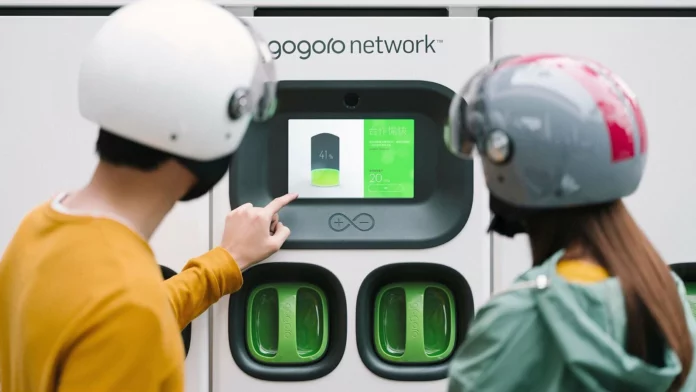
The Suzuki Burgman electric scooter is a part of a larger initiative in Japan to encourage battery sharing and expand the use of e2Ws. Suzuki is collaborating with the Tokyo-based battery sharing service Gachaco Co., Ltd. Eight Burgman electric scooters will be used in field tests that will last three months, from April to June 2023.

It is a Class-2 light electric scooter with impressive specifications. Suzuki’s e-Burgman has a range of up to 44 kilometres on a single charge when ridden steadily at 60 kilometres per hour.

Suzuki
credit: rushlane

It has a 0.98kW rated output, a 4.0kW maximum output, and an 18Nm maximum torque. The following measurements apply: 1,825mm in length, 765mm in width, 1,140mm in height, and 780mm in seat height. The vehicle weighs 147 kg at the kerb. It has a lithium-ion battery and a synchronous AC motor for power.

In addition to Yamaha Motor Co., Ltd., Kawasaki Heavy Industries, Ltd., and Honda Motor Co., Ltd., Suzuki is a member of the Swappable Battery Consortium for Electric Scooters. The consortium is attempting to standardise replacement systems and swappable batteries.

A significant step towards expanding the use of electric two-wheelers in Japan and battery sharing. Common specifications were taken from the technical paper TP21003. For swappable batteries that address concerns about drive range and charging time, development standards have been adjusted. The consortium has also been working with e-Yan OSAKA on field tests to encourage the use of electric scooters.

Also Read:

Source

India’s battery swapping policy still eludes the reality: Will we ever get it?

0

The electric vehicle industry is still waiting for the battery swapping policy, which finance minister Nirmala Sitharaman announced in the budget for 2022–2023, even as international investors rush to clean mobility projects, encouraged by India’s decarbonization goals.

The battery swapping policy is anticipated to provide solutions for the space shortage in cities and to shorten the amount of time it takes to charge a vehicle, particularly commercial two- and three-wheel EVs. The federal think tank NITI Aayog released the draught policy almost a year ago, after several rounds of stakeholder consultation with battery swapping and charge-point operators, as well as vehicle manufacturers.

The battery swapping policy’s release has been delayed by the widespread opposition from industry players to the interoperability standards, which require swappable batteries to have a specific set of outer dimensions to qualify for incentives.

“The Bureau of Indian Standards (BIS), which was entrusted with formulating the specifications, was asked to not release the standards as the industry believes they are skewed towards one particular original equipment manufacturer (OEM), and standardizing the battery dimensions will involve lot of changes to the platforms that operators and OEMs have built and will not be feasible in the current business case. Commerce and industry minister Piyush Goyal, who chaired many meetings with the industry, decided that the interoperability standards will not be released,” a senior government official close to the developments.

battery swapping policy
credit: livemint

The official added that a government agency had also contacted the Prime Minister’s Office to ask for his help in persuading the Niti Aayog and the BIS to either release the battery-swapping policy without the interoperability standards or to start a new round of discussions with the Department of Science and Technology (DST) and all stakeholders to decide how interoperability for customers could be achieved without establishing uniform battery pack dimensions.

The battery swapping policy standards, while not being required for all OEMs, were intended to serve as the foundation for FAME-II-like customer incentives to purchase vehicles with swappable batteries and to create a level playing field for both direct charging and swappable battery solutions. The delay might undermine the faith investors have so far expressed in the developing sector, which depends on precise government regulations to grow.

Also Read:

Source

Honda to launch two new EV’s in India: Is this is a strong message to its competitors?

0

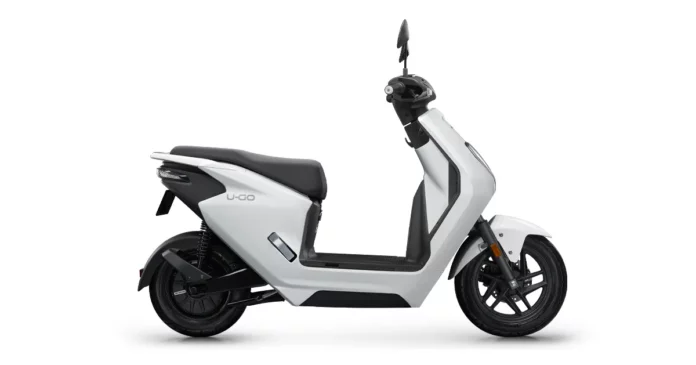
Honda Motorcycles and Scooter India (HMSI) has finally announced that several electric two-wheelers will be arriving in India by the end of the current year. According to HMSI, two electric vehicle models with fixed and swappable batteries will be introduced in 2024. It has also been confirmed that these electric two-wheelers will be introduced in the mid-range segment, but it is still unknown whether they will take the form of scooters or motorcycles.

To produce the new line of products, HMSI is building a special EV factory at the manufacturer’s Nalasupara plant in Karnataka. By 2030, the factory will be able to produce one million electric two-wheelers. The factory will boast cutting-edge automation features and run entirely on renewable energy.

Multiple new models will be built on Honda’s new dedicated EV platform, which supports various drivetrains like fixed battery and swappable battery platforms.

Honda
credit: timesofindia

In 2024, the launch of two electric two-wheelers in the midrange is anticipated. Honda’s Mobile Power Pack E will provide power for the models with interchangeable batteries. The battery packs, PCU, and motor for these electric vehicle models will all be “Made in India” components.

By adding charging stations and EV service facilities to HMSI’s existing 6,000 touchpoints across the country, the after-sales experience of Honda electric two-wheelers will also be improved. Additionally, customers will be offered battery charging options at strategically placed petrol stations, underground stations, and other hotspots across the nation.

Along with starting a new EV business, HMSI is also working towards bringing all of its two-wheeler models up to speed with OBD2 requirements and E20 fuel blend compliance by H1 2024. HMSI also has 20 models and plans to increase its exports to 58 nations. In addition, a new scooter assembly line with a 6 lakh unit annual production capacity is being built at the Vithalapur factory in Gujarat.

Also Read:

Source

Okinawa Praise e-scooter performs really well despite the company having a bad YoY in February 2023

0

Sales in Okinawa decreased year over year in February 2023. 6,726 units were sold in total in February 2023, a decrease of 32.11 percent from the 9,907 units sold in February 2022. On a month-over-month basis, however, February 2023 total sales rose 12.47 percent over January 2023.

The Okinawa IPraise model, which saw sales decline by 74.18 percent YoY, was primarily responsible for the decline. The Praise Pro model, which has the largest market share at 69.19 percent, also experienced a 19.90 percent YoY decline in sales. The R-30 model experienced the highest MoM growth in sales, increasing by 420.96 percent. The Lite model came in second at 111.90 percent. The Praise Pro model still has the highest market share at 77.83 percent despite MoM sales declining.

Okinawa

Overall, sales in Okinawa decreased YoY but rose month over month.

To strengthen its position in the electric scooter market, the brand may need to concentrate on reviving the sales of its IPraise and Praise Pro models. Eight new colours have been added by the manufacturer to the Praise platform. They are Sun Orange, Mauve Purple, Military Green, Seafoam Green, Ocean Blue, Liquid Metal, and Electric Green.

Okinawa
credit: rushlane

Riders can express their individuality and sense of style with the new colour options. The Okinawa Praise Pro electric scooter displays the design and technological prowess of the manufacturer. Praise Pro has a strong battery that charges completely in just 3–4 hours. It can go 56 km/hr at its top speed.

The Electronic Assisted Braking System (E-ABS) and the central locking system with an anti-theft alarm are just two of Praise Pro’s advanced safety features. Riders will also value how convenient the Locate My Scooter feature and the USB port for charging mobile devices are. The Okinawa Praise Pro even has a walk assistance feature.

The Okinawa iPraise Plus is a cutting-edge electric scooter that combines style and usability. It has a remarkable 137 km range on a single charge, making it perfect for daily commuting requirements. Riders can monitor the performance and battery life of their scooters thanks to Eco App integration.

Also Read:

Source

Servotech Power Systems Unveils EV Charging Solutions at 8th Smart Cities India Expo

0
Servotech Power Systems Unveils EV Charging Solutions at 8th Smart Cities India Expo

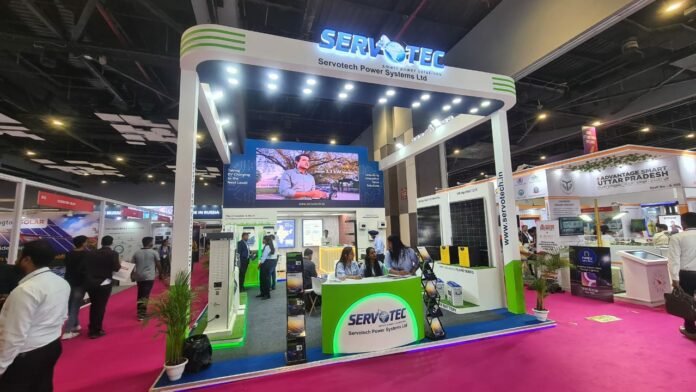
Leading EV charger manufacturer and solar solutions provider Servotech Power Systems Ltd. (NSE: SERVOTECH) presented a wide portfolio of the latest tech-enabled Solar and EV Charging Solutions at the 8th Smart Cities India Expo co-located with the 30th Convergence India expo.

Nitin Gadkari, Minister of Road Transport and Highways, inaugurated the Expo. The event is one of the largest exhibitions for smart cities, automation, and IoT solutions in the country.

Servotech Power Systems Unveils EV Charging Solutions at 8th Smart Cities India Expo

Servotech Power Systems Unveils EV Charging Solutions

Servotech displays its finest range of tech-driven advanced Solar and EV Charging Solutions which includes Solar on-grid & off-grid Inverters, Solar Hybrid Inverters, Lithium Batteries, 7 kW, 10 kW, 14 kW AC EV Chargers and 30 kW & 60 kW DC fast EV Chargers.

Servotech’s participation in this event aligns with its strategic initiatives to demonstrate its commitment to supporting India’s transition to cleaner energy. It also enabled SPSL to showcase its wide variety of cost-efficient solutions to adapt to green energy technology across the country.  

The Founder and Managing Director of Servotech, Raman Bhatia, remarked on the thrilling prospect of attending a significant event like Smart Cities India Expo, “This platform provides Servotech with an excellent opportunity to showcase its latest innovations in the green and clean energy sector making us a prominent player in the industry. The event attracted thousands of visitors from across the globe, including industry experts, policymakers, and government officials giving Servotech a massive opportunity to interact with its potential customers.

In line with our company’s mission ‘Produce Green to Live Green’, we are proud to contribute to this mission by providing innovative and sustainable energy solutions. Our commitment to green energy is reflected in the progress we’ve made in the EV segment, where we have gained a sizable market share. We aim to make green energy an integral part of people’s everyday routines, fostering a cleaner and more sustainable future. We remain focused and agile in approaching our mission of providing a greener life to our customers by providing them with the highest quality and reliable products.”

Tata Motors to give its mid-size Harrier SUV a 1.5 litre turbo engine and an EV inspired design

0

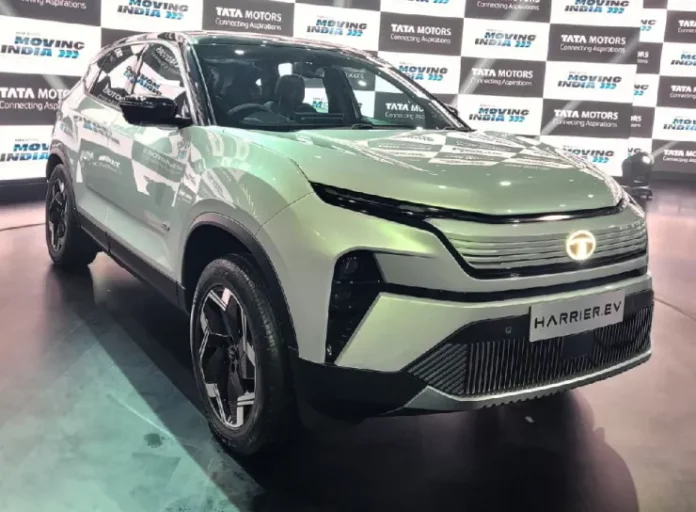
One of the most well-known models from the company, the mid-size SUV Harrier from Tata Motors, recently got an update for 2023 that included ADAS and a new Dark Red Edition. The car’s exterior, however, has not changed. According to reports, Tata Motors is developing an SUV mid-cycle update that will change the exterior styling and add a highly anticipated petrol engine. It is anticipated that the company will offer it with its recently unveiled 1.5 L TGDi petrol powerplant.

The company presented the four-cylinder turbo petrol engine at the Delhi Auto Expo in 2023. The manufacturer claims that this new motor can generate 170 bhp at 5,000 rpm and a maximum torque of 280 Nm between 2,001 and 3,500 rpm. Additionally, it has been claimed that Tata Motors will use the same petrol engine for both the updated Safari and the upcoming mid-size Tata Curvv. It is anticipated that it will also be used in the Tata Sierra’s ICE version, which is scheduled for release in 2025.

In addition to an aluminium design that increases efficiency and economy, Tata Motors claims that the new petrol engine has features like dual cam phasing, a variable oil pump, and an integrated exhaust manifold in the cylinder head.

Tata Motors
credit: cartoq

The new Tata TGDi petrol engine’s water-cooled variable geometry turbocharger boosts the engine’s torque at lower revs for better acceleration. Low ownership costs are produced by the new motor’s redesigned valve trains and timing chains. For the Harrier petrol variant, manual and automatic gearboxes will be available.

In addition to the new engine in the Harrier Facelift, Tata Motors is anticipated to continue offering the tried-and-true 2.0L turbo diesel engine, 6-speed manual and automated transmission options. The diesel engine recently received updates to bring it into compliance with the stricter BS6 Phase II pollution requirements. It generates 168 horsepower and 350 Nm of maximum torque. The Safari, a seven-seater SUV older than the Harrier, is currently powered by the same engine.

Also Read:

Source

Electric Vehicles Charging Stations: Indian Government allocations Rs 800 crores

0

Electric vehicles with batteries (BEVs or EVs) are the latest revolution in the transportation sector, contributing to almost 16% of global emissions. It is environmentally friendly and costs less to operate and maintain. 1.05 million EVs will be sold in India by 2022, with an adoption rate of EVs of about 4.7%. However, range anxiety, brought on by immature battery technologies and a lack of charging infrastructures, is the main issue holding back the adoption of EVs. India had 2,700 charging stations by the end of 2022 and may need 20.5 lakh charging stations by 2030.

On Tuesday, the Ministry of Heavy Industries announced that three PSU oil marketing companies (OMC) had received a total of Rs 800 crore under the FAME India Scheme Phase II in order to build 7,432 public fast charging Electric Vehicles Charging stations across the nation. The funds were authorised under Phase II of the FAME Scheme.

Three OMCs, Indian Oil (IOCL), Bharat Petroleum (BPCL), and Hindustan Petroleum (HPCL), have each received Rs 560 crore, or 70% of the total amount, from the ministry as the first installment for the installation and commissioning of upstream infrastructure and charging equipment of Electric Vehicles public charging stations at corresponding retail outlets across the nation.

The installation of Electric Vehicles Charging stations is anticipated to be finished by March 2024

Electric Vehicles
credit: deccanherald

“The addition of the new 7,432 public charging stations will be a significant push to EV charging ecosystem,” the release said, and added the charging capacity would be used for charging electric 2-wheelers, 4-wheelers, light commercial vehicles, and mini-buses.

The move, according to Minister of Heavy Industries Mahendra Nath Pandey, will strengthen India’s electric vehicle ecosystem and encourage more people to use cleaner forms of transportation. In order to achieve Prime Minister Narendra Modi’s Net Zero mission, he further stated that the government is committed to promoting environmentally friendly mobility options and lowering the nation’s carbon emissions. The minister added that the action will build a strong, publicly accessible charging infrastructure network in India.

Also Read:

Source

TVS Jupiter e-scooter patent images leaks Online

0

TVS plans to expand its market share by introducing new products in the 5kW to 25kW power range. Over the next 18 months, these new products will be introduced. KN Radhakrishnan, the CEO of the company, disclosed TVS plans at a recent conference. A new powertrain will be installed in the new TVS electric two-wheelers. This is clear from a recent patent application the business made. The Jupiter electric scooter, which will compete with the Activa electric next year, may use this new powertrain. The hub motor used by iQube has benefits like quiet operation and little energy loss. A hub motor might not function as well, though, if the power output is greater than 5kW.

A new mid-mounted motor is being developed because the new electric two-wheelers from TVS will have a power range of 5kW to 25kW.

Some intriguing information regarding the new electric powertrain has recently come to light through a patent filing. The mid-mounted motor has been connected to the rear wheel by a straightforward transmission system. The transmission casing serving as the swingarm is a special feature. This will probably contribute to the intended electric two-wheeler being lighter overall. The casing is connected to a pivot at the end of the motor. The rear wheel receives energy from the motor via a drive gear.

TVS
credit: rushlane

It is known as a “endless transmission drive” by TVS. The possibility of using either a chain drive or a belt drive is mentioned in the patent. This new powertrain differs from hub motors in that it has a speed reduction ratio, as opposed to hub motors where the motor and wheel spin at the same speed. It implies that the motor’s and the back wheel’s rotational velocities will differ.

For vehicles with higher power output, mid-mounted motors are preferred. With electric scooters like the Ather 450X and Ola S1 Pro, comparable systems are already in use. With this new powertrain, TVS will likely try to develop a new lineup of electric two-wheelers focused on performance. For comparison, the 4.4 kW setup on the iQube achieves 0-40 kmph in only 4.2 seconds. The new mid-mounted motor on the TVS Jupiter electric will provide a better overall riding experience. It will compete with the upcoming Honda Activa electric scooter, set to go on sale in January 2024. The top two selling scooters in India in the petrol segment are the Activa and Jupiter.

Also Read:

Source