Home Blog Page 271

BMW iX2 EV to launch in India in late 2023

0
bMW iX

BMW had a lot to say at its annual conference, especially about EVs. The confirmation that the upcoming redesigned X2 will be joined by an all-electric version called, predictably, the iX2 has been added to the list.

We’ve seen spy photos of the iX2 before, and we even commissioned a rendering of what the production version of the gas-powered X2 might look like (see above), but this is the first time we’ve heard from the horse’s mouth that the EV version will be produced.

The X2 is essentially a “coupe” version of the small X1 SUV, with a stubby design and steeply raked rear roof. As a result, the electric version will most likely share all of its mechanicals with the iX1, which is already available outside of the United States. The BMW iX1 xDrive 30 is powered by two electric motors that produce 313 horsepower and 364 pound-feet (494 Nm) of torque, with a range of 257-272 miles (413-438 km).

According to BMW, it takes 5.7 seconds to reach 100 kilometres per hour and has a top speed of 180 kilometres per hour (112 mph).

BMW
credit: hindustantimes

The battery pack on the iX1 is 66.5 kWh, so its usable capacity will be slightly slower. For the iX2, we can expect similar, if not identical, results. The X2 and iX2 will be built in the same factory in Regensburg, Germany, as the X1 and iX1, and will go on sale at the end of 2023, with deliveries beginning early next year, at least in Europe. We expect the X2 to return to BMW’s lineup in the United States, and we hope the all-electric iX2 will join it. The iX1, however, is not currently available in the United States, despite the fact that its gas-powered platform mate is.

The iX2’s price is unknown, but the X2 costs more than the X1, so expect the iX2 to follow suit and cost a little more than the X1.

Also Read:
Source

Honda to reveal the details of its new EVs this Month

0

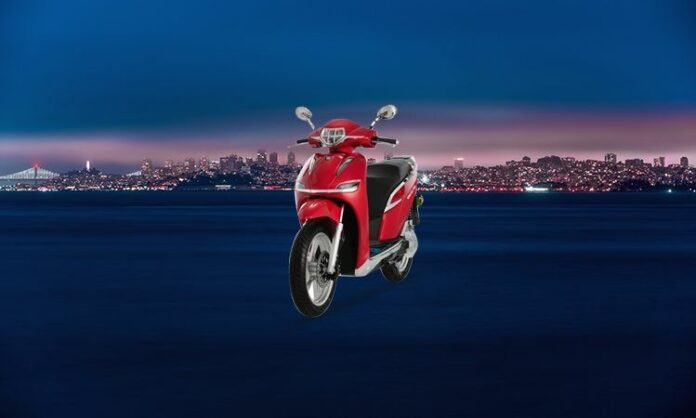
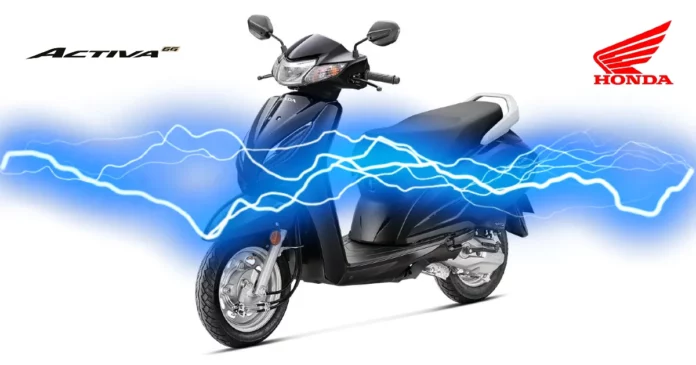
Honda Motorcycle and Scooter India (HMSI) has announced that it will launch an electric scooter in India in April 2023. It is unclear whether this will be the much-anticipated Activa electric or something else. More information will be released on March 29th. Honda already sells a variety of electric two-wheelers in international markets. The same product line could be homologated and introduced in India.

According to HMSI’s president, MD, and CEO, Atsushi Ogata, the company will have a diverse portfolio of EVs in India. Honda will offer three types of electric two-wheelers in India, primarily based on top speed. Electric Bike (EB), with a top speed of 25 kmph, will be one of the focus areas. The Electric Moped (EM) category of Honda EVs will have a top speed of around 50 kmph.

The third category will be Electric Vehicles (EV), with top speeds of more than 50 kmph. Vehicles in the first EB category will not require registration or a driver’s licence. EMs and EVs will be subject to the same set of rules that apply to gasoline-powered two-wheelers. According to Ogata, the launch of the electric scooter will be followed by the release of a high-speed EV.

Honda
credit: autocarindia

Honda Motorcycle and Scooter India (HMSI) has announced that it will launch an electric scooter in India in April 2023.

It is unclear whether this will be the much-anticipated Activa electric or something else. More information will be released on March 29th. Honda already sells a variety of electric two-wheelers in international markets. The same product line could be homologated and introduced in India.

While Honda has ambitious plans for the EV market, Ogata stated that the company’s primary focus will remain on petrol-powered two-wheelers. It’s understandable, given that the ICE-powered two-wheeler market is still massive and will be for several years. A full transition to EVs will necessitate changes to the entire supply chain and manufacturing ecosystem, which will take time to implement. Another limiting factor is consumer psychology, as people are often hesitant to try something new.

Also Read:

Source

Volkswagen Group is increasing its spending to make EVs more affordable

0

In the next five years, Volkswagen Group will invest 180 billion euros ($193 billion) in areas such as battery cell production, digitalization in China, and expanding its presence in North America, while spending on combustion engines will decrease.

More than two-thirds of the five-year investment budget (122 billion euros) is earmarked for electric vehicles and software as the group, whose brands include Porsche, Audi, Bentley, Volkswagen Group, and Skoda, ramps up its efforts to challenge Tesla’s leadership in electric vehicles.

In comparison to the previous annual update, the automaker is increasing overall spending by 13%. The difference from the previous plan is primarily due to increased investment in its battery business, raw materials, and a $2 billion Scout brand plant in South Carolina, according to Chief Financial Officer Arno Antlitz.

Volkswagen Group is still aiming to launch an affordable EV by 2025, priced around 25,000 euros ($26,795) at current prices and built on a second-generation version of its all-electric MEB platform.

Volkswagen Group
credit: reuters

Antlitz expressed hope that by then, the company would have struck enough raw material sourcing deals and expanded battery production to reduce EV costs, which account for 40% of total EV costs. Volkswagen Group’s investment in combustion engine technology will peak in 2025, when the European Union’s strict new Euro 7 emissions regulations go into effect, and then decline as the company works towards its goal of 50 percent all-electric sales globally by 2030.

In an effort to improve operations at its software unit Cariad, Volkswagen Group said it is finalising high-performance software for its premium and luxury brands, which could be applied across the company in the medium term.

According to the carmaker’s annual report released on Tuesday, the unit has gone over budget and missed its targets, suffering an operating loss of 2 billion euros in 2022 on revenue of 800 million euros. Cariad will be ready to deliver the premium software package to Porsche in time for the launch of the full-electric Macan SUV in 2024, according to Blume on Monday.

Also Read:

Source

India EV Growth: Delhi’s EV penetration stands the highest in Country at 8.3%

0

According to a study conducted by the Council on Energy, Environment, and Water (CEEW), Delhi has the highest EV penetration in India at 8.3% between April 2021 and September 2022. According to the Greening India’s Automotive Sector study, the Burari RTO is the greenest in India. EVs accounted for 46.38% of registered vehicles sold between April 2021 and September 2022.

According to the study, Assam (5.91%) and Karnataka (4.85%) followed Delhi in terms of EV penetration. Between April 2021 and September 2022, 61,449 EVs of all types were sold in Delhi. The majority of EVs, 48.55 percent, were two-wheelers, with only 0.12% being passenger four-wheelers.

States typically incentivize EV purchase by reducing the registration fee or vehicle cost.

Similar policies in other states have resulted in an increase in EV sales. Uttar Pradesh topped the list in terms of EV sales, with 1,65,338 EVs sold and a penetration rate of 3.91%.

EV
credit: timesofindia

The penetration percentage is the proportion of EVs purchased out of all vehicles purchased during a given time period. According to the report, while two-wheelers sold the most units of any type of EV, commercial four-wheelers had the highest penetration.

According to the study, 46.35% of all commercial four-wheelers sold were electric vehicles, while only 1.50% of all passenger four-wheelers sold were electric vehicles. Electric bus penetration was 29.39%. According to the study, EV sales experienced rapid post-pandemic growth and market penetration. States with EV policies that include consumer incentives saw multiple times the market growth of states without such incentives. EV two-wheelers and EV rickshaws jointly lead the EV segment in India, accounting for 93.5 percent of the total market. The study suggests that India’s auto industry set an official EV transition target.

Also Read:

Source

MS Dhoni suggests that EVs are not “The Solution” for the carbon emission problem

0

We all know who MS Dhoni is, but for those who don’t, he is the former captain of the Indian cricket team and one of the game’s most talented players. He is well-known for his natural affinity for automobiles. In fact, he has a soft spot in his heart for vintage cars and motorcycles, which explains why he has so many of them in his car collection.

In a recent interview, he was overheard discussing the future of the automobile industry. MS Dhoni believes that EVs are not the answer to the issue of emissions and carbon footprint.

MS Dhoni
credit: carblogindia

Simply put, MS Dhoni mentions that it is not the EVs themselves that are important, but where the electricity to power the EVs comes from. If electricity is generated using nonrenewable energy sources, then electrifying cars accomplishes nothing.

However, focusing on developing renewable energy sources to generate electricity will be the actual solution. At the moment, one might believe that because EVs emit no tailpipe emissions, they must be better for the environment. However, this is only one aspect of the overall process. They require charging, so it is critical to understand where the electricity is coming from.

Indeed, many industry experts and enthusiasts have been pointing this out for quite some time. To determine whether or not EVs are good for the environment, we must consider the entire energy generation process. As a result, solar and wind energy are required to power the EVs in order to maximise the overall positive impact on the environment.

Source

Okinawa Autotech touches 2.5 lakh unit production in Rajasthan

0
Okinawa

Okinawa Autotech, a leading Indian manufacturer of electric two-wheelers, delivered its 250,000th unit, the popular Praise Pro model, from its state-of-the-art manufacturing plant in Rajasthan on Tuesday.

Okinawa Autotech began operations in 2015 and released its first model, Ridge, in 2017. The company now has the most diverse product portfolio, 542 3S touchpoints, unrivalled after-sales service, and improved customer connectivity.

Okinawa Autotech recently announced the opening of its first Research and Development (R&D) Center in Italy in collaboration with its joint venture (JV) partner Tacita, with a planned investment of €25 million over the next three years.

Okinawa Autotech
credit: zeenews

According to a press release, the partnership will focus on new product development, upgrading the existing product portfolio, and developing an all-new e-powertrain to support the next generation of products.

Jeetender Sharma, MD & Founder, Okinawa Autotech, said, “The 2.5 lakh milestone is a strong testament to the quality of our robust product portfolio. With sustainable mobility at the core of our value proposition, our aim is to establish a benchmark in reliability and quality standards that would augment our customers’ experience by several notches. With a strong pipeline of new products planned to be launched in India very soon, we aim to achieve the magical number of one million by 2025.”

The company intends to launch its first electric cruiser motorcycle soon, followed by other new models later this year. In keeping with the industry’s rapid growth, the company intends to expand its touchpoints to 1000+ dealerships across India by 2025.

Also Read:

Source

2024 Hyundai Kona Electric Vehicle Specs revealed

0

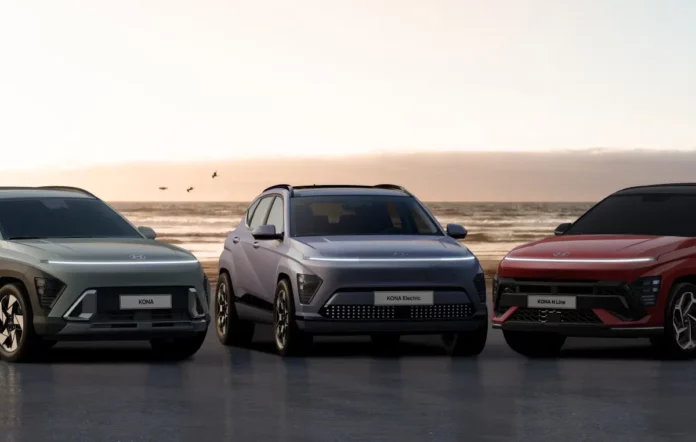
The Hyundai Kona Electric received a larger, more feature-rich upgrade just before Christmas last year when the design was officially unveiled. Hyundai has now released detailed specifications for the new Kona, which features an EV-first design. When compared to the current Kona Electric, the new design is expected to be larger in most dimensions. Hyundai has now revealed official battery specs and range information for the New Hyundai Kona Electric.

The new Kona Electric has two battery pack options. The base model comes with a 48.4 kWh battery pack that promises a range of 342 kilometres on a full charge. The top variant has a larger 65.4 kWh battery pack and a driving range of 490 km. The larger battery pack charges from 10-80% in 41 minutes using the fast charger. The new Kona’s battery pack options include a front-mounted electric motor. The electric motor in the smaller battery pack is rated to deliver 154 hp, while the larger battery pack delivers 214 hp. Both variants have the same torque output of 255 Nm.

In India, a 39.2 kWh battery pack with a claimed range of 452 km is available. If the next-generation Hyundai Kona EV is launched in India, it should have a longer range than the current model. The new Kona, like the current model, has Vehicle-to-load capability. This means that Kona EV will be able to charge both internal and external devices such as home appliances.

Hyundai Kona has a radical and geometric design.

Hyundai Kona
credit; rushlane

Upgrades to many of Hyundai’s designs rarely feel organic and cohesive in capturing the essence of its predecessor. The parametric and pixel design philosophies work together to create a visually appealing front.

Separate pods house the headlight and brake light elements, while LED light bars take centre stage at both ends. They emphasise the width of the new Kona. In that regard, the new Hyundai Kona is 5.5″ (139.7mm) longer, 0.9″ (22.86mm) wider, and has a 2.3″ (58.42mm) longer wheelbase than the previous model.

It has an athletic look thanks to the sharp lines and creases on the sides. Simultaneously, flared wheel arches and undercuts behind the fenders add a lot of muscle. There are stylish 5-spoke alloy wheels, and near the C-pillar, the shoulder-line and roof-line merge to form an X-insignia.

Hyundai used environmentally friendly materials on the inside. The dual 12.3″ digital displays and a 12″ HUD are the main draws here. Highlight features include wireless Android Auto and Apple CarPlay, an NFC-enabled smartphone and smartwatch access digital key, ambient lighting, flat reclining electric front seats, Hyundai SmartSense ADAS technology, and remote parking, among others.

Also Read:

Source

All EV and Hybrid SUVs coming to India in 2023

0

The Indian automotive industry is undergoing a massive transformation, with petrol and diesel vehicles falling behind electric vehicles. Although India’s EV industry is in its early stages, the government has pressed automakers to launch electric vehicles and implement EV use in order to reduce pollution.

However, replacing ICE vehicles with EVs, particularly four-wheelers, is an expensive proposition for buyers. An EV costs nearly twice as much as its ICE counterpart, making it less cost effective for car buyers.

So here are some EV and Hybrid options for you look out for in future:

1. MG Comet EV

EV
credit: gaadiwaadi

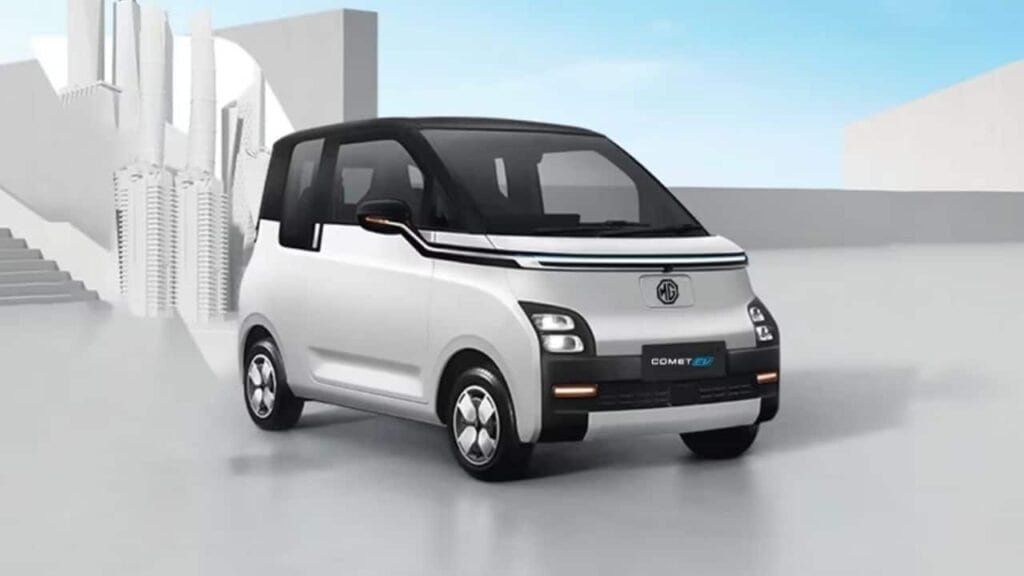
In April 2023, MG plans to launch the Comet EV, a compact electric vehicle in India. Prices and battery specifications will also be revealed at that time. This rebadged version of the Chinese Wuling Air will be produced at MG’s plant in India. The battery for the Comet EV is rumoured to be sourced from Tata Autocomp and will use LFP cells. Comet will be the smallest vehicle in MG’s lineup in India, providing customers with a low-cost entry point into the world of EVs.

2. Honda Hybrid SUV

EV
credit: gaadiwaadi

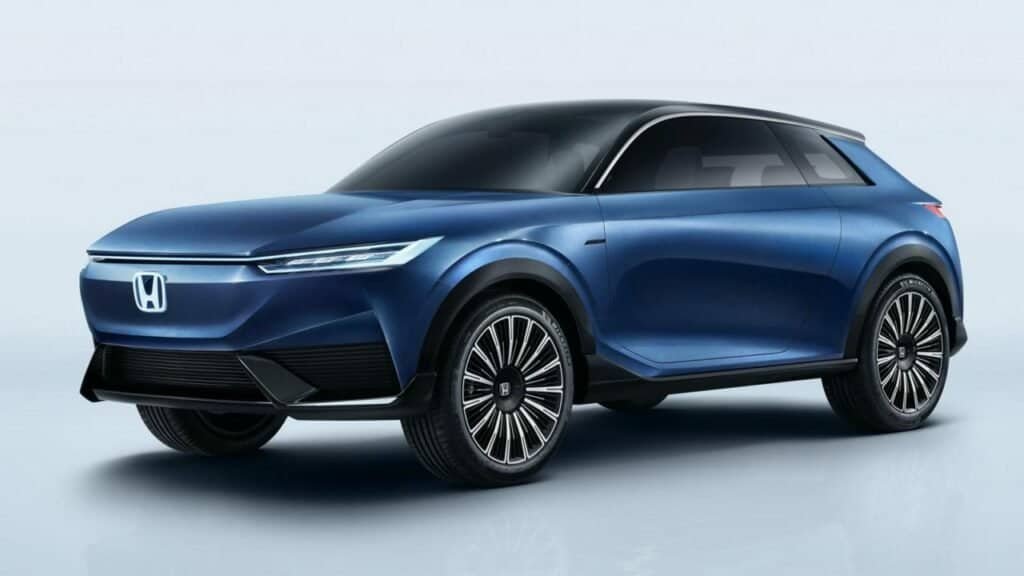
In order to revitalise the brand, Honda is currently developing a mid-size SUV, which is expected to hit the market in 2023. According to reports, Honda’s upcoming SUV will have a hybrid engine and will compete with the recently launched Toyota hyryder, Maruti Grand Vitara, Kia Seltos, and Hyundai Creta.

3. Lexus RX Hybrid

EV
credit: gaadiwaadi

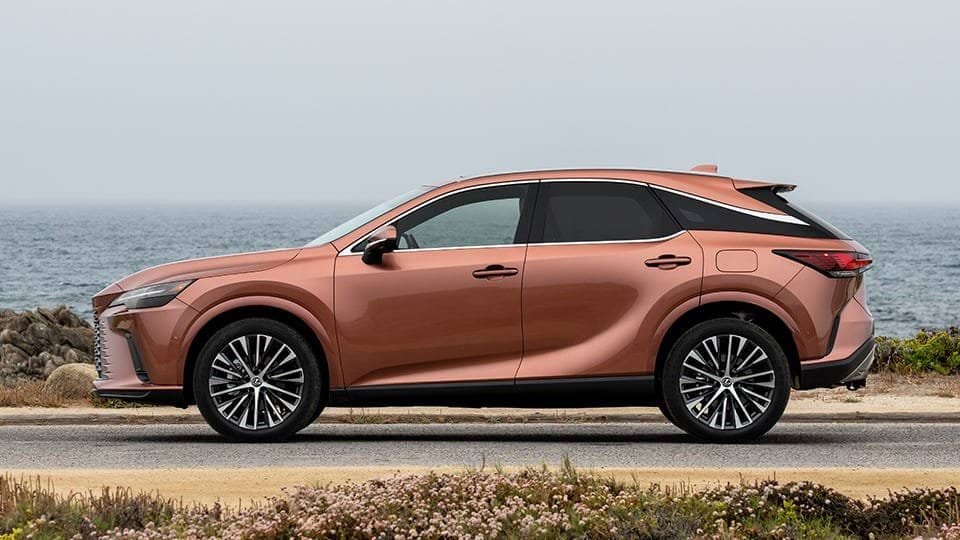
The Lexus RX made its domestic debut in January at the 2023 Auto Expo. When it is released, the fifth-generation luxury SUV will be available in RX 350h Luxury and RX 500h F Sport Performance trim levels. The hybridised engines are the 2.4-litre turbocharged petrol and 2.5-litre turbocharged petrol.

4. Maruti Suzuki C-MPV

EV
credit: gaadiwaadi

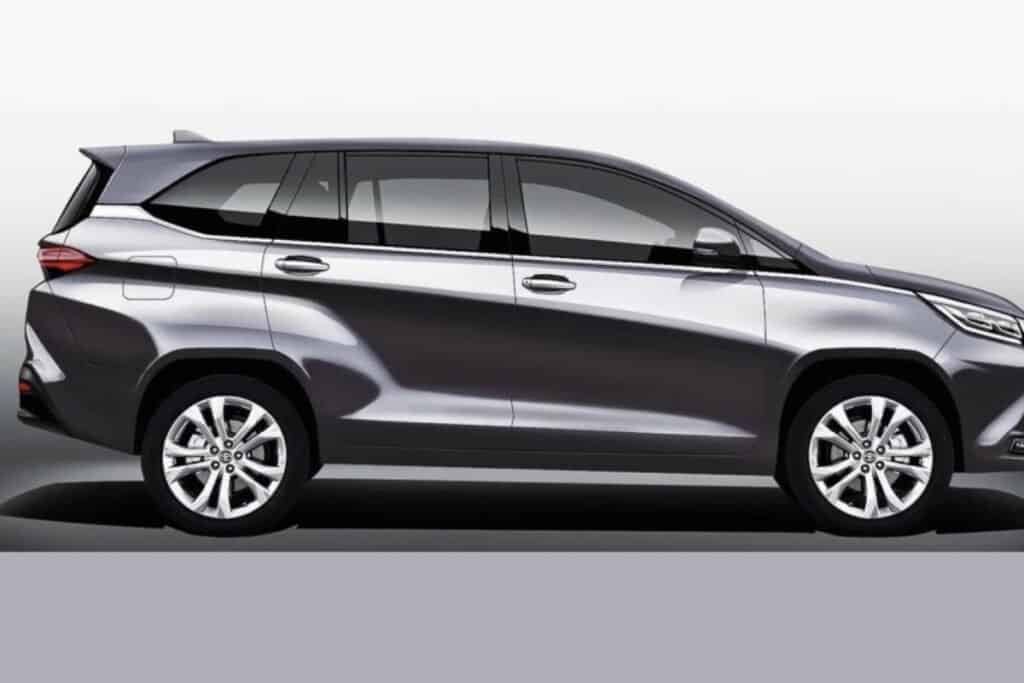
In the near future, Maruti Suzuki is expected to launch a premium C-segment MPV based on the Toyota Innova Hycross. It is expected to be styled after the Grand Vitata and to be powered by the 2.0-litre NA petrol and 2.0-litre strong hybrid petrol engines found in its Toyota sibling. It will also most likely be the first Toyota cross-badged for Maruti Suzuki.

5. Next-Gen Maruti Swift and Dzire

EV
credit: gaadiwaadi

The next-generation Maruti Suzuki Swift and Dzire will be introduced in India in 2024, with significant changes both inside and out. They will be powered by a brand-new 1.2-litre three-cylinder hybrid petrol engine, which may be available in high-spec variants. It will have a claimed mileage of 35-40 km/l.

Also Read:

Source

Nissan Motor Co. is accelerating its shift to EV market

0

Nissan is hastening its transition to electric vehicles, particularly in Europe, where emissions regulations are strictest, the company announced on Monday. Nissan Motor Co. stated in a statement that by fiscal 2026, 98% of its offerings in Europe will be electric or series-hybrid. This is an increase from the previous target of 75%. In Japan, the company aims to produce 58% of its model offerings, up from 55% previously.

A hybrid vehicle has both a gasoline engine and an electric motor, but a series hybrid uses the motor to power the wheels, or powertrain. The engine drives a generator that powers the motor. Parallel hybrids, such as Toyota Motor Corp.’s Prius, alternate between a gas engine and an electric motor.

Nissan Motor’s EV and series hybrid sales target for the United States remains at more than 40%.

Nissan Motor
credit: timesofindia

In China, the target was reduced from 40% to 35%. This only applies to pure EVs, not hybrids. Nissan’s target figures exclude expected vehicle sales from alliance partners such as Renault SA of France and Mitsubishi Motors Corp., a smaller Japanese automaker. With its Leaf, which went on sale in 2010, the company was an early leader in electric vehicles. Since then, newcomers such as Tesla and Chinese automaker BYD have surpassed it.

According to Nissan officials, the company, based in Yokohama, has a wealth of knowledge about EV technology, particularly how consumers use the products and what kind of wear and tear develops on the battery, as well as other knowledge critical to the proliferation of green cars.

Nissan Motor Co. plans to launch 19 electric vehicle models by 2030, up from 15 previously. Nissan announced earlier this month that it will invest up to a 15% stake in Ampere, Renault’s European electric vehicle and software entity. Nissan and Renault have been collaborating on EV technology, with Nissan spearheading the development of a next-generation battery.

Also Read:

Source

Budget EV cars in India: a look at Citroen eC3, Tata Tiago and Tata Tigor

0

The Federation of Automobile Dealers Association (FADA) recently released passenger car sales figures for various EV manufacturers. While the PV (passenger vehicle) market in India had 1.3 percent electric cars in December 2022, the figure fell to 0.6 percent in January 2022 before rising back to 1.0 percent last month.

So lets talk about some of the most Affordable EV options available for buyers in India

1. Citroen eC3

EV
credit: teambhp

Citroen has introduced the eC3, an electric version of the ICE-powered C3 hatchback, in India. The eC3 starts at Rs 11.50 lakh for the Live variant and goes up to Rs 12.43 lakh for the Feel variant with dual-tone paint and Vibe Pack.

The Citroen eC3 is powered by a 29.2kWh battery pack, which powers the front axle-mounted electric motor, which produces 57hp and 143Nm of peak torque. With this power, the eC3 is claimed to accelerate from 0-60 kph in 6.8 seconds and reach a top speed of 107kph. The Citroen eC3 also comes with two driving modes, Eco and Standard, as well as regenerative braking.

The Citroen eC3 has a 320km ARAI-claimed range and two charging options. The first is a DC fast charger capable of charging the battery pack from 10-80% in 57 minutes, and the second is a 3.3kW onboard AC charger capable of CCS2 fast charging. The eC3 can also be charged using a home charger, and it takes 10.5 hours to charge from 10% to 100%.

2. Tata Tiago EV

EV
credit: teambhp

Tata Tiago EV will make its debut in India in September 2022. There are two battery pack options. There is a 24 kWh battery pack with a MIDC range of 315 km. Another option includes a 19.2 kWh battery pack with a stated range of 250 km.

Tata Tiago EV has four charging options: a 15 A home socket, a 3.3 kW AC charger, a 7.2 kW AC home charger, and a DC Fast charger. The EV also has DC fast charging and can be charged from 10% to 80% in 57 minutes.

Some of the safety features available on the Tata Tiago EV include ABS with EBD, rear parking sensors, a rear parking camera, and a seat belt reminder.

3. Tata Tigor EV

EV
credit: teambhp

Tata Tigor EV is available in four trim levels: XE, XT, XZ+, and XZ+ Lux. Furthermore, Tata Motors is providing a free feature update to current Tigor EV owners via a software update, as it did with the Nexon EV Prime.

The updated Tigor EV has an ARAI-certified range of 315 km, while the current Tigor EV has a range of 306 km. This will also provide a marginal improvement in real-world driving range. The battery pack has a capacity of 26 kWh and is rated IP67 for dust and water resistance. The Tigor EV’s electric motor produces 76 Ps of maximum power and 170 Nm of peak torque.

Also Read:

Source