Home Blog Page 269

Electric vehicle sales in India crosses a record milestone with more than 1 million units sold in FY 23

0

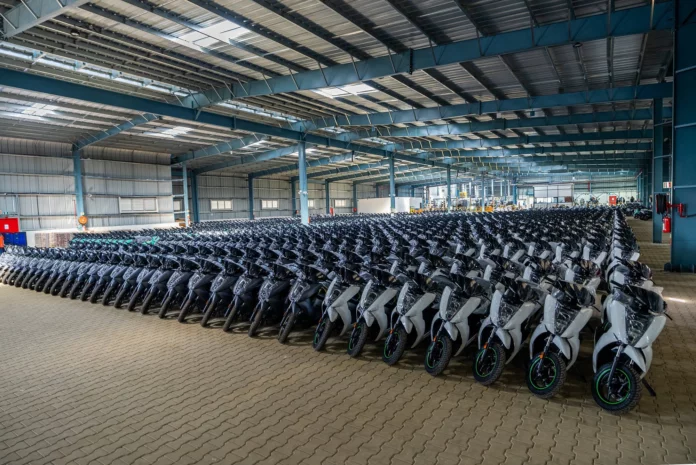
In fiscal year 22-23, India’s electric vehicle sales surpassed one million units. According to the most recent data from the Society of Manufacturers of Electric Vehicles (SMEV), the overall EV industry sold 1,152,021 units in FY 2023, including e-buses, e-cars, e-three-wheelers, and e-two-wheelers.

This is a 58% increase over the 726,861 units sold in FY21-22. Aside from that, the two-wheeler sales total also included 120,000 low-speed e-scooters, 285,443 low-speed e-rickshaws, and around 50,000 low-speed e-cycles, totalling 846,976 units in FY23. This is a significant increase from the 27,888 electric two-wheelers sold in FY17 and nearly three times the 328,000 units sold in FY22.

In FY23, electric three-wheelers accounted for 34% of the Electric vehicle market, with 401,841 units sold. Electric four-wheelers sold 47,217 units at 4%, while electric buses sold 1904 units at 0.16%.

Electric vehicle
credit: timesofindia

Industry, however, has voiced its concern over the suspension of FAME2 subsidies to companies that do not meet localisation eligibility arguing that it has impacted sales. The momentum in electric two-wheeler adoption “fell after the festive season not because of consumer demand but the sudden withholding of more than the Rs 1,200 crore subsidy already passed on by the majority of OEMs to the customers on the pretext of delay in the localisation,” said the SMEV statement.

However, industry has expressed concern about the suspension of FAME2 subsidies for companies that do not meet localisation eligibility, claiming that it has impacted sales. Sohinder Gill, director general, SMEV, said, “While all the earlier schemes since 2015 had negligible effect on the Electric vehicle adoption, the revised FAME2 had a dramatic effect on e-two wheeler adoption as it decreased their prices by around 35%.

This started attracting the component supply chain that had earlier shunned anything to do with electric two wheelers because of extremely low volumes. It is only in the late 2021, suppliers started queuing up to OEMS to show their eagerness of developing Electric vehicle component. It took most of these suppliers 12 to 18 months, the usual time that it takes to localise and now most of them have started setting up sufficient capacities.”

Also Read:
Source

Ather 450X, Ola S1 Pro & TVS iQube S: A Detailed Comparison

0

Ola Electric currently leads the electric two-wheeler market, followed by TVS Motor and Ather Energy. Ather’s portfolio has recently been updated to include a more affordable option in the form of the Ather 450X. If you’re in the market for an electric scooter but aren’t sure which one to get, we’ve got you covered.

1. Design (Ather 450X, Ola S1 Pro & TVS iQube S)

Ather 450X
credit: businessinsider

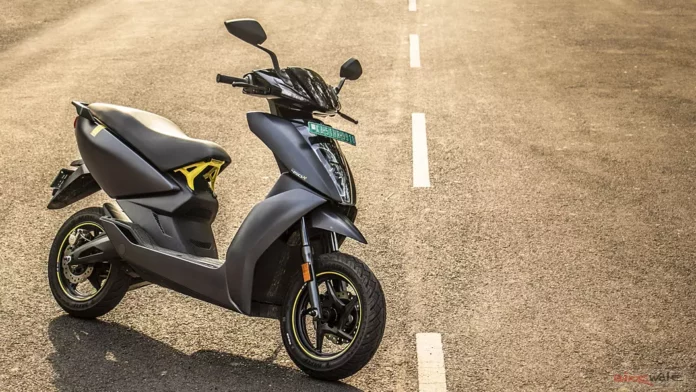
Starting with the design, each of the three scooters was created using a unique design language. Starting with the Ather 450X, it has a sporty and futuristic design that easily distinguishes itself on the road. The Ola S1 Pro has a modern and stylish design. The TVS iQube, on the other hand, has a more traditional design and is identical to the company’s ICE scooter, the TVS Jupiter. If you want a sporty or sleek design, the Ather 450X or the Ola S1 Pro are good options. However, if you want a simple design that will fly under the radar, the TVS iQube S is a better option.

2. Performance (Ather 450X, Ola S1 Pro & TVS iQube S)

Ather 450X
credit: businessinsider

The Ather 450X is powered by a 6.2kW PMS motor with a peak torque of 26 Nm.

It has a top speed of 90 km/h and can accelerate from 0 to 40 km/h in 3.3 seconds. The Ola S1 Pro is powered by an 8.5kW mid drive IPM motor with a peak torque of 58 Nm. The electric scooter has a top speed of 116 km/h and can accelerate from 0 to 40 km/h in 2.9 seconds. The TVS iQube S, like its design, takes a conservative approach. It is powered by a 4.4 kW BLDC Hub motor with a peak torque of 33 Nm. The scooter has a top speed of 82 km/h and can accelerate from 0 to 40 km/h in 4.2 seconds.

3. Features (Ather 450X, Ola S1 Pro & TVS iQube S)

Ather has reduced the number of smart features available in its Ather 450X, and they are now only available with the Pro Pack variant.

Ather 450X
credit: businessinsider

The electric scooter has a 7-inch greyscale TFT touchscreen, but no 4G or Bluetooth connectivity, and no on-screen navigation. The Ola S1 Pro has a 7-inch colour touchscreen and a slew of features, including on-screen navigation, call support, music playback, key sharing, proximity unlock, and more. You can also use your phone to track the battery percentage on the scooter. The TVS iQube S also has a 7-inch TFT screen that can be controlled via the handlebar joystick. The scooter includes navigation, call alerts, music player control, and other features. You can use the app to track the charging status and use geofencing features.

Also Read:

Source

Royal Enfield plans to build a new EV factory in Tamil Nadu

0

Royal Enfield, based in Chennai, plans to build a new factory in Tamil Nadu to support its growing global ambitions and diversification into electric vehicles. According to several sources, the company has already purchased a 60-acre plot of land in Cheyyar, on the outskirts of Chennai, which will serve as the primary production base for its two-wheeled EVs in the future.

In the next 12-24 months, Royal Enfield is expected to invest between Rs 1,000 and Rs 1,500 crore in order to expand both its product portfolio and manufacturing capacity.

While the first electric motorcycle is expected to be released from a dedicated setup within Royal Enfield’s existing Vallam Vadagal plant, which is its core IC engine production base, it has been learned that work has already begun at the Cheyyar plot to ensure a smooth transition to EVs as and when the portfolio of zero-emission models is developed and ready for rollout.

Royal Enfield
credit: autocar

While Royal Enfield’s existing plants in Oragadam and Vallam Vadagal have a combined manufacturing capacity of over a million units per year and are capable of meeting rising demand in the coming years, the expected recovery in the domestic two-wheeler market, RE’s aggressive global expansion, and diversification into EVs necessitates the company being future-capacity-ready.

The 60-acre plot of land in Cheyyar was purchased to relocate some of the activities from the Thiruvottiyur facility, which has been in operation since 1995 and has become a thriving residential area. According to sources, the company may spend between Rs 100 crore and Rs 150 crore on groundwork, but the brand-new factory may not be ready until 2025.

Also Read:

Source

Haryana EV policy: A look at India’s one of the most Generous EV policies

0

Haryana ev policy is one of the most generous policies for EV buyers in India. For the purpose of increasing the state’s EV market share, the new Haryana EV Policy-2022 was adopted last year. The Haryana ev policy aims to replace all types of government vehicles with EVs by 2024, among other objectives. The state government is offering incentives for both hybrid and pure electric vehicles in order to meet its objectives (HEVs).

For HEVs costing between 15 and 40 lakh rupees, the state is providing a subsidy of 15% of the ex-showroom price, up to 3 lakh under the Haryana ev policy. The incentive is 15% of the ex-showroom price, up to a maximum of 5 lakh, for hybrid electric vehicles with a price range of 40 to 70 lakh. The state offers a 15% subsidy of up to 6 lakh for electric cars priced between 15 lakh and 40 lakh, making the Haryana ev policy even more enticing for full-electric vehicles. Even the most expensive imported EVs are eligible for 15% subsidies, up to 10 lakh, for electric vehicles priced between 40 and 70 lakh.

The Haryana ev policy offers a subsidy of 50% of the ex-showroom price for electric tractors, up to a maximum of 5 lakh, and a 10% incentive of the ex-showroom price, up to a maximum of 10 lakh, for electric buses.

Haryana ev policy
credit: economictimes

Additionally, the state is offering exemptions from the motor vehicle tax of 100% for electric 2- and 3-wheelers, 75% for electric 4-wheelers and buses, and 25% for hybrid electric 4-wheelers under the Haryana ev policy.

Additionally, the FAME India II Scheme, with a budget of 10,000 crore, has been introduced by the Government of India to encourage the demand for Electric Vehicles (EVs) by offering upfront subsidies and developing EV charging infrastructure. There has also been a 1000 crore allocation made under FAME II for the installation of EV charging stations.

Also Read:

Source

Hyundai wants to climb to the 3rd spot in Global EV Market

0
Hyundai

Hyundai Motor Group, a leading automobile manufacturer based in South Korea, has set its sights on becoming one of the top three electric vehicles (EV) makers in the world. In pursuit of this goal, the company has announced a bold plan to invest KRW24 trillion (US$18 billion) by 2030 to strengthen its EV production and research and development (R&D) capabilities.

Hyundai sets its sights on becoming one of the top three EV manufacturers globally with an $18 billion investment by 2030

With this investment, Hyundai plans to produce more than 1 million EVs annually and sell them in global markets. The company’s EV lineup will include a range of models, from affordable cars to high-end luxury vehicles, and will cater to the needs and preferences of different customers around the world.

Hyundai

To achieve its goal, Hyundai will establish a dedicated EV platform, which will support various drivetrains like fixed battery and swappable battery platforms. This platform will allow the company to develop and manufacture multiple new EV models, all of which will be built to the highest standards of quality and reliability.

In addition, Hyundai will invest heavily in battery technology and expand its battery production capacity to meet the growing demand for EVs worldwide. The company will also focus on developing next-generation electric powertrains and other related technologies to enhance the performance, efficiency, and safety of its EVs.

Hyundai

Hyundai‘s investment will also extend to the establishment of a global charging infrastructure network, which will help alleviate range anxiety and promote the widespread adoption of EVs. The company will work with local governments, utilities, and other stakeholders to develop this network and make it accessible and convenient for all EV users.

Overall, Hyundai’s ambitious plan represents a significant step forward in the company’s commitment to sustainable mobility and environmental stewardship. By leveraging its expertise, resources, and innovative spirit, Hyundai aims to create a brighter, cleaner, and more sustainable future for all.

via DigiTimes

Also Read: No Face: What Does the spirit represent in Spirited Away?

How to Find the Best EV for Your Budget and Needs in 2023?

0
How to Find the Best EV for Your Budget and Needs in 2023?

Shopping for an electric vehicle (EV) can feel overwhelming. With all the options out there and new models coming out every year, it can be hard to know which one is right for you. Don’t worry – this How to Find the Best EV in 2023 guide will help you find the best EV for your budget and needs!

How to Find the Best EV in 2023:

Determine Your Budget and Goals

Before you can get started shopping for an electric vehicle, you need to determine your budget and other goals. Consider not just the cost of the car itself, but also any applicable taxes, incentives, insurance factors and fuel costs. Think about how often you will drive your EV, how far a charge will take you and what type of climate and terrain you are likely to encounter in your travels. This will help inform the next steps in finding the best EV for your needs.

How to Find the Best EV for Your Budget and Needs in 2023?

Research Available Vehicles and Options

One of the key time-consuming factors in this How to Find the Best EV guide is about researching the EV you desire. After you’ve determined your budget and needs, it’s time to start researching available electric vehicles. You can read reviews on automotive websites or visit a dealership or car show to compare different EVs. As you research, keep in mind the features that are important to you. Consider the range per charge of the vehicle, charging speed and availability, interior features, warranties and other factors that will help determine whether an EV is right for you. If necessary, take a test drive before making your final decision!

Test Drive Several Models

Once you have done your research, the best way to decide on an EV is to test-drive a few models. Take into account factors such as safety features, acceleration and braking, interior features like comfort and visibility, and styling. Consider how the vehicle handles all types of road conditions. Also, consider having a mechanic inspect the EV before you commit to buying it.

How to Find the Best EV for Your Budget and Needs in 2023?

Evaluate Fuel Efficiency Ratings & Range

One of the most important factors in this How to Find the Best EV guide to consider when shopping for an EV is its fuel efficiency rating and range. You’ll want to look for an EV that can travel an adequate distance without needing a recharge. Most EVs offer ranges between 20-200 miles, with some models offering up to 300 miles on a single charge. Look for models with an energy efficiency rating of at least 30 kWh/100 miles, as this will help ensure you get good value for your money in terms of driving range.

Compare Warranty, Maintenance Costs & Rebates

Before making a purchase decision on an EV, be sure to compare warranty options, maintenance costs and rebates. Many manufacturers offer generous warranty packages covering parts and labour as well as battery performance. Look into applicable government incentives, buyback programs and other offers that may also help reduce the cost of purchasing and powering your EV. Sometimes, can be overlooked, but after-sales plays an important role, so in our How to Find the Best EV guide, this is again an important aspect to consider.


Liked our How to Find the Best EV in 2023 guide? Also Read:

Tesla slashes the prices of its EVs by $5000 in the US

0

As the US gets ready to implement new regulations on EV-tax credits, Tesla has reduced the price of two of its most expensive vehicles, marking the fifth reduction this year. According to reports, Tesla has slashed $5,000 off both the Model S and Model X. The Model 3 sedan’s price has decreased by $1,000, and the Model Y’s price has decreased by $2,000, respectively. Tesla Model S’s entry-level trim now costs $84,990 instead of the $89,990 it did at the beginning of March.

The price of the Tesla Model X plaid has been reduced to $94,990

The reduction follows new guidance on which EV models can qualify for tax credits of $3,750 or $7,500 that the US Treasury Department and IRS released in March. The new rules took effect this month.

Tesla
credit: businessinsider

However, the proposed guidance stipulates that eligible vehicles must have final assembly finished in North America and must not exceed a Manufacturers Suggested Retail Price of $55,000 for cars and $80,000 for pickup trucks, vans, or SUVs. This means that both the Model S and Model X might not be eligible for tax credits.

Previously, Tesla announced that a $7,500 tax credit that has been available since January will be reduced starting on March 31 for its Model 3. The Model X SUV and the Model S each received steep discounts of $10,000 and $5,000, respectively, last month.

Given that Tesla reported a 36% increase in first-quarter deliveries last week, the price reductions appear to have increased sales. It sold 422,875 vehicles in the first three months of this year, primarily Model 3 and Model Y cars.

Also Read:

Source

Indian EV manufacturing: Tamil Nadu has reportedly around INR 30k crores of investment commitments in the EV sector

0

According to reports, the government of Tamil Nadu has received commitments for investments totaling 30,000 crore in the production of electric vehicles and related industries. The State has taken the lead in luring capital to the EV manufacturing industry. One of the States that offers the most robust manufacturing incentives in the EV industry is this one. Like the Sriperumbudur and Oragadam corridors, places like Hosur and Krishnagiri in the Western region are becoming EV manufacturing hubs.

Large EV manufacturing facilities for electric two-wheeler brands like Ola Electric, Ather Energy, and Ampere Electric have been established in the State. TVS Motor Company is also producing electric goods at its Hosur factory, where it has plans to increase capacity.

The government has concentrated on building specialised industrial infrastructure for the EV manufacturing as more and more EV companies show interest in opening up shop in the State.

EV manufacturing
credit: businessline

A Future Mobility and E-Vehicle Park is being built at SIPCOT Industrial Park, Shoolagiri, Krishnagiri District, at an estimated cost of $300 crore, as there has been a greater interest from the companies to locate their EV manufacturing units in locations like Hosur and Krishnagiri due to the proximity to Bengaluru, the IT capital of India, which offers some benefits in the software and IT systems.

In order to develop the Future Mobility Park, a Conceptual Master Plan has been created with assistance from the British High Commission. Units that produce electric vehicles, drones, autonomous vehicles and their parts, advanced cell manufacturing, power electronics, sensors & PCBs, and electric motors may be located in this EV park. The State government also plans to establish a new EV park close to Thiruvallur because Chennai’s manufacturing corridor has a notable auto component and electronics ecosystem.

Also Read:

Source

Tesla is planning to build new EV battery manufacturing factory in Shanghai China

0

As a supplement to the output of the Megapack factory in California, Tesla Inc (TSLA.O) is opening a factory in Shanghai that can produce 10,000 Megapack energy products annually, the company announced in a tweet on Sunday. Chinese state-run news agency Xinhua broke the story first.

Xinhua reported from a signing ceremony in Shanghai that Elon Musk’s automaker will break ground on the plant in the third quarter and begin production in the second quarter of 2024. The new factory, which will initially produce 10,000 Megapack units annually, or roughly 40 gigawatt hours of energy storage, to be sold globally, will supplement a sizable existing electric vehicle manufacturing facility in Shanghai, according to Xinhua.

Tesla will increase production and reduce costs of its Megapack lithium-ion battery units at its new plant in Shanghai to meet the growing demand for energy storage as the world transitions to using more renewable energy sources.

The majority of Tesla’s revenue comes from its electric vehicle division, but Musk has promised to roughly double the size of its solar and battery businesses.

Tesla
credit: hindustantimes

The Chinese battery giant CATL (300750.SZ), whose Chairman Robin Zeng anticipated that energy storage batteries would have a larger market than batteries for electric vehicles, has also been strengthening its partnerships with customers like Tesla (EV). Currently, Tesla can produce 10,000 Megapacks annually in its Megafactory in Lathrop, California.

The company started making Model 3 vehicles in Shanghai in 2019 and can now produce 22,000 vehicles per week. It was reported in May of last year that Tesla intended to increase the annual capacity of the Gigafactory Shanghai, its most productive auto manufacturing facility, by 450,000 units.

However, as demand began to wane in the third quarter, the American company struggled with rising inventory in Shanghai, which prompted drastic price cuts in its key international markets in January. The world’s largest auto market, China, saw EV sales growth slow to 20.8% in the first two months of 2023 from 150% in the same period in 2018.

Also Read:

Source

100 electric vehicle charging stations will soon be installed in Delhi

0

100 electric vehicle charging stations will be installed at various metro stations, bus depots, and other locations throughout the national capital as part of the Delhi government’s flagship initiative. Together with representatives from the electricity department, the project was examined by Delhi Power Minister Atishi on Thursday.

Atishi instructed the electricity department’s staff and Delhi Transco Ltd. (DTL) representatives to proactively handle any problems that arise during the installation of EV charging stations in order to have 50 of them operational by the end of April and 100 by the end of July.

She directed the officials to expedite the work and complete it within the stipulated timelines. She further said that “the efforts of the Kejriwal government have made Delhi emerge as the electric vehicle (EV) capital of the country in recent years. In this direction, the government is establishing 100 EV charging stations across the city to strengthen Delhi’s EV charging infrastructure.”

“With this project, there would be an excellent and convenient EV charging infrastructure in every part of the city, where the cost of charging per unit will be the lowest not only in the country but also in the world. People will have to spend less than Rs 3 per unit for EV charging,” She added.

As a result of the government’s initiatives, Atishi claimed that the capital sold the highest percentage of electric vehicles in the nation—16.7%—of all vehicles sold in December 2022.

electric vehicle
credt: economictimes

“Now that the demand for electric vehicles is increasing so rapidly among people in Delhi, we are building 100 electric vehicle charging stations in the capital to ensure that people have enough charging stations available around them and do not face any problems related to charging,” the Minister said.

Interestingly, the Delhi government is building all of these charging stations under a public-private partnership (PPP) approach. The government released the biggest tender the nation had ever seen in this industry last year. According to the official statement, the cost of charging each unit at these charging stations is even less than Rs 3 per unit.

Also Read:

Source