Home Blog Page 288

Apple post-pones its Electric Vehicle launch date to 2026

0

Apple Inc has dialled back ambitious self-driving plans for its future electric vehicle and pushed back the car’s goal launch date to 2026, according to Bloomberg News, citing people familiar with the subject. Following the report, Apple’s stock dropped 2.4%.

Since 2014, when it first began to develop a vehicle from scratch, the company’s automotive efforts, known as Project Titan, have progressed unevenly. According to Bloomberg, Apple is reportedly considering a less ambitious design that would include a steering wheel and pedals and will only allow full autonomous capabilities on highways.

Apple
credit: reuters

According to the report, Apple intends to produce a car that allows drivers to perform other chores on a freeway while being informed with enough time to switch to manual control.

According to a Bloomberg story last year, Apple is striving to debut an electric car as soon as 2025 and has refocused the project on complete self-driving capabilities. According to the story, Apple’s dream automobile would have no steering wheel or pedals, with interiors intended for hands-free driving.

Also Read:

Source

Volvo revises its XC40 Recharge and C40 Recharge EVs with new features

0

Volvo has revised the XC40 Recharge and C40 Recharge EVs on a global scale, increasing efficiency and power. The upgrade also changes the drivetrain choice for single motor variations, with power now being routed just to the rear wheels, which Volvo claims improve efficiency. The higher-spec Recharge Twin models, on the other hand, keep the dual-motor setup but get a larger 82kWh battery, up from 78kWh previously.

The revised XC40 and C40 Recharge’s range has improved by approximately 32km in the single motor configuration (up from 476km for the C40 and 460km for the XC40). On the other hand, the Recharge Twin variations have a claimed range of 508km for the C40 and 502km for the XC40, which are 64km longer than the previous models.

Volvo
credit: autocarindia

The upgrade now has a quicker charging rate of up to 200kW for the Recharge Twin versions, reducing the 10-80% duration to 10 minutes from 27 minutes previously. This now corresponds to the charging time of the standard models with smaller batteries, which maintain the same 150kW speed.

Power has increased across the board, with base models now producing 238hp, up from 231hp previously. The Recharge Twin variations now have two different electric motors – 163hp in the front and 245hp in the back (formerly 204hp front and rear), but the overall 408hp output remains the same.

The news comes just a few weeks after Volvo unveiled its new EX90 electric flagship, which will go on sale internationally in 2024.

Volvo has opted to phase out existing plug-in hybrid vehicles (PHEVs) in favour of all-electric vehicles (EVs). The automaker has stated that it plans to launch at least one EV in India per year. Volvo has already debuted the XC40 Recharge in our market, and the company has stated that the C40 Recharge will arrive in 2023.

Also Read:

Source

BMW starts production of hydrogen fuel-based “BMW iX5” concept car

0
BMW starts production hydrogen fuel based “BMW iX5” concept car

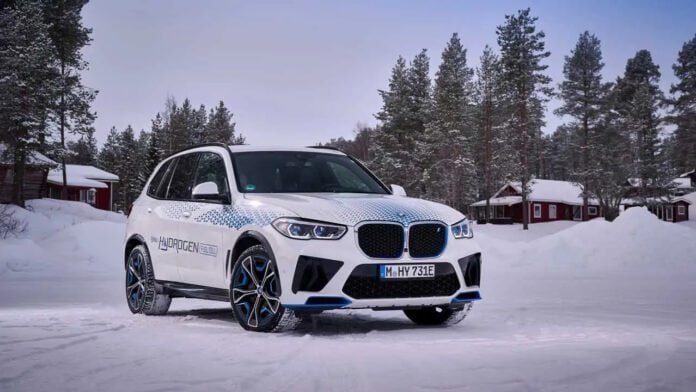
The BMW Group is commencing the product of its BMW iX5 Hydrogen model. The first ever Sports Activity Vehicle( SAV) featuring hydrogen energy cell technology has formerly completed a ferocious programme of testing under demanding conditions during the development phase and will now be used as a technology demonstrator for locally carbon-free mobility in named regions from mid-2023.

“Hydrogen is a versatile energy source that has a key role to play as we progress towards climate neutrality,” says Frank Weber, Member of the Board of Management of BMW AG responsible for Development.

BMW starts production hydrogen fuel based “BMW iX5” concept car

BMW begins production of small-series hydrogen-powered iX5

The experimental BMW iX5 Hydrogen is powered by a brace of electric motors( one at each axle) with a concerted affair of 369bhp. The company’s fifth-generation eDrive motors also feature on the i7 and iX electric buses. still, rather than pulling stored electrical energy from a battery pack like a conventional electric auto, the iX5 generates its electricity through a chemical response between stored hydrogen and oxygen from the air via an energy cell able of generating up to 125kW.

Also, the same system is used to toast the cabin when demanded. The energy cell, developed in cooperation with Toyota, is supplied by two 700- bar storehouse tanks enwrapping the space used by the gearbox and driveshaft in the combustion-engined X5. Together, the tanks can hold six kilograms of hydrogen.

BMW starts production hydrogen fuel based “BMW iX5” concept car

After the vehicles that started the product are ready, they will visit named regions coming spring to publicise the zero- emigrations power train result. So what are the advantages of hydrogen-powered vehicles over traditional EVs? The energy-cell tech minimum used in the BMW iX5 doesn’t lose performance in cold and hot temperatures and offers a much longer range.

Other implicit advantages of hydrogen-electric vehicles are the lack of a heavy lithium-ion battery pack and the stiffer suspense needed to support it. This makes the vehicle much lighter and eliminates the threat of fire. BMW’s board member for a product, said, if the current structure issues are remedied, it could introduce hydrogen energy cell technology on other vehicles in its line-up, similar to the iX3, iX and i4.

Hyundai will showcase new concepts of Purposes-built Mobility at CES 2023

0
Hyundai will showcase new concepts of Purposes-built Mobility at CES 2023
Hyundia Mobis introduces all new concepts of Purposes-built Mobility at CES 2023.

The South Korean giant Hyundai will be participating in the upcoming CES 2023 where it will be showcasing its products in its largest exhibition space ever at CES 2023, where it will unveil a new convergence technology optimized for purpose-built vehicles (PBV).

Hyundai Mobis to show new concepts of Purposes-built Mobility at CES 2023

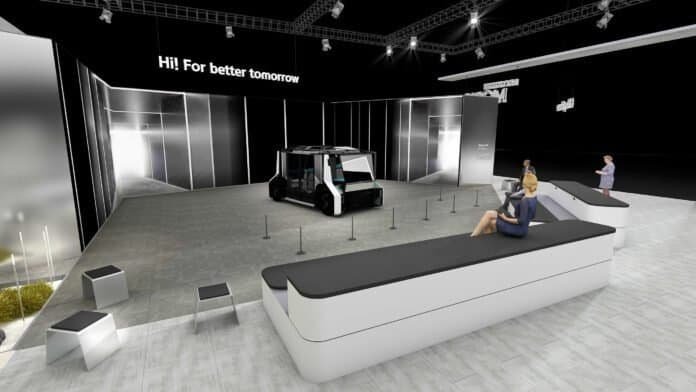
While Hyundai continues to do innovation when it comes to EVs, the automaker giant will be showing what it has planned for a better-sustained future under the theme of ‘Hi! For a Better Tomorrow!’. As per the release, Hyundai Mobis will be unveiling new PBV concept models M.Vision TO and M.Vision HI for the first time. ‘TO’ refers to going ‘toward’ the future, whereas ‘HI’ refers to ‘a humanity-oriented’ driving experience. M.Vision is Hyundai Mobis’ brand that symbolizes its philosophy and vision for future mobility technologies.

M.Vision TO is a self-driving vehicle based on an electrification system featuring cameras, radars, LiDARs, e-corner modules, and MR displays that are integrated into the four pillars located on the front and rear sides of the vehicle. Inside M.Vision TO are PBV-grade seats that can be folded or rotated.

M.Vision HI is a PBV designed for leisure, relaxation, and outdoor activities. The glass of the vehicle can be used as a large display screen to watch movies or even enjoy online shopping. M.Vision HI features gaze-assisted remote control technology that utilizes the eyes of the user as the controller, allowing them to appreciate the content without any additional manipulation.

Hyundai will be also leveraging new technologies like self-driving sensors, e-corner modules for independent driving and steering, and MR (mixed reality) displays into the vehicle frames. Alongside the new PBV concept models, Hyundai Mobis will also be showcasing 19 of its newly developed, mass-producible mobility technologies at its exhibition space, including the future cock-pit integrated solution (MVICS 4.0), LED grille lighting, and hologram AR-HUD.

Not only this, at CES 2023, Hyundai Mobis will be presented with the CES 2023 Innovation Award for its swivel display technology and new concept rear wheel suspension technology. Hyundai’s new swivel display is characterized by a moving structure on which a 32-inch ultra-large display moves vertically whereas the new concept rear wheel suspension is an innovative technology that can be applied to future vehicles, such as EVs and PBVs, to facilitate integrated functions and weight reduction.

Know more only at CES 2023 website.

Volkswagen ID.4 electric SUV spotted testing in India

0
Volkswagen ID.4 electric SUV spotted testing in India

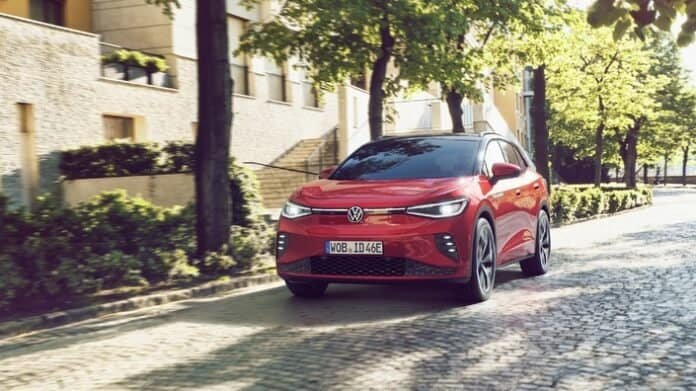
Volkswagen has been spotted testing its electric crossover ID.4 in India. The forthcoming crossover was spotted testing its high-performance GTX variant on Indian roads. The first high-riding vehicle in the ID EV range by the German automaker, theID.4 is likely to arrive in both AWD( each- wheel- drive) and RWD( hinder wheel drive) variants. The forthcoming crossover is grounded in Volkswagen’s ID Crozz conception which was unveiled encyclopedically in 2020.

Volkswagen ID.4 electric SUV spotted testing in India

Volkswagen ID.4 electric SUV

A red-coloured test mule of VolkswagenID.4 in its top-spec GTX interpretation was lately described with Indian number plates, which indicates that the model is witnessing the final phases of testing in India. This test mule was riding on a 20-inch amalgamation bus and had a binary-tone red and black makeup scheme. The other highlights of the design of the ID.4, including the wide stretched day running LED at the front and tail light bar at the reverse, are the same as those in the global-spec model. Like the other- electric ID models from Volkswagen, the ID.4 has an unrestricted front tulle, sprucely dredged hinder glass and pop-up door handles.

On the inside, the new India- spec Volkswagen ID.4 is anticipated to get the same interior layout and features, as the global spec model gets presently. The cabin seen in the asset images has each-new Volkswagen design rudiments, similar to the ultra-modern multifunctional steering wheel, a cleaner design for the dashboard and a free-standing touchscreen infotainment system. The instrument press is also a full- TFT display unit, which looks different from that of the current display units in Taigun and Virtus.

Volkswagen ID.4 electric SUV spotted testing in India

The VolkswagenID.4 for India will also get colour-enciphered interior trims, which are completely customizable as per the proprietor’s preferences. In all liability, the India- spec model will also get features like three-zone automatic climate control, leather upholstery, 12- way powered front seats and ambient lighting. With its overall length close to 4.5 metres, it looks as big as other mean SUVs in India, similar to Tata Harrier and MG Hector.

The model of the Volkswagen ID.4 described on the Indian roads is the top-spec GTX variant, which comes with an all-wheel-drive system with an electric motor each on the front and hinders axles. This interpretation comes with a 77 kWh battery pack, which claims a range of about 334-463 km. This particular variant of the Volkswagen ID.4 is also compatible with DCultra-fast charging styles, through which you can gormandize charge theID.4 in just 35 twinkles. The lower hinder-wheel-drive performances might also be on trade to keep the starting prices low.

Simple One electric scooter will start production in India soon

0
Simple One electric scooter will start production in India

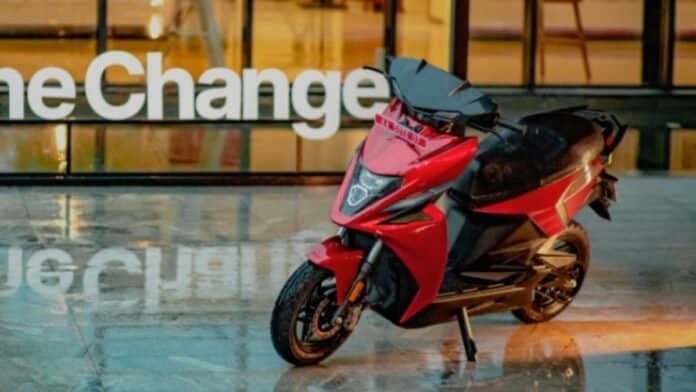
The Bengaluru-grounded EV start-up Simple Energy will commence operations at its Simple Vision 1.0 factory on January 19 on the morning of the product of the Simple One electric scooter. The company lately laid over the deliveries of the Simple One from September CY22 to Q1 CY23. While the electric scooter was launched way back in August 2021, its deliveries have been laid over multiple times.

Simple One electric scooter will start production in India

Simple One electric scooter

Located in Hosur, Tamil Nadu, Simple Energy’s Simple Vision 1.0 factory is spread across an area of 200,000 sq ft. The company originally invested Rs 100 crore in the installation, which has a claimed periodic product capacity of units. The company claimed it had designed a motor line at the factory to manufacture its own personal motor.

“We’re officially moving from planning to prosecution, prototype to product, and dreams to reality. The sweats are now taking shape into a larger vision, Simple Vision 1.0. With better engineering on Simple One and rigorous R&D, we anticipate bringing stylish quality electric vehicles that will make the switch to green mobility briskly and smoother. We look forward to embarking on the trip of product this January 2023,” said Suhas Rajkumar, author and CEO, of Simple Energy.

Simple One electric scooter will start production in India

The Simple One electric scooter is the company’s first EV immolation and will go up against the likes of Ather 450X, the Ola S1 series, Bajaj Chetak, TVS i-Qube, Hero Vida V1, and others. Thee-scooter gets a 4.5 kW electric motor that’s rated for 72Nm of peak torque and is paired to a 4.8 kWh battery pack. The powertrain is able of delivering a claimed range of 236 km on a single charge and indeed thee-scooter to a top speed of 105kmph.

The scooter is available for bookings on the company’s functionary website for Rs.1,947. Simple Energy has conducted the test rides of its electric scooter in 12 Indian metropolitan cities which include Bengaluru, Chennai, Hyderabad, Jaipur, Delhi, Lucknow and Bhubaneshwar. Simple Energy also aims to expand its manufacturing operations to a factory in Dharmapuri, Tamil Nadu which is anticipated to have a production capacity of 1.25 lakh units per time.

Tata Motors mocks Mahindra over its EV Sales

0

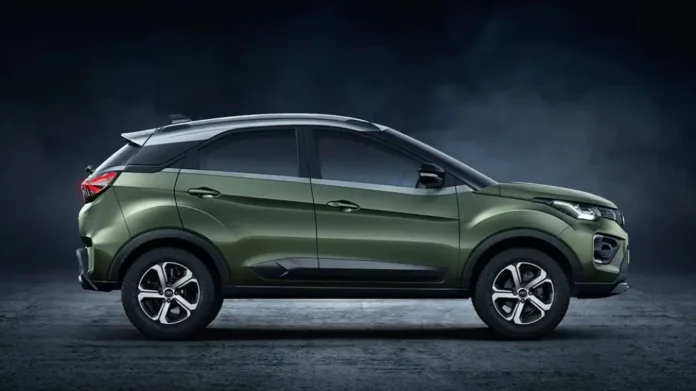
Tata Motors, the indigenous carmaker, has a history of disparaging other automakers for a variety of reasons. While Tata has previously targeted rival manufacturers such as Maruti Suzuki and Hyundai for poor safety ratings, the company has now moved to social media to criticise the Mahindra XUV400 over electric car sales in India. Tata Motors has contrasted the Tata Nexon EV to the Mahindra XUV400 in a picture posted on Tata’s Tata Passenger Electric Mobility social media handles. The picture reads ‘35,000 > 00’ when comparing Nexon EV sales to Mahindra XUV400 sales.

The Tata Nexon EV is the first high-voltage made-in-India Electric SUV, and due to its competitive nature and lack of a direct competitor, the Nexon EV is the best-selling electric car in the country, selling 35,000 units in India. This puts Tata Nexon EV far ahead of its competitors and makes it the sole electric vehicle to reach the milestone, prompting Tata Motors to publicise the feat on social media.

However, in doing so, Tata compared the Nexon EV to the yet-to-be-released Mahindra XUV400, which is regarded as the direct challenger of the Tata Nexon EV MAX and, according to Mahindra, would be the fastest made-in-India electric car. The Mahindra XUV400, which was previously revealed, is set to be released in India in January 2023 and would have a driving range of 400+ kilometres.

Mahindra
credit: zeenews

Because the Mahindra XUV400 has not yet been released, the brand promotion comparing the Nexon EV to the Indian electric SUV has not gone well with social media users. Many have criticised Tata for criticising Mahindra for zero sales when the vehicle has yet to enter Indian roads. The Tata Nexon EV is available in two models: Nexon EV Prime and Nexon EV Max.

The Mahindra XUV400 has a 39.4 kWh battery pack that is coupled to a 150 PS electric motor that produces 310 Nm of peak torque. As a result, the XUV400’s 0-100 kmph sprint takes only 8.3 seconds. The Nexon EV Max, on the other hand, has a 143 PS motor under the hood that creates 250 Nm and allows it to sprint from 0 to 100 km/h in under 9 seconds. The Tata Nexon EV Max has a 40.5 kWh battery pack with a stated range of 437 km, whilst the Mahindra XUV400 has a 39.4 kWh battery pack and an ARAI-claimed range of 456 km.

Also Read:

Source

Tata Motors inches closer to becoming India’s No. 2 thanks to its EV sales

0
Tata Motors

Tata Motors and Hyundai India are competing for the number two slot in the domestic market. The Indian automaker surpassed the Korean auto giant in sales twice, in December 2021 and May of this year, with the difference between the two corporations a mere 23,939 units between December 2021 to November 2022.

Hyundai’s 15-year reign as number two could be jeopardised if its lack of presence in the electric vehicle market — the key driver of Tata’s growth — persists. Hyundai now has only one EV on the market, the Kona, which has sold approximately 1,200 units since its launch in July 2019, with monthly sales averaging 50-60 units, compared to Tata Motors’ monthly sales of 3,400 electric vehicles.

Tata, on the other hand, has the Nexon EV, Tigor EV, and Nexon EV Max, which account for 7.8% of total sales and have showed a 30% growth in sales since December 2021.

Tata
credit: financialexpress

Tata appears to be in a stronger position in the EV industry in the coming year as well, with two launches — the Altroz EV and the Punch EV — according to reports. Hyundai India will expand its EV portfolio with the Ioniq 5 electric car, for which reservations will open on December 20 and will go on sale shortly after its debut at the Auto Expo in January 2023.

However, Tata Motors will continue to be the undisputed leader in electric vehicles. Chandra added that celebrating the 50,000th electric car in India is a strong testament to how the carmaker’s portfolio is resonating with people across the country. “Electric cars are offering a practical solution to problems of rising fuel price and worsening pollution. Customers are now ready to welcome electric cars and we are thrilled to witness the transition from early adopters to electric cars becoming a mainstream choice for Indian customers,” he said. It produced its 50,000th electric vehicle from its Pune plant last month. With 80 new towns added to its electric car network in the last six months, the company anticipates that sales of electric vehicles will only increase.

Also Read:

Source

Lightyear 0 – The Electric Car that charges while driving

0
Lightyear 0 – The Electric Car that charges while driving

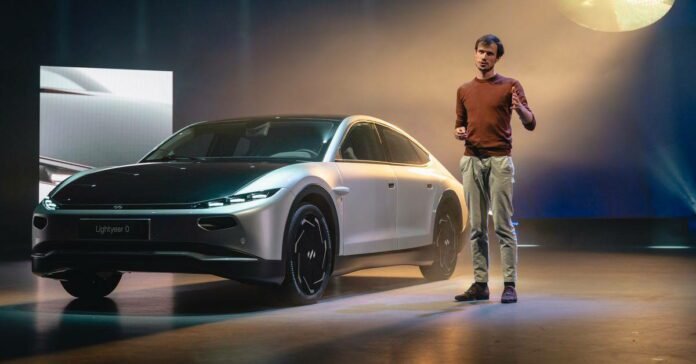
Dutch company Lightyear, which has spent the last six times developing technologies to make the world’s first solar-powered electric vehicle has now entered a veritably important phase of its continuance. Its first model, Lightyear 0 has now entered product, a company press release said.

Lightyear 0 – The Electric Car that charges while driving

The world’s first solar electric car Lightyear 0

As the world moves toward electric modes of transportation, new challenges are being thrown up. Unlike combustion machine-powered vehicles that can be refuelled nearly anywhere and in no time, electric vehicles bear a devoted charging structure and time to charge the batteries.

Advances in battery technology have redounded in a significant reduction in charging times over the once many times. Company author and CEO Lex Hoefsloot, is, still, of the opinion that the rapid-fire transition to EVs will affect a large number of vehicles seeking access to charging structures, which will not gauge up in sync with the increased demand. Solar-powered Lightyear buses, however, will not be dependent on the structure.

Lightyear 0 – The Electric Car that charges while driving

The electric car is delivered with a charging string plugged into any electrical socket to charge the EV. The battery pack on the auto is a modest 60kWh which promises a 288 afar 463 km) range on a single charge. Combined with the solar charging available through double twisted panels, the Lightyear 0 can reach up to 432 long hauls (695 km).

Since it’s doubtful that a motorist will exact the full juice of the battery every single day, the panels keep charging Lightyear 0 every day and add further long hauls every day. Grounded on an average commute of 21 long hauls( 35 km), the Lightyear 0 can go a full two months before it needs to connect to a wall-socket bowl again.

Interestingly, the auto is well-designed and doesn’t show any signs of concession a stoner has to make to gain the solar charging advantage. While all this was great during the prototype stage, Lightyear has now entered a pivotal phase of a factual product.

Ola creates a new record by selling more than 20K e-scooters in November with plans for a new E-Scooter

0

Ola Electric, an Indian electric vehicle (EV) business, surpassed the 20,000 mark once more in November. In October, the EV unicorn firm revealed that it has sold 20,000 units of its S1 series of e-scooters, breaking the 20,000-unit barrier. According to the Vahaan webpage, Ola has become the leading EV seller in India, followed by Okinawa scooters, which manufactures over 17,000 scooters.

Commenting on this development, Bhavish Aggarwal, Founder and CEO of Ola, said, “The End of ICE Age is now a reality. The complete dominance of EVs in the premium scooter segment shows that the only reason why customers still consider an ICE vehicle today is due to the lack of world class EV alternatives. We will continue to build and expand aggressively with products across multiple segments and price-points and lead the transition of the Indian 2W industry to 100 per cent EVs by 2025!”

The company’s plant in Krishnagiri, Tamil Nadu, produces these EV scooters. The manufacture of e-scooters began in November of last year, and the company has so far released three models in the S1 series: the Ola S1 Air, the Ola S1 Pro, and the Ola S1.

Ola
credit: businesstoday

This month, the company will also unveil MoveOS 3, a new category of e-scooters. This calendar year, the corporation also opened 14 additional experience centres in 11 cities. According to a report by consulting firm RBSA Advisors, India’s electric vehicle (EV) market is predicted to develop at a compounded annual growth rate (CAGR) of 90% this decade, reaching $150 billion by 2030.

According to the analysis, India’s transformation to shared, electrified, and connected mobility could help the country avoid approximately one gigatonne of CO2 emissions by 2030. TVS iQube, Bajaj Chetak, Ather 450X, and Hero Motocorp’s freshly debuted VIDA V1 series are among the other two-wheeler players in the market.

Also Read:

Source