Home Blog Page 295

Volvo EX90 SUV: Everything you need to know

0
Volvo EX90 SUV

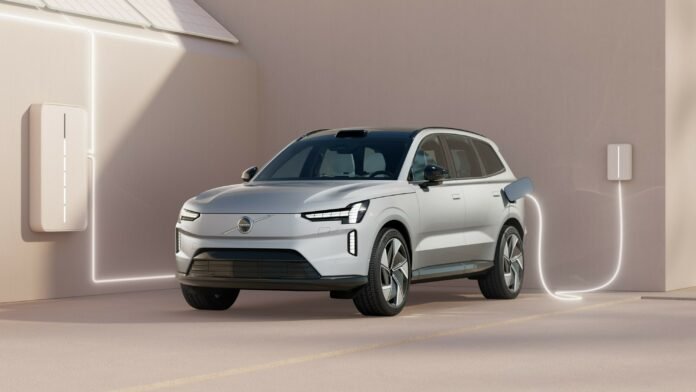
The new seven-seat EX90 SUV from Volvo has been unveiled as the company’s new flagship. The new EV SUV, which is scheduled to go on sale internationally in 2024, is essentially a battery-only version of the current Volvo XC90. After the XC40 Recharge and the C40 Recharge, it is the Swedish brand’s third electric vehicle; however, it is the first to be supported by a specific EV SPA2 architecture. Although it has many similarities with the previously unveiled Polestar 3, the EX90 has three rows of seating instead.

The EX90 is a development of the current XC90 SUV in terms of design and is based on the Concept Recharge that was unveiled last year. The EX90 keeps the XC40 Recharge’s blanked-off grille and Thor’s hammer headlights as signature Volvo design elements.

It has flush door handles and angular 22-inch five-spoke alloy wheels that are visible from the profile. Although there are some side wrinkles, the huge glasshouse reminds me of the XC90. It has a dual tail lamp design with a C-shaped LED unit below and a pixelated pattern for the unit above that is rather distinctive from the back. The EX90 is a tiny bit longer than the XC90 in terms of size, at 5,037mm. It is lower than the XC90 but also broader.

The enormous 14.5-inch vertically oriented touchscreen with Volvo’s Google-based infotainment is the interior’s most notable feature. A 5G connection is included as standard with the EX90 to support over-the-air updates. Only the top-spec Ultra grade of the EX90 is currently available, and it comes with features like a panoramic sunroof, a 25-speaker Bowers & Wilkins audio system with Dolby Atmos, and speakers built into the headrests. The EX90 also includes phone key technology as standard, which uses the smartphone as the vehicle’s key.

Using a lot of natural elements, the inside is finished with Nordico upholstery, a fabric manufactured from recycled materials like PET bottles and corks. Overall, according to Volvo, the EX90 incorporates 15% recycled steel, 25% recycled aluminum, and about 48kg of recycled and bio-based plastics, or roughly 15% of the total amount of plastic used in the vehicle.

  • FhINeCJX0BA51ev Volvo EX90 SUV: Everything you need to know
  • FhINe BWQAMKQxZ Volvo EX90 SUV: Everything you need to know
  • FhINdkxXwAYLtXz Volvo EX90 SUV: Everything you need to know
  • FhINec6X0AAxEfO Volvo EX90 SUV: Everything you need to know

The new EX90, according to Volvo, is the safest vehicle they have ever produced. Safety features, including those in the SUV’s hardware and software, have received a lot of attention. The sensor will be positioned on the front edge of the roof, and it will come equipped with Lidar (light detection and ranging). For the purpose of enabling cutting-edge driver assistance and safety systems, that will collaborate with a variety of additional internal and external sensors and cameras.

At first, that will consist of an improved Pilot Assist system and a lane-changing steering support feature. According to Volvo, the systems will eventually provide “unsupervised autonomous driving” in specific situations and locations via an over-the-air subscription upgrade. The interior sensors may detect eye focus to advise against tired or distracted driving.

The new safety equipment will be powered by a central software system that combines proprietary Volvo software with cutting-edge Nvidia Drive platforms, Qualcomm’s Snapdragon Cockpit platform, and the infotainment and battery management systems of the EX90.

A twin-motor, all-wheel drive powertrain with two output levels will be the EX90’s standard setup. Performance variants offer 517hp and 910Nm of torque, while Twin Motor models deliver 408hp and 770Nm. The maximum speed for each model will be 180 kph. A 111 kWh battery provides power and a 600 km range (WLTP cycle). The electric SUV is capable of quick charging and can charge from 10% to 80% in less than 30 minutes. When hooked into a suitable charger, the Plug and Charge feature of the EX90 will immediately begin charging the device and processing payments.

Late next year, the company’s plant in Charleston, South Carolina, will start producing the Volvo EX90, with production at the company’s Chengdu, China, plant to follow. Volvo claims that by the time production begins, both plants’ manufacturing will be climate-neutral.

The EX90 is the first of one new totally electric cars that Volvo will introduce each year to help it achieve its goal of being an electric-only brand by the year 2030, according to the company. The company hasn’t announced what will come after the EX90, but it is known that it is working on a budget SUV to replace the XC40. Additionally, an electric version of the current XC60 is probably going to be a top priority.

Also Read:
Source

Skoda plans to launch to launch its Electric Vehicles soon in India

0

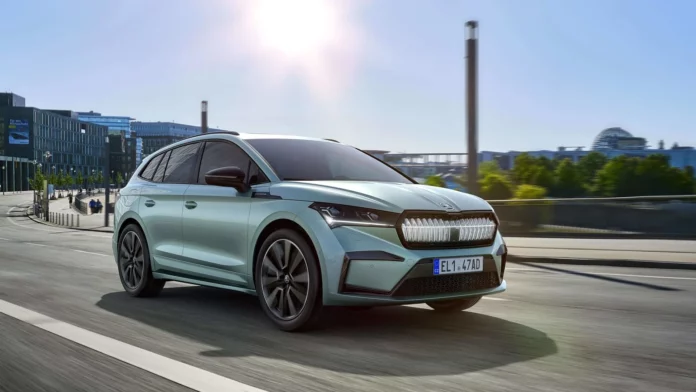
Within the next 12 to 18 months, the Czech automaker Skoda Auto will introduce a fully finished model into the Indian electric vehicle (EV) market. Petr Solc, brand director at Skoda Auto India, told that “First things first, we would like to test the market with a readymade unit from Europe.”

According to him, Skoda eventually intends to offer a variety of EVs, some of which will be assembled locally, some of which will be parts and components. The development of the EV charging infrastructure will determine how quickly EVs are introduced.

“The Indian market is getting more and more important for Skoda,” Solc said. “Now we are the third biggest market for Skoda brand globally. And, actually, the biggest market for Skoda out of Europe.”

Skoda is thinking about expanding investments to extend its portfolio across both the ICE (internal combustion engine) and EV sectors, he said, as a result of seeing an increase in volumes with the introduction of the Kushaq SUV and Slavia sedan under the India 2.0 program.

Skoda
credit: theeconomictimes

With sales this year anticipated to be close to four million, India has recently emerged as one of the markets for passenger vehicles that is expanding the quickest in the world. In India, Skoda sales are anticipated to more than double this year, reaching nearly 50,000 cars, up from 23,858 units in 2021. In the company’s first ten months of 2022, 44,500 units had been sold. It had previously recorded the best-ever annual sales of roughly 34,000 units a decade ago.

Also Read:

Source

Mahindra to start setting up EV Charging Network before the launch of its XUV400

0

Before its line of EVs is introduced in India, Mahindra & Mahindra established agreements with Jio-bp, Statiq, and Charge+Zone in order to build an electric vehicle charging network. Through these collaborations, Mahindra EV users will have access to a fast-charging infrastructure and e-mobility services like transactions, availability, discovery, and navigation.

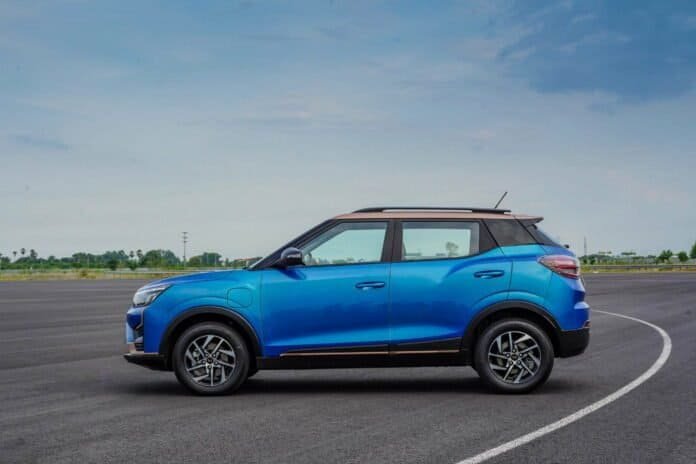
Mahindra recently presented the XUV400, an all-electric C-segment SUV, at Mahindra Research Valley in Chennai. The business also debuted its Born Electric Vision line of SUVs in the UK earlier this year. The brand in India will release further electric vehicles after the XUV400 EV over the ensuing few years.

Mahindra claims that it wants to improve India’s EV charging infrastructure through these collaborations. The company wants to provide advantages to all participants in the EV ecosystem by using the advantages of the EV infrastructure partners.

Mahindra
credit: HT Auto

“We approach these partnerships as an opportunity to offer robust EV infrastructure solutions to our customers, quickly. This will also help us in moving a step forward towards achieving India’s net-zero goals,” Veejay Nakra, President – Automotive Division, M&M Ltd., said.

The Mahindra XUV300 small SUV serves as the foundation for the all-electric XUV400. The electric SUV is anticipated to arrive at dealerships soon, with bookings starting and a pricing announcement following sometime in January 2023. The XUV400, which boasts a 456 km driving range, is powered by a 39.4 kWh battery pack. It has a 150 horsepower and 310 Nm peak torque electric motor installed on the front axle. According to the manufacturer, the XUV400 is the fastest in its class and can accelerate from 0 to 100 km/h in 8.3 seconds. It can go as fast as 150 kph.

Also Read:

Source

Honda debuts its EM1 e: Electric Scooter

0

While the majority of Honda’s sales still come from its ICE-based two-wheelers, the company is intensifying its efforts in the EV market. By 2025, Honda intends to release at least 10 electric two-wheelers worldwide. The EM1 e: electric scooter is one of them; it was introduced at the current EICMA 2022.

Electric Moped is essentially what EM1 stands for, while the e: suffix stands for Honda Mobile Power Pack (MPP). Honda’s forthcoming electric two-wheelers will use the MPP platform, which has removable battery packs and battery switching stations. For its entry-level EVs, Honda is concentrating on comparatively smaller battery packs. These are simple to use and have a sufficient range for daily city sprints.

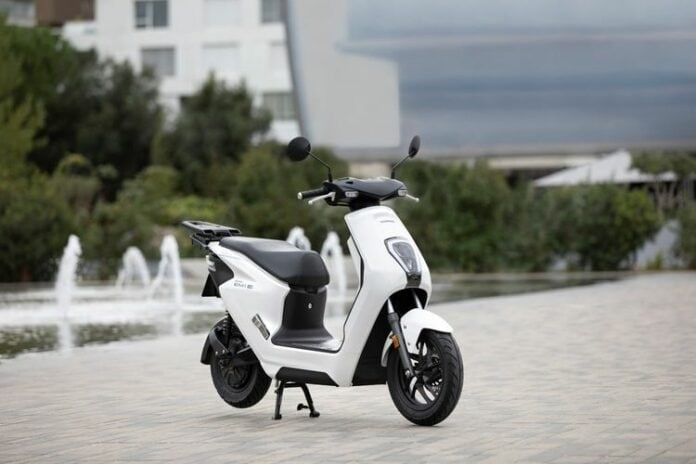
Honda EM1 e: electric scooter will particularly target younger populations with its tiny, stylish design. The scooter’s curved body panels and smooth edges give it a sophisticated appearance and feel.

Honda
credit: rushlane

Since the scooter lacks any avant-garde or flamboyant design features, it is obvious that it was made for practical purposes. The streamlined instrument cowl, apron-mounted LED headlamp, and rounded rear view mirrors are a few of the standout characteristics.

The Honda EM1 e: electric scooter has a flat floorboard, underseat storage, and a specialised rear rack, all of which allow it to carry a considerable load. On the side panels are folding foot pegs, and the single-piece seat appears to be comfortable. The battery pack is a detachable item that is situated underneath the seat. The battery management system and other related components are probably being held by the floorboard panel because it is quite thick.

Range of the Honda EM1 e electric scooter is more than 40 kilometres. Although this figure looks a little low, it was set that way on design to keep battery costs down. Honda will also develop its battery-swapping infrastructure to address range anxiety. According to the pictures, the Honda EM1 e: has a hub-mounted motor. At this moment, information on the motor and battery capacity is not available. Quality, dependability, and durability have been prioritised during the development of the Honda Mobile Power Pack e. It has undergone testing for a range of circumstances, including humidity, a range of temperatures, impact, and vibration.

In addition to using swapping stations, consumers have the option of charging the battery at home. The list of hardware is fairly simple, including items like a telescoping front fork and dual rear shock absorbers. Honda EM1 e: electric scooter looks to have 12-inch front and 10-inch rear wheels, while other specifics are unknown.

Also Read:

Source

Report says 54% of consumers are concerned about EV quality, not range

0
Report says 54% of consumers are concerned about EV quality, not range

Recently, a report revealed that over 50 percent of Indian consumers are more concerned about EV quality than its range. The report added that ‘EV range anxiety’ appears to be a misperception. As per the report by CyberMedia Research (CMR), consumers are not shying away from EVs owing to ‘EV range anxiety’ or ‘upfront costs,’ or ‘limited EV charging infrastructure.’

Report says 54% of consumers are concerned about EV quality, not range

54% of consumers are concerned about EV quality

About 50 percent of Indian consumers are now open to buying EVs, albeit with a caveat, while 54 percent of consumers are still concerned about EV quality,’ a report stated. As per the report by CyberMedia Research (CMR), consumers are not shying away from EVs owing to ‘EV range anxiety’ or ‘upfront costs’, or ‘limited EV charging infrastructure.

“For long, limited EV charging infrastructure and range anxiety have been construed as barriers for EV adoption. However, automotive OEMs have already designed EVs with a sufficient range of up to 200 kms or more,” said John Martin, analyst, smart mobility practice, CMR. “The potential consumer for EVs is more concerned by the overall EV quality. EV quality includes not just external build quality but refers to the overall quality of internal components used – including battery and others,” Martin added.

Report says 54% of consumers are concerned about EV quality, not range

“Driven by ongoing policy thrust at the central and state levels for EV infrastructure development, along with upstream R&D in battery development will ensure a significant uptick in ramping-up e-mobility. For OEMs, the focus should be on continuous awareness generation around the quality and potential of EVs,” John noted.

India’s EV charging infrastructure is accelerating, with more public EV charging stations coming up. With a strong government policy push, including its flagship EV scheme, faster adoption and manufacturing of electric vehicles (FAME), and more automotive OEMs prioritising EVs, India’s EV momentum is gaining momentum. Alongside, cross-industry collaborations in the EV ecosystem will also contribute to the ramping-up of charging infrastructure.

Here are the 6 Best EV to buy in India right Now

0

The demand for electric automobiles has begun to increase in India as a result of the country’s increasing pollution levels, particularly in Delhi and other cities. Here is a list of electric vehicles that will be available for purchase in 2022 in light of the demand.

MG ZS EV

EV
credit: newsroompost

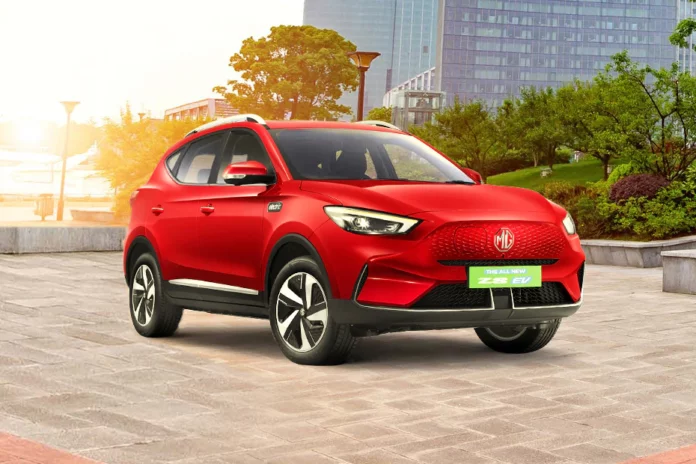
Tata Nexon EV is less expensive than the MG ZS EV, which price starts at Rs 2088 lakh. The vehicle has a 44.5kWh battery with a 340km range. In standard mode, the battery needs six to eight hours to fully charge. The vehicle’s quick charging, however, charges in just 50 minutes. The EV’s 448-liter boot space is noteworthy.

Mercedes-Benz EQS

EV
credit: newsroompost

The Mercedes-Benz EQS is the most expensive electric vehicle (EV) on the list, with the top variant costing between 1.55 crore and 2.45 crore. The vehicle has a 107.8 kwh battery that is said to have a 526–580 km range. The sedan car can accommodate 5 persons. The battery is covered by an 8-year warranty with the automobile.

Tata Nexon EV

EV
credit: newsroompost

The Tata Nexon EV has a 30.2kWh battery that, when fully charged, provides a 312 km range. The vehicle can charge from empty to 80% with rapid charging in under 60 minutes. The car’s starting price is Rs 13.99 lakh. The engine produces 127 horsepower.

Tata Tigor EV

EV
credit: newsroompost

Tata’s Tigor EV is available with a 21.5kWh battery that has a 142km range on a full charge. Additionally, the EV has a fast charging station that enables complete charging of the vehicle in just 90 minutes. The battery needs to be recharged in the regular mode for six hours. It is offered for sale at a launch price of Rs 9.54 lakh.

Mahindra e2oPlus

EV
credit: newsroompost

The Mahindra e2oPlus is the best electric vehicle for a small family in the $7.57 lakh price bracket. The vehicle’s 10.08kWh lithium-ion battery provides about 100km of range for the passenger on a full charge. A regular charger takes six hours to fully charge a car, compared to a fast charger’s 75 minutes. The motor produces 25bhp and 70Nm of torque.

Hyundai Kona Electric

EV
credit: newsroompost

Hyundai has released the Hyundai Kona Electric, which features a 39.2kWh battery pack and a starting price of Rs 23.71 lakh, for fans of the brand. A 39.2 kWh battery powers the motor of the EV for 452 kilometres. The quick charging mode takes 57 minutes to fully charge the vehicle. The battery can be fully charged in six hours using the usual mode. The motor generates 134bhp and 395Nm of torque. In just 10 seconds, it can accelerate from 0 to 100 kph.

Also Read:

Source

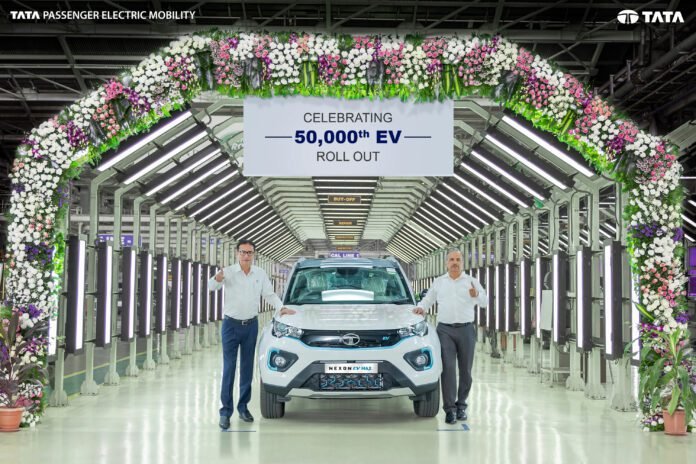
TATA Motors completes 50,000 EV milestone in India

0
TATA Motors completes 50,000 EV milestone in India

A new remarkable achievement by TATA Motors, the EV maker of India has recently confirmed that they have completed making 50,000 EVs. The company today, rolled-out its 50000th EV, from its Pune facility. There is no doubt that Tata Group has worked tirelessly to turn things around with TATA Motors and given a big focus on four-wheeler EVs much before any other Indian automakers did.

Obviously, this is a moment of pride for the county because in a short span of time Tata Motors has achieved this feat through its Indian manufacturing unit and R&D. Tata Motors is focusing on a three-phased architecture approach for EVs and plans to launch 10 EVs in 5 years and so this EV revolution is going to continue in the coming years, we hope the company completes 1 Lakh achievement even faster next time around.

TATA Motors completes 50,000 EV milestone in India

Commenting on this achievement, Mr. Shailesh Chandra, Managing Director, Tata Motors Passenger Vehicles Ltd. and Tata Passenger Electric Mobility Ltd. said, “As the pioneers of EVs in the country, the onus of ensuring successful adoption was on us. With well calibrated product mix, and strong consumer-facing initiatives, we have been able to address barriers to EV adoption. We created an entire EV ecosystem with Tata Group companies to provide simple, cost-effective solutions for our customers.

“Celebrating 50,000th EVs in India is a strong testament to how our portfolio is resonating with people across the country. EVs are offering a practical solution to problems of rising fuel price and worsening pollution. Customers are now ready to welcome EVs and we are thrilled to witness the transition from early adopters to now EVs becoming a mainstream choice for Indian customers.” 

Source: Tata Motors

Honda showcases the e:N2 Electric Vehicle Concept

0

At the 2022 China International Import Expo, which opened today in Shanghai, Honda unveiled the e:N2 electric vehicle (EV) concept. The company’s e:N Series models come in two sets; the first set was unveiled back in December 2021. According to Honda, the e:N2 represents the direction of all its new EV cars.

Speaking about its appearance, the e:N2 idea has angular, dynamic lines all around, with the front end being dominated by a huge LED DRL that spans the entire face in the shape of an H. According to Honda, the black “metallic look” on the EV concept car is “new styling that does not belong to any existing categories.” Although the e:back N2’s has not yet been unveiled, we anticipate it to include lights comparable to that of the front fascia.

Honda asserts that the primary goal in creating the EV’s interior was to create a “space” where passengers might experience “intellectual exhilaration.”

Honda eN2 EV 1667618482769 1667618491571 1667618491571 Honda showcases the e:N2 Electric Vehicle Concept
credit: timesofindia

As a result, the car will have a clear and uncluttered digital cockpit with the newest Honda CONNECT capabilities as well as the efficient presentation of lighting and smells. The e:inside N2’s hasn’t been made public, just like the rear end.

“The e:N2 Concept represents the value of our e:N Series, which will ‘redefine the fun EVs can offer to customers’ with their unique driving pleasure, the value as a mobility space and design. In China, Honda will continue delivering a broad range of electrified mobility products unique only to Honda and experience our rebirth into an electric mobility brand,” said Toshihiro Mibe, Director, President and Representative Executive Officer of Honda Motor Co., Ltd.

Also Read:

Source

PMV Electric To Unveil The First Flagship Smart Microcar EaS-E On 16th November

0
PMV Electric To Unveil The First Flagship Smart Microcar EaS-E On 16th November

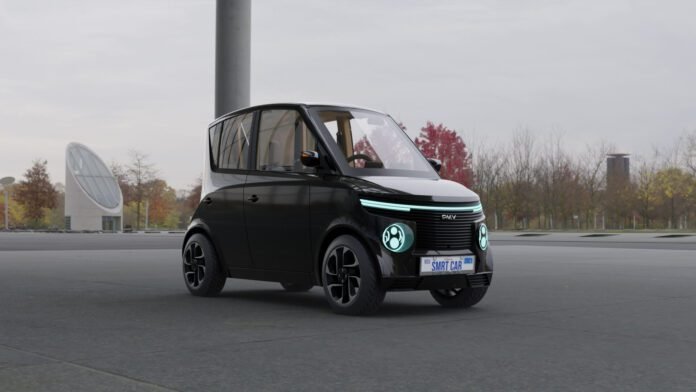
PMV, a Mumbai-based electric vehicle manufacturer, is all set to launch its micro-electric vehicle on November 16, 2022. The car has been named EAS-E and the automaker wants it to be an everyday car for people. According to PMV Electric, the company wants to create a brand new segment called Personal Mobility Vehicle (PMV). Notably, the EaS-E is the first car from PMV Electric and it is expected to be priced between ₹4 lakh to ₹5 lakh.

PMV Electric To Unveil The First Flagship Smart Microcar EaS-E On 16th November

PMV Electric’s EaS-E micro EV to debut on November 16

Mumbai-based PMV Electric will unveil its first-ever electric vehicle in the Indian market on November 16. The micro EV will be called EaS-E. The compact car will be primarily targeted at city dwellers looking for an affordable electric vehicle for everyday use and will be offered in three variants. The EV will deliver a range of up to 200km on a single charge.

The PMV EaS-E features a compact “Smart Car” design language and flaunts a clamshell bonnet, a squared-out grille with a full-width LED DRL, circular LED headlamp units, and a raked windscreen. On the sides, the EV is flanked by ORVMs, large windows, flared wheel arches, and designer alloy wheels. The rear end of the vehicle gets a full-width taillight.

The PMV EaS-E is likely to be offered in three variants. The driving range of the vehicles will vary from 120 km to 200 km on a single charge. The driving range will be dependent on the variant that the customer chooses. Interestingly, the automaker claims that the battery of the vehicle would be able to charge in just four hours. PMV is offering a 3 kW AC charger.

PMV Electric To Unveil The First Flagship Smart Microcar EaS-E On 16th November

However, we expect the two-seater micro EV to feature a minimalist dashboard, fabric upholstery, remote keyless entry, cruise control, power windows, manual AC, a multifunctional steering wheel, an LCD instrument cluster, and an infotainment panel with Bluetooth and USB connectivity. The safety of passengers will be ensured by seatbelts, among other features.

Speaking on the announcement, Kalpit Patel, Founder, PMV Electric said, “We are thrilled to be officially unveiling the product. This will be a significant milestone for the company as we have built a world-class product made by an Indian company. We look forward to electrifying the nation and introducing a brand new segment called the Personal Mobility Vehicle (PMV), purpose-built for everyday use.”

The launch will be held digitally & streamed live on youtube on 16th November. The company has started taking pre-orders on the website www.pmvelectric.com & has generated a sizable pre-order book not only from India but from International markets too. We expect the compact electric car to be priced at around Rs. 4 lakh (ex-showroom).

Hindustan Motors is making a come-back as a new All-EV Brand

0

One of the most recognisable companies in the nation, Hindustan Motors was once well-known for its Ambassador automobiles, which dominated the market for many years. Hindustan Motors, which is currently owned by businessman CK Birla, is anticipated to return to the market in India with an electric two-wheeler line. It is now in discussions with a European partner and is anticipated to form a joint venture soon. To begin with, Hindustan Motors is anticipated to make an official return some time in the following year and will collaborate closely with its new worldwide partner.

It is also poised to resume its West Bengal factory in Uttarpara, close to Kolkata. The Indian company also said that it will soon make an official announcement with more information regarding the joint venture and the identity of its overseas partner. According to what is currently known, Hindustan Motors will introduce several new electric scooters in India to compete with competitors including the Bajaj Chetak, TVS iQube, Ather 450X, Ola S1, and Simple One. It will also compete with rivals like Hero Electric, Viva, Okinawa, and others.

Hindustan Motors present plans are now apparent, notwithstanding early speculations that the Ambassador EV might be introduced.

Hindustan Motors
credit: gaadiwaadi

Together, the two businesses would invest more than Rs 600 crore in the future project. Additionally, the company hasn’t fully ruled out the idea of returning to the domestic four-wheeler market in the future.

Hindustan MotorsBengal plant, which at the time employed more than 2,500 people, was closed in 2014. Due to low productivity, deteriorating discipline, a severe lack of funding, and a decline in demand for the plant’s key goods, manufacturing at Uttarpara ceased. Before the plant’s activities were terminated in March 2014, a total of 2,200 Ambassadors had been sold in the previous fiscal year. In towns like Kolkata and Mumbai, the Ambassador is still utilised as a trusted taxi.

Also Read:

Source