Home Blog Page 294

Maruti Swift and Dzire Hybrid will deliver 35 to 45 Kmpl in 2024

0

Demand for vehicles with lower fuel costs per mile is increasing as fuel prices rise. CNG fuel has, to some extent, assisted in resolving this problem. However, the cost of CNG is also increasing. There are electric cars, however, they are currently a little too pricey and lack a charging infrastructure. At this point, a growing number of firms are reorienting their efforts toward powerful hybrid technology. Maruti Suzuki is arguably the first genie desire of most people in a nation that is concerned with driving its cars on the least amount of fuel feasible. This is also appropriate to do. Nobody wants to drain their bank account every day by driving a vehicle that doesn’t get good gas mileage.

The Swift and Dzire are two of Maruti’s best-selling vehicles currently on the market. They successfully balanced providing features and performance with reasonable cost. It has just come to light that the upcoming Maruti Swift and Dzire will feature powerful hybrid technology.

The Swift and Dzire platforms internally referred to as YED, will also receive a new engine. This is a three-cylinder, 1.2L engine with the designation Z12E. Unlike the K12C engine’s 4-cylinder configuration, which is currently used in both the Swift and Dzire. Strong hybrid technology for the upcoming Dzire and Swift is reportedly supplied by Toyota, a partner in Maruti’s technology.

These electric hybrid parts are probably interchangeable with the powerful hybrid versions of the Grand Vitara and the HyRyder. Because they are already localised, it also makes sense. Future Swift and Dzire hybrid models with higher power will cost more than non-hybrid counterparts. Currently, a Grand Vitara or HyRyder in the strong hybrid version costs about Rs. 2.6 lakh more than their mild hybrid counterparts. It is anticipated that there will be much less of a difference between the hybrid and non-hybrid models of Swift and Dzire.

Each month, Maruti produces between 30 and 40 thousand Swift and Dzire vehicles. The price of production is probably going to decrease as sales increase. According to a source familiar with this development, Maruti is promoting hybrid technology to account for a third of the sales of the Swift and Dzire.

Maruti
credit: Suzuki Garage

Maruti may reduce this price difference to within Rs. 1 lakh to 1.5 lakh by the time YED enters the market, which is anticipated to happen in 2024. Swift and Dzire will be the first affordable hatchbacks and sedans to feature powerful hybrid technology when they go on sale. The highest-end trims are likely to be the only ones to offer hybrids.

The Swift and Dzire hybrid are anticipated to be the most fuel-efficient vehicles in the nation when it comes to the magic number, according to reports. The numbers should be in the range of 35 to 40 km/l. This would significantly increase fuel efficiency. Figures for the Swift and Dzire, in contrast, are 22.56 and 24.1 km/l, respectively. High fuel efficiency and low CO2 emissions provide advantages for both customers and Maruti Suzuki’s CAFE rating (Corporate Average Fuel Economy). In the scoring methodology for the CAFE II, hybrid vehicles receive extra points. win-win situation. In 2024, Swift and the Dzire will be available with powerful hybrid technology.

Also Read:

Source

Abarth 500 EV design leaks ahead of its Release

0

The automobile was photographed by paparazzi at what looks to be a promotional shoot for the vehicle just a few hours after Abarth shared the first teaser image of its first electric hot hatch. As soon as inquisitive bystanders gathered, the folks who shot the video covered the car reasonably quickly, but not quickly enough, as we can now see the entire first electric Abarth. As you can see, the bodywork of the Abarth 500 EV is considerably more aggressive than that of its less potent Fiat cousin. First, the front lip contrasts with the lower bumper’s wider air intake.

The Abarth also seems wider, though we can’t be certain about that either. The word “ABARTH” is prominently displayed on the front and sides of the vehicle. There will probably be several customizing options, one of which is those side stickers. Additionally unique are the LEDs that surround the headlights. They travel around completely on the regular 500 EV. The LEDs on the bonnet of the Abarth appear to have been replaced with black strips, giving the vehicle harsher eyes and neatly arched brows.

Additionally, the alloy wheels are significantly bigger, and the tires seem to be nothing more than a thin layer of low-profile rubber. It is to be assumed that it sits much closer to the ground. A lowered sports suspension is a standard feature on even the most basic ICE Abarth.

Little is known about the Abarth EV at this time, but the fundamental design will almost definitely not change. This entails a front-mounted electric motor and a floor-mounted, larger 42 kWh battery. For individuals who don’t require as much range, Fiat has a smaller battery, but we don’t think the Abarth will have it as a viable alternative.

Abarth
credit: autocardindia

With a 117-horsepower motor installed, the high-output 500e can accelerate from 0 to 60 miles per hour in under nine seconds. The standard ICE Abarth has a turbocharged four-pot engine with only 162 horsepower, yet it weighs only 2,282 pounds. It can therefore accelerate from 0 to 60 mph in slightly over seven seconds.

The major issue with the electric Abarth is its power-to-weight ratio. The entry-level ICE Abarth weighs 793 pounds less than the basic Fiat 500e, which has a weight of 3,075 lbs. EVs do give their full amount of power at 1 rpm, but Abarth will need to significantly increase the power to make up for the weight. The positioning of the battery pack will at least guarantee that it performs at least as well as the ICE model in terms of handling.

Abarth
credit: autocardindia

We would venture to say that Abarth will go for an electric motor with at least 200 horsepower. There isn’t enough area for a dual-motor arrangement, therefore we don’t anticipate one. The car’s limited trunk room will be taken away if another powerplant is mounted on the back axle. Abarth will have to carefully strike a balance between power and range. With a 200-mile range, the 500e standard already has a mediocre range. Anything less than 150 miles is unnecessary and will probably turn away potential clients.

Also Read:

Source

Is BYD Atto 3’s entry to India a warning sign for TATA and Mahindra?

0
Is BYD Atto 3's entry to India a warning sign for TATA and Mahindra?

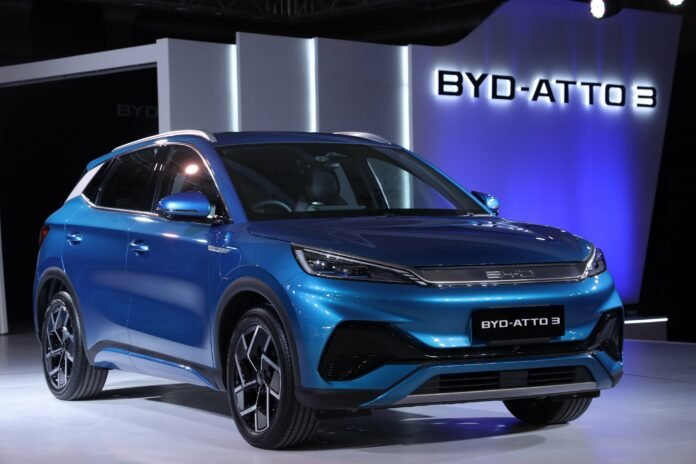
The Chinese EV maker has already crossed Tesla in terms of sales and it is showing no signs of stopping being backed by a strong foundation in its native country, which already started adapting EVs a decade ago. Now they have entered India with their very successful BYD Atto 3 which they will launch in the Indian market on 16th November.

It’s an electric SUV that indeed looks futuristic and much better than the ones available in the current Indian market. With a claimed mileage of up to 521km in a single charge, this certainly attracts a lot of potential EV buyers in India.

Is BYD Atto 3's entry to India a warning sign for TATA and Mahindra?

How is BYD a threat to Indian car brands like TATA and Mahindra?

The Chinese giant, which has become famous for its Blade batteries or Solid State batteries has quickly become superior in terms of quality and features. Overturning Tesla’s own manufacturing record and selling more EVs in a year is in itself a great job.

Because of its constant innovation, Tesla itself will be sourcing these new batteries from BYD soon. So, considering how big of a thing BYD is currently, the brand’s entry into India obviously poses threat to Indian automakers like TATA and Mahindra.

While TATA Motors is the leader in terms of the Indian EV market and has recently delivered 50,000 EVs, will face stiff competition from BYD. As the Chinese giant will start manufacturing EVs in India and price the Atto 3 at Rs.30 lakh (expectedly), this will put direct pressure on all EV makers in India.

Starting with the BYD Atto 3, we expect the Electric car maker will further extend its portfolio in India and associate with more dealers to capture Indian buyers. The Atto 3 is no less a premium EV with a 12.8-inch rotating touchscreen and a 5-inch digital instrument cluster, leather upholstery, automatic climate control and many other features.

In terms of safety, BYD has given features like a 360-degree camera, cruise control, front and rear collision warning, lane keeps assistance to name a few of them. With a dimension of 4,455mm in length, this makes the Atto 3 a proper SUV and a direct alternative to popular models like MG ES EV and Hyundai Kona.

Tata Nexon EV
Currently, TATA Nexon EV is the best-selling EV in India

Now, BYD remains both aggressive in price and local manufacturers of its popular models in India, the rising Indian brands like TATA and Mahindra will seriously be in danger. While TATA Motors is the leader in the EV space in India with multiple models like Tiago EV, Nexon EV and Tigor EV along with next-gen models like Curvv, and Avinya in line for the next few years but BYD could be a serious threat with its superior technology and pricing.

On the other hand, Mahindra, who has just launched the XUV400 EV and is popular with its models like eVerito in the commercial space, is again a brand that is investing a lot to capitalise on the Indian EV market. The best SUV maker, Mahindra has tied up with German automaker Volkswagen to make the new Born Electric platform which will bring classy EVs like BE 5,7 and 9 and also will make the XUV lineup of futuristic EVs in the coming years.

Is BYD Atto 3's entry to India a warning sign for TATA and Mahindra?

Price will play a key

In a price-conservative country like India, a lot of people will love more range from their EVs which BYD is offering but at a higher cost, it might be well suited for some but most people will demand more for the price they pay. While Indians are still in the shifting period to EVs, which will again last for few more years, price-to-performance, styling and brand image will play a key role. Many Indians will love both TATA and Mahindra brands propering in the country but only if they match BYD in terms of price-to-performance and keep innovating in this space to help people shift to EVs sooner or later.

So, both Indian brands TATA and Mahindra can capitalise on the trillion-dollar EV market of India which will burst in the next few years as the prices of these vehicles reduce. Now, BYD has a huge chance of challenging these two brand with its huge inflow of cash and wealth of technology at its disposal, so, it will be interesting to see how BYD strategize the Indian market and opportunitize the rising EV space.

Kawasaki showcases Ninja EV & Z EV bikes, will debut in 2023

0
Kawasaki showcases Ninja electric, Z electric bikes, coming out in 2023

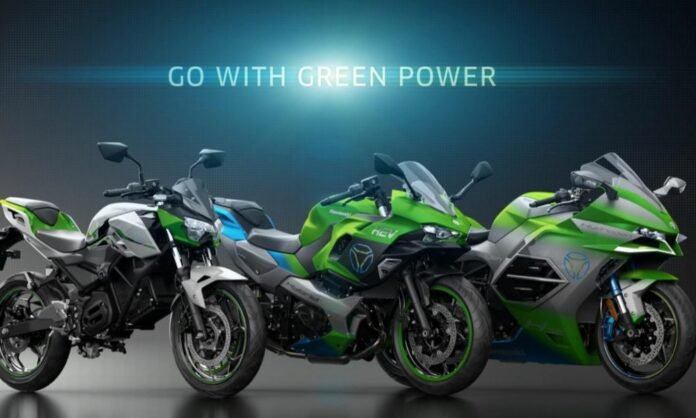
Kawasaki took to the EICMA Milan Motorcycle Show to unveil a trio of electric motorcycles, with Electrek front and center to see the action live. The Kawasaki Ninja EV and Kawasaki Z EV were revealed as traditional battery electric motorcycles, while the company also unveiled an HEV hydrogen-powered concept motorcycle. While the electric Ninja and Z models are both still in prototype form, Kawasaki Motors president Hiroshi Ito announced to the audience that the two models would be available for purchase next year.

FhTukBfWQAAhDi0 Kawasaki showcases Ninja EV & Z EV bikes, will debut in 2023

Kawasaki Z, Ninja electric bikes

The Japanese brand took the wraps off a number of bikes at EICMA 2022, yesterday. As per the company, it will roll out the Ninja electric bike and Z electric bike in global markets next year, which are officially called the Ninja BEV and Z BEV, respectively. Both the Ninja BEV and Z BEV electric bikes will be available for purchase in 2023.  

These bikes appear to have been inspired by the Z400 and the Ninja 400. According to the brand, these bikes will abide by the A1 requirements. Moreover, they will be marketed as entry-level electric performance bikes and will share the same battery with a capacity of up to 3.0 kWh.

The hybrid electric vehicle prototype, on the other hand, is still a little ways off from going into production, but Kawasaki predicts that it will hit the market by 2024. Further information on the motorcycle is still expected, but the HEV will have robust hybrid technology and will use either hybrid power or simply electric power depending on the needs.

President Ito has reaffirmed that Kawasaki is still heavily focused on bikes with internal combustion engines even if the company has begun to move toward electric motorcycles. Additionally, he stated that Kawasaki will launch about 30 ICE models internationally between 2024 and 2025, with almost half of them arriving in Europe.

FhTumdOXgA069Ok Kawasaki showcases Ninja EV & Z EV bikes, will debut in 2023

For the safety of the rider, both the Z EV and Ninja EV are equipped with disc brakes on both the front and rear wheels, along with dual-channel ABS and a regenerative braking system for improved braking performance.The suspension duties on both motorcycles are taken care of by telescopic forks on the front and a mono-shock unit on the rear end.

FhTulPIXgAIP0rq Kawasaki showcases Ninja EV & Z EV bikes, will debut in 2023

As of now, the pricing and availability details for the Z EV and Ninja EV are very much a mystery. When launched, we can expect both all-electric motorcycles to be priced at around Rs. 5 lakh (ex-showroom) in India.

Ola Electric Motorcycle Confirmed by CEO Bhavish Aggarwal

0
Ola Electric Motorcycle Confirmed by CEO Bhavish Aggarwal Scooters

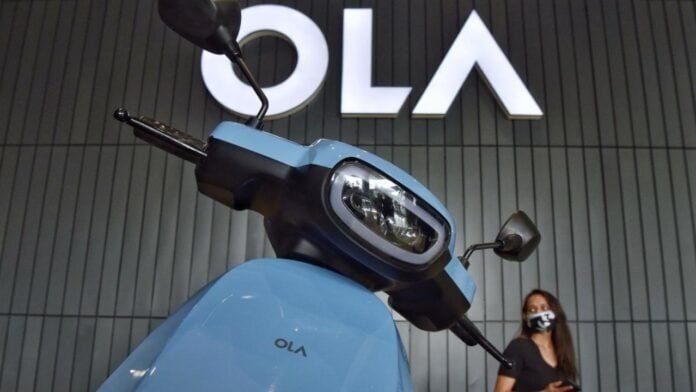
In India, Ola Electric is making a significant move in the e-mobility market. The company has already teased its upcoming electric car for the Indian market and has already released three electric scooters into the market. Now, the brand has confirmed that they are working on a new electric bike. Additionally, Bhavish Aggarwal, the company’s CEO, confirmed the story of the Ola Electric bike in a number of tweets.

Ola Electric Motorcycle Officially Confirmed

Ola CEO Bhavish Aggarwal has confirmed the company’s plan to introduce electric motorcycles in the near future. He made a couple of tweets confirming this news. He also made a poll on Twitter asking his followers about their preferred bike style – Sports, Cruiser, Adventure, or Cafe Racer. Out of these, currently, the Sports category is getting the maximum votes.

Ola Electric’s first product, the S1 scooter has gained a lot of popularity since its launch. The electric scooter is available in three trims – S1 Air, S1 Standard, and S1 Pro. The company might target the mainstream market with its upcoming motorcycle before moving into the premium sector. At the debut of the Ola S1 Air scooter on Diwali, Ola made a hint about the introduction of an electric motorcycle. The brand CEO said, “over next 12 months we will build EV products in all two-wheeler categories.”

Ola Electric has sold over 20,000 scooters in the last month. This demonstrates the brand’s strong performance in the electric two-wheeler sector. The company has also introduced the S1 Air electric scooter to compete in the market for budget electric scooters. The Ola S1 Air has a smaller 2.5kWh battery pack, which generated a 4.5kW peak motor output. There are three riding modes available in the S1 Air: Eco, Normal, and Sports. The ARAI claims that the Eco mode’s riding range is 101 km per charge.

Ola is likely to share more details about the new products in the country in 2023. Ola is currently offering the S1 e-scooter in 3 trims. The company aims to further improve its sales by improving its production capacity and maintaining an aggressive pricing strategy. Not just electric motorcycles, Ola is also developing an electric car for the Indian market. In fact, Ola has already teased different versions of the electric vehicle that is likely to be in 2023. The company has also announced to export the e-scooters to Nepal this year, and to Europe and Latin America in 2023.

International EV show coming to India on 13th November 2022

0

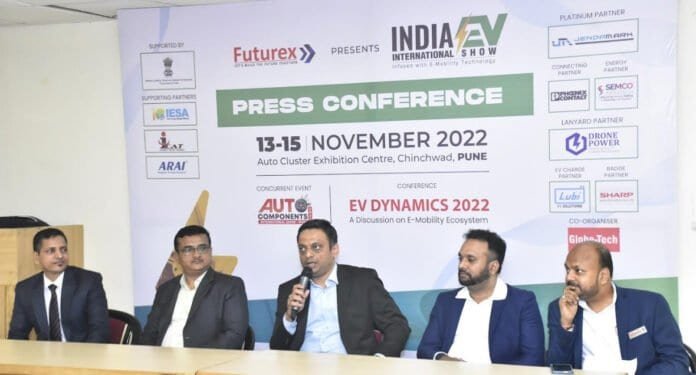
E-mobility is gaining momentum in India and is moving forward more quickly than in any other nation. The goal of the India International EV Show 2022 is to bring together thought leaders, creators, and innovators from the electric vehicle sector with the rest of the world to rethink sustainability through innovation and experience. It will take place from November 13 to November 15 at the Auto Cluster Exhibition Centre in Chinchwad, Pune, India. Find all the components and raw materials you require for your upcoming EV project. In order to display the most advanced technology, the India International EV Show brings together more than 120 businesses from the automobile industry, electrification facilitators, and several other EV industrial sectors.

Namit Gupta, Director, Futurex Trade Fairs & Events, Mukesh Yadav, Project Manager- Futurex, Satish Mandole, Director, Globe-Tech Media, Himanshu Jadhav, Director, Jendamark India Pvt Ltd, and Subhabrata Ghosh, President-Operations- Battrixx were present when the exhibition was announced in a press conference.

Concurrent event Auto Component International Show conveniently brings together the most recent new materials, new engine technologies, including electric motors and hybrid applications, new control systems, sensors, testing and validation services, and technologies, and innovative ideas that will aid electric vehicle manufacturers in the long run in improving product design, efficiency, and ultimately sales.

Your knowledge will be updated by the India International EV Show, Auto Component International Show, and EV Dynamics 2022 Symposium.

EV
credit: punekarnews

The electrification of the automotive industry will cause major market size changes for automotive components and disrupt the entire supply chain. Batteries and electric motors, as well as radar and light detection and ranging (LiDAR) sensors and other essential components for autonomous driving, would probably account for around 52% of the market by 2030.

Major manufacturers including JENDAMARK, LUBI EV SOLUTIONS, SHARP, DRONE POWER, PHOENIX CONTACT, and SEMCO INFRATECH are among the more than 120 companies that are taking part. ICAT, IESA, and ARAI are providing support. The event also has participation from companies including EVTRIC, MAGENTA, ISCOOT, HIOKI, CYBERNETIK, SIMPLINITY, DOW, DUPONT, SIEMENS, REDON, NKE BIKES, KEVIN ELECTROTHERM, MASTPRO, BLUE STAR, IPG PHOTONICS, and SLTL GROUP.

This expo will provide in-depth market data, excellent business opportunities, and a venue for networking between the various stakeholders, including EV manufacturers, technology developers, battery manufacturers, partners in the infrastructure for charging, component manufacturers, distribution partners, policymakers and regulators from government and ministries, private organizations, industry associations, etc.

Also Read:

Source

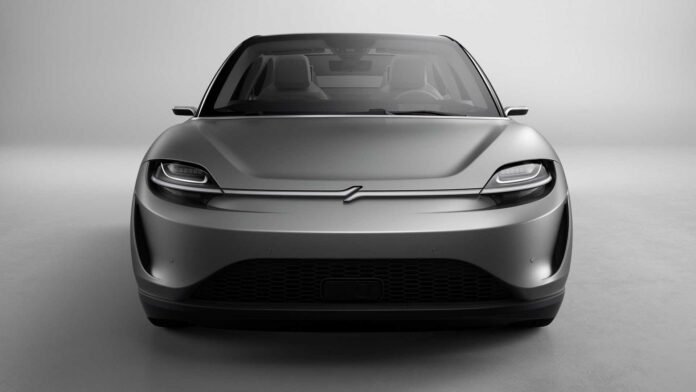
Sony-Honda electric vehicles will be serviced by Honda dealerships

0
Joint Sony and Honda electric vehicles will be serviced by Honda dealerships

Honda dealers in the U.S. are servicing, but not selling, a new wave of electric vehicles from the company’s new joint venture with Sony. This is the message from Honda executives at the head office in Japan.

Speaking during the company’s earnings call on Wednesday, CFO Kohei Takeuchi said the sales model would be completely new, echoing early talk of an online approach. “It will be something new, not Sony, not Honda,” he said.

Honda dealers can service Sony-Honda EVs

Sony and Honda announced the formation of a joint venture earlier this year to jointly develop electric vehicles, where Sony will be responsible for the mobility platform and Honda for manufacturing. This will result in a new company launching its first electric vehicles in the US market in 2026.

Oddly enough, the EVs that Sony Honda Mobility eventually produces (or, if it produces any at all) will not wear a Honda badge — or Sony lettering, for that matter; it’s not like prospective buyers of these EVs will be able to bring their cars to Best Buy or the local big box. Even though EVs need less maintenance than their ICE-equipped counterparts, electric cars still require periodic service.

Joint Sony and Honda electric vehicles will be serviced by Honda dealerships

On a call to discuss Honda’s financial results, CFO Kohei Takeuchi claimed that the Honda-Sony sales model would be novel for the automaker. That could mean online, direct-to-consumer sales, and Takeuchi noted that the sales process would be entirely new for both Honda and Sony.  He also said the companies are still hashing out the sales and service details but feel that the existing dealer network is well-positioned to step in for service needs.

The CFO added that the future plans surrounding sales and service are still up in the air, but he feels Honda’s large US dealer network is totally equipped to be able to service the Sony-Honda EVs. Honda has over 1,000 US dealers, and many already service plug-ins. While Honda hasn’t made a notable EV push yet, it’s certainly not a complete stranger to electric cars.

Joint Sony and Honda electric vehicles will be serviced by Honda dealerships

Honda and Sony plan to produce their first EVs in North America at an upcoming facility in Ohio under the name Sony Honda Mobility Inc. The first vehicles are due to arrive in the spring of 2026. Honda has already teased the first Sony Honda Mobility EV, which will make its official debut at CES in Las Vegas in 2023.

Upcoming EV Car launches in India

0

Indian automakers introduce fresh battery-powered automobiles every year. However, India’s EV infrastructure is still far behind. Nevertheless, EV adoption as an alternative to ICE vehicles is growing gradually. Although it will be a while before EVs are widely adopted, we can anticipate this market to expand at a healthy clip in the years to come, in part because of the lower operating expenses that EVs provide.

Here are some of the new EVs that will soon be available in India:

Tata Altroz EV

EV
credit: timesofIndia

At the 2019 Geneva Motor Show, Tata debuted the luxury hatchback Altroz in an all-electric version. The ALFA platform, which can support electrification, serves as the foundation for the Tata Altroz EV. At the Auto exhibition 2023, the electric premium hatchback is anticipated to debut. Many characteristics of the already-launched Nexon EV, including the same electric drivetrain, PDU (Power distribution unit), and battery pack, are anticipated to be shared by the Tata Altroz EV. The vehicle is anticipated to include connected car technology, which will enable you to view the vehicle’s statistics, including the battery’s remaining capacity and charging history, as well as find the closest charging stations for you.

Citroen C3 EV

EV
credit: timesofIndia

Recently, Indian roads were used for testing by the Citroen C3 EV. The charging port appears to be covered by the disguised front fender of the spotted car. The EV will be modelled on the ICE C3 because of how similar the side profile and other design components are. To set itself apart from the standard model, Citroen is likely to make some glaring visual alterations. Speaking of the powertrain and battery, it is anticipated to be supplied with a variety of battery alternatives, one of which being the global-spec 50kWh battery pack found in the Peugeot e-208, which is based on the same platform and has a WLTP-claimed range of over 350km.

BYD ATTO 3

EV
credit: timesofIndia

The Indian market has received the debut of BYD’s second electric vehicle. Bookings for the EV have already begun, delivery of the Atto 3 will begin early in 2019, and BYD plans to formally introduce the EV at the end of November. The 60.48 kWh Blade battery in the BYD Atto 3 can be charged from 0% to 80% in just 50 minutes using an 80 kW DC fast charger. The Atto 3 will take up to 10 hours to fully charge using a household AC charger. Additionally, it has a VTOL mobile power station feature that enables the Atto 3’s battery pack to operate as a power bank for up to 3.3 kWh of electronics and appliances.

Praviag’s electric SUV

EV
credit: timesofIndia

Pravaig, a start-up with headquarters in Bengaluru, has revealed plans to introduce a revolutionary electric SUV. The e-name SUV is still a mystery, but Pravaig says it has a top speed of over 200 kmph and a range of more than 500 km. The business also says the SUV can accelerate from 0 to 100 kmph in 4.3 seconds. Regarding the exterior, the SUV has an angular and powerful appearance. Its front wheel arches have been widened, and it has thin LED headlights.

Mahindra XUV 400 electric

EV
credit: timesofIndia

The Mahindra XUV400, Mahindra’s first electric SUV, was recently revealed in the Indian market. The business declared that it would introduce an electric SUV in January 2023. Initially, 16 cities will see the introduction of the Mahindra XUV400 electric SUV, including Mumbai, Hyderabad, Delhi NCR, Bengaluru, Kolkata, Chennai, Pune, Ahmedabad, Goa, Jaipur, Surat, Nagpur, Trivandrum, Nashik, Chandigarh, and Kochi. In these cities, test drives of the electric SUV will begin in December 2022. Deliveries of the Mahindra XUV400 will start towards the end of January 2023.

Arctic Blue, Everest White, Galaxy Grey, Napoli Black, and Infinity Blue are the five colour options for the Mahindra XUV400. A dual-tone roof option with a Satin Copper finish is also available. An IP 67 compliant 39.5 kWh battery pack and PSM motor, which together produce a maximum torque of 310 Nm and 149.5 PS at their peak, power the Mahindra XUV400. The electric SUV travels from 0 to 100 km/h in 8.3 seconds and has a top speed of 150 km/h. According to the firm, the Mahindra C-segment e-SUV has a range of 456 km on a single full charge using the Indian driving cycle (MIDC). According to Mahindra, a 50kW DC fast charger can fully charge the battery from 0% to 80% in just 50 minutes. It takes 6 hours 30 minutes to charge a device using a 7.2 kW/32A outlet, compared to 13 hours using a typical household 3.3 kW/16A plug.

Also Read:
Source

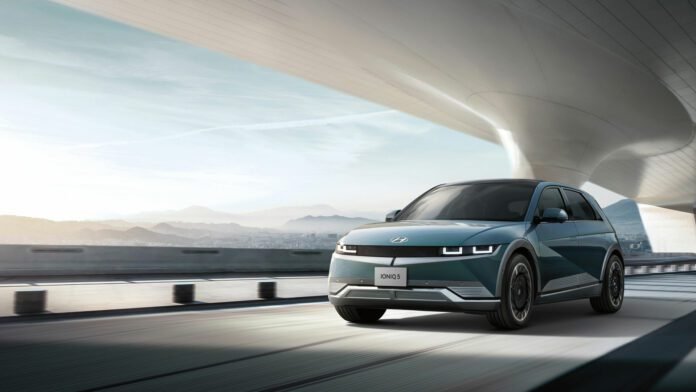
Hyundai’s new EV Ioniq 5 to launch in India soon

0
Hyundai's new EV Ioniq 5 to launch in India soon

Hyundai Motor Group has unveiled the E-GMP dedicated BEV platform for its next generation of electric cars to the world. Chassis components such as the battery, motor, and electric power system are all part of the E-GMP platform. The high-voltage battery can power a wide variety of electronic gadgets thanks to the system’s sophisticated battery pack and bidirectional charging port.

Hyundai Ioniq 5 EV

The term IONIQ is a fusion of “ion” and “unique”, that was announced as a long-term research and development project focussing on sustainable mobility. IONIQ is the ideal representation of Hyundai’s commitment to sustainable and innovative mobility solutions.
Under the aegis of Beyond Mobility, IONIQ 5 will set a new benchmark that redefines the electric mobility lifestyle in India with synergies of intelligent technology, sustainability and innovation.

1614273137 2022 hyundai ioniq 5 Hyundai's new EV Ioniq 5 to launch in India soon

IONIQ 5’s new EV platform gives us the opportunity to re-create a new mobility experience. This SUV is built on Hyundai Motor Group’s Electric-Global Modular Platform (E-GMP), an innovative system that was exclusively developed for next-generation battery electric vehicles and will usher in a new era of clean mobility for Hyundai.

Unsoo Kim, CEO, Hyundai Motor India Ltd., said, “Our Electric Mobility campaign in India began in 2019 with the launch of India’s 1st Electric SUV – Hyundai KONA Electric. With the introduction of E-GMP to India, we will be able to provide customers with advanced battery electric vehicles, derived from a platform that is modular, scalable and versatile. Conceptualized and engineered to pivot the future transformation of Electric Mobility, E-GMP will usher in a new league of Electric Vehicles for the smart new age customers in India.”

20210223062647 Hyundai Ioniq 5 2022 rear Hyundai's new EV Ioniq 5 to launch in India soon

Both the high-voltage battery and the backup battery may be charged with the help of the E-GMP platform’s integrated charging control unit (ICCU). E-modular GMP’s design means it can be used to create the chassis for a wide variety of vehicle configurations, and its creative interior packaging ensures that these vehicles will have features like a level floor, thin cockpit, and a flexible, roomy cabin.

The platform’s low-mounted battery pack provides a low centre of gravity and improves cornering capability. The Hyundai IONIQ 5 has a peak speed of 185 km/h thanks to its high-speed electric motor. In addition, a 350 kW DC charger can charge an E-GMP vehicle to 80% in only 18 minutes. E-GMP will also provide more room inside by relocating the air conditioning unit to the engine compartment. E-flat GMP’s floor design improves passenger comfort, and getting rid of the transmission tunnel in the centre of the car makes it easier for the person sitting in the middle seat in the back.

TVS Motor, Amazon India join hands to deploy EVs for deliveries to cut down emissions

0
TVS Motor, Amazon India join hands to deploy EVs for deliveries to cut down emissions

Amazon India and TVS Motor Company have joined hands to strengthen electric mobility in the country, the companies said in a joint statement on Wednesday. As part of the collaboration, a fleet of electric two-wheelers and three-wheelers from TVS Motor will be deployed for Amazon’s last-mile deliveries.

TVS Motor, Amazon India join hands to deploy EVs for deliveries to cut down emissions

Amazon India to deploy TVS Motor Company’s EVs for last-mile deliveries

Amazon India will deploy a fleet of electric two and three-wheelers manufactured by TVS Motor Co. for last-mile deliveries across the country. This will be as part of a strategic engagement between the two companies announced on Wednesday.

In addition, the two companies would work in tandem to examine the possible use cases of electric vehicles for various Amazon business groups for its network and logistical requirements.

“The collaboration marks another decisive step for Amazon to achieve our goal of becoming net-zero carbon by 2040, as part of our commitment to The Climate Pledge. Electric mobility is a significant component of our business operations and we are resolute in our commitment to transforming our transportation network to serve our customers more sustainably,” said Abhinav Singh, Director – Customer Fulfilment, Supply Chain and Global Specialty Fulfilment, Amazon India.

TVS Motor, Amazon India join hands to deploy EVs for deliveries to cut down emissions

The collaboration with TVS Motor strengthens the delivery network by adding electric two and three-wheelers to Amazon’s existing fleet. This will support the supply chain in minimising the environmental impact of the company’s operations and contribute to Amazon India’s goal of inducting 10,000 EVs into its fleet by 2025, added Singh.

Manu Saxena, Senior Vice President, Future Mobility, TVS Motor said, “With the success of TVS’ iQube Electric, we now intend to expand our electric offering across multiple segments and commercial mobility stands at opportune inflection points. TVS Motor is now ready with electric two-wheeler and three-wheeler product options for B2B along with an ecosystem of connected service and alternate ownership.

“We are happy to collaborate with Amazon India. This marks a big milestone in our journey and contributes to our joint goals of electrifying mobility services. We are confident that this collaboration will open the door to creative solutions that will further nurture a more resilient, sustainable and brighter future,” added Saxena.

TVS Motor, Amazon India join hands to deploy EVs for deliveries to cut down emissions

In order to test solutions, the two companies will pilot TVS Motor’s electric vehicle solutions through partner base and delivery associates across India. In 2020, Amazon India announced that it would include 10,000 EVs in its delivery fleet by 2025. On its part, TVS Motor aims to expand its EV offerings across multiple segments, including commercial mobility. It will further be instrumental in expanding and strengthening the company’s focus on presence across all major cities, charging solutions and alternate ownership models in India.