Home Blog Page 293

Pravaig may be soon launching a Flagship Killer EV in India

0

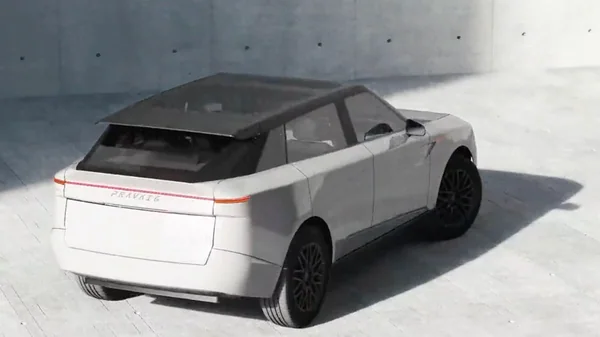
Pravaig, An electric vehicle manufacturer with its headquarters in Bengaluru plans to enter the market for high-end cars. Its first high-end EV SUV, the Defy, is touted as a “flagship killer” that will compete with numerous high-end EV vehicles now on the market. On November 25, the automobile is anticipated to emerge from cover with astounding range and performance specifications.

For some time now, Pravaig has been teasering the Defy electric SUV. Key performance metrics were made public by the corporation prior to the official unveiling. The startup’s second product is Defy, a five-seater premium electric SUV. It had previously displayed the Extinction MK1, its first electric vehicle, which it claimed could go more than 500 km on a single charge and reach high speeds of about 200 kph. After its introduction more than two years ago, the two-door, four-seater electric vehicle did not become a commercial success. The Defy electric SUV is anticipated to meet, if not improve upon, some of the performance parameters, according to information provided by Pravaig.

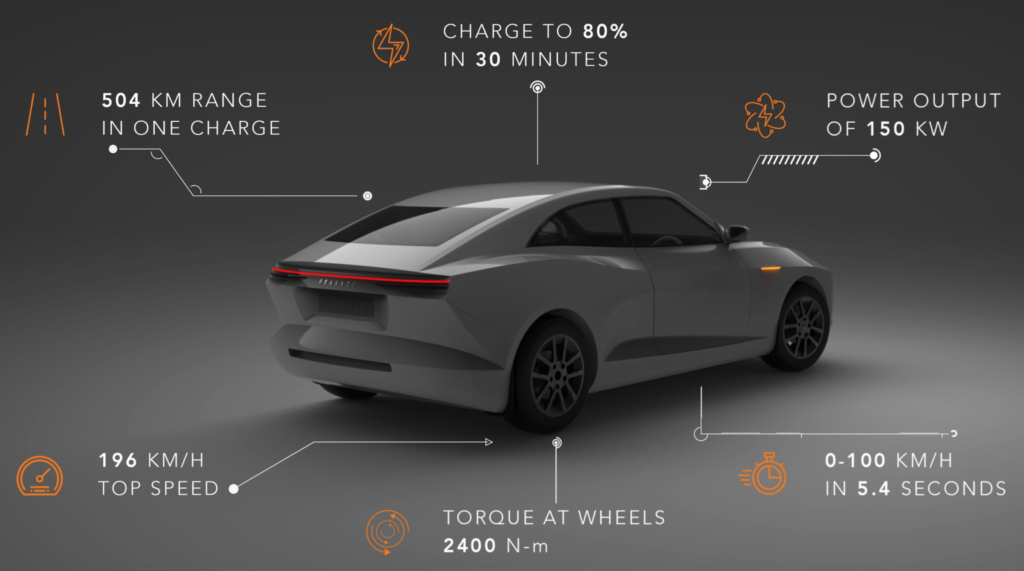
According to the manufacturer, the EV has a 504 km range on a single charge. It may be among the EVs in India with the longest range as a result. In just 30 minutes, the battery could be charged up to 80% of its capacity. This confirms that DC fast charging is available for the electric SUV.

Pravaig’s assertion regarding the Defy’s power and torque numbers makes things better.
Pravaig
credit: hindustantimes

According to the EV startup, the EV will have a maximum torque of 620 Nm and 402 horsepower. The power output is roughly identical to that of the Kia EV6, Audi e-Tron electric SUV, and even the Volvo XC40 Recharge. According to the company, the electric SUV has a top speed of 210 kmph.

The manufacturer claims that the electric SUV would be able to accelerate from 0 to 100 km/h in 4.9 seconds, which is nearly as fast as some of the fastest EVs now on Indian roads. According to Pravaig, the Defy will have on-board wifi, a 15-inch laptop desk, a limousine divider, 220V charging sockets, an air quality index with PM 2.5 air filter, vanity mirrors, an upgraded music system, a USB socket, and wireless charging. MirrorLink would be supported on the screens. It’s crucial to remember that once the electric SUV is introduced, the features that will be included in the production model will be made public. Recently, luxury car manufacturers from abroad have begun to enter the Indian market.

Also Read:

New Solar-Powered Electric Vehicle art adds new Beauty to Bengaluru’s Street

BYD ATTO 3 Electic SUV enters the Indian Market starting at Rs.33.99 Lakh
Source

Google Maps got a big update: It will now help you find charging stations for EVs

0
Google Maps got a big update: It will now help you find charging stations for EVs

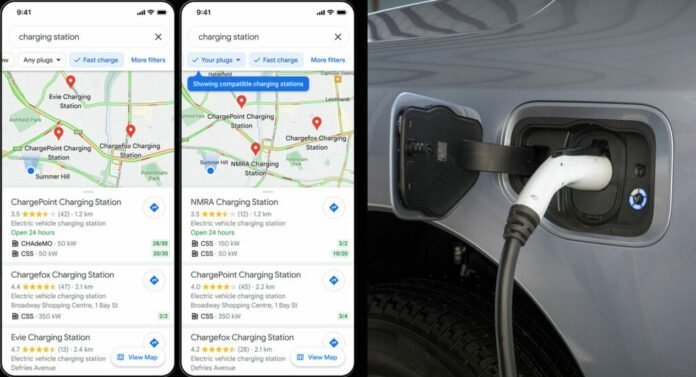
EV charging stations can be found with just one click. In the coming days, Google Maps will admit a new stoked reality point that enables you to use your phone’s camera to discover what’s hard. The Hunt with Live Viewpoint will also include availability icons and AR-powered directions and arrows tool to help us find the EV charger, the company blazoned on Thursday.

First over, if you need some juice and do not have a ton of time on your hands, you can now filter through the all EV charging stations on Charts by opting for ” fast charging” to find speedy battery life. also, Charts will now include wheelchair icons for those who bear availability options.

Google Maps got a big update: It will now help you find charging stations for EVs

Google Maps Now Shows EV Charging Stations


Google Maps hunt with Live View was blazoned in September of this time, along with Neighborhood Vibe, Immersive View, and other features. Pretend you ’re in New York for vacation shopping and to see musketeers. Lift your phone and hit the camera symbol in the hunt bar to see bordering stores, cafes, and ATMs.

For possessors of electric vehicles who need to charge their vehicles, Google Maps has experienced another notable change. You can use the streamlined Google Maps to filter charging station information to find fast dishes or entrapments that are compatible with your electric vehicle( EV).

Google Maps got a big update: It will now help you find charging stations for EVs


With AR- powered directions and arrows, you can see where they’re and how far down they are, and spot places that aren’t in your immediate view( like an apparel store around the block) to get a sense of the neighbourhood. According to Google, the Lens AR restatement system also performs better at decoding signs and other accoutrements written in foreign languages and displaying the restatement in your language. This is particularly helpful when trying to understand a menu written in a foreign language.

Drivers of EVs have been able to get real-time information about local charging stations for a while. But now Google Maps has a new filter that lets others choose to see fast charge-capable locations. That’s those with chargers rated for 50kW or higher so cars and trucks can be powered up faster.

Google Maps got a big update: It will now help you find charging stations for EVs

Another important point you can take advantage of right down is the capability to see if a business is wheelchair-accessible or not. Head into the Google Charts settings menu, turn on the” Accessible Places” toggle, and you should see an icon next to businesses denoting whether or not they are fluently passable by those in wheelchairs. This point has been available in the U.S., Canada, and a couple of other countries for a while, but it’s now a part of the Google Charts experience encyclopedically.

Eas-E: PMV Electric launches one of the Most Affordable EV in India

0

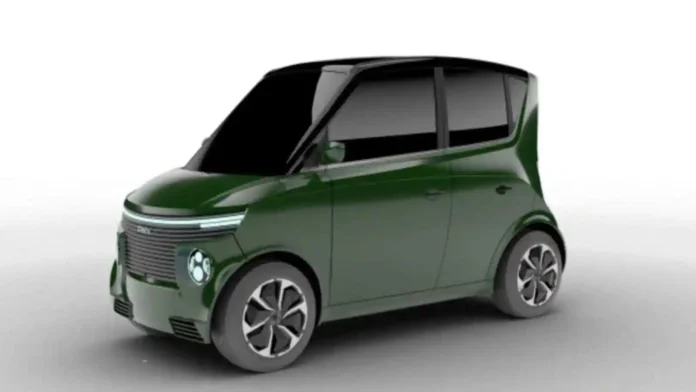
The Eas-E, a new electric vehicle from PMV Electric, has been introduced. It is the least expensive electric vehicle available in India. The car is technically a quadricycle because it only has two seats. There aren’t any options available on the market, though, if you want to purchase a little electric automobile. It’s the first electric vehicle under Rs 5 lakh in price (ex-showroom in India).

The price for the PMV electric vehicle starts at Rs. 4.79 lakh (ex-showroom). There will be three alternatives with various price points. The least expensive will be able to provide a range of 120 kilometres on a single charge. The top model has a 200 km range, while the second model has a 160 km range. The Mumbai-based automaker claims to have received 6,000 pre-orders since the bookings were made available. A payment of Rs 2,000 can be used to complete the pre-order process. The new electric vehicle will be produced in PMV’s Pune production facility, the company has stated. By the middle of 2023, deliveries are anticipated to start. A 3-year/50,000 km warranty will be included with the car’s sale.

The motor of the PMV Electric has a 13 hp power rating and a 50Nm torque rating. PMV claims that Eas-E has a 0–40 kph time of fewer than 5 seconds and a top speed of 70 kmph. According to PMV, the car will only cost 75 paise for each kilometre. According to the manufacturer, it has a 1,157mm width, making it India’s slimmest quadricycle. Compared to the Tata Nano’s 3,099mm length, the PMV Eas-E is substantially smaller at 2,915mm. Its height is 1,600mm. The electric vehicle has a 2,080mm wheelbase and 170mm ground clearance.

With LED daytime running lamps adding some glitz to the front, the Eas-E gets a low-profile grille. Due to its extraordinary narrowness, the car can get by with just one wiper and two circular headlamps.

Eas-E
credit: hindustantimes

The vehicle receives a light bar on the taillight, giving it a more cutting-edge appearance. Both single-tone and dual-tone colour options for the new car are available for purchase. The vehicle has four doors in total, with one door located behind the other. The passengers will have easy access thanks to the four doors.

The slim shape of the Eas-E electric automobile has led to a distinctive dashboard. The steering wheel of the car is located directly in the middle of the dashboard. The driver’s seat of the car is adjustable. Both an infotainment display and an LCD digital instrument cluster are included with Eas-E purchases. Onboard navigation and smartphone communication will be supported by the display.

Depending on the driver’s preferences, the vehicle also has a variety of driving modes to maximise performance or range. Regenerative braking, single-pedal operation, remote parking assistance, and cruise control are also included. For future-proofing, the automobile will receive OTA updates and 4G connectivity.

Also Read:

Source

You can now buy Okaya EVs from Flipkart directly with 15-day guaranteed delivery

0
You can now buy Okaya EVs from Flipkart directly with 15-day guaranteed delivery

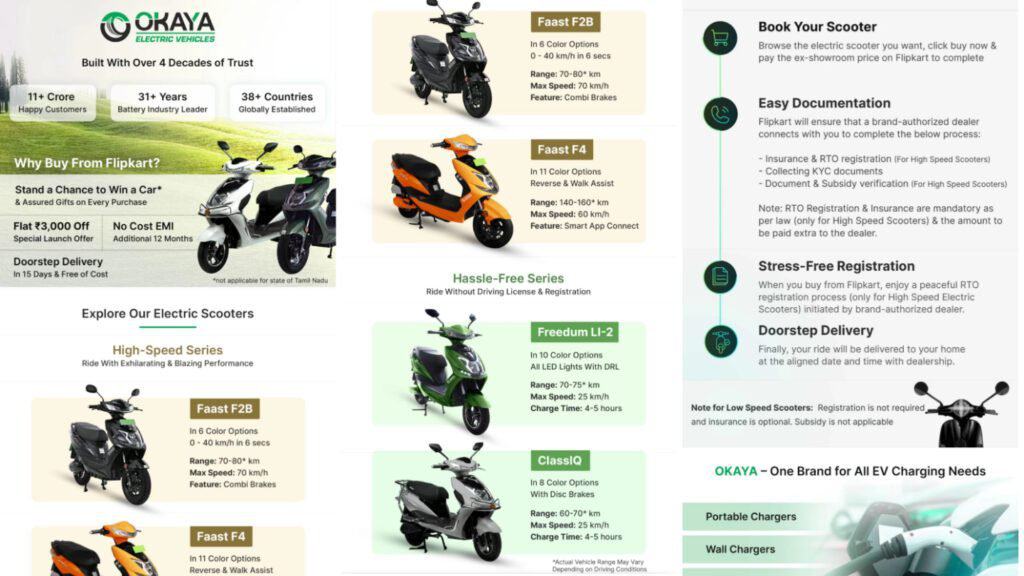
Okaya EVs will now be available on Flipkart

As you know, Flipkart is the biggest e-commerce player in India and it has already started selling two-wheelers on its platform to offer almost any to everything online. Now, considering the craze of EVs in the country, Flipkart is now selling two-wheeler EVs on its platform directly and helping consumers like us to get the EV booked as well as eventually delivered to your doorsteps.

While a number of companies like Ather, Bounce Infinity, and Ampere have already started selling their EVs via Flipkart, now, as per the latest press release by the company, Okaya EVs will also be listed on Flipkart. The launch of Okaya’s range of EVs on Flipkart will enable them to make their offerings available to a wider base of millions of Flipkart customers across 9,000 pin codes in 245 cities including metros such as Bengaluru, Delhi and smaller cities including, Gondia, Jorhat, Mumbai and Sultanpur.

You can now buy Okaya EVs from Flipkart directly with 15-day guaranteed delivery

If you haven’t really seen EVs on Flipkart then head over to “Bikes and Cars” category and select “Two-wheelers” to access the selection. Here, you will have multiple two-wheelers to choose and you can filter for EVs as well, customers can also make use of Flipkart’s affordability constructs such as No Cost EMI and credit card offerings to make their purchases through a paperless experience.

Essetically, Flipkart is also promising a 15-day guaranteed delivery which again boosts confidence of new buyers, but, do see the availability depends on your pincode for each EVs from various makers. Okaya EVs as we checked in already available in popular cities like Bangalore with 15 days of booking and if you want to check their latest offerings you can directly check from the Flipkart app.

Rakesh Krishnan, Senior Director, Two-wheelers, Automobile, and Electronics at Flipkart, said, “As India’s homegrown e-commerce marketplace, Flipkart has been at the forefront of building new categories online and we are excited to have recently launched our two-wheeler category to democratize the rapidly evolving industry. Our aim is to offer a wide selection of multi brand two-wheelers across vehicle types with a 15-day delivery promise which is a first in the industry along with a paperless and affordable purchase experience. We are excited to make available Okaya’s range of EVs as we look to fulfill the evolving EV requirements of our customers across the country.”

The two-wheeler category has been witnessing impressive traction among customers with over 10x increase in searches since its launch on Flipkart.

Anshul Gupta, Director, Okaya EV, said, “We are one of the fastest growing EV brands in the country, drawing our legacy from over three decades of experience as a leader in the battery industry. We offer a healthy selection of both high speed and low Speed EVs which helps improve the selection for customers. With Flipkart’s deep understanding of customer needs and their industry-best affordability programs, we are hopeful of significantly expanding our reach among customers and bringing customer delight with a 15-day guaranteed delivery.”

Over the last few years, new age two-wheelers and EVs have been gaining traction in India on the back of growing interest towards sustainable mobility options, government subsidies and a wider selection available. Flipkart is using innovative ways to popularize online purchase of two-wheelers and conducted its first-ever Live Commerce event called ‘The Auto Hour Live’ during the festive season in October which saw participation of thousands of viewers.

via Flipkart Press Release

Kia EV6 Wholesale Sales shows slight decrease

0

According to Kia, its global car sales grew to 238,660 vehicles in October, up 8.6% over the same month last year. The business was able to increase its year-to-date result to 2.41 million units (up 2.6%) as a result. Unfortunately, there hasn’t been much advancement in the BEV sector, as the volume of Kia EV6 vehicles fell year over year for the third consecutive month.

Kia EV6 wholesale sales last month totaled 6,518 units (closely connected to production), including 2,175 in South Korea and 4,343 exported.

Kia
credit: insideevs

The decrease from one year ago is 6.8%. Positively, the volume increased somewhat from October. This year, the average monthly sales seem to be around 6,800 (and 6,500 since August), thus October does not appear to mark a significant advancement.

  • EV6: 3,904 retail sales outside South Korea
  • (6,518 wholesale – 2,175 in South Korea and 4,343 exported)
  • Niro EV: 2,456 retail sales outside South Korea
  • Soul EV: 361 retails sales outside South Korea
  • Total*: at least 8,896 (down 22% year-over-year) or 3.7% of the total volume

Whether the factory can create any more or whether that is the maximum it can, it is difficult to determine Since Kia EV6 wholesale volume has already surpassed 68,000 units this year, we may continue to predict that at least 80,000 units may be produced by 2022. The company produced over 97,000 EV6 in total. Over 65,000 of them were exported, the majority.

Also Read:

Source

Report: India might become the future World Leader in EV Production Market

0

According to a study by Berkeley National Laboratory and UCLA, India has the potential to overtake the rest of the world in the production of electric vehicles. The study stressed that switching from diesel-fueled trucks to electric-charged ones will help India achieve its goal of net zero greenhouse gas emissions by the year 2070. 88% of the oil used in India is imported, while freight vehicles account for roughly 60% of all petroleum use in the country’s transportation sector.

According to a study released on Monday by the University of California, Los Angeles (UCLA) and the Lawrence Berkeley National Laboratory (Berkeley Lab), electric trucks would be less expensive to operate than diesel trucks. India may also overtake the rest of the world as a producer of electric vehicles.

According to the report, the move will also assist India in lowering its dependency on imported oil, enhancing air quality, and achieving its goal of net zero greenhouse gas emissions by 2070.

India
credit: entrepreneur.com

According to Nikit Abhyankar, research scientist at Berkeley Lab and author of the study Freight Trucks in India are Primed for Electrification, electric trucks would be crucial to improving India’s energy security and lowering the cost of goods transportation. According to the paper, if electric vehicles were used instead of diesel trucks, greenhouse gas emissions would drop from 35% per kilometre to 9%. This is based on India’s current grid emissions.

According to report author and academic scientist at Berkeley Lab and UCLA Deepak Rajagopal, India had previously started very ambitious electrification initiatives. According to Rajagopal, the timing is now right to implement targeted rules regarding trucking, according to a statement issued by Berkeley Lab. Scientists from Berkeley Lab assessed how battery-electric trains may bring environmental justice, financial savings, and resilience to the US in similar study that was released last year.

Also Read:

Source

Mercedes has slashed its EV car Prices in China

0

Due to intense competition in the largest EV market in the world, Mercedes-Benz Group AG reduced pricing on two electric car models in China by as much as $33,000. The luxury automaker announced late Tuesday that selected models from its EQ range will have lower costs starting on Wednesday and that it would offer subsidies to consumers who had only just purchased the vehicles.

The price decreases appeared to be effective right away, as the EQE was listed on Mercedes’ Chinese website Wednesday morning for 478,000 yuan ($67,675), down from 528,000 yuan on Tuesday. The EQS luxury edition model was reduced from 1.19 million yuan on Tuesday to 956,000 yuan on Wednesday, a decrease of almost $33,000.

According to people familiar with the company’s plans who wanted to remain anonymous because the information is private, Mercedes is making the adjustments because sales in China have been underwhelming. According to the sources, some dealers have already started running deals in an effort to increase sales, with EQS deliveries occasionally falling as low as 100 per month.

Mercedes
credit: bloomberg

The Mercedes flagship S-Class model’s all-electric variant, known as the EQS, is designed to highlight the company’s most cutting-edge technological advancements.

There is less headroom in the back seat of the EQS, which is a disadvantage in the Chinese market where wealthy customers may prefer to sit in the back rather than drive the car themselves. This is despite the fact that the EQS’s low-slung roof makes it very aerodynamic, increasing its range on a single charge.

Mercedes noted in a statement to Bloomberg News that the top-end EV category in China is still developing, particularly for vehicles costing more than 1 million yuan. According to data from the China Automotive Technology and Research Center, Mercedes sold roughly 8,800 EVs in the nation between January and July. These sales included the less priced EQA, EQB, and EQC models. EV industry leader BYD Co. in China sold approximately 220,000 EVs in October alone. BYD Co. focuses more on the middle market. Foreign automakers are responding to challenges on the Chinese market in addition to Mercedes. In October, Elon Musk’s Tesla Inc. reduced pricing across the board in China.

Also Read:

Source

New Solar-Powered Electric Vehicle art adds new Beauty to Bengaluru’s Street

0

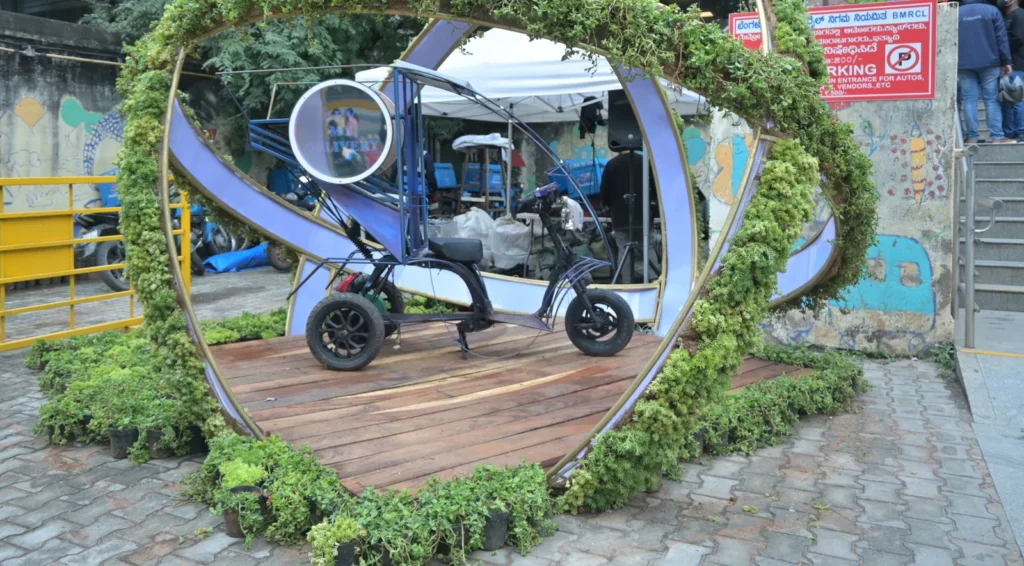
This past weekend saw the premiere of a novel solar-powered electric vehicle installation on Bengaluru’s Church Street. Its construction from recycled materials and interactive features, such as a throttle interaction that dispenses treats, represent India’s transition to electric automobiles.

The three-wheeler installation developed as part of the Bengaluru Moving programme combines art and science to get residents of Bengaluru to consider the path that their package deliveries take. It is intended to be a tactile and engaging experience that invites viewers to actually touch and feel an EV.

According to a study by the Stand.earth research organisation, India has last-mile emissions per delivery of roughly 285 gCO2, which is far higher than the weighted average for the entire world of 204 gCO2. Delhi, Mumbai, Kolkata, Bengaluru, and Chennai are just a few of the cities that produce more CO2 from last-mile delivery than whole nations do.

In support of the installation, the Commissioner of Directorate of Urban Land Transport of Government of Karnataka, V Manjula said, “We are very pleased to be supporting #EVmyDelivery initiative and this interactive installation that is raising awareness about last mile emissions resulting from the e-commerce deliveries and the transition to electric 2 and 3-wheel fleets to eliminate the release of tailpipe emissions. The Directorate of Urban Land Transport’s mandate is to further the adoption of sustainable transport in Karnataka and we are happy to support such initiatives that focus on building citizen awareness and action.”

Bengaluru
credit: auto.hindustantimes

This installation is the ideal illustration of how art can be used to raise social consciousness and enable artists to support ground-breaking notions and ideas. For this particular piece, Bengaluru-based artist Rahul KP (also known as Mechanimal) and Mumbai-based artists Radhika and Madhvi of Workshop Q collaborated. To show how electric vehicles for last-mile delivery are cleaner and more sustainable since they drastically cut tailpipe emissions, they collaborated to build a solar-powered wheeler out of junk.

“Art holds the power to move and motivate people to experience the world differently. It provides a window into an alternate world of possibilities and that is what we have tried to do with this installation. Open up the world of possibilities to consumers who are looking to make informed and sustainable choices,” said Radhika and Madhvi.

The Directorate of Urban Land Transport and Bangalore Metro Rail Corporation worked together to construct the installation. The event aims to bring together various players from the automobile industry, e-commerce, startups, and design studios to discuss the problem of greening the last mile delivery along with Autoguru and Bengaluru Design Week.

Also Read:

Source

BYD ATTO 3 Electic SUV enters the Indian Market starting at Rs.33.99 Lakh

0

As you may remember, BYD entered the Indian market in 2017 with the introduction of its electric buses. The E6 MPV followed in November 2021. BYD, which is now acknowledged as the largest EV manufacturer in the world, claims that around 1,500 reservations have been made for the new Atto 3 electric SUV. Its ex-showroom launch price is Rs 33.99 lakh. The E3 platform is where the Atto 3 is located. A permanent magnet synchronous motor is included with it. According to ARAI tests, the BYD-ATTO 3 has a range of 521 km, a greater battery capacity of 60.48kWh, quick charging from 0% to 80% in 50 min, and a 0-100km/h acceleration time of 7.3s.

image BYD ATTO 3 Electic SUV enters the Indian Market starting at Rs.33.99 Lakh

With many of the country’s automakers making big plans to add even more electric vehicles to their lineups, India’s electric vehicle market is moving forward at full speed. Up till now, the Tata Nexon EV, Tigor EV, Tiago EV, MG ZS EV, and Hyundai Kona Electric have been the segment’s main growth drivers. Numerous new vehicles from regional and international automakers have entered the market. BYD, a Chinese manufacturer of electric vehicles, intends to grow its business in India as it enters the mainstream EV market with the Atto 3 electric SUV.

The BYD-ATTO 3 is an extremely competitive EV option thanks to its sporty, potent exterior and rhythmic interior.

It also has the L2 Advanced Driving Assistance System (ADAS) BYD Dipilot, 7 airbags, a panoramic sunroof, a 12.8-inch (32.5cm) adaptive rotating Screen, 360° holographic transparent imaging system, NFC card key, and a Vehicle to Load (VTOL) mobile power station. In addition, the BYD-ATTO 3 offers features like wireless charging for smartphones, a one-touch electric tailgate, an 8-speaker audio system, electric seat adjustment, voice control, multi-color gradient ambient lighting that changes colours in time to the beat of the music, PM 2.5 air filter, CN95 air filter, etc. It received a 5-star safety certification from EURO NCAP.

There are four colour options for the BYD-ATTO 3: Boulder Grey, Parkour Red, Ski White, and Surf Blue. A 3kW portable charging box, a 7kW home charger, installation services, a 6-year roadside support contract, and six free maintenance visits are all included in the BYD-ATTO 3 package. In addition, BYD-ATTO 3 provides traction battery warranties of 8 years or 1.6 lakh kilometres (whichever comes first), motor and motor controller warranties of 8 years or 1.5 lakh kilometres (whichever comes first), and vehicle warranties of 6 years or 1.5 lakh kilometres.

Also Read:

Source

Tesla is sharing EV Charging designs with other manufacturers

0

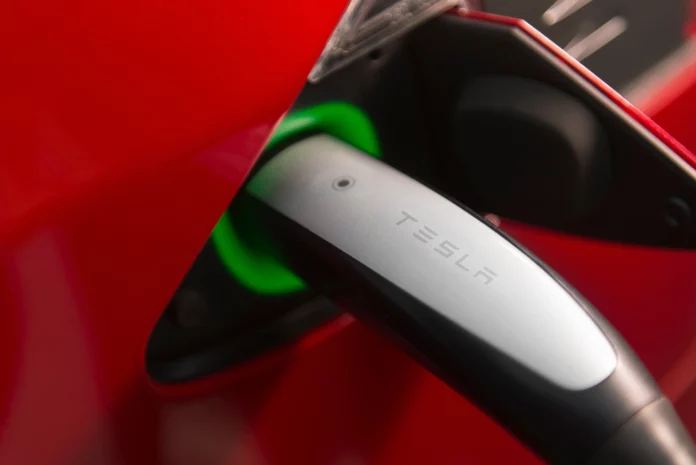
In an effort to persuade network providers and manufacturers to adopt the technology and aid in making it the new norm in North America, Tesla is revealing the design of its EV charging port. Tesla announced that its design and specification files are ready for download in a blog post on Friday. In order to make Tesla’s charging connector a public standard, the firm claimed it is “actively working with relevant standards bodies to codify Tesla’s charging connector as a public standard.”

All Tesla vehicles have a charging plug that supports up to 1 MW of DC charging as well as AC charging. Compared to the Combined Charging System (CCS) connectors used by the majority of EVs in North America, it is regarded as having a more compact design and better performance.

Tesla asserts that the North American Charging Standard (NACS), the name it has given to its charging connector and charge port, is the most widely used charging standard in the continent. This statistic is based on the number of chargers at Tesla-branded Supercharging stations as well as vehicle sales in North America. In the US, Tesla has roughly 1,500 Supercharger stations. An average of nine chargers are present at each station.

Tesla
credit: autoeconomictimes

Tesla did not identify any automakers or providers of charging infrastructure as converts. It’s difficult to imagine GM, Ford, and Stellantis switching to Tesla’s technology in this intensely competitive environment, where almost every automaker is now using the CCS.

But at least one business, the EV startup Aptera, is in favour of the change. Aptera demanded earlier this year that the U.S. government make Tesla’s Supercharger technology the norm for all EV charging across the nation. Additionally, several of EVGo’s American charging stations now have Tesla hookups.

Network operators “already have plans in motion” to implement NACS at their chargers, the business claimed in the blog post. Tesla owners would be able to charge at these stations without the use of an adaptor if network service providers like ChargePoint, EVConnect, or Electrify America added NACS. Owners of those vehicles would have access to Tesla’s North American Supercharging and destination charging networks if automakers switched to NACS for its EVs.

Also Read:

Source