Kawasaki took to the EICMA Milan Motorcycle Show to unveil a trio of electric motorcycles, with Electrek front and center to see the action live. The Kawasaki Ninja EV and Kawasaki Z EV were revealed as traditional battery electric motorcycles, while the company also unveiled an HEV hydrogen-powered concept motorcycle. While the electric Ninja and Z models are both still in prototype form, Kawasaki Motors president Hiroshi Ito announced to the audience that the two models would be available for purchase next year.
Kawasaki Z, Ninja electric bikes
The Japanese brand took the wraps off a number of bikes at EICMA 2022, yesterday. As per the company, it will roll out the Ninja electric bike and Z electric bike in global markets next year, which are officially called the Ninja BEV and Z BEV, respectively. Both the Ninja BEV and Z BEV electricbikes will be available for purchase in 2023.
These bikes appear to have been inspired by the Z400 and the Ninja 400. According to the brand, these bikes will abide by the A1 requirements. Moreover, they will be marketed as entry-level electric performance bikes and will share the same battery with a capacity of up to 3.0 kWh.
The hybrid electric vehicle prototype, on the other hand, is still a little ways off from going into production, but Kawasaki predicts that it will hit the market by 2024. Further information on the motorcycle is still expected, but the HEV will have robust hybrid technology and will use either hybrid power or simply electric power depending on the needs.
President Ito has reaffirmed that Kawasaki is still heavily focused on bikes with internal combustion engines even if the company has begun to move toward electric motorcycles. Additionally, he stated that Kawasaki will launch about 30 ICE models internationally between 2024 and 2025, with almost half of them arriving in Europe.
For the safety of the rider, both the Z EV and Ninja EV are equipped with disc brakes on both the front and rear wheels, along with dual-channel ABS and a regenerative braking system for improved braking performance.The suspension duties on both motorcycles are taken care of by telescopic forks on the front and a mono-shock unit on the rear end.
As of now, the pricing and availability details for the Z EV and Ninja EV are very much a mystery. When launched, we can expect both all-electric motorcycles to be priced at around Rs. 5 lakh (ex-showroom) in India.
Kawasaki took to the EICMA Milan Motorcycle Show to unveil a trio of electric motorcycles, with Electrek front and center to see the action live. The Kawasaki Ninja EV and Kawasaki Z EV were revealed as traditional battery electric motorcycles, while the company also unveiled an HEV hydrogen-powered concept motorcycle. While the electric Ninja and Z models are both still in prototype form, Kawasaki Motors president Hiroshi Ito announced to the audience that the two models would be available for purchase next year.
Kawasaki Z, Ninja electric bikes
The Japanese brand took the wraps off a number of bikes at EICMA 2022, yesterday. As per the company, it will roll out the Ninja electric bike and Z electric bike in global markets next year, which are officially called the Ninja BEV and Z BEV, respectively. Both the Ninja BEV and Z BEV electricbikes will be available for purchase in 2023.
These bikes appear to have been inspired by the Z400 and the Ninja 400. According to the brand, these bikes will abide by the A1 requirements. Moreover, they will be marketed as entry-level electric performance bikes and will share the same battery with a capacity of up to 3.0 kWh.
The hybrid electric vehicle prototype, on the other hand, is still a little ways off from going into production, but Kawasaki predicts that it will hit the market by 2024. Further information on the motorcycle is still expected, but the HEV will have robust hybrid technology and will use either hybrid power or simply electric power depending on the needs.
President Ito has reaffirmed that Kawasaki is still heavily focused on bikes with internal combustion engines even if the company has begun to move toward electric motorcycles. Additionally, he stated that Kawasaki will launch about 30 ICE models internationally between 2024 and 2025, with almost half of them arriving in Europe.
For the safety of the rider, both the Z EV and Ninja EV are equipped with disc brakes on both the front and rear wheels, along with dual-channel ABS and a regenerative braking system for improved braking performance.The suspension duties on both motorcycles are taken care of by telescopic forks on the front and a mono-shock unit on the rear end.
As of now, the pricing and availability details for the Z EV and Ninja EV are very much a mystery. When launched, we can expect both all-electric motorcycles to be priced at around Rs. 5 lakh (ex-showroom) in India.
According to government figures, sales of electric vehicles in India are expected to surpass 10 lakh in 2022. According to data from the Ministry of Road Transport and Highways’ Vahan database, 9.95 lakh electric vehicles have been registered in India as of 2022, a threefold rise from 3.22 lakh in 2021 and an increase of more than eightfold from 1.21 lakh in 2020. The statistics does not include Telangana registrations, which could indicate that the number has already surpassed 10 lakh.
According to the database, a total of 19.28 lakh electric vehicles have been registered since the database’s inception. The major drivers of growth have been EV fleet operators and people purchasing two-wheelers.
According to The Economic Times, manufacturers such as Ola Electric, Tata Motors, and Ather Energy stand to benefit the most from rising EV usage.
“Our aggressive approach in the EV segment helped us be the first Indian auto manufacturer to cross the 50,000 EV sales milestone this year,” Shailesh Chandra, managing director of Tata Motors Passenger Vehicles & Tata Passenger Electric Mobility, told the publication.
credit: deccanherald
Multiple product launches announced by major industry participants, increased acceptance of EVs with hurdles to adoption decreasing, and stringent pollution rules requiring automakers to include EVs in their portfolio are all boosting market growth, according to Chandra.
“The growth momentum in the electric two-wheeler industry has been building positively in the last few months. In the next few years, there would be more electric two-wheeler product launches at competitive price points, which would help boost their adoption”, said Hero Electric chief executive Sohinder Gill.
Vehicle retail sales, including electric and fossil-fuel-powered vehicles, totaled 15.37 lakh units in December, a decrease from about 24 lakh units the previous month. By 2030, the government expects EVs to account for 30% of private automobiles, 70% of commercial vehicles, and 80% of two- and three-wheelers. According to the newspaper, sales of electric two-wheelers in India are predicted to increase 24 times from their current level to 1.769 crore units by 2030, citing a survey by venture capital firm Blume.
Godawari Electric Motors, based in Raipur, has announced that it will demonstrate its whole EV two and three-wheeler line, which will be debuted in 2023, during the next Auto Expo 2023. At the show, the company will unveil two products: an e-auto (L5M) and an e-bicycle.
Last month, the Godawari Electric Motors stated that its e-auto will have whole vehicle body panels built of DCPD material. DCPD is the most recent plastic technology that provides numerous advantages.
According to Godawari Electric Motors, the material is impact resistant and “virtually unbreakable,” making the vehicle sturdy enough to perform in tough situations and rust-proof.
credit: financialexpress
At the Auto Expo, the electric two- and three-wheeler maker will also display prototypes of its e-scooter, e-loader, and e-rickshaw. All of these products will be produced at the company’s new production plant in Raipur. These three products are scheduled to be released in the coming fiscal year.
The business previously stated that it would invest up to Rs 150 crore in Raipur to establish an EV manufacturing unit.
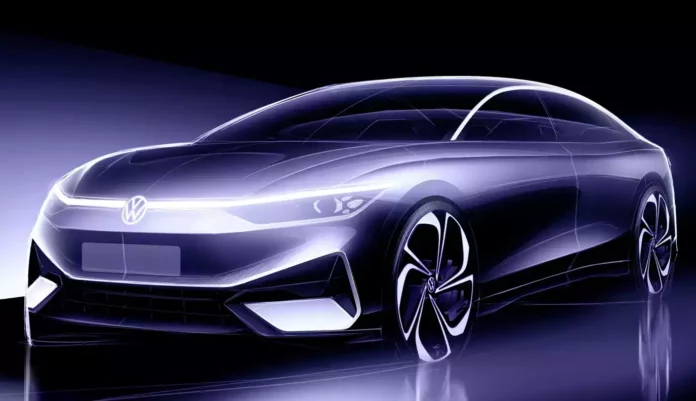
Volkswagen is preparing to unveil a new totally electric vehicle on January 3rd at the Consumer Electronics Show (CES) 2023. According to the information available, the business will reveal the camouflaged version of the new EV, as well as the nameplate and technical specifications.
While details are limited, the new ID.Aero electric vehicle is expected to debut on the global stage next month at CES 2023. VW even previewed the forthcoming ID.Aero’s arrival in China last month.
Volkswagen intends to market the ID. Aero to customers in the premium midsize class.
“With the ID. AERO show car, we are revealing a preview of the next member of the ID. family. A car with an emotional and at the same time extremely aerodynamic design, a range of over 600 kilometers, an extraordinary amount of space, and a premium interior,” said Ralf Brandstätter, Chief Executive Officer of Volkswagen Passenger Cars.
credit: timesindianow
The VW CEO also stated that the future ID.Aero will be VW’s next global automobile model. It will be available in Europe, China, and the United States. The model, which will be constructed on the company’s Modular Electric Drive Matrix (MEB) platform, is expected to include a 77 kWh lithium-ion battery. The new EV is expected to have a WLTP range of up to 620 kilometres on a full charge. The 0.23 drag coefficient will also help the automobile reach a longer range.
The manufacture of the future Volkswagen ID.Aero will begin in Emden next year, with China sales expected to begin in late 2023. Next year, the company will debut its alternative ID.Buzz EV in the United States.
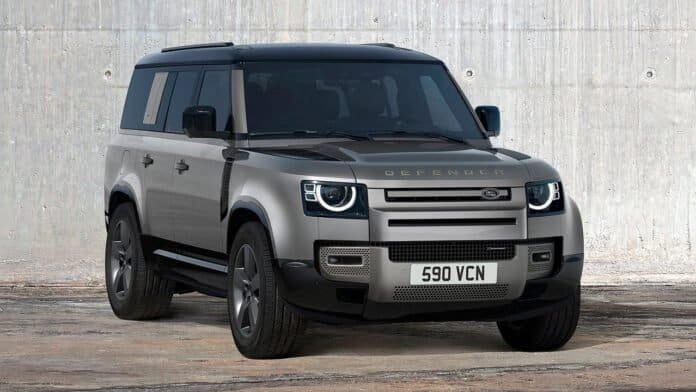
According to Auto Express, the Land Rover Defender will go totally electric over the next few years. The most recent version of the popular 4×4 was only introduced in 2020, but completely electric versions of the 90, 110, and 130 are expected to arrive as part of a revised Defender line-up in 2025, with automobiles reaching customers in 2026.
The transition is projected to result in a platform technology shift from the current D7 Premium Lightweight Architecture to Land Rover’s advanced new MLA Flex platform. MLA can accommodate both fully electric and internal combustion engines, and it already underlies the company’s new Range Rover and Range Rover Sport models, with all-electric versions planned in 2024. The platform transition will occur at a time when the Defender is ready for a mid-life update, but don’t expect significant changes to the car’s appearance, despite the change in architecture.
The style and dimensions of the Defender are expected to remain the same, as with the Discovery Sport, which shifted platforms to Land Rover’s Premium Transverse Architecture in 2019 to allow for greater electrification.
Inside, there may be some tweaks to the infotainment system, such as a slightly larger screen, but the cabin design has been so warmly accepted by customers that it is unlikely to be altered significantly. However, as Land Rover seeks to improve its environmental credentials, the usage of sustainable materials is set to expand.
credit: autoexpress
Engineers at the company are excited about the potential of their legendary 4×4 being electric and the benefits it will bring to its off-road capabilities. Through software management, more control of electric power delivery is feasible, as is sophisticated torque vectoring. Both will improve the Defender’s significant off-road capability, while a completely flat underbelly will provide more ground clearance.
We’re yet to see how Land Rover separates its all-electric models from internal combustion-engined vehicles, but with less cooling required, we’d expect the intakes on the ICE model to be blanked out for the electric version – as shown in our exclusive Defender EV photograph. According to JLR rumours, this treatment might be used to the company’s only current all-electric model, the Jaguar I-Pace, which is set for a facelift in early 2023.
Despite calls from some quarters for Land Rover to accelerate the arrival of all-electric models, the company’s current management is unwilling to do so, given that the company has an order bank of over 200,000 cars, the majority of which are high-margin Range Rovers, Range Rover Sports, and Defenders. Buyers clearly have a preference for electrified JLR items. Currently, over 65% of all models sold are electrified in some fashion, ranging from mild hybrids to plug-in hybrids and the I-Pace full EV.
As India accelerates its adoption of electric vehicles (EVs), the true test of EVs, particularly two-wheelers, will occur again with the arrival of summer next year. According to EV manufacturers and network providers, they have learned from 2022 and are ready to give a more secure and safe journey for users. Dozens of EVs caught fire, including in showrooms, in the first half of 2022, causing some injuries and prompting many investigations from the government and relevant departments.
In October, the government issued new standards for EV manufacturers, including additional safety criteria for battery cells, battery management systems (BMS), on-board chargers, battery pack design, and heat propagation due to internal cell short circuit leading to fire, among other things.
According to Gunjan Malhotra, Director, Komaki Electric Division, the adoption of EVs is expanding due to the growing need to minimise reliance on imported oil and the rapidly dwindling fossil resources, and they are prepared to deliver a secure and safe experience for riders.
“Komaki envisions safe and reliable EVs on Indian roads by offering ultra-modern EVs equipped with heat-resistant Lithium Ion Phosphate (LiPO4) batteries. Even in the worst-case scenarios, LiFePO4 batteries are safer and more secure against fire. The iron-containing cells and excellent fire resistance make LiPO4 incredibly safe and effective,” Malhotra said.
Another factor driving EV demand is their low emission level, which is expected to drive market revenue growth over the projection period. EVs emit fewer greenhouse emissions and air pollution than other gasoline or diesel-powered vehicles.
“These automobiles also contribute to a sustainable environment by not polluting the environment with smoke or hazardous emissions. Therefore, brands are engaged in fierce competition in the two-wheeler segment of India’s valuable electric-two-wheeler market,” said Malhotra.
Electric vehicle (EV) sales in the country have increased dramatically in the previous two years. EV sales climbed from 48,179 in 2020-21 to 2,37,811 in 2021-22 and 4,42,901 in 2022-23.
In a written reply to the Lok Sabha last week, Minister of Heavy Industries Mahendra Nath Pandey stated that the ministry has implemented a scheme titled ‘Faster Adoption and Manufacturing of Electric Vehicles in India Phase II’ (FAME India Phase II) to promote the adoption of electric/hybrid vehicles in the country.
credit: telanganatoday
Phase-II of the FAME India initiative is currently being implemented for a five-year term beginning April 1, 2019, with a total budgetary support of Rs 10,000 crore. According to Akshit Bansal, Founder and CEO of EV charging network operator Statiq, the year 2022 will be monumental in terms of ramping up infrastructure for EV charging stations in the country.
“Indeed, from a mere 1,000 publicly available chargers at the beginning of the year, they were estimated to have shot up to nearly 1,800 by the middle of the year, a figure which has further jumped to about 2,500 as we come to close of the year, underlining a steady growth path,” Bansal said.
The approaching year holds immense promise for EV charging stations in the country, in a market that now has over 13 lakh EVs, including 2Ws, 3Ws, and 4Ws, and continues to grow.
“With the government’s broader commitment to clean mobility and the concomitant reduction of GST on EVs as well as chargers/charging stations, private investment into this segment would also play a larger role now. At the same time, real estate developers would also seek to collaborate with EV charging station players for both residential and commercial properties,” Bansal added.
Private equity (PE) investment in India’s EV business could exceed a billion dollars this year, according to industry analysts. According to Ketan Mehta, Founder and CEO of Jaipur-based HOP Electric, an electric two-wheeler manufacturer, investing in EV mobility is becoming the go-to decision in India, especially because people are making conscious eco-friendly and sustainable choices.
“The government’s ambitious Rs 26,058 crore production-linked incentive (PLI) scheme for auto under the new Non-Automotive Investor (OEM) category has come as a welcome initiative to bolster the country’s manufacturing capacities,” he said.
Under this mandate, HOP Electric will invest more than Rs 2,000 crore in India in the next five years to boost the company’s chances of becoming a global energy mobility pioneer,” he added. The most crucial issue in the trip, according to Sameer Aggarwal, Founder and CEO of EV fintech platform Revfin, has been the lack of financing choices for commercial drivers.
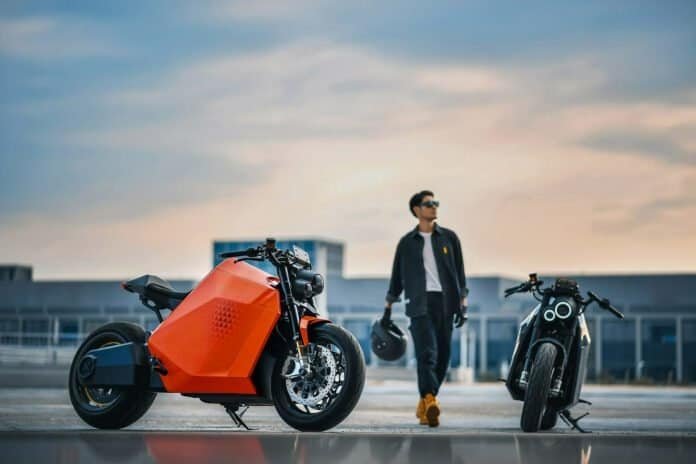
EVs are getting insanely popular days and to dive into the race many players are investing billions, however, Chinese players do have an edge for their early adoption. As we know CES 2023 is coming and it’s one of the biggest Consumer Electronic Shows of the year, the EV maker Davinci Motor will be participating and showcasing its futuristic DC100 electric motorcycle.
“We’re excited to announce that CES 2023 represents our first on-site appearance in the US market,” said Rosanna Libia, Davinci Motor International Business Manager. “As a tech-driven company, this show is top on our agenda for events where we want to represent ourselves as a tech company in the US and across the world. CES 2023 serves as the perfect opportunity to introduce our product to the US market, and we would like to invite media and attendees to visit our booth.”
A New Era Of Electric Mobility
Headlining Davinci Motors‘s CES 2023 booth will be the brand-new DC100 product, which the company bills as the first electric motorcycle designed to rival traditional 1,000 cc motorcycles in terms of performance. Sure to be hit with attendees at the event, the DC100 features a revolutionary, sci-fi-inspired, design that has never been seen before in the market.
When it comes to the two-wheeler’s aesthetic and performance, engineers and designers have worked for hand in hand tirelessly to strike a perfect balance between acceleration, speed, and range. Their efforts truly paid off, as is demonstrated in the DC100’s technical specifications. This electric motorcycle is capable of achieving 0-60 mph (0-100 km/h) in a mere 3 seconds before topping out at 124 mph (200 km/h). At the same time, it boasts a range in excess of 249 mi (400 km), while a full charge takes just half an hour using level 3 DC fast-charging stations.
The appearance of Davinci Motor at CES 2023 marks a period of continued momentum for the company following its European debut in November at EICMA, the world’s leading exhibition of motorcycles in Milan, Italy.
There has been anticipation in the US market regarding the DC100 over recent months from potential users, media, and distributors alike. CES 2023 is primed to serve as the perfect opportunity for end-users to get a feel of the product for the first time while acting as a chance for potential US dealers and distributors to get the first look as well.
Davinci Motor’s booth will be located in North Hall #10163, exclusively showcasing the company’s flagship DC100 product, as well as its latest technology, new design, and overall riding experience.
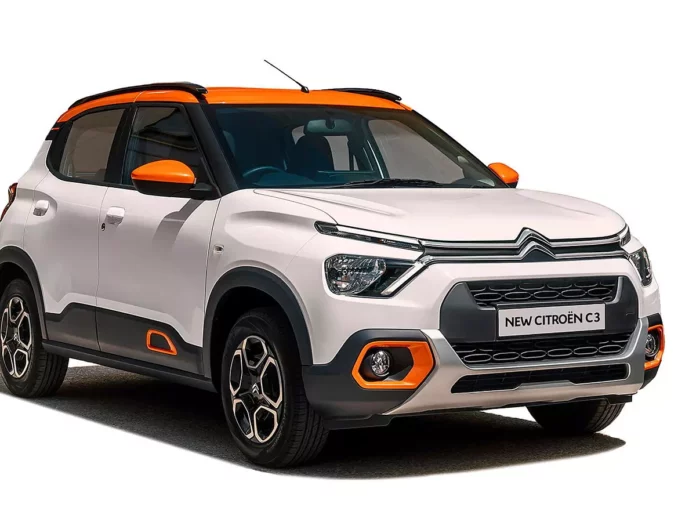
Citroen India debuted the C3 in the affordable category earlier this year. The French automaker also confirmed the hatchback’s electric variant, dubbed ‘eC3’, a few days ago. The eC3 has been spotted in its production-ready form ahead of its official debut, which is slated to take place later this month.
The spotted Citroen eC3 was painted in an orange hue and, based on prior sightings, could have the charging station on the front fender.
credit: carwale
The eC3 has the same exterior design and appearance as the ICE C3, with split headlamps, steel wheels with covers, square tail lamps, roof rails, and a dual-tone paint scheme. The interior of the eC3 is currently lacking in detail. However, we anticipate that it will include a 10-inch touchscreen infotainment system, a digital instrument cluster, a height-adjustable driver seat, and power windows.
credit: carwale
While the technical specs of the Citroen eC3 are unknown, we expect it to be powered by a 20-30kWh battery pack with a range of 200-250km on a single charge. The Citroen eC3 will compete with the Tata Tiago EV when it is released.
Sony Honda Mobility (SHM), a joint venture between Sony and Honda, has officially confirmed that its new electric vehicle (EV) will be unveiled on January 4 at the annual Consumer Electronics Show (CES) in Las Vegas. The joint venture plans to begin the manufacture of its first electric vehicle in 2026, with a concentration on North American production and online sales. Japan will be the second market to launch, followed by Europe. Sony accompanied the news with a teaser image. However, the teaser photograph does not show the model clearly.
While many aspects are yet unknown, Sony Honda Mobility has stated that the vehicle may be capable of autonomous driving at level 3 under certain scenarios and level 2+ in a wider range of settings. The business also claims that certain functions will be introduced to the car via a membership service. According to rumours, the automotive infotainment system may incorporate a full version of the PlayStation 5.
credit: autohindustan
According to rumours, Sony Honda Mobility’s next EVs will be offered in the premium EV segment, which indicates that while they may not be inexpensive for mass-market consumption, the goods may undercut those from luxury automobile makers.
Sony has been charged with developing the software system within the EVs, as well as cloud-based services and in-cabin entertainment options. Honda will offer its experience in vehicle manufacture and engineering to a joint venture with Sony. It is unclear if Honda or Sony Honda Mobility (SHM) will be in charge of after-sales service. Sony Honda Mobility has stated that pre-orders for the joint venture’s first car will be available in the first half of 2025.
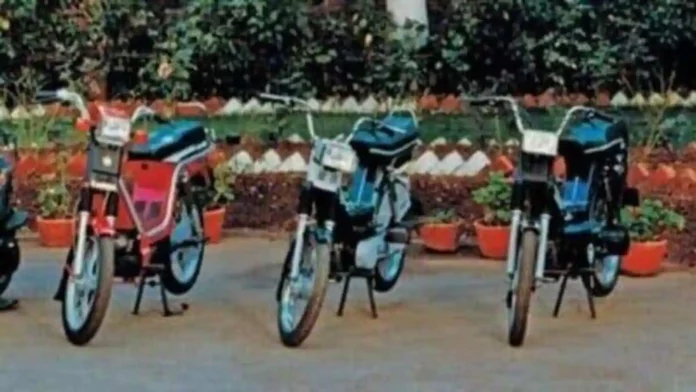
Luna, a popular scooter back in the day, was built in India by Kinetic Group and featured a 50cc motor. It was inexpensive, practical, and benefited many small families and company owners. Luna used to sell over 2,000 units every day, making it the most popular Moped in India at the time, with prices starting at Rs. 2,000.
It has been in production since 1972, and Kinetic Group has announced a rebirth of this famous moped legend with a twist. The surprise is that it will only be available as an EV. However, it will not be priced at Rs. 2000.
Fast forward to December 2022, and TVS currently has a monopoly in the moped market. Because the XL100 is the only ICE moped in the country, it sells between 30 and 40 thousand units every month. Kinetic Group does not want to resurrect Luna with its current 50cc engine. Luna will instead be an electric vehicle.
Electric scooters aimed primarily at the B2B sector are becoming increasingly popular. Honda is also planning to launch EVs for the B2B market. A fresh patent for an electric moped has surfaced, and Benly-e test mules are becoming more common. The moment has come for Kinetic Group to bring their famous Luna moped back to India.
Kinetic Green Energy & Power Solutions, a subsidiary brand of Kinetic Group, will manufacture the Luna Moped in 2023.
credit: rushlane
Kinetic Engineering Limited has even started producing chassis and subassemblies. Kinetic is establishing a separate assembly line for Luna electric with a monthly production capacity of 5,000 units. According to the statement, it would most likely be known as E-Luna when it is released.
Kinetic appears to be banking big on the 2023 Luna electric. The business has installed 30 new welding machines in its new assembly line, which is reserved for the future Luna. The paint shop and fabrication shops of the company’s Ahmednagar manufacturing plant have also been updated. Technical specifications are not yet available.
However, Kinetic will undoubtedly play the affordability card and build the product accordingly. This will undoubtedly appeal to the intended audience. For the planned use, a modest and purposeful moped with a range of roughly 70 km should suffice. More information will be released in the future. The Kinetic E-launch Luna’s pricing is projected to be less than Rs 50,000.
Tata Motors, India’s largest electric car manufacturer, is seeking to quadruple its monthly EV volumes to 8,000-10,000 units, led by the launch of the new Tiago EV. Tata Motors expects to sell 50,000 electric vehicles per year in FY23, putting it on track to generate a billion dollars from its EV business in the coming months.
Tata Motors has already achieved an annualised rate of 55,000 to 60,000 units per annum with the Nexon and Tigor EVs, and with the inclusion of the Tiago EV, the business is targeting an annualised rate of 1 lakh units by FY24.
With the recently released Tiago EV and the Punch EV slated for 2023, Tata Motors is aiming for 1 lakh EV manufacturing in the next 12-18 months, resulting in a company EV penetration of more over 15%. If it can maintain current sales velocity, the EV business might earn between Rs 12,000 and Rs 15,000 crore in revenue, which is nearly similar to the business generated by its conventional car industry just three years ago.
Tata Motors was able to collect over 20,000 bookings for its new entry-level EV within 10 days of unveiling the Tiago EV prices.
Already, about 50,000 prospective consumers have expressed interest in the Tiago EV, with approximately 23% of them being first-time car buyers. While declining to reveal exact volume or revenue figures, Shailesh Chandra, MD of Tata Motors Passenger Electric Mobility, stated that the new Tiago EV will democratise electric vehicles to a much bigger consumer base and that the model has brought in a huge number of new buyers for the company. “From where I am now, the potential is to easily double with the Tiago and the new products that are planned over the next couple of years. We are on an aggressive path of product introduction. With the new product introduction plan, the volumes will surely grow,” says Chandra.
credit: autocarindia
To accommodate the rise in volumes, the firm has already built a network of 4,000 charging stations in collaboration with Tata Power, which is expected to grow to 10,000 stations in the following 18-24 months. The company has already invested $500 million of the USD 1 billion raised, with the remaining $500 million to be invested over the next 12-18 months when the company meets specified objectives.
The Ford facility in Sanand, which it acquired earlier this year, is undergoing final approvals before being retooled to handle both ICE and EV goods. In 18 months, the company intends to begin consolidating its manufacturing presence. The Indian electric car market is expected to reach 2 million units by the end of the decade, and Tata Motors wants to maintain its dominance in the face of increased competition.
The company has aggressively increased EV localisation, and it is continuing to work with numerous suppliers to secure future supply for batteries and other components. “We will work with multiple suppliers. With a diverse product portfolio, we want to ensure that the dependency is not concentrated with few sources,” says Chandra.
While volumes are increasing by orders of magnitude, rising battery prices may pose a danger. After the initial pricing offer expires, the business will raise the prices of Tiago EV. While the precise amount of the price rise has yet to be determined, it is expected to be in the range of Rs 30,000 to 35,000.
According to Chandra, battery prices have risen by 30-35 percent in the last six months but are now levelling out. He confirmed that the Tiago EV costs will rise, although he did not specify how much.