Home Blog Page 284

Geely launches its Panda Mini EV in China for 40K Yuan

0

Geely Holding Company owns Volvo Cars, Lotus Cars, London Electric Vehicle Company, and Qianjiang Motorcycles, as well as the Geely Auto brand. The brand’s core market is China, and it is one of the world’s most established automobile firms.

In China, there is a market for small electric vehicles aimed mostly at urban consumers. In China, vehicles like as the Wuling Hongguang Mini EV / MG Air frequently top the sales lists. In many aspects, these cars are cutesy and toy-like, which perfectly appeals to the target population.

Geely has now showcased its new Panda Mini EV via its subsidiary brand Geome, with that market in mind. This car’s theme is, you guessed it, Pandas. This car has been successfully designed to match or come near to the cuteness of a real Panda.

In big cities, China is infamous for traffic congestion and pollution. A compact electric vehicle is ideal for situations like these, and it is less expensive than huge electric vehicles with large batteries and powerful engines.

The Geely Panda Mini EV strives to be as adorable as a Panda. We have a toy-like outer design in this sense.

There are Panda references in the front and rear bumper designs, which include black inserts that replicate the black patches beneath a Panda’s eyes. To cool the batteries, there is a small rectangular opening for air intake. The rest of the front fascia is sealed off. There are circular LED DRLs around the headlamp and Geome branding in a cutout that is most likely the opening for its charging system. It also gets blackened ORVMs that look like Panda ears.

Geely
credit: rushlane

The Panda references don’t stop there. Alloy wheel hubs are designed to look like panda paws and complete the Panda-inspired look. Geely displayed the Panda Mini Electric Car in Hangzhou, and even the demonstration was adorned with pink and light blue hues and panda characters.

It has four seats and two doors for entry and exit. The pink dashboard is dominated by a huge infotainment screen and a digital instrument cluster. A panoramic sunroof, physical climate control buttons, and other luxuries are also available. It is somewhat more than 3m long and 1.5m wide. The Panda Mini EV stands 1.6m tall and has a 2.01m wheelbase.

Geely has now showcased its new Panda Mini EV via its subsidiary brand Geome, with that market in mind. This car’s theme is, you guessed it, Pandas. This car has been successfully designed to match or come near to the cuteness of a real Panda.

In big cities, China is infamous for traffic congestion and pollution. A compact electric vehicle is ideal for situations like these, and it is less expensive than huge electric vehicles with large batteries and powerful engines.

It is supposed to be powered by a Guoxuan High-Tech Lithium-Ferrous-Phosphate battery. In terms of driving range, a single charge will provide approximately 150 kilometres. A 40-horsepower (30 kW) motor should be sufficient to propel this little vehicle. In China, the Geely Panda Mini EV is expected to cost between 40,000 and 50,000 Yuan (approx Rs. 4.73 lakh to Rs. 5.92 lakh). Its major competitors are the Wuling Hongguang Mini EV and the MG Air EV, both of which are slated to launch in India.

Also Read:
Source

Tata to launch Punch EV as its next electric vehicle

0

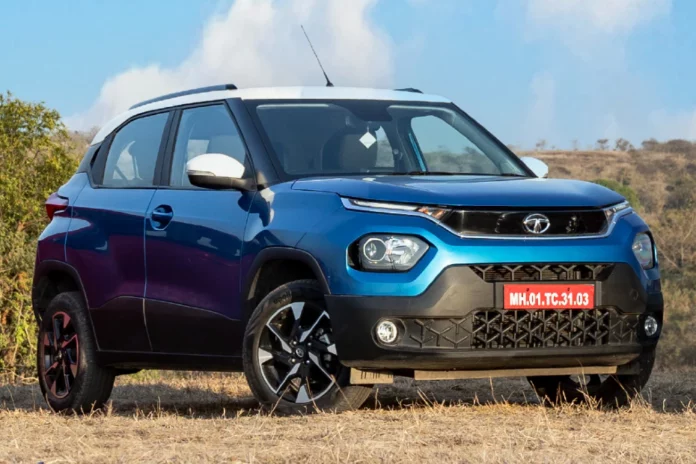
Tata is India’s foremost electric vehicle manufacturer, with the country’s largest EV lineup. The brand’s electric vehicles range from the recently debuted Tiago EV to the top-of-the-line Nexon EV Max. And now, the automaker has stated that the Punch EV will be joining its EV lineup soon.

With this confirmation, we can hypothesise on the location of the next Punch EV, which will be between the Tigor EV and the Nexon EV Prime.

Tata
credit: cardekho

The Punch EV, like most Tata EVs, might have two battery pack configurations with ranges ranging from 300km to 350km.

The ICE-powered version’s amenities, such as a seven-inch touchscreen infotainment system, semi-digital instrument cluster, automated climate control, auto-folding ORVMs, cruise control, dual front airbags, and ABS with EBD, are anticipated to be carried over to the Punch EV. The electric Punch may additionally include multi-mode regenerative braking, leather upholstery, and a few more features.

It will be Tata’s first EV to be launched on the automaker’s latest ALFA platform. The ALFA platform is intended to support a variety of body types as well as ICE, electric, and hybrid powertrains. The Altroz operates on the same platform.

Tata
credit: cardekho

Because the ICE Punch costs between Rs 6 lakh and Rs 9.54 lakh (ex-showroom), the electrified Punch may cost around 12 lakh (ex-showroom). The vehicle could be unveiled at the 2023 Auto Expo in January as a competitor to the planned Citroen eC3 and as a more economical alternative to the Nexon EV Prime.

Source

India will soon be selling 20% ethanol blended fuels in the Country

0
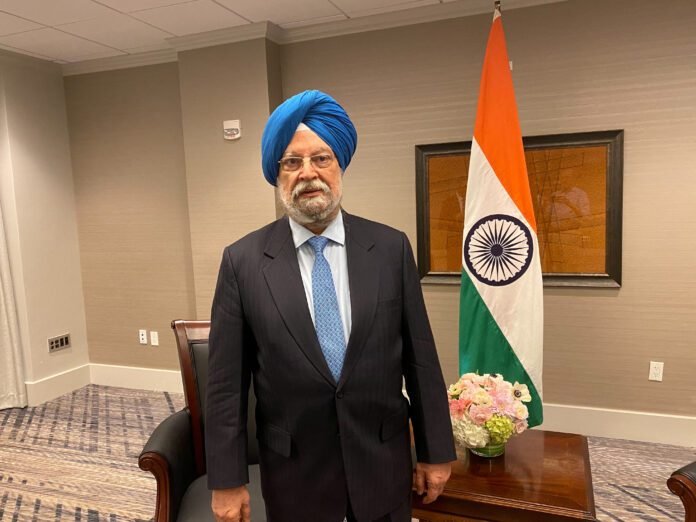
Indian minister of Petroleum and Natural Gas Hardeep Singh Puri poses for a picture after he launches an auction of offshore oil and gas blocks in Houston, Texas, U.S., October 10, 2022. REUTERS/Gary McWilliams

According to Petroleum Minister Hardeep Singh Puri on Friday, India is set to offer 20% ethanol-blended fuel, which would be sold in select outlets starting next month. Puri, speaking at the kickoff of India Energy Week 2023 in Bengaluru, also stated that the 20% ethanol blending will not necessitate engine changes.

“We have achieved 10 per cent blending of petrol in June 2022, which was well ahead of the November 2022 deadline. We have also accelerated efforts to reach the ambitious goal of E-20 (20 per cent ethanol blending in gasoline) by ethanol supply year (ESY) 2025-2026. In fact, E-20 will be available at selected outlets from next month,” said the minister. 

He also indicated that 2G (second generation) refineries would be built to produce ethanol from Parali (Panipat) and Bamboo (Numaligarh), with the dual goal of decreasing pollution and meeting energy security goals.

ethanol
credit: reuters

The minister also stated that the country’s import basket has been diversified. “From only 27 countries (2006-2007), we have increased the number to 39 countries (2021-22). In the process, we have added new countries like Libya, Gabon, Equatorial Guinea, and Guyana; while strengthening our relationship with countries like the US and Russia,” said Puri.

According to him, reforms have increased India’s oil production by 18%, from 28.7 billion cubic metres (BCM) in 2020-21 to 34 BCM in 2021-22, with a further increase to 36 BCM in 2022-23. Our oil output has climbed from 29.7 MMT in 2021-22 to 30.8 MMT in 2022-23 and is anticipated to rise to 34 MMT in 2023-24.

Also Read:

Source

Tata Motors subsidy TML Smart City Mobility Solutions will be operating 921 E-Buses in Bangalore City

0

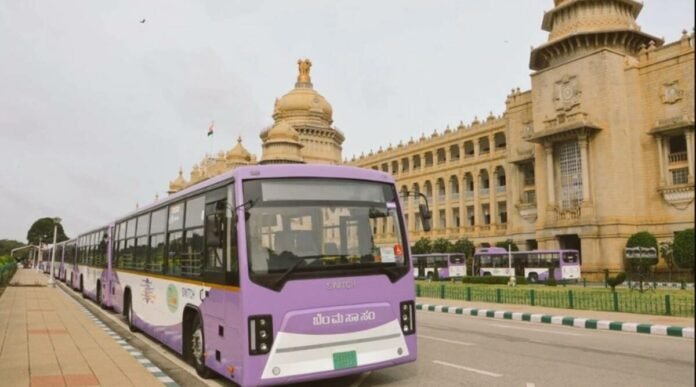
Tata Motors, India’s largest commercial vehicle manufacturer, announced on Friday that Bengaluru Metropolitan Transport Corporation (BMTC) has signed a definitive agreement with TML Smart City Mobility Solutions Ltd., its wholly owned subsidiary, for the operation of 921 electric buses in Karnataka’s capital city. TML Smart City Mobility Solutions Ltd. will supply, operate, and maintain 921 12-metre low-floor electric buses for a term of 12 years as part of the arrangement.

The Tata Starbus Electric is a vehicle designed in-house that has a superior design and best-in-class features for a sustainable and comfortable travel.

Tata
credit: businessinsider

Commenting on the announcement, G. Sathyavathi, IAS, Managing Director, Bengaluru Metropolitan Transport Corporation said: “We are confident that the induction of the zero-emission, eco-friendly buses will benefit all stakeholders and help in curbing air pollution. Tata Motors’ vast experience in the electric mobility domain will certainly assist in providing uninterrupted, safe and comfortable commute in the city.”

Asim Kumar Mukhopadhyay, CEO and MD, TML Smart City Mobility Solutions Limited, said: “It is a momentous occasion for us as we sign the first definitive agreement under the larger CESL tender and are delighted to have partnered with BMTC in their effort to modernise and electrify the public transportation in the city of Bengaluru. We, at Tata Motors, continuously endeavour to develop smart, green and energy efficient mass mobility solutions. We are confident that the electric buses will provide sustainable, safe and comfortable public transportation to the commuters of Bengaluru.”

Tata Motors’ R&D centres have worked tirelessly to develop novel mobility solutions driven by alternative fuel technologies, such as battery-electric, hybrid, CNG, LNG, and Hydrogen Fuel Cell technology.

Tata Motors has supplied more than 730 electric buses across several cities in India, with a total mileage of more than 55 million kilometres and an uptime of more than 95%.

Also Read:

Source

Himachal Pradesh will soon be rolling out new Electric Vehicle Policy in the State

0

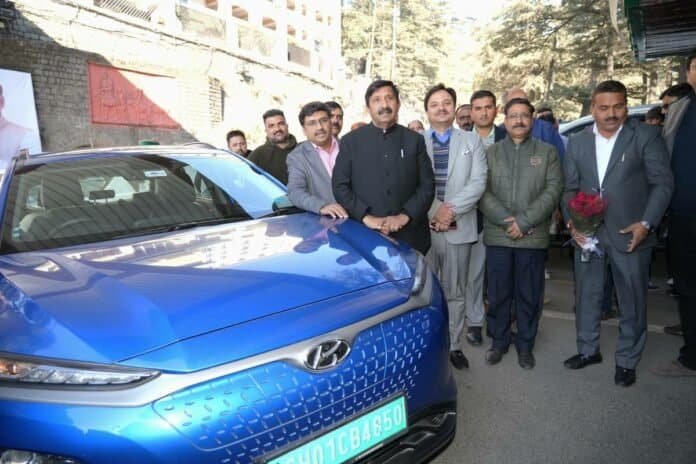
Mukesh Agnihotri, the deputy chief minister of Himachal Pradesh, test drove an electric car from the secretariat and inquired about its technical elements. Himachal Pradesh is reforming its transportation industry with innovative ideas and will soon implement a new electric vehicle (EV) legislation, deputy chief minister Mukesh Agnihotri said on Monday.

Agnihotri drove an electric vehicle borrowed from the secretariat and inquired about its technological features. He stated that positive attempts would be made to drastically alter the transportation sector. Discussions are being held at various levels to introduce the new policy, he said. “Initially, the operation of electric vehicles will be promoted at the secretariat. Thereafter, their use will be increased in public transport,” Agnihotri said.

The government’s priority in the state, a renowned tourist destination, include environmental protection and promoting electric automobiles. He stated that a decision on the acquisition of electric vehicles will be made soon.

electric
credit: hindustantimes

The government will take appropriate steps to provide charging facilities. “In the initial phase, this facility will be provided in various government institutions, including the secretariat and Himachal sadan and bhawans outside the state,” he added. The Himachal Road Transport Corporation has approximately 1,000 vehicles with zero book value, which will be gradually replaced with electric vehicles, according to Agnihotri, who also stated that electric buses will be included in the fleet under the new policy.

“The electric vehicle policy will prove fruitful in reducing this loss. It will also reduce the daily expenditure of about ₹1.5 crore incurred by the corporation,” he said. He also stated that the HRTC’s fleet of luxury buses would be expanded. Meanwhile, Agnihotri presided over a Ropeways and Rapid Transport Development Corporation (RTDC) review meeting here on Monday. He made note of all active projects, as well as concerns and problems that the firm was experiencing.

“The state government plans to go for this eco-friendly, clean and green mode of transport in a big way,” he said, adding that RTDC has started ground work for this project in Shimla. “This ropeway project will have a network of 14.69km ropeways connecting 15 stations with a project cost of ₹1,546.40 crore,” he said, adding that “our government plans to develop similar urban ropeway projects for Dharamshala and Manali towns”.

Source

Hyundai officially lifts the cover off of its 2nd Gen 2024 Kona EV

0

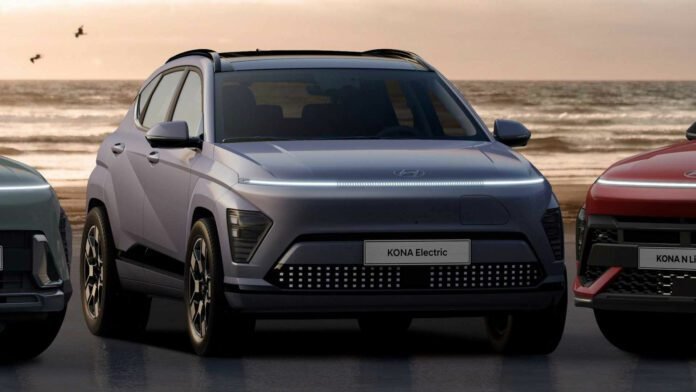
Hyundai has officially unveiled the second generation 2024 Kona. The Korean carmaker has shown off the many trim levels of the Kona that will be available in the United States. In addition to the EV trim, the Kona will be available with an ICE powertrain, a hybrid electric (HEV), and a sportier N-Line option. Only the EV trim is available in India.

The new Hyundai Kona’s exterior style is reminiscent of Hyundai’s popular global Staria van design, particularly with the single line of DRLs at the front.

Lower in the grille are the main headlight and tail light components. According to Hyundai, “The all-new Kona’s clean, distinctive nose characterizes the front section’s pure volume, which contributes to the model’s smooth aerodynamic performance.”

Hyundai
credit: timesnownews

Furthermore, different stylistic features are added to the Kona trimmings. While the EV trim is distinguished by pixel graphic detailing on the grille and rear bumper, as well as pixel-inspired 19-inch wheels. Black wheel arch claddings and a more robust bumper design are standard on the ICE and HEV grades. The N-Line trim adds optional black mirrors and roof, “wing type” spoilers, and a more aggressive front and rear bumper design, as well as distinctive 19-inch alloy wheels, dual mufflers, and silver side skirts.

Interestingly, Hyundai revealed that the second generation Kona was developed from the ground up as an EV. The platform was then modified to work on other systems. This makes the Kona EV even more unusual when compared to other classic ICE-based EVs created by automakers in the past.

Hyundai
credit: indianownews

Aside from a new style, the Kona has grown in size. The new model has a length of 4,355 mm, which is 150 mm longer than the previous edition. The wheelbase has also been expanded by 60 mm, as has the width by 25 mm.

In terms of the inside, Hyundai has taken a more straightforward, driver-centric approach. The dashboard now has two 12.3-inch wide displays, one for the instrument cluster and one for the infotainment system. The gear lever has been relocated to the steering column behind the steering wheel, freeing more space in the centre column. Hyundai states that the curve-free Bench seat in the second row provides maximum usage, comfort, and convenience.

Also Read:

Source

Maruti Suzuki to unveil its All-Electric SUV Concept at the India Auto Expo 2023

0

Maruti Suzuki’s global unveiling of an all-electric SUV concept at the Auto Expo 2023 is expected to be one of the show stoppers and the first sign of the company’s EV aspirations for the Indian market. India’s largest manufacturer is yet to produce an EV and has been significantly slow in India’s fast-growing electric car market, where Tata Motors has captured an 84 percent share in less than four years.

The EV idea that Maruti Suzuki will present is significant since it will preview the Japanese automaker’s first all-electric car (code: YY8). This vehicle is slated for debut in January-February 2025, and represents the start of the company’s EV adventure. This EV, like the Futuro-e in 2020 and the Future-S in 2018, will be Maruti Suzuki’s hero concept for 2023.

The Maruti YY8 midsize SUV in February will be co-developed with Toyota, who will also have its own version of this model. The YY8 will be a worldwide product, developed for both domestic and foreign markets, with approximately half of the output destined for international markets. The YY8 will be manufactured in Suzuki’s Gujarat plant for the domestic market as well as overseas.

In true EV form, the YY8 concept is slated to feature a radical and futuristic design language that will be entirely distinct from the company’s current crop of ICE cars. It will be over 4.2 metres long, about the size of a Creta, with a wheelbase of 2,700mm, which is larger than even the MG ZS EV.

The Maruti Suzuki YY8 electric SUV is based on the 27PL platform, which is a variant of Toyota’s 40PL worldwide platform.

Maruti
credit: autocarindia

Its long wheelbase allows for a large battery pack and a spacious cabin. The YY8 will feature short overhangs and wheels pushed to the edges as much as possible to maximise space without the packaging constraints of a standard ICE car, as is the trend.

The YY8 SUV will be available with two battery pack options: 48kWh and 59kWh. Under regular test conditions, the former is predicted to have a range of approximately 400km, while the latter is expected to have a range of approximately 500km. BYD, a Chinese battery company, will supply Maruti-Suzuki with LFP blade cell batteries. Blade cell technology offers significant weight, packaging, and range improvements, and Maruti Suzuki expects that its blade cells will give the YY8 a competitive advantage, particularly against Tata Motors’ enormously popular range of EVs, which employ traditional (but inefficient) LFP cylindrical cells.

The YY8 will be available in both two-wheel-drive and all-wheel-drive configurations, though it is unclear whether AWD will be available in the domestic market. Power outputs are predicted to be in the 138hp to 170hp range. The Maruti Suzuki YY8 electric SUV, as well as its Toyota counterpart, are slated to arrive in India in early 2025. According to sources, the company is aiming for a pricing range of Rs 13 lakh-15 lakh, which translates to an MG ZS EV-sized SUV for the price of a Tata Nexon EV. Maruti Suzuki may have been slow to the EV game, but if the YY8’s features (and price) are anything to go by, this could be the model that breaks Tata Motors’ party.

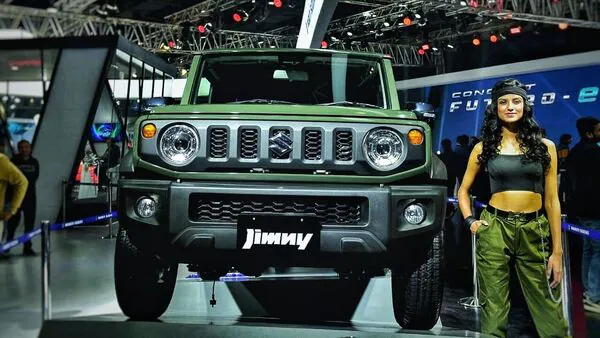
In addition to the YY8 concept, Maruti Suzuki is expected to reveal production versions of the YTB SUV and the 5-door Jimny. Maruti is also anticipated to show off the Wagon R’s flex fuel prototype, which was recently shown off in Delhi.

Source

India EV market expected to touch $100 billion by 2030

0

According to a Bain & Company analysis, India’s electric vehicle (EV) value chain revenue pool is estimated to reach $76-100 billion by 2030, potentially translating to a $8-11 billion profit pool.

“The Indian automotive market is poised for rapid EV growth, due to the convergence of factors including government incentives, improving cost-competitiveness and original equipment manufacturer (OEM) investment, along with increased customer readiness and awareness,” the report noted.

According to Deepak Jain, a partner at Bain & Company and co-author of the paper, contributors to the auto revenue and profit pools in 2030 will be very different from those in the automotive sector today. “While 40-50% of revenue pool will come from auto OEMs, it will be significantly altered in the nature and composition,” he said. “New business opportunities such as battery (13%), charging (8%) and mobility (6%) will emerge. Unified platforms will become the next big play as many EV ecosystem players are looking for forward or backward integration to create a broader e-mobility ecosystem.”

EV
credit: financialexpress

Indian EV market has already seen $3.7 billion private equity and venture capital (PE/VC) investments over the previous three years, and this sum appears destined to climb dramatically as the industry develops.

Findings from the report indicate that 35-40% of all vehicles sold in India by 2030 will be EVs, up from 2% in 2022. “Two-wheelers and three-wheelers will be vanguards for EV adoption, achieving 40-45% penetration by 2030,” Jain said. “This is driven by several factors, including highly competitive total cost of ownership (TCO), limited need for public charging infrastructure given the adequacy of home charging for daily use, investments in building compelling product offerings with comparable performance to internal combustion engine (ICE) vehicles, and early adoption by delivery and logistics fleets.”

The four-wheeler electric passenger vehicle (PV) segment (broadly electric vehicles) is predicted to fall behind the adoption curve. Higher product performance and public charging infrastructure needs, as well as higher capital costs and TCO gaps, act as hurdles to adoption. By the end of this decade, this category is estimated to account for 15-20% of overall PV sales.

EV
credit: financialexpress

Despite lower penetration and volumes, electric PVs will account for around 41% of the revenue pool by value, followed by electric two-wheelers (33%).

According to the analysis, electric buses will have a penetration curve comparable to that of electric PVs by 2030, owing in large part to state transportation initiatives focused on fleet electrification for intracity transportation. “While we believe that deep EV penetration in India by 2030 is a realistic scenario, five key areas need to align to make it a reality,” added Mihir Sampat, partner at Bain & Company and co-author of the report.

Also Read:

Source

Indian Oil (IOCL) will set up 18 chargers in India with Statiq bagging the contract from the company

0

Statiq, a provider of electric car charging services, announced on Monday that it has been awarded a contract to deliver 18 chargers to Indian Oil Corporation Ltd for installation at important locations across the country.

IOCL wants to build up these chargers, encompassing both 30kW and 60kW for four-wheelers, at strategic places within its network, the company said in a statement. At their 63rd AGM, the state-owned oil and gas corporation revealed its ambition to attain a net zero emission target by 2046 and of having set aside ₹2 trillion to that end.

IOCL has been pursuing a vigorous green agenda to guide the country’s green energy transition by focusing on several emission mitigation channels such as biofuels, green hydrogen, renewables, etc.

IOCL
credit: hindustantimes

“IOCL is a market leader as well as a thought leader when it comes to the subject of carbon neutrality in this nation. Their work matches their words and it is an honor to win a tender with such a future-ready company. The 18 Statiq EV chargers that they will purchase, by way of the tender, will have an unimaginable reach and we are looking forward to connecting with numerous 4-wheeler owners who will undoubtedly benefit from them,” said Aman Rehman, Head- of Government Relations and Corporate Affairs, Statiq.

“At IOCL, we have embarked on our carbon neutrality journey in the right earnest and as part of our plan, we were searching for an able electric mobility partner. With Statiq having won this tender, we are glad to find a collaborator who will provide us with quality Made-in-India EV chargers. This will help us propagate to the general population the message of making the transition to clean energy in an easy fashion that is also affordable and reliable,” said Shrikant Madhav Vaidya, Chairman and Managing Director, IOCL.

Statiq has added several charging stations to its already extensive network during the last year. By the end of the year, Statiq aims to establish an approximately 20,000-strong charging network, it added.

Also Read:

Source

Here are all the advantages of buying an EV in India

0

The fact that the running cost of Electric Vehicles (EVs) is cheaper compared to that of four-wheelers containing an Internal Combustion Engine (ICE) has led to a surge in electric automobiles in India.

1. Lower running costs

You save a lot of money on fuel because you don’t have to pay for gasoline or diesel to keep your EV operating. The cost to charge an electric car compared to the price of gas or diesel is substantially low. You can further lower your electricity costs by utilising sustainable energy sources such as solar.

2. Low maintenance costs

Because they have so many moving parts, gasoline and diesel cars require routine maintenance. That’s not the case with electric vehicles as they have substantially lesser moving parts. This means that your electric vehicle will most likely have lower long-term maintenance expenditures.

3. Tax and financial benefits

With India’s embrace of EVs, the government offers a variety of laws and incentives to encourage the use of such vehicles. For example, EVs have lower registration and road tax costs than ICE vehicles.

4. Better performance

EVs were once thought to be unfeasible. However, that has changed in recent years, with manufacturers providing well-designed and appealing EVs. Even the performance of EVs has improved for the better. Electric Vehicles are lighter in weight, and their acceleration is excellent compared to fuel-powered vehicles.

EV
credit: vehicleinfo

5. Zero tailpipe emissions

EVs have no exhaust emissions, which helps to lessen the carbon footprint. You may further lower your carbon impact by charging your EV with renewable energy.

6. Easy to drive and quiet

EVs are simple to drive because they have fewer moving components and simple controls. You can also charge such a car by plugging it into a public or home charging station. They are very silent, which helps to reduce the noise levels produced by fuel-powered cars.

7. Convenience of charging at home

There is no need to locate the nearest gas station to refuel. Charge your electric vehicle at home and get moving. With modern charging technologies, you may charge an EV quickly or even use battery swapping services to keep driving without worrying about conventional fuel availability.

EV
credit: vehicleinfo

8. No fuel, no emissions

EVs are simple to drive because they have fewer moving components and simple controls. You can also charge such a car by plugging it into a public or home charging station. They are very silent, which helps to reduce the noise levels produced by fuel-powered cars.

9. Spacious cabin and more storage

There is no need to locate the nearest gas station to refuel. Charge your electric vehicle at home and get moving. With modern charging technologies, you may charge an EV quickly or even use battery swapping services to keep driving without worrying about conventional fuel availability.

10. They are future proof 

With some governments promising to gradually reduce their reliance on gasoline and diesel (fossil fuels), EVs are seen as a viable alternative.

Also Read:

Source