Home Blog Page 282

Qualcomm Snapdragon Ride Flex SoCs are here to become your Future Cars Smart Brain

0

The Snapdragon Digital Chassis Concept Vehicle embodies Qualcomm’s objectives to remain at the forefront of the future’s next-generation driving experience (and also that of auto-making in general). It entails increasingly prevalent car-wide processors that integrate hardware, software, and services, a prominent “pillar” of which are the computing solutions presented as Snapdragon Ride Platforms at CES 2023.

Qualcomm has announced that the next generation of these Platforms will be based on an advanced 4 nanometer (nm) process and will be pitched to tier-1 automakers as practically all-in-one platforms that implement “the industry’s only scalable and open system designed for ADAS and ADLotus Eletre SUV price range and specs detailed with first ‘end-to-end autonomous driving’ LiDAR kit”.

Qualcomm
credit: arenaev

At the major trade show, the OEM also unveiled Snapdragon Ride Flex SoCs, a new automotive computing platform that, like the rest of the Snapdragon Ride Platform family, integrates the NCAP-approved and European General Safety Regulations-certified Ride Vision stack for sensor control required for next-generation self-driving capabilities.

Qualcomm
credit: arenaev

Flex SoCs will also have a software suite that includes a real-time OS and Qualcomm’s Automotive Open System Architecture (AUTOSAR) for applications such as a car’s hypervisor and infotainment screens.

Qualcomm
credit: arenaev

They are also qualified to provide services like parking assistance and driving monitoring. As a result, Qualcomm now promotes its future Ride Flex chips as a multi-priority “Qualcomm completes NUVIA acquisition, will release high-performance ultrabook processors in 2022digital cockpit, ADAS and AD…on a single SoC”. Their first version is now being tested by vehicle OEMs, with mass production set to commence in 2024.

Also Read:

Source

Nvidia joins hands with Foxconn to enter the Electric Vehicle market

0

At the Consumer Electronics Show (CES) 2023, chipmaker Nvidia and technology manufacturer Foxconn established a strategic agreement to build automated and autonomous vehicle systems. Foxconn will be a tier-one manufacturer under the arrangement, producing electronic control units (ECUs) based on Nvidia DRIVE Orin for the worldwide automobile industry. Electric vehicles (EVs) made by Foxconn will use DRIVE Orin ECUs and DRIVE Hyperion sensors for highly autonomous driving.

“This strategic cooperation with Nvidia strengthens the intelligent driving solutions Foxconn will be able to provide. Together, we are enabling the industry to build energy-efficient, automated vehicles,” Eric Yeh, senior director of the Software Development Center at Foxconn, said in a statement.

Meanwhile, Nvidia unveiled the GeForce RTX 40 Series laptops, which are powered by the company’s ultra-efficient Ada Lovelace GPU architecture and deliver the company’s largest-ever generational leap in performance and power efficiency, as well as being up to three times more power efficient than the previous generation.

Nvidia also announced at CES 2023, an upgrade to its cloud gaming service GeForce Now with RTX 4080-class graphics processing units, which would increase performance for premium users.

Nvidia
credit: nvidianews

According to the firm, improved GeForce NOW RTX 4080 SuperPODs will give over 64 teraflops of graphics horsepower to a one user, which is more than 5x that of an Xbox Series X and almost 1.75x that of previous-generation SuperPODs.
The high-performance GeForce NOW cloud gaming service will also be available in cars, according to the company.

Hyundai Motor Group, which includes the Hyundai, Kia, and Genesis brands, BYD, the world’s largest manufacturer of new energy vehicles (NEVs), and Polestar, a Swedish premium electric vehicle and lifestyle brand, will be the first to collaborate with Nvidia to deliver GeForce NOW in their vehicles.

“Accelerated computing, AI and connectivity are delivering new levels of automation, safety, convenience and enjoyment to the car,” Ali Kani, vice president of automotive at Nvidia, said in a statement.

Also Read:

Source

Sony and Honda announces their new EV “Afeela” at the CES 2023

0

During Sony’s presentation at CES in Las Vegas on Wednesday, the joint mobility venture of Sony and Honda showcased a new EV concept called Afeela. The logo will feature on the joint venture’s first production electric vehicle, which will go on sale in North America in 2026.

Much remains unknown about the new brand, although Sony Honda Mobility CEO Yasuhide Mizuno stated that the car would leverage Sony’s capabilities with artificial intelligence, entertainment, virtual reality, and augmented reality to deliver a distinct EV.

Over 40 sensors, including cameras, radar, ultrasonic, and lidar, will be integrated across the vehicle’s exterior to improve its capacity to recognise objects and drive independently. Afeela, according to Mizuno, would strive to express three primary themes: autonomy, augmentation, and affinity.

The prototype shown on stage resembled little of the concept first shown at CES three years ago by Sony. Instead, this was a sedan with a front light bar, a closed off grille, and a high-gloss black top. Some of the more intriguing exterior modifications included black hubcaps and a light accent above the wheel wells. Several people said the Afeela prototype looked like a cross between a Porsche 911 and a Lucid Air.

Sony
credit: Sony

The new EV will be priced to compete with the likes of Mercedes-Benz, BMW, Volvo, and Audi. Sony has stated that it expects its software to offer subscription services, which means that vehicle owners will most likely have to pay a monthly price to use specific capabilities.

Sony surprised CES guests three years ago when it unveiled the Vision-S, a sleek concept sedan.

The Vision-S, with its pillar-to-pillar multimedia panels and emphasis on music and entertainment, was designed to depict what a car would look like if Sony really manufactured one. Which it told everyone it had no plans to do.

That, however, was not totally correct. In early 2022, word spread that Sony and Honda were forming a joint company with the sole objective of mass producing and selling electric vehicles. The Sony-Honda vehicles will be manufactured at one of Honda’s 12 US sites, though no information on expected volume has been released. The EV will be available in the United States first, followed by Japan and Europe later. Preorders are expected to begin in 2025.

Sony
credit: sony

Among the concepts proposed for the Honda-Sony vehicle is a fully integrated PS5 for gaming and entertainment. According to Yasuhide Mizuno, chair of Sony Honda Mobility and senior management officer of Honda, the objective was to “create a car as hardware that will adapt to the entertainment and network we would like to deliver,” he said late last year in an interview.

In other words, Sony sees cars, particularly electric vehicles, as a critical platform for the future of its technology and entertainment goods. But, unlike Apple and Google, it is not satisfied with licencing its hardware and software to automakers or designing its own operating system. It also wants a say in the design and development process. Making cars is extremely dangerous and costly, especially for a company that has never done it before.

ALso Read:

Source

2022: The year when Electric Vehicle Revolution picked its pace in India

0

The year 2022 will be regarded as the year India’s electric vehicle revolution fully took off. From 4000 units per month in June 2021, the monthly run rate increased to 80,000 units by the end of 2022, a 20x increase. From less than 1% penetration in 2021 to nearly 6% in just a year, India’s EV revolution has not only been limited to metropolitan areas, but is proving to be a pan-India phenomena. In reality, many cities, including Bengaluru, Pune, and Surat, already have an EV penetration of around 20%.

The customer preference for EVs across tier 1, 2, 3, and rural locations demonstrated that there has always been a market in India ready to adopt EVs – the new, superior technology. While much has been accomplished in a single year, this is simply the beginning. A far larger opportunity awaits. The global EV shift began in the west, with businesses such as Tesla and, more recently, Rivian, Lucid, and established European carmakers such as BMW, Mercedes, and others participating. These firms have concentrated on items such as luxury sedans, huge pickup trucks, and other forms appealing to a western audience. Even the most basic Tesla Model 3 will cost more than $50,000 (or 50,000 in India).

The bulk of the world does not associate mobility with luxury goods. More than 99% of products sold in nations such as India are priced between $100,000 and $50,000. The same is true in Southeast Asia, Latin America, Africa, and, to a lesser extent, in some developed regions such as Europe and Japan. This price point includes product segments from 2Ws such as scooters, motorcycles, small, mid-size SUVs, and cars.

elecric
credit: olaelectric

Traditionally, the Japanese dominated this industry during the ICE period, with legendary businesses including as Honda, Suzuki, Toyota, Nissan, Yamaha, Kawasaki, and others creating fundamental technology, producing at scale, and commanding the global market. As a result, Japan has risen to become one of the world’s leading industrial nations.

Only the midstream processing of lithium is now dominated by China. The majority of lithium mining, however, are in Australia, Chile, and Argentina. The great majority of these mines are not controlled by China. By focusing on localising lithium midstream processing and collaborating with these countries, India can create an alternate supply chain for itself and the rest of the world.

While hydrogen is an interesting energy technology, its applications will be limited to static industrial settings. It will never be as efficient as electric vehicles. Consider using electricity to generate hydrogen, then compressing and exporting it thousands of kilometres before injecting it into hydrogen cars and turning it back to electricity. Because the grid is the most effective way of transporting power, EVs will always be far cheaper than hydrogen automobiles. This is India’s chance to grasp the twenty-first century. This decade will be India’s decade of EV transition and worldwide EV hub. To build this future, India will need to employ a four-pronged strategy.

Also Read:

Source

Lucid Group has officially started delivering its Air EVs in Saudi Arabia

0

Just days after Lucid Group began delivering its distinctive Air electric vehicles in the European Union, the young Tesla challenger is now establishing a presence in the Middle East, with the first batch of EV deliveries taking place in Saudi Arabia in the last few hours. According to the Twitter account @SaudiEV, one of the first Air EV deliveries took place on January 1, 2023 in Riyadh, Saudi Arabia’s capital city. Of course, this news comes only days after the Lucid Air Dream Edition electric vehicle began delivery in Germany and the Netherlands.

The Lucid Group’s proprietary 900-volt-plus electrical architecture enables effective charging of its EVs. When combined with a 300+ kW DC fast charger, the Lucid Air Grand Touring edition can add 400 km of range in just 15 minutes.

Lucid Group was able to decisively address worries about a potential cash crunch that the company was widely expected to confront in 2023 by the end of December 2022. First, the business completed its at-the-market offering, which was announced in November, raising around $600 million by selling 56.2 million shares.

Second, Lucid Group announced that it would raise about $915 million through a private placement of shares by selling some of its shares to the Ayar Third Investment Company, an associate of the Saudi PIF. In total, the company has gained $1.515 billion in new liquidity to strengthen its cash position, which stood at $3.85 billion at the end of Q3 2022 and was made up of cash, cash equivalents, and investments.

With a Total Addressable Market (TAM) of only about 15% in the United States, some experts are wary about Lucid Group’s financial viability prospects.

After all, the corporation is already consuming approximately $1 billion in cash per quarter. The company’s cash position would have dropped to an estimated $2.85 billion by the end of December 2022 if the recent capital raising exercise had not occurred. However, with the infusion of new liquidity, the company is anticipated to complete the fourth quarter of 2022 with $4.365 billion in cash – more than enough to finance the entire fiscal year 2023.

Reservations for the Lucid Gravity SUV will be available in 2023, with deliveries slated to begin in 2024. To refresh your memory, Lucid Group’s AMP-1 facility in Casa Grande, Arizona, has a current production capacity of 34,000 units per year. The plant is getting a second assembly line to handle the manufacturing of the Lucid Gravity SUV. The facility’s yearly production capacity will grow to 90,000 automobiles per year once the refurbishment is completed. Separately, Saudi Arabia has gave Lucid Group around $3 billion in incentives in order to develop a 155,000-unit-per-year manufacturing facility in the Kingdom. Saudi Arabia has also agreed to buy up to 100,000 electric vehicles from the corporation over the following ten years.

Also Read:

Source

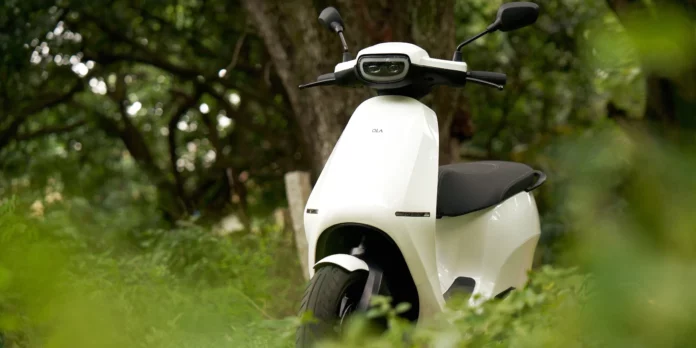
Ola reportedly sold around 25,000 Electric Scooters in December 2022 Alone

0
Top 10 electric scooters in India

Bhavish Aggarwal, the founder and CEO of Ola Electric, disclosed on Twitter that his company sold over 25,000 scooters in the final month of the 2022 calendar year. He also stated that the EV startup’s market share has increased to 30%. Ola has expanded its experience centres to 100 locations throughout India, with more to open by the end of March 2023.

The Move OS 3.0 software upgrade for its S1 electric scooters was recently released. Party mode, hyper charging, ride moods, Bluetooth calling function, advanced re-generation, proximity lock/unlock, hill-hold control system, and other features are included in the over-the-air update.

Ola introduced the S1 Air in India a little over a month ago, with an introductory price of Rs. 79,999 (ex-showroom), and it shares key features with the S1 and S1 Pro

Ola
credit: gaadiwaadi

It has a 2.5 kWh battery pack and claims to go from zero to 100 percent in four hours and 30 minutes, but the S1 Pro has an 8.5 kW engine and a 4 kWh battery. The electric motor has a peak power output of 4.5 kW and a top speed of 90 kmph, whereas the S1 Pro has a top speed of 115 kmph. It has a claimed riding range of 101 km in Eco mode, but the under-storage capacity is 36 litres, which is slightly less than the S1 and S1 Pro.

Bluetooth connectivity, numerous rider profiles, mood settings, a companion app, music playing, navigation, a seven-inch touchscreen TFT display, three ride modes (Eco, Normal, and Sports), and other features are included. In 2022, 6,15,365 electric scooters and bikes were sold in India, representing a more than 300 percent increase. With 1.50 lakh unit sales, Ola led the way.

Ola intends to broaden its portfolio by offering new electric motorcycles and scooters in the premium and volume segments by 2024, as it expands into new pricing ranges. The first Ola electric car will be available in 2024, with the business aiming to have six different electric four-wheelers available by 2027.

Also Read:

source

Maruti YY8 Electric SUV will be a Tata Nexon EV Rival

0

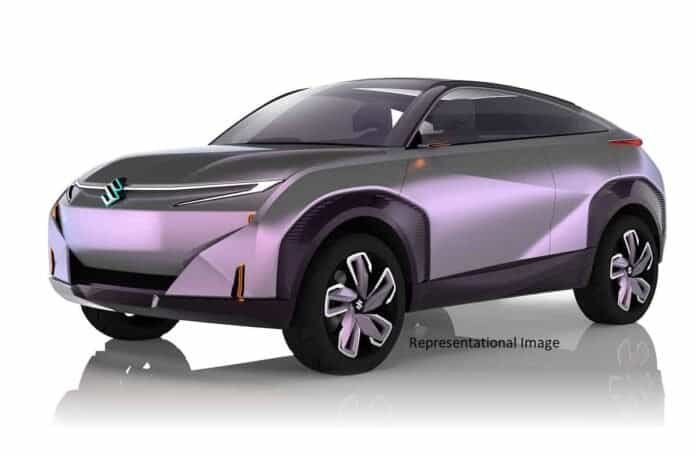
Despite the fact that it is late in the race, Maruti Suzuki appears to be increasing its focus on the EV category. At the upcoming 2023 Auto Expo, India’s largest automaker will unveil its first all-electric model, designated YY8. It will be the company’s hero concept in 2023, similar to how Future-S was in 2018 and Futuro-e was in 2020. 

The Maruti YY8 will be manufactured at Suzuki’s Gujarat plant. The EV will be available in both home and international markets. Exports are estimated to account for around 50% of total production. The YY8 is being developed in partnership with Toyota, which plans to release its own rebadged version of the EV.

Maruti YY8 electric SUV will be available with 48 kWh and 59 kWh battery pack variants to ensure a better fit for a broader spectrum of people with various demands and preferences. The respective approved ranges are projected to be between 400 and 500 kilometres. Power output is predicted to be in the 138 to 170 horsepower range. There will be two-wheel drive and all-wheel drive options available. AWD will be available for export markets, however, it is unclear whether it will be available in the domestic market.

Unlike Tata EVs, which use standard LFP cylindrical cells, the Maruti YY8 EV will use LFP blade cell batteries. BYD, a leading Chinese automobile manufacturer, will supply it. In terms of range, weight, and space utilisation, blade cell technology promises to be superior. Blade batteries can give more range since more cells can be packed into the limited space.

Maruti
credit: rushlane

BYD also says that the blade battery is far safer than existing battery technologies. It passed the nail penetration test with a surface temperature range of 30 to 60 degrees Celsius. Other extreme testing includes crushing the battery, bending it, overcharging it, and heating it in a furnace. Even still, BYD asserts no fires or explosions occurred.

The Maruti YY8 electric SUV will be built on Toyota’s 40PL worldwide platform and the 27PL born-electric skateboard architecture.

Its lengthy wheelbase of roughly 2,700 mm ensures spacious interiors and enough capacity for a huge battery pack. The YY8 will have short overhangs, in accordance with EV design trends. Wheels will be put as close to the edges as feasible, allowing for greater space on the inside.

The Maruti YY8 is predicted to be over 4.2 metres long, similar to the Creta’s 4.3 metres. It would have a futuristic appearance that is unlike anything seen in the current generation of Maruti vehicles. Because there will be many competitors by 2025, Maruti will provide the YY8 with a broad set of high-tech features.

The Maruti YY8 electric SUV and its Toyota counterpart are likely to cost between Rs 13 lakh and Rs 15 lakh upon launch. At this pricing point and with so many features, the YY8 has the potential to become another Maruti bestseller. However, rivalry will heat up dramatically by 2025, as both Mahindra and Tata are developing their own electric vehicles. 

This new Maruti e-SUV will compete with the Tata Nexon, Mahindra XUV400, and other electric SUVs currently on the market. Maruti will also display other models at the 2023 Auto Expo, including the YTB SUV (Baleno-based coupe SUV cross) and the 5-door Jimny. The WagonR flex fuel prototype will also be present.

Also Read:

source

Tata Motors had their best-ever Annual Sales in 2022

0
Tata Motors MD: Improvement in Charging Infrastructure can reduce range anxiety for EVs

Tata Motors’ passenger vehicle division ended fiscal year 2022 on a good note. As previously reported by Autocar Professional on December 19, the manufacturer has achieved its best-ever year wholesales performance in CY2022: over 500,000 units.

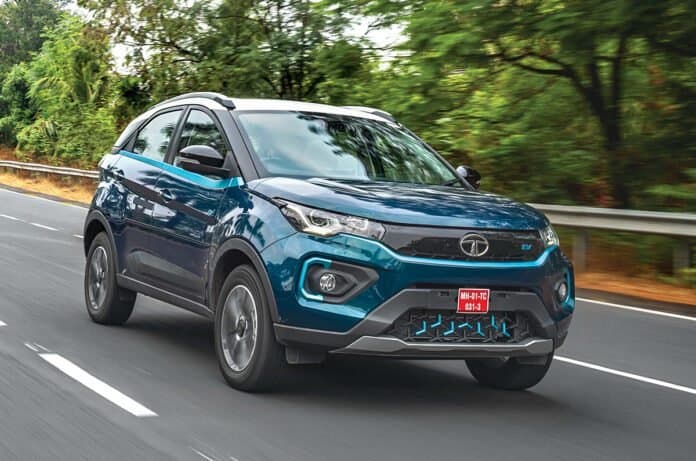
The company just disclosed a December sales total of 40,043 units, bringing the 12-month calendar year total to 526,798 units, with an average monthly sales total of 43,899 units. The business, which sells seven PVs in the local market – Altroz, Tigor, Tiago, Nexon, Punch, Harrier, and the Safari – has capitalised on rising demand for its SUVs, particularly the Nexon and the Punch, which are currently the best-selling and fourth-best-selling SUVs in India.

Tata Motors’ quick expansion has also been aided by its first-mover advantage in the fast-growing electric car industry, where it controls more than 80% of the market. The Nexon EV, Tigor EV, and Xpres-T (for fleet buyers) are presently available, while the Tiago EV, which will be available in January, was recently unveiled. According to Autocar Professional, Tata Motors sold 41,538 EVs in CY2022, accounting for 7.88% of the company’s total sales of 526,798 units. The company has grown by 59% year on year.

In the company’s official statement, Shailesh Chandra, Managing Director, Tata Motors Passenger Vehicles and Tata Passenger Electric Mobility said, “For Tata Motors passenger vehicles, CY22 has been a momentous year as we outpaced industry growth and crossed the distinctive milestone of 500,000 units comfortably to post wholesales of 526,798 units. Last quarter (Q3 FY23) was one of the best quarters for the PV industry with strong retails from new launches, robust festive demand, and adequate supply of vehicles. Tata Motors PV posted the highest ever quarterly and monthly retails in Q3 FY23 and December 2022, respectively. We also crossed the coveted 50,000 units of monthly retail for the first time.

Tata
credit: autocarpro

He added, “Wholesales recorded in Q3 FY23 were of 131,297 units (growth of 32.6% vs Q3 FY22) and in December 22 of 40,043 units (growth of 13.4% vs December 2021) with the popular SUV range continuing to contribute to two-third of the sales volumes. EVs posted their highest ever sales in Q3 FY23 at 12,596 units (growth of 116.2%) and crossed the landmark cumulative sales milestone of 50,000 units. The Tiago.ev received a tremendous response post the bookings opening during the quarter; deliveries are to start in Jan 2023. Going forward, we expect the growth momentum for EVs to remain strong with their rising popularity and the announcement of progressive policies by several states. Overall, we expect the PV industry to continue witnessing robust demand in the next quarter. We intend to remain vigilant and closely monitor any possible impact on the supply side due to rising Covid cases globally.”

Tata Motors is also on track to meet its FY2023 sales target of 500,000 vehicles, including 50,000 EVs, with nine months remaining in the fiscal year.

From April to December 2022, it sold a total of 403,747 units, including an anticipated 32,443 EVs. The recently unveiled Tiago EV, India’s first sub-Rs 10 lakh electric vehicle, might offer the charge starting in January 2023, when sales are scheduled to begin. With the XPres-T electric sedan, which has received orders for 23,000 units for Rs 3,000 crore, the manufacturer is also reaping significant benefits from sales to fleet operators.

Also Read:

source

EV Sales India: 2022 was the year with 210% reported growth

0

With total sales of 999,949 units in calendar year 2022, India Auto Inc narrowly missed the million-unit mark by 51 vehicles, according to official figures. This large figure is based on retail statistics from the government of India’s Vahan portal on the evening of December 31 at 10 p.m., a few hours before the year 2023 began. Due to the lag effect, it’s possible that the million EVs milestone was merely reached with a few additional car registrations specific to CY2022, added to the overall tally a few days later.

Furthermore, as one reader pointed out, the Vahan portal data does not include the state of Telangana or military forces sales statistics. Given this real-world scenario, the aggregate cumulative sale of EVs across vehicle classes in CY2022 in India would have reached the one-million mark for the first time.

The electric vehicle (EV) industry has had a fantastic year. The 999,949 EVs sold in CY2022 represent a significant 210% year-on-year increase over the 322,871 units sold in 2021. The two- and three-wheeler segments, which are often regarded as the EV industry’s “low-hanging fruits,” are responsible for the majority of the growth. Given that they are less expensive than electric passenger vehicles or commercial vehicle sectors, it is understandable that they are the largest contributors to EV sales.

Electric two-wheelers account for 62.23% of all EV sales in India in 2022, and 4% of India’s overall two-wheeler market, with cumulative sales of 15.3 million two-wheelers (1,53,07,255 units).

EV
credit: autocarpro

Ola Electric leads the market with 108,130 units, followed by Okinawa Autotech with 101,366 units – only 6,764 units behind. Ola Electric, Okinawa Autotech, Hero Electric, Ampere Vehicles, Ather Energy, TVS Motor Co, Bajaj Auto, Pur Energy, Revolt Intellicorp, and Being India Energy are the top ten OEMs, accounting for 550,562 units or 89% of total sales. Meanwhile, another 20-odd OEMs are engaging in a vigorous battle for a piece of the action in India’s burgeoning e-two-wheeler sector.

Electric three-wheelers have been another major growth engine for the EV industry, accounting for 34% of total EV sales in CY2022.

YC Electric Vehicles is the market leader in 2022, with an expected 27,814 units and an 8.24% market share. Saera Electric Auto is ranked second with 18,364 units, while Mahindra Reva Electric is ranked third with 15,485 units in the overall rankings. Dilli Electric Auto (13,148 units), Champion Polyplast (12,695), Mini Metro (10,457), Piaggio Vehicles (6,978), and Lectrix EV have also performed well (6,978).

According to Vahan EV retail sales data for CY2022, the electric four-wheeler segment sold a total of 37,792 units, including 32,824 motor vehicles and 4,968 electric PVs. As a result, the electric four-wheeler segment accounts for over 4% of India’s total EV market.

Tata Motors, the business with the largest EV portfolio, has sold 30,284 units and controls 80% of the market. MG Motor India has a 9% market share with 3,390 units sold.

Also Read:

source

Tata Motors is all set to take over Ford’s Gujrat Plant by January 10th 2023

0

Tata Passenger Electric Mobility Limited, Tata Motors’ electric vehicle unit, stated on Friday, December 30, that its agreement to acquire Ford India’s production factory in Gujarat’s Sanand will be completed on January 10, 2023. The deal covers land, a vehicle production plant, machinery, and equipment, as well as all qualified staff.

Tata Motors, in an exchange filing, stated, “Tata Passenger Electric Mobility had executed a Unit Transfer Agreement on August 7, 2022, for the acquisition of Ford India’s manufacturing plant situated at Sanand, Gujarat, which inter-alia includes: (i) entire land & buildings; (ii) Vehicle Manufacturing Plant along with machinery and equipment situated therein; and (iii) transfer of all eligible employees of FIPL’s vehicle manufacturing operations at Sanand, for a total consideration, exclusive of taxes, of Rs 725.7 crore.”

The company also announced that both parties would proceed with the deal on January 10, 2023, after fulfilling the requisite condition precedents and obtaining applicable government clearances.

This announcement comes at a time when Tata Motors is experiencing manufacturing capacity restrictions in its existing plants, resulting in lengthier wait times for select car models.

Tata
credit: cnbctv18

Following this acquisition, Tata Motors’ manufacturing capacity, which is currently 300,000 units per year, might be increased to 420,000 units per year. As part of the acquisition, all qualified Ford employees have been offered employment with Tata’s EV subsidiary on comparable terms, conditions, and service perks as their existing employer.

“As part of the transaction, all eligible employees of FIPL’s vehicle manufacturing plant have been offered employment with TPEML on terms, conditions and benefits of service similar to those that are currently availed by them. TPEML would like to take this opportunity to extend a warm welcome to all the eligible FIPL employees who have accepted its offer of employment and who shall become TPEML employees with effect from 10th January 2023,” it added.

Also Read:

Source