Home Blog Page 277

Tesla price cut: Why it was neccessary for the EV maker to cut price and how it has affected the company

0

Tesla, the poster child for electric vehicles, has had a difficult year. The company’s value was wiped out by billions in 2022, the first year since it went public. So when Tesla announced last week that it was lowering the price of its electric vehicles (EVs) by up to 20%, it raised eyebrows. Following a string of controversies involving its CEO, Elon Musk, the move has caused investors concern.

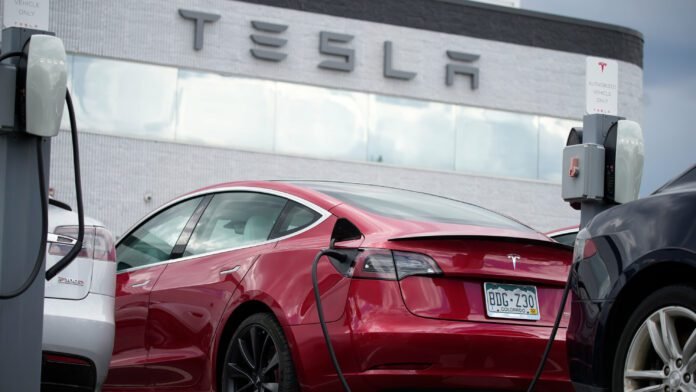
Other investors see this as a sign that Tesla is ready to reverse its stock price decline. All Tesla models have seen price reductions, some larger than others. The Model Y base unit is now $52,990, down from $65,990, a nearly 20% reduction. The Model 3 Performance now costs $53,990, down from $62,990.

The Model S Performance is Tesla’s most expensive model, and there’s a $21,000 savings if you’ve been eyeing one. It’s now down to $114,990, a 15% reduction in price. Tesla officials stated that the price decrease was due to lower supply chain and logistics costs, which allowed them to pass these savings on to the end user.

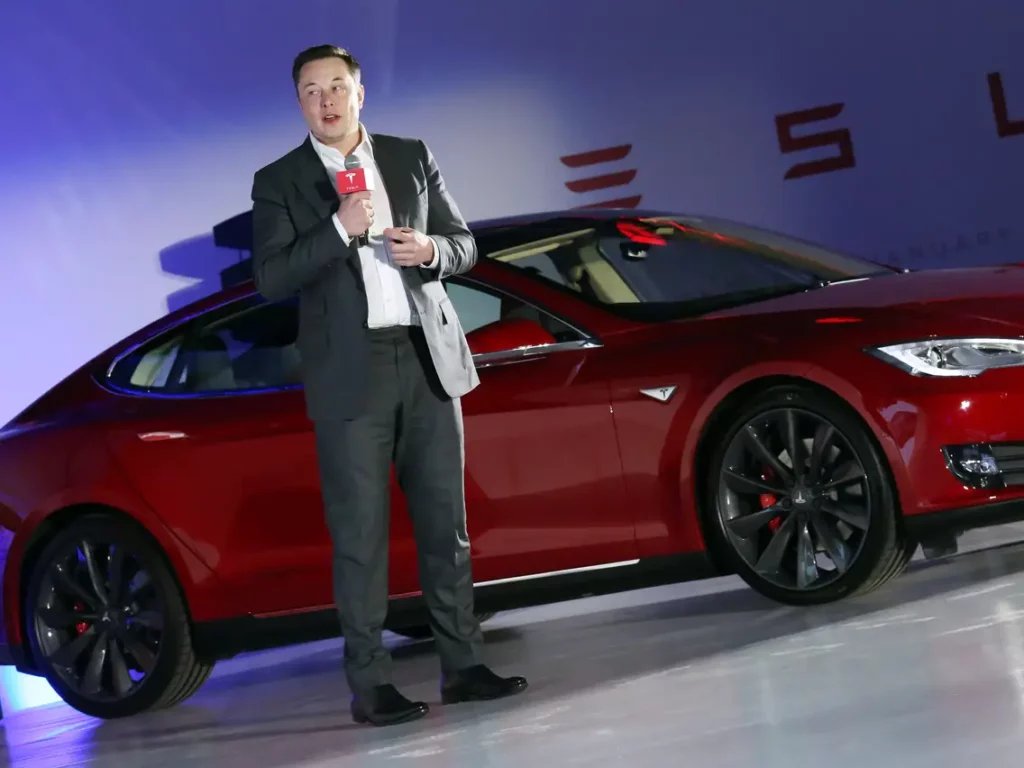
Elon Musk, CEO of Tesla, stated last year that the company’s prices had become “embarrassingly high” at a time when a recession was looming.

Tesla’s decision last week to slash global EV prices by up to 20% could attract new buyers to the industry, but it will also force other automakers to respond with lower prices or risk being left behind, analysts and investors said. And, like many other major US corporations, Tesla has been affected by the economic downturn. Tesla shares have dropped by more than two-thirds in value over the last year, trading at around $104 per share after reaching all-time highs of $400 earlier this year. Everyone is aware of Musk’s now-infamous purchase of Twitter, which has been steadily losing money following a series of layoffs and advertisers fleeing. Musk sold $3.6 billion in Tesla stock in December to help fund the new venture.
Tesla
credit: Tesla

In addition, President Biden signed the Inflation Reduction Act into law in August of last year. The newly rebranded ‘clean vehicle credit’ for EVs is now available as part of this. This tax credit reimburses consumers $7500 for purchasing a brand-new EV. Buyers must purchase an EV made in North America to qualify. There is also a price limit for receiving the rebate: vans and pickup trucks cannot be priced higher than $80,000, and any other vehicle cannot be priced higher than $55,000.

Another significant change in the Act impacted Tesla. Previously, once a manufacturer sold 200,000 EVs, it was no longer eligible for the tax credit. This has now been repealed, which represents a significant change in Tesla’s fortunes with potential customers looking to save money. So it makes perfect sense for Tesla to lower their prices.

From January 9 to 15, daily sales in China increased by 76%. Germany, home to Tesla’s Berlin gigafactory, has reported an increase in Model Y wait times. According to Edmunds, an online car resource, the Model Y skyrocketed in searches by the week ending January 15, jumping from 70th to second place in the rankings. The Model 3 moved up 36 spots to become the 11th most searched vehicle. Stock prices have risen as a result of the increased demand for Teslas. Tesla closed yesterday (January 24) at nearly $144, up from a low of $108 at the start of the year.

Also Read:
Source

iVoomi S1 Electric Scooter: Here’s All we know about the EV which promised 240 KM in a Single Charge

0

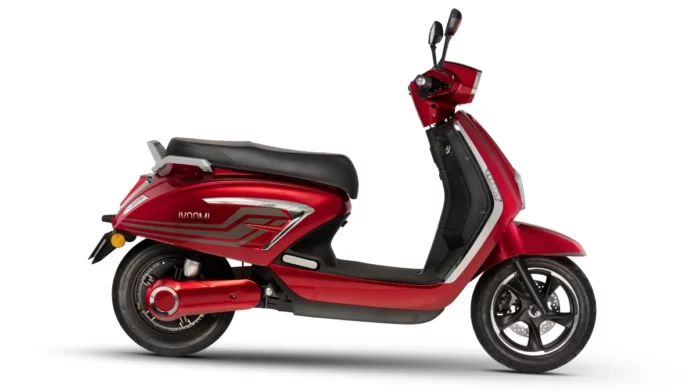
With the introduction of the S1 80, S1 100, and S1 240, Mumbai-based iVoomi Energy has introduced new variants of the S1 electric scooter. The iVoomi S1 line-up has been upgraded to meet various requirements, and prices range from 69,999 to 1.21 lakh. The highlight, however, is the claimed range of 240 km on a single charge, which makes the new offering worth keeping an eye on. However, the current S1 e-scooter is still on the market and will cost $85,000.

The top-spec iVoomi S1 240 electric scooter has a range of 240 kilometres (IDC). The model has a 4.2 kWh twin battery pack and a 2.5 kW (3.3 bhp) motor with extra torque. The entry-level S1 80 electric scooter, on the other hand, is equipped with a 1.5 kWh battery pack that provides a range of 80 km (IDC) on a single charge. The S1 80 also gets a 2.5 kW hub-mounted motor with a top speed of 55 kmph. All models have three riding modes: Eco, Rider, and Sport. Peacock Blue, Night Maroon, and Dusky Black are among the colour options.

According to IDC, the iVoomi S1 240 has a range of 240 km, a twin battery pack of 4.2 kWh, and is powered by a 2.5 kW motor with extra torque.

iVOOMi
credit: iVOOMi

While the hardware and specifications of the S1 80 are less than those of the S1, it does use a 1.5-kWh battery pack with an IDC range of 80 kilometres. The S1 80 is propelled by a 2.5kW hub-mounted motor capable of reaching a top speed of 55 kmph. The S1 comes with three riding modes: Eco, Rider, and Sport. The model also includes the new ‘Find my Ride’ feature, which includes a GPS tracker and monitoring system.

iVoomi Energy will begin selling the new S1 e-scooter range across its dealership network on December 1, 2022. The company has partnered with financial institutions to provide easy financing options of up to 100% of the on-road price. The manufacturer has also announced plans to expand its presence in the country’s southern region, and will make its entire product line available by the end of the year.

Also Read:
Source

Citroen eC3 Electric Car: Here is why you should consider buying a new car from Citroen

0

The Citroen E-C3, an electric car that slots between the Tata Tiago EV and Tigor EV, arrives just days after the launch of the Mahindra XUV400 and the almost immediate price revision of the Tata Nexon EV. Citroen India has made a clear statement with the E-C3: the EC3 will look identical to the C3. There is no way to tell one from the other except for the powertrain switch from petrol to electric, a few electric badges, a charging lid on the front fender, and green number plates. There is nothing new to report on the design front. It still looks good, a cheerful design like Citroens are known for in this increasingly aggressively designed automotive world.

The colour schemes make the Citroen EC3 stand out, and the stance gives it a borderline SUV appearance. When you look to the side of the E-C3, you’ll notice a black bar under the side skirt. It’s the E-battery C3’s protruding. When compared to the C3, the battery pack reduces ground clearance by 10mm to 170mm.

The interior of the Citroen E-C3 follows the same approach in order to keep development costs to a minimum. Both the orange and grey interior packs are carried over to the EC3. The drive selector and details on the instrument cluster that show the state of charge in the battery, range, and how efficiently you are driving are the differences on the inside. It even keeps the key that you need to ‘crank’. When you turn the key, the Citroen EC3 starts up quietly.

The E-C3 has been in development for 4.5 years, alongside the ICE car. This was very early in Citroen’s entry into India, and the EV landscape was very different back then than it is now.

Citroen
credit: Citroen

That establishes the foundation for what follows – the performance figures. The E-C3 has only 56bhp, making it India’s least powerful electric vehicle. It has 18bhp less than the much smaller and lighter Tata Tiago EV, but what it lacks in power it makes up for in torque, producing 143Nm, which is 29Nm more than the Tiago EV.

What appears to be a step up from the petrol Citroen C3 is that the E-C3 feels more planted and stable around corners. The added weight of nearly 300kg over the petrol car, combined with the low CG of the battery, makes the E-C3 more stable around bends. To accommodate the extra weight, we presume the C3’s soft suspension setup was tuned and stiffened, but details on this remain unknown for the time being.

The Citroen E-C3 will go on sale in February, with reservations opening this weekend. For a car in this price range, you get two variants with a plethora of customization options. We anticipate that the E-C3 will be priced between Rs 10.5 and 11 lakh ex-showroom, as it is a much larger car than the Tata Tiago EV and has a larger battery.

Also Read:

Source

BYD is diving head-first into India’s growing Passenger EV Market

0

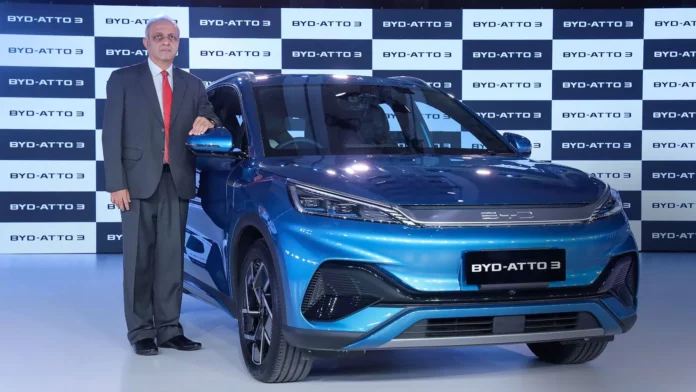
BYD India, a subsidiary of Chinese vehicle manufacturer BYD, is optimistic about the evolution of the country’s passenger electric vehicle (EV) market and plans to release another model this year. According to Sanjay Gopalakrishnan, senior vice president of BYD India’s passenger EV business, the company sold 700 EV cars of a single model in 2022 and expects to sell 15,000 units of three models in the current calendar year.

BYD currently offers two models which are the SUV and the MUV

According to him, the third model in the sedan segment will be released in October of this year. BYD, a Chinese conglomerate headquartered in Shenzen, is a leading manufacturer of electric vehicles and in Chennai, BYD India has an assembly plant.

BYD
credit: economictimes

According to Gopalakrishnan, the BYD vehicles are shipped to India in semi-assembled form and then assembled at the Chennai plant. BYD first introduced an electric bus in India in 2017, followed by an electric passenger car in November 2021. In 2022, the company expects to sell 1.8 million electric vehicles globally.

The assembly capacity of the BYDs Chennai plant will be increased based on demand from the current 15,000 units per year. The Chinese company has already invested USD 200 million in India, and BYD India now has 24 dealer locations across the country, according to Gopalakrishnan.

Also Read:

Source

EV: Indian Refiners shifting their focus towards the country’s growing EV Market

0

The rapid adoption of electric vehicles in India’s emerging market has prompted a major rethinking of the country’s long-term fuel requirements, as refiners in Asia’s third-largest economy accelerate their shift away from oil production. India, one of the world’s fastest-growing oil markets, has lagged behind major economic peers in Europe and Asia in terms of EV adoption, but sales are now picking up, and investment in new autos and energy infrastructure is increasing.

According to some analysts and industry participants, India’s gasoline consumption will peak sooner than previously thought, forcing top oil firms to accelerate transition plans to alternative business lines, particularly increased petrochemical manufacturing.

EV
credit: economictimes

Slowing fuel demand will be visible by 2030 as EV technologies stabilise, compared to an earlier projection of the 2040s, and also the changes in the heavy trucking sector will come later.

By global standards, India’s progress in EVs is modest, however, last year registered EVs tripled to 1.01 million by 2021, with the majority being two- and three-wheelers. While EVs account for only 1% of the 3 million cars sold each year, New Delhi hopes to increase this to 30% by 2030 and has implemented a variety of policies to that end, including consumer tax breaks. State refiners in India, which dominate fuel retailers, intend to instal EV charging stations at over 22,000 fuel stations and highways by 2024.

Also Read:

Source

EV and E-commerce: How Electric Vehicles are helping the e-comm businesses to grow more

0

E-commerce was one of the first to adopt electric vehicles and about 15 to 20% of last-mile e-commerce cargo fleets have been electrified via retrofitted solutions, ICE vehicle replacement with EVs, or EV introduction. India is making rapid progress toward EV commercialization thanks to proactive government policies.

However, the transition to EVs necessitates careful planning and consideration. We quickly realised, as an early OEM entrant into the EV market, that the entire EV ecosystem is still learning how to deploy, operate, and service electric vehicles.

The majority of logistics companies require vehicles for the first, middle, and last mile. With relatively low payloads, EVs can currently be deployed efficiently for first- and last-mile applications. However, as the technology matures, EVs will enter the mid-mile and inter-city logistics markets.

Electric vehicles require less ongoing maintenance and also a dedicated EV service network that includes driver training, fleet integration, and ongoing maintenance is required to facilitate EV adoption.

EV
credit: financialexpress

More intelligent planning is required for EV cargo fleet optimization to cover the shortest distance possible while delivering the greatest number of packages. Companies can reduce the payload and increase the range of electric vehicles by using lighter materials for both the vehicles and their packaging. Distance travelled and weight are optimised by using data analytics and algorithm-driven technological solutions.

With the right EV partners, these companies were able to convert 10%-15% of their total fleets to EV in 6-8 months and 20%-30% in just over a year, saving 70% on average in operating costs. The electric vehicle ecosystem is rapidly evolving, and companies can improve driver performance through training and the use of smarter IoT devices. The time it takes to make the change will be reduced as technology advances, and the amount of money saved will increase dramatically.

Also Read:

Source

Hyundai to invest $8.5 billion to accelerate its EV Business

0

Hyundai Motor Co. has announced a 10.5 trillion won ($8.5 billion) investment plan through 2023 to advance its clean-emission vehicles and technology. Hyundai disclosed this in an exchange filing in its home market of South Korea on Thursday. Hyundai has repeatedly stated that it wants to be more than just a player in the EV game, and it offers EVs under the Ioniq brand name in addition to conventional vehicles.

The company plans to sell up to 43 lakh vehicles in 2023, which is approximately 10% more than it sold in all of 2022. And, as EV adoption continues to rise globally, a significant portion of the sales may come from EVs. Kia Corp, a subsidiary, is also betting big on EVs, with plans to sell over 32 lakh vehicles this year.

Hyundai
credit: hindustantimes

Hyundai and Kia are the world’s third largest automakers, trailing Toyota and Volkswagen AG.

However, when it comes to EVs, Tesla has a commanding lead over all competitors and expects to sell around 20 lakh EVs this year alone. However, while Tesla has gained momentum as a result of recent price cuts announced in key markets such as China and the United States, Hyundai has found the going tough in many parts of the world. In the United States, the company is working to alleviate concerns about President Joe Biden’s climate and energy bill.

Over a three-month period, sales in China fell 19%, while figures in Europe remained relatively flat. Russia emerged as a major concern after Hyundai suspended operations in the country in 2022 as a result of Russia’s invasion of Ukraine. In the most recent quarter, sales fell by approximately 65%. However, the company remains optimistic, aiming for an 11.5 percent revenue increase in 2023.

Also Read:

Source

TVS Motor Company seems to be ahead in the India EV Race

0

The consolidated net profit of TVS Motor Company increased by 28% to 304 crore in the third quarter ended December 2022 (Q3FY23) from 237 crore the previous year. Its revenue increased to 8,075 crore from 6,606 crore the previous year (YoY).

“TVS Motor’s 3Q EBITDA and PAT grew 16-22% YoY and were 4-7% above Jefferies estimares. We believe TVS should be a key beneficiary of Indian 2W demand recovery. TVS has turned aggressive in EVs, leading among incumbents in E2Ws with 17% market share in Jan, and is planning to launch multiple products in next 18 months. Our FY24-25E EPS is 14-15% above street. We expect TVS’ earnings to almost treble over FY22-25,” said Jefferies while retaining its Buy on the auto stock with a target price of ₹1,550. 

TVS
credit: mint

Brokerage Nirmal Bang has reiterated its belief that TVS is a front-runner among incumbent OEMs in the electric vehicle (EV) space, with aggressive plans for the EV business that include a series of new model launches over the next 12-18 months, monetization of the EV arm, and investments in technology to cover the entire spectrum of EV product portfolio.

TVS sold 29k EV units across three different iQube variants in 3QFY23 and expects to double its volume in 4QFY23. It expects to sell more than one lakh EVs in FY23. TVS had a 14.5% market share in EVs in 3QFY23, and EVs contributed 10% to scooter volume. The company also stated that it intends to release an Electric 3W in the coming months.

Also Read:

Source

Budget 2023: EV Charging Infrastructure needs a big Push in the Country

0

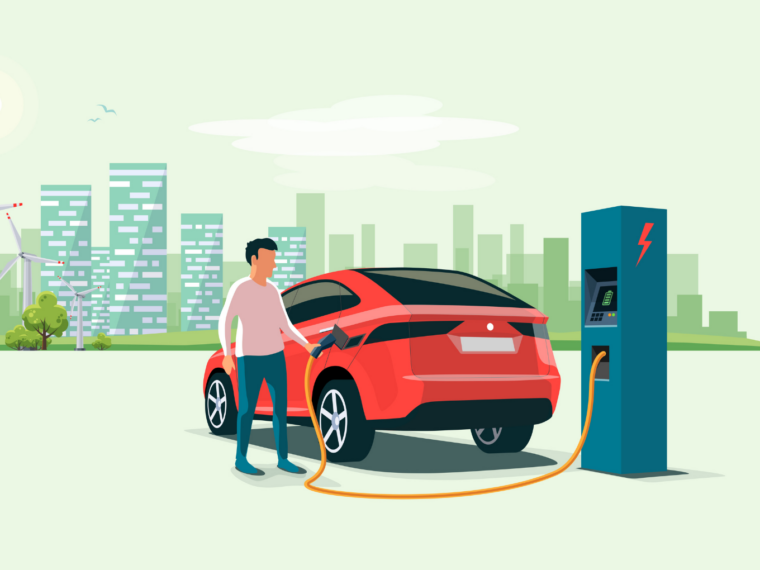
Creating a vast network of public stations and community charging stations (in societies) in key metro cities to assist India in realising its EV dream is a daunting task, and the country currently faces a huge gap as EV adoption increases, particularly in the two-wheeler segment. According to Ministry of Power guidelines, EV charging infrastructure is classified into five broad categories.

Electric Vehicle Supply Equipment (EVSE), Public Charging Stations (for the general public), Battery Charging Stations (where discharged or partially discharged EV batteries are recharged), Captive Charging Stations (exclusive stations owned or controlled by the charging station owners), and Battery Swapping Stations are some examples (where any electric vehicle can get its discharged battery or partially charged battery replaced by a charged battery).

India had 2,700 public charging stations and 5,500 charging connectors at the end of 2022. According to Counterpoint Research, the country will have 10,000 public charging stations by the end of 2025. By 2030, the country may require 20.5 lakh charging stations, a massive task that must be accompanied by a surge in EV sales until then.

According to Raghav Arora, Co-Founder and CTO of EV charging solution provider Statiq, as the demand for EVs grows exponentially, so will the need for public and community charging stations.

EV
credit: indiatvnews

Since 2020, EV sales in India have been at an all-time high, indicating a shift in people’s attitudes toward electric mobility. The government has been assisting the electric vehicle industry through programmes such as FAME1 and FAME2, with a particular emphasis on charging infrastructure.

It has set a target of electrifying 70% of all commercial vehicles, 30% of private cars, 40% of buses, and 80% of two-wheeler and three-wheeler sales by 2030. According to Sohinder Gill, CEO of Hero Electric, the company is focused on strengthening the EV charging network by partnering with EV tech companies such as Statiq, BOLT, Charzer, Massive Mobility, and Log9 Materials to instal over 1 lakh charging points across India.

Also Read:

Source

Pure EV releases its first impact report showing some amazing Numbers

0
Pure EV releases its first impact report showing some amazing Numbers

PURE EV, a leading Electric Vehicle Two-Wheeler (EV2W) Company based in Hyderabad, has recently released their first Impact Report. This report captures the true essence of EV adoption by demonstrating the enormous impact electrification had on the economic life of the average person as well as the overall health and well-being of the community.

PURE EV is one of the few EV2W OEMs with R&D expertise and battery manufacturing technology. When it comes to technology, the company is one of the top born-electric EV2W OEMs, as evidenced by their 100+ patent filings. This has enabled the company to regularly innovate and develop products that meet the most recent regulatory standards while also meeting the needs of the Indian commuter.

Commenting on this report Rohit Vadera, co-founder and CEO of PURE EV has said “Philosophy of PURE EV is not restricted to sales numbers, we believe that the true impact can only be measured with the maximum usage of the vehicle (kilometres driven) by the customers. Below is a brief snapshot of our 60k+ customers.”

Pure EV

– More than 60k KM- 2 Customers

– More than 50k KM- 13 Customers

– More than 30k KM > 5 per cent of Customers

– More than 20k KM > 25 per cent of Customers

– More than 15k KM > 50 per cent of Customers

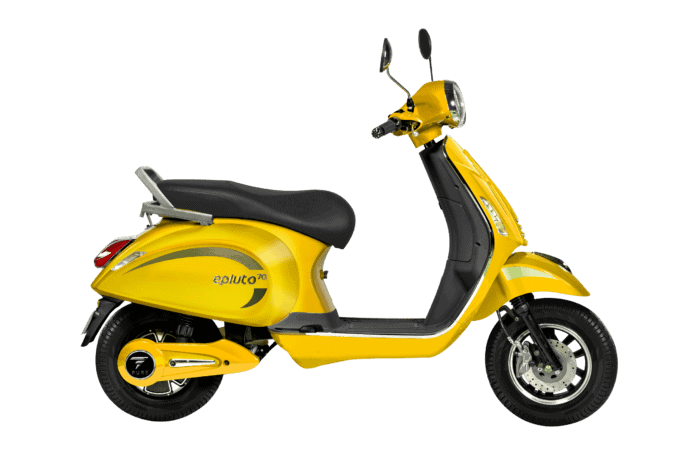
In 2020, the company released its first high-speed scooter, the ePluto 7g, and since then, PURE EV has consistently released a new model every year.

PURE EV is the only EV2W company in India with a diverse product portfolio that includes electric scooters and motorcycles, thanks to the recent launch of their ecoDryft electric commute motorcycle. PURE EV’s recent ecoDryft model is aimed at the commute motorcycle segment of the Indian two-wheeler market. So, with this push into commute motorcycles, PURE EV can accelerate the adoption of EV across India, and the impact on society as a whole could be truly phenomenal.

Also Read:

Source