Home Blog Page 7

Major Fire at Kota EV Showroom Destroys Over 50 Electric Bikes

0
Kota EV Showroom

A major fire broke out at the Kota EV Showroom, an electric vehicle showroom in Kota, Rajasthan, on Wednesday morning, destroying over 50 electric scooters and bikes. Police officials said the blaze spread rapidly through the showroom, causing significant damage. Authorities suspect a short circuit as the reason behind the fire. This incident marks yet another fire safety concern at EV facilities in India, highlighting the critical need for enhanced safety protocols at electric vehicle showrooms and charging centers.

Kota EV Showroom Fire DetailsInformation
Incident DateNovember 26, 2025 (Wednesday morning)
LocationElectric vehicle showroom, Kota, Rajasthan
Vehicles Destroyed50+ electric scooters and bikes
Suspected CauseShort circuit
Fire Engines Deployed4 fire engines from Kota Fire Department
Control TimeOver 1 hour to bring flames under control
CasualtiesZero injuries or fatalities reported
Property DamageSignificant; many EVs completely charred
Investigation StatusCase registered, official probe underway
Kota EV Showroom
Kota EV Showroom

Rapid Fire Spread Kota EV Showroom

Rajasthan: More than 50 electric vehicles were burnt after a massive fire broke out in an electric vehicle showroom in Rajasthan’s Kota on Wednesday morning, police said. Officials said the blaze, which spread rapidly through the premises, is suspected to have been triggered by a short circuit.

The rapid spread of the fire through the showroom underscores the particular challenges associated with electric vehicle fires, where lithium-ion batteries can intensify blazes and create additional safety hazards for firefighters and bystanders.

Emergency Response and Fire Containment Efforts

Firefighters arrived promptly, controlling the flames before they could reach nearby shops and homes. Footage from the site showed intense flames as staff and bystanders helped remove partially burnt EVs to reduce losses. Police confirmed no injuries occurred and assured the public that the situation is now under control.

Four fire engines from the Kota fire department were dispatched to the scene and firefighters worked for over an hour to bring the flames under control and prevent the fire from spreading to neighbouring establishments. Visuals from the scene showed fire personnel battling rising flames, while onlookers helped pull out half-burnt electric bikes and scooters from the showroom to limit losses.

Complete Loss of Electric Two-Wheelers

Despite these efforts, many EV two-wheelers were completely charred. Authorities confirmed that no casualties or injuries were reported in the incident. Police said they have registered a case and begun an investigation to determine the exact cause of the fire.

The complete destruction of over 50 electric vehicles represents a significant financial loss for the showroom owner, though the exact monetary value of the damage has not been officially disclosed. The incident also raises concerns about inventory insurance coverage and safety compliance for EV retail facilities.

Coordinated Emergency Response

Four fire engines from the Kota Fire Department responded quickly to the electric vehicle showroom fire. Firefighters worked for over an hour to bring the blaze under control and prevent it from spreading to adjacent buildings.

The swift deployment of multiple fire engines and coordinated firefighting efforts prevented what could have been a far more catastrophic situation, with the fire potentially spreading to neighboring commercial establishments and residential areas.

No Casualties Reported: Safe Evacuation

Authorities confirmed that no one sustained injuries during the major fire at the Kota electric vehicle showroom. Employees and visitors evacuated safely after the blaze began in the morning. Police and fire department officials coordinated the evacuation to ensure public safety. The incident caused property damage but no human casualties, which officials called fortunate given the intensity of the fire.

The absence of casualties represents a fortunate outcome given the intensity and rapid spread of the fire. The morning timing likely meant fewer customers were present at the showroom, reducing the risk of human casualties.

Official Investigation Launched

Police have registered a case regarding the fire at the Kota electric vehicle showroom and launched an official investigation. Officers are collecting evidence to determine whether the fire resulted from a short circuit or other causes. Eyewitness statements, CCTV footage, and expert analysis will form part of the probe. Authorities aim to prevent similar incidents in the future by identifying safety lapses.

The comprehensive investigation will examine electrical wiring systems, charging infrastructure, battery storage protocols, fire safety equipment availability, and compliance with building safety regulations. The investigation is ongoing, and officials have asked the public and local business owners to follow fire safety measures. Police have promised to release further updates as the inquiry progresses to provide clarity on the cause of the blaze.
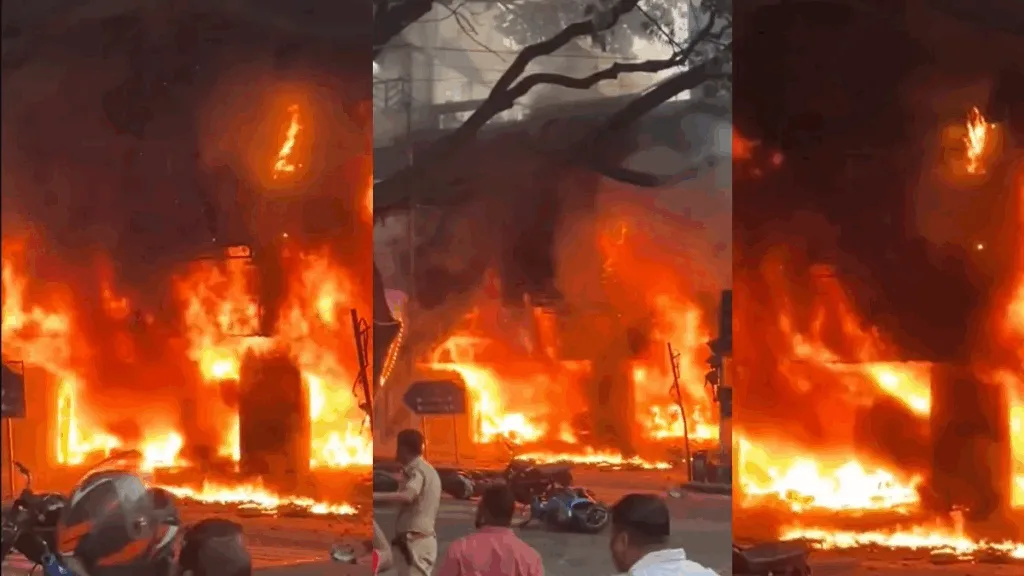
image 355 Major Fire at Kota EV Showroom Destroys Over 50 Electric Bikes
Kota EV Showroom

Growing Concern: Pattern of EV Facility Fires in India

This incident follows a disturbing pattern of fire incidents at EV-related facilities across India. In a separate recent incident, a fire at an electric bike showroom in Konark, Odisha destroyed 30 vehicles and caused damage estimated at over ₹50 lakhs, also triggered by an electrical short circuit during charging operations.

More tragically, in November 2024, a devastating fire at My EV Store in Bengaluru’s Rajajinagar claimed the life of a 20-year-old receptionist named Priya, while destroying over 25 electric bikes. That incident, also caused by a suspected electrical short circuit, highlighted inadequate safety measures at EV retail facilities.

Critical Safety Concerns for EV Industry

These recurring incidents raise urgent questions about:

  1. Electrical Infrastructure Standards: Adequacy of electrical wiring and circuit breaker systems in EV showrooms handling high-capacity charging operations
  2. Battery Storage Protocols: Safe storage practices for lithium-ion batteries, which can experience thermal runaway and intensify fires
  3. Fire Suppression Systems: Availability and effectiveness of specialized fire suppression equipment suitable for electrical and battery fires
  4. Building Safety Compliance: Enforcement of fire safety regulations, emergency exits, and evacuation procedures
  5. Staff Training: Preparedness of showroom employees to respond to electrical fires and battery-related emergencies

Industry Response and Safety Recommendations

The EV industry and regulatory authorities must prioritize:

  • Mandatory installation of advanced fire detection and suppression systems designed for electrical fires
  • Regular electrical safety audits of charging infrastructure
  • Segregated battery storage areas with fireproof barriers
  • Enhanced insurance coverage requirements for EV retail facilities
  • Staff training programs on electrical fire response protocols
  • Stricter enforcement of building safety codes for EV-related establishments

The recurring nature of these incidents suggests systemic gaps in safety infrastructure and regulatory oversight that require immediate attention from industry stakeholders and government authorities.

For more updates on EV safety incidents in India and electric vehicle fire prevention measures, stay connected with our comprehensive coverage.

Official Links:
Mahindra XEV 9S: India’s First 7-Seater Born-Electric SUV Launches Tomorrow

0
Mahindra XEV 9S

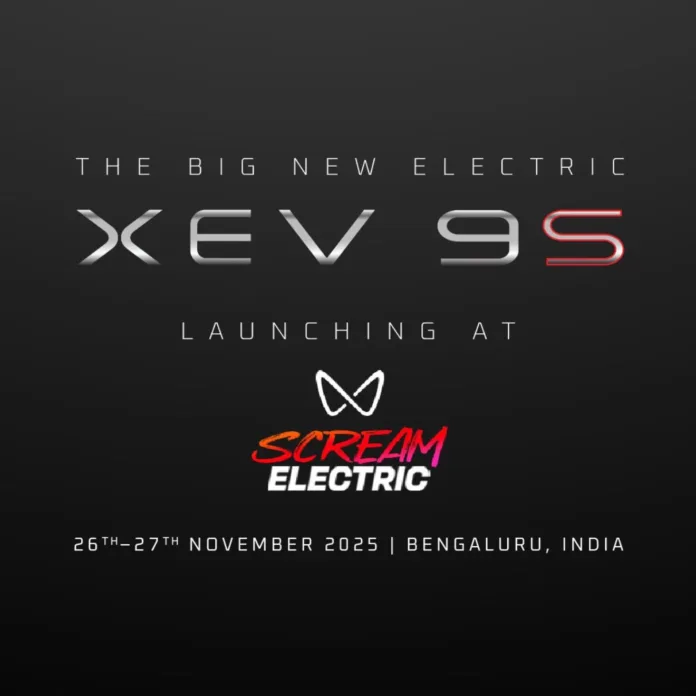
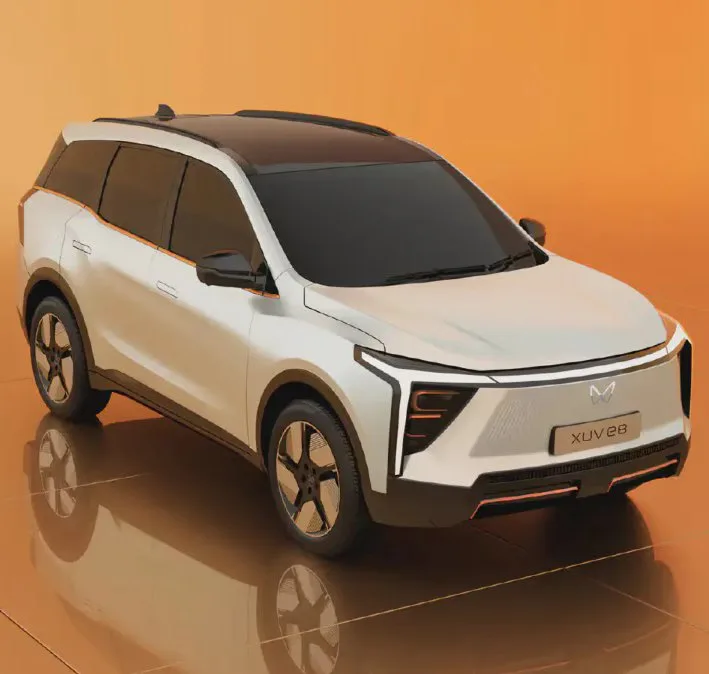
Mahindra XEV 9S, India’s electric vehicle revolution takes a giant leap forward as Mahindra prepares to unveil the XEV 9S, the first 7-seater, authentic, ground-up Electric Origin SUV in its class based on the acclaimed INGLO architecture. Launching on November 27, 2025, in Bengaluru, this family-focused electric SUV promises to redefine luxury, space, and sustainability for Indian families.

image 351 Mahindra XEV 9S: India's First 7-Seater Born-Electric SUV Launches Tomorrow

Mahindra XEV 9S : The Seven-Seater Game Changer

Unlike conventional ICE-to-EV conversions, the XEV 9S has been designed with EV-first intent, reflected in its proportions, cabin layout, and features. Built on the INGLO skateboard platform co-developed with Volkswagen, the SUV maximizes interior space while delivering impressive performance metrics that rival premium international offerings.

Mahindra XEV 9S: Complete Specifications

Specification59 kWh Variant79 kWh Variant
Expected Price₹21-25 lakh₹28-35 lakh
Power Output228 bhp282 bhp
Torque380 Nm380 Nm
Claimed Range542 km656 km
Fast Charging20-80% in 20 minutes20-80% in 20 minutes
Seating Capacity7 seats7 seats
Drive TypeRWDRWD

Premium Features That Matter

The XEV 9S will be equipped with ventilated and powered front seats, featuring an electric Power Boss function for the front passenger seat, along with a panoramic sunroof, 7 airbags, and a premium 16-speaker Harman Kardon sound system. The cabin showcases a triple 12.3-inch screen setup—digital instrument cluster, central infotainment touchscreen, and co-driver display—creating a tech-forward environment that rivals luxury European EVs.

Interior highlights include rear seatback entertainment screens, dual-zone climate control, wireless charging, ambient lighting, and Level 2 ADAS suite with 360-degree camera. The boss mode function allows second-row passengers to electronically adjust front seats for maximum legroom, making long journeys comfortable for families.

Design Philosophy: Bold Yet Familiar

The XEV 9S features a closed-off front grille, accentuated by a sleek LED light bar, flanked by sharp triangular LED projector headlamps, with a new illuminated butterfly logo signaling Mahindra’s evolving EV identity. The side profile echoes the XUV700 while incorporating flush door handles and aero-tuned alloy wheels. At the rear, connected LED taillights and a simplified upright tailgate complete the sophisticated design language.

Range Anxiety? Not Anymore

With fast-charging capabilities enabling 20% to 80% charge in just 20 minutes via DC fast chargers, the XEV 9S addresses India’s biggest EV concern. The larger 79 kWh battery pack delivers a claimed 656 km range, making weekend getaways and intercity travel genuinely feasible for Indian families.

Market Positioning & Competition

The XEV 9S is expected to start at around ₹21 lakh (ex-showroom), positioning it competitively against the upcoming Tata Safari EV and BYD eMAX 7. For buyers exploring seven-seater electric SUVs, the XEV 9S represents the first true born-electric option with genuine long-distance capability.

Mahindra’s EV portfolio expansion continues gaining momentum, with the BE 6 and XEV 9e achieving 30,000 combined sales within seven months. The XEV 9S targets families seeking spacious, tech-loaded electric mobility without compromise.

Final Thoughts

The Mahindra XEV 9S isn’t just another electric SUV—it’s India’s answer to family-friendly electric mobility that doesn’t sacrifice space, comfort, or range. With official pricing and complete specifications set to be revealed tomorrow, Indian EV enthusiasts have every reason to celebrate.

Mahindra BE 6 Formula E Edition: World’s First Formula E-Inspired Electric SUV Launches at ₹23.69 Lakh

0
Mahindra BE 6 Formula E Edition

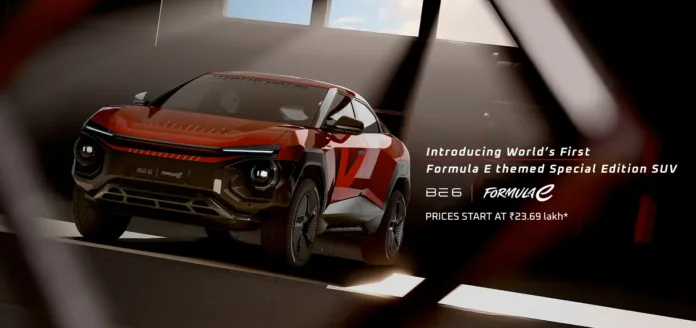
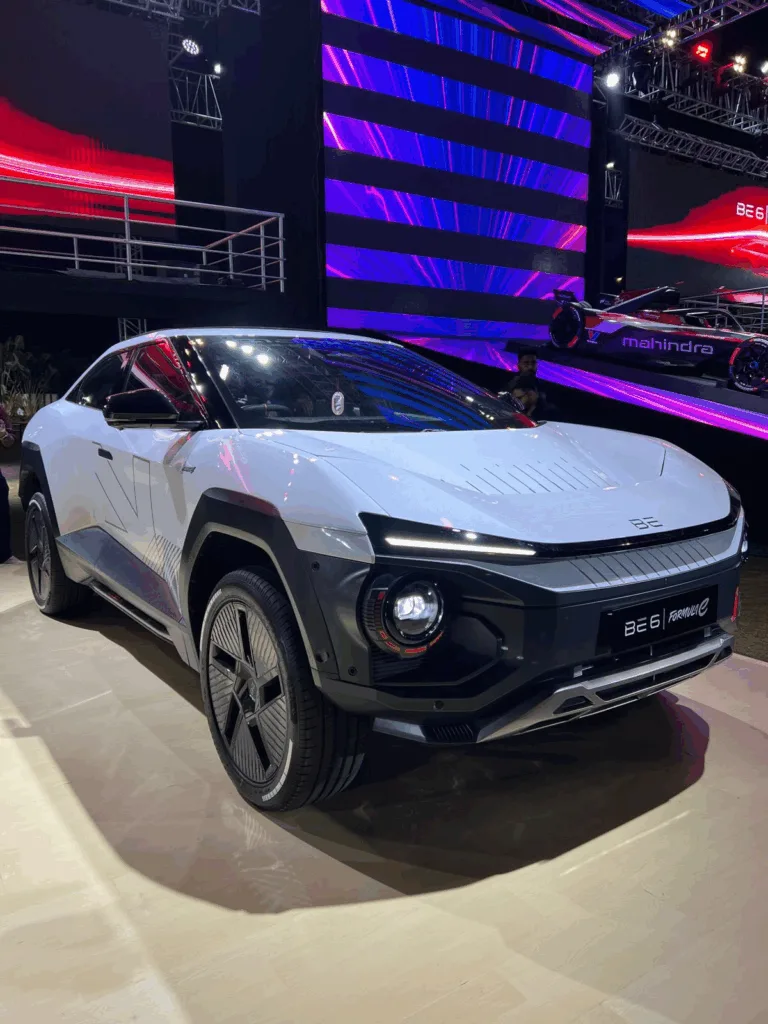
Mahindra has officially launched the BE 6 Formula E Edition, creating history as the world’s first Formula E-inspired electric SUV. Priced at ₹23.69 lakh for the FE2 variant and ₹24.49 lakh for the FE3 variant (ex-showroom), this special edition celebrates Mahindra Racing’s decade-long commitment to electric motorsport.

Mahindra BE 6 Formula E Edition

Mahindra BE 6 Formula Racing Heritage Meets Road-Ready Performance

Building on Mahindra’s status as a founding team member of Formula E since 2013, the BE 6 Formula E Edition brings motorsport DNA to everyday driving. The SUV showcases aggressive styling with eyebrow-shaped LED DRLs, redesigned headlights, and Formula E-inspired decals that command attention on Indian roads.

Key Specifications: Mahindra BE 6 Formula E Edition

FeatureFE2 VariantFE3 Variant
Price₹23.69 lakh₹24.49 lakh
Battery Options59 kWh / 79 kWh79 kWh
Range (MIDC)557 km / 683 km683 km
Power Output228 bhp / 282 bhp282 bhp
Torque380 Nm380 Nm
Fast Charging20-80% in 20 minutes20-80% in 20 minutes
Drive TypeRWDRWD

Premium Racing-Inspired Features

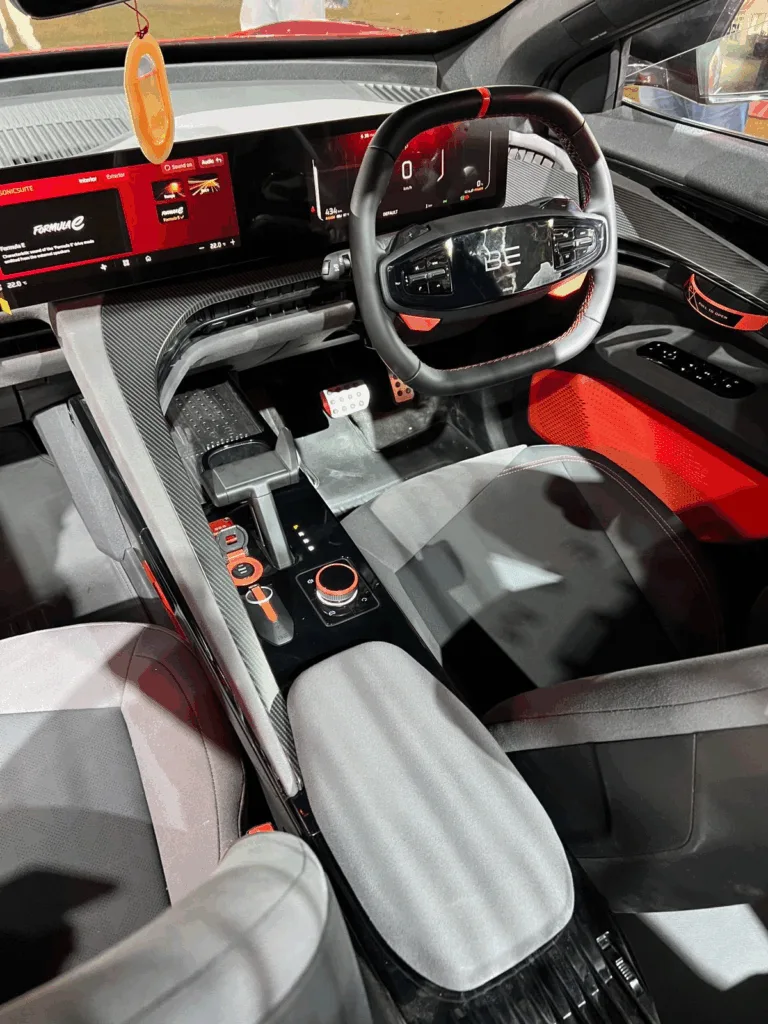
The Formula E Edition comes in four striking colors: Red, Orange, Silver, and White, with the signature Firestorm Orange being the standout choice. Interior highlights include Formula E-branded seats, motorsport-style carbon fiber accents, a race-inspired start-stop button with flip cap, and accented brake calipers that echo the racing pedigree.

Built on Mahindra’s INGLO platform—co-developed with Volkswagen—the BE 6 Formula E Edition maintains the standard model’s impressive fast-charging capabilities, allowing drivers to charge from 20% to 80% in just 20 minutes at compatible DC fast chargers.

image 350 Mahindra BE 6 Formula E Edition: World's First Formula E-Inspired Electric SUV Launches at ₹23.69 Lakh

Availability Timeline

Preferences can be added from December 14, bookings open January 14, and deliveries commence February 14, 2025. This strategic launch follows the success of the BE 6 Batman Edition and reinforces Mahindra’s position in India’s rapidly growing electric vehicle market.

For those exploring electric SUV options in India, the BE 6 Formula E Edition represents a unique blend of racing heritage and practical electric mobility. Compared to other premium EV launches, Mahindra’s special edition targets enthusiasts seeking motorsport aesthetics with family-friendly functionality.

Final Verdict

The Mahindra BE 6 Formula E Edition isn’t just another trim level—it’s a statement piece that bridges the gap between Formula E circuits and Indian highways, offering genuine performance credentials at competitive pricing.

Bengaluru 3ev Secures ₹120 Crore, Marking Mahanagar Gas’s First EV Investment

0

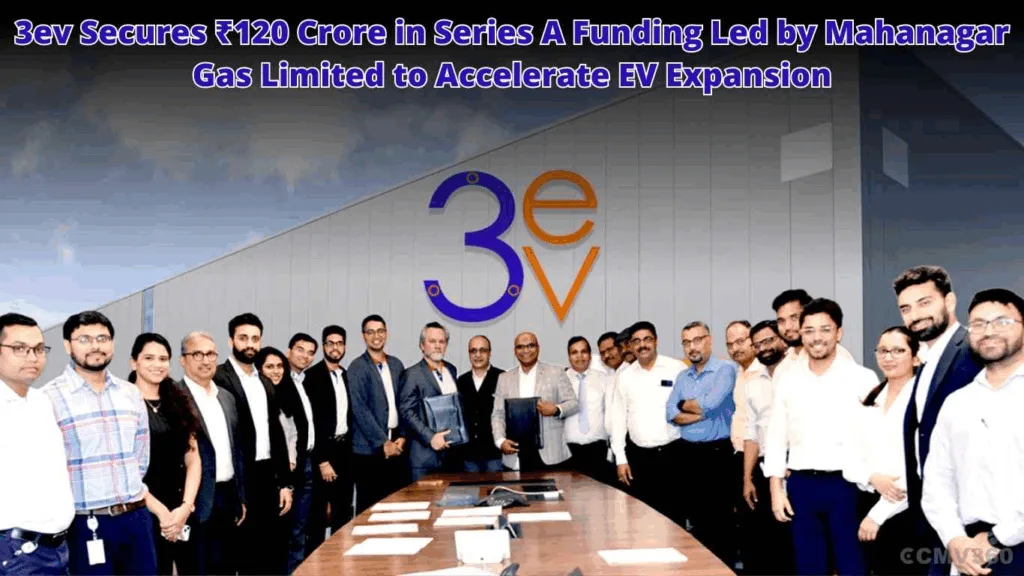
Bengaluru 3ev Industries has secured Rs 120 crore in a Series A funding round led by Mumbai-based Mahanagar Gas Ltd. This marks the city-gas distributor’s first strategic investment in India’s electric mobility market. The round also saw participation from Equentis Angel Fund and Thackersey Group. This significant investment positions 3EV to accelerate its manufacturing capabilities and expand its comprehensive ecosystem approach to electric three-wheeler mobility in India’s rapidly evolving EV landscape.

3EV Series A Funding DetailsSpecifications
Total Funding Raised₹120 crore
Funding RoundSeries A
Lead InvestorMahanagar Gas Limited (MGL)
MGL Investment₹96 crore (first strategic EV investment)
Thackersey Group Investment₹10.46 crore (Bhishma Realty Limited)
Equentis Angel Fund Investment₹8.15 crore
HNI/UHNI/Family Office Contribution₹4.82 crore
Previous Funding$2 million seed round from family offices
FY24 Revenue₹17.8 crore
FY25 Projected Revenue₹54.7 crore
FY26 Revenue Target₹65 crore with positive EBITDA
FY24 Vehicle Sales438 units
FY25 Projected Sales834 units (90% growth)
Bengaluru 3ev

Bengaluru 3ev-Mahanagar Gas Makes Strategic Entry into Electric Mobility

Mahanagar Gas invested Rs 96 crore, while Thackersey Group put in Rs Rs 10.46 crore and Equentis contributed Rs 8.15 crore. The rest came from high-net-worth and family office investors, according to a statement. This substantial investment represents Mahanagar Gas Limited’s strategic pivot toward supporting India’s clean energy transition through electric mobility infrastructure.

MGL invested ₹96 Crore as the lead participant, followed by the Thackersey Group (Bhishma Realty Limited) with ₹10.46 Crore and Equentis with ₹8.15 Crore. Additional contributions amounting to ₹4.82 Crore came from high-net-worth individuals (HNIs), ultra-high-net-worth individuals (UHNIs), and family offices.

Strategic Deployment: Scaling Manufacturing and 3C Division Launch

The Bengaluru-based electric three-wheeler manufacturer said the investment will help scale production capacity, strengthen supply-chain integration, and expand its charging, aftermarket and conversion services division.

The funding will specifically support the rollout of 3EV’s pioneering 3C division, encompassing three critical pillars of electric mobility infrastructure. The proceeds will be utilized to expand its manufacturing capabilities, powering the launch of its pioneering 3C division (charging, care & conversions), and accelerate advancements in supply chain integration and research across regenerative braking systems, advanced materials, and solar-enabled cold chain EV technologies, 3ev Industries said in a press release.

Impressive Growth Trajectory: Revenue and Sales Metrics

The startup nearly doubled vehicle sales to a projected 834 units in FY25 from 438 a year earlier, with revenue rising to Rs 54.7 crore from Rs 17.8 crore. This 90% growth in vehicle sales and 207% revenue expansion demonstrates strong market traction and customer validation of 3EV’s electric three-wheeler offerings.

3ev has demonstrated traction through the receipt of this funding, nearly doubling vehicle sales from 438 in FY24 to a projected 834 in FY25, with revenues rising from Rs 17.8 crore in FY24 to Rs 54.7 crore in FY25. By FY26, the company targets a revenue of Rs 65 crore with a positive EBITDA margin. The projected achievement of positive EBITDA by FY26 signals 3EV’s path toward sustainable profitability within the capital-intensive EV manufacturing sector.

Leadership Vision: Ecosystem Approach to Electric Mobility

“This investment initiated in FY25 marked a defining milestone for 3ev Industries. With this funding, we have strengthened our build quality, after-market capability and tailored financing solutions that make EV adoption seamless for our customers,” said Peter Voelkner, Managing Director, 3ev Industries.

Peter Voelkner’s emphasis on an ecosystem approach highlights 3EV’s differentiated strategy beyond pure vehicle manufacturing. “With this funding, we have strengthened our build quality, after-market capability and tailored financing solutions that make EV adoption seamless for our customers. Our mission has always been to transform last-mile connectivity with sustainable mobility through an ecosystem approach, and this partnership gave us the resources and strategic support to target that,” said Peter Voelkner, MD, 3ev Industries.

Investor Rationale: Battery-as-a-Service and Market Positioning

“We believe 3ev’s unique combination of robust vehicle design, strong customer testimonials and an innovative battery-as-a-service (Baas) model positions it to play a pivotal role in driving EV adoption across urban markets in a nascent industry,” said Manas Das, VP at Mahanagar Gas Ltd.

The Battery-as-a-Service model represents a critical innovation reducing upfront vehicle costs and addressing one of the primary barriers to EV adoption in price-sensitive commercial vehicle segments. Manas Das, VP at MGL, stated “At Mahanagar Gas Limited, we are committed to supporting India’s clean energy transition, and electric mobility is an integral part of that journey. We believe 3ev’s unique combination of robust vehicle design, strong customer testimonials and an innovative Battery-as-a-Service model positions it to play a pivotal role in driving EV adoption across urban markets in a nascent industry.”

Bengaluru 3ev

Equentis Perspective: Operational Excellence and Market Capture

“We see 3ev as a catalyst in India’s electrification journey. Their strong operational model through 3eco, BaaS-backed aftermarket ecosystem, and proven traction in the 3W space make them uniquely positioned to capture the next wave of EV growth,” said Manish Goel, Founder, Equentis.

Equentis’s investment thesis emphasizes 3EV’s comprehensive operational model encompassing manufacturing, charging infrastructure (through 3eco), aftermarket services, and innovative financing mechanisms—creating a defensible competitive moat in the electric three-wheeler segment.

Market Opportunity: L5 Three-Wheeler Segment Poised for Explosive Growth

With India’s urban mobility ecosystem evolving rapidly, demand for L5 electric three-wheelers is expected to surge. The segment, benefiting from a strong total-cost-of-ownership advantage and policy support, is projected to grow at a 19.5% CAGR, reaching $18.7 billion by 2035 and crossing 60% penetration in three-wheeler sales.

This massive market opportunity validates the timing of Mahanagar Gas’s strategic entry into electric mobility. The L5 category—comprising passenger and cargo three-wheelers—represents one of India’s fastest-electrifying vehicle segments due to favorable economics, regulatory support, and concentrated urban usage patterns ideal for electric powertrains.

Technology Focus: Advanced R&D Initiatives

The funding will accelerate 3EV’s research initiatives across multiple cutting-edge technologies. The company is investing in regenerative braking systems to maximize energy recovery and extend range, advanced materials to reduce vehicle weight and improve efficiency, and solar-enabled cold chain EV technologies—a critical innovation for India’s logistics and food distribution sectors requiring temperature-controlled transport.

Competitive Positioning in India’s EV Landscape

3EV competes in the electric three-wheeler segment against established players including Mahindra Last Mile Mobility, Bajaj Auto, Piaggio Vehicles, and numerous startups. The company’s differentiation lies in its comprehensive ecosystem approach combining vehicle manufacturing, charging infrastructure, aftermarket services, and innovative financing solutions rather than focusing solely on vehicle sales.

Supply Chain Integration and Manufacturing Scale-Up

The Series A funding will enable 3EV to strengthen supply chain integration—a critical capability for managing component costs and ensuring production reliability in India’s evolving EV supply ecosystem. Enhanced manufacturing capacity will support the company’s ambitious sales targets while maintaining quality standards essential for commercial vehicle applications where uptime and reliability directly impact operator economics.

For more updates on India’s electric three-wheeler market and EV startup funding rounds, stay connected with our comprehensive industry coverage.

Official Links:

Tesla Model Y Could Help Indian Buyers Save Up to ₹20 Lakh

0
Tesla Model Y

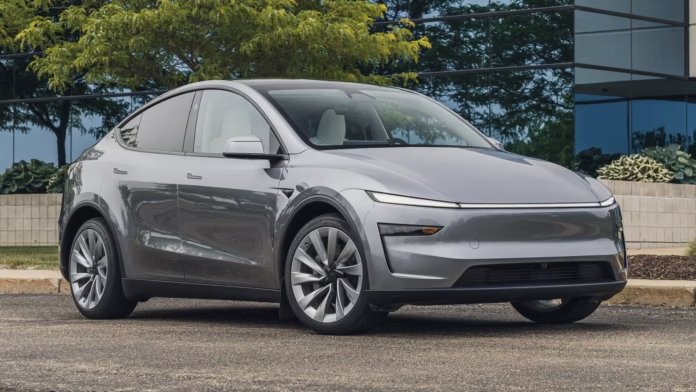
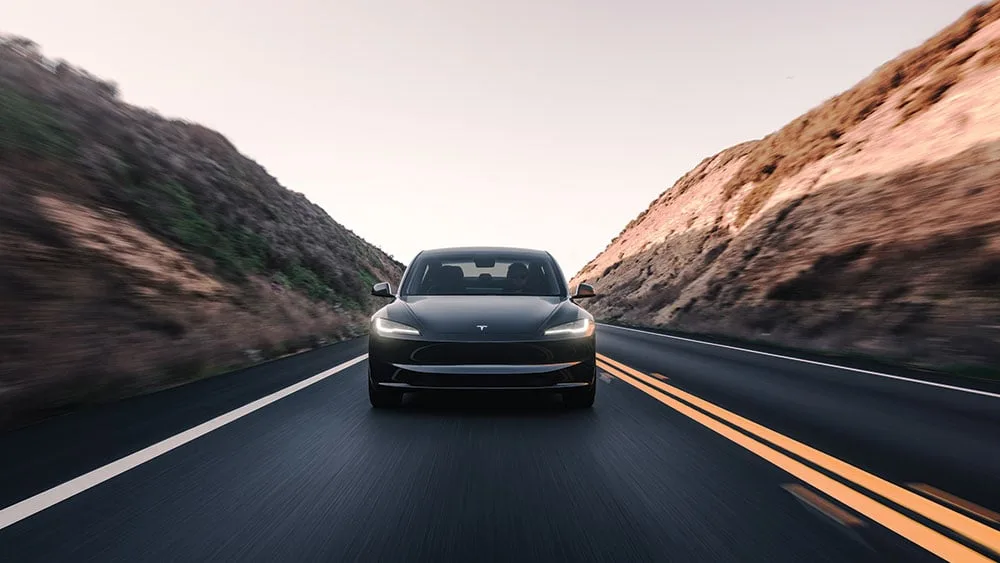
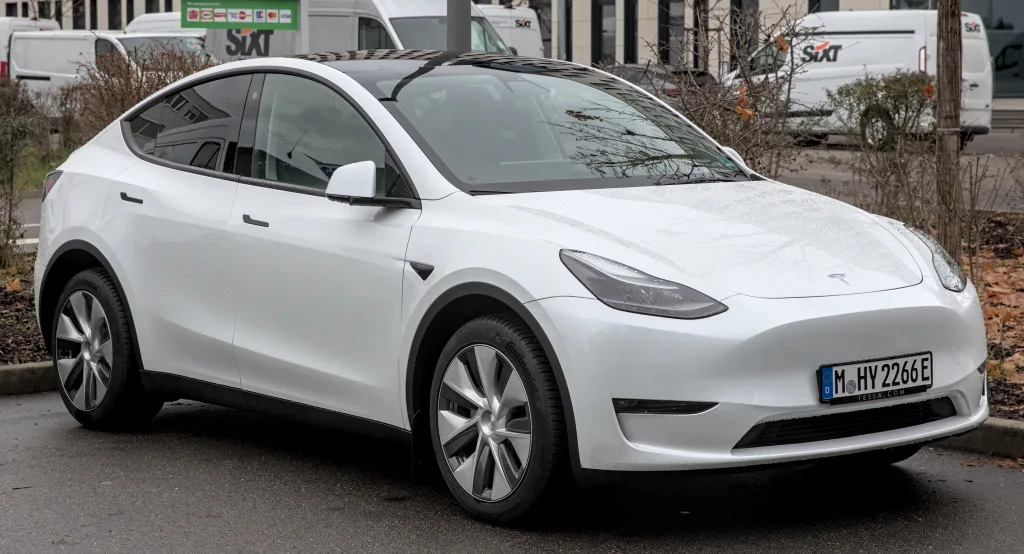
Tesla Model Y India expects buyers to recover roughly one-third of the Model Y’s ₹60 lakh price through fuel and maintenance savings within four to five years, the company’s General Manager Sharad Agarwal said on Wednesday. This total cost of ownership (TCO) argument represents Tesla’s strategic pitch to overcome the sticker shock from India’s steep import tariffs, positioning the premium electric SUV as a financially viable option despite its ₹60 lakh entry price.

Tesla Model Y India TCO AnalysisDetails
Purchase Price₹59.89 lakh (RWD) to ₹67.89 lakh (Long Range RWD)
Expected Savings (4-5 years)₹20 lakh (~33% of vehicle price)
Savings ComponentsFuel costs + Maintenance costs
Home Charging CostOne-tenth of petrol prices
Current Sales (Sep-Oct 2025)104 units delivered
Total Bookings (Early November)~600 orders
2025 Registrations118 vehicles
US Price Comparison70% higher than US market due to import tariffs
India Import Tariff100% on fully built units
Battery Options60 kWh (500 km range), 75 kWh (622 km range)
Power Output~295 hp (single electric motor)
Tesla
Tesla Model Y

Comprehensive TCO Pitch: ₹20 Lakh Savings Over 4-5 Years

Indian customers can save around 2 million rupees while buying a Model Y in terms of maintenance and petrol costs, Agarwal said at an event in Gurugram city, neighbouring Delhi. This substantial savings projection forms the core of Tesla’s value proposition to Indian consumers grappling with the Model Y’s premium pricing.

“Plus it has a high resale value. The cost of home charging is one tenth of petrol prices,” he added. The resale value argument addresses another critical concern for Indian car buyers who typically view vehicles as long-term investments and carefully consider depreciation when making purchase decisions.

Breaking Down the Savings: Fuel and Maintenance Economics

The ₹20 lakh savings projection derives from two primary components. On the fuel side, home charging costs represent approximately one-tenth of petrol expenses, translating to dramatic operational cost reductions for daily commuters and frequent drivers. For a vehicle covering 20,000 km annually at average Indian driving patterns, the fuel cost differential alone could amount to ₹1.5-2 lakh per year compared to equivalent premium ICE SUVs.

Maintenance savings contribute significantly to the TCO advantage. Electric vehicles eliminate oil changes, transmission servicing, spark plug replacements, exhaust system maintenance, and numerous other routine services required by internal combustion engines. Tesla’s simplified drivetrain with fewer moving parts reduces wear-and-tear expenses and extends service intervals dramatically compared to conventional vehicles.

Import Tariff Impact: 70% Price Premium Over US Market

Tesla entered India in July and priced its Model Y about 70% higher than the cost of the car in the United States due to high taxes. India has 100% import tariffs on cars, which the firm’s chief Elon Musk has called among the steepest in the world.

This tariff burden fundamentally constrains Tesla’s pricing flexibility in India. The same Model Y variant selling for approximately $45,000 in the United States (before incentives) costs Indian buyers around $67,000-71,000, creating a massive price gap that no amount of operational savings can fully bridge for most consumers.

Modest Sales Performance Despite TCO Arguments

According to the Federation of Automobile Dealers Associations (FADA), Tesla sold 104 vehicles across September and October. The company has registered 118 cars in India so far in 2025, including 40 in October.

These numbers suggest Tesla’s TCO pitch has gained limited traction in India’s price-sensitive market. Tesla has opened showrooms in Mumbai and Delhi and, by early November, had reportedly secured around 600 bookings in India. While 600 bookings represent genuine interest, the conversion rate and actual deliveries remain far below Tesla’s initial expectations for the Indian market.

Technical Specifications: Range and Performance

The Tesla Model Y RWD is now available in India with 60 kWh and 75 kWh battery options, powered by a single electric motor producing around 295 hp. The 60 kWh version offers a WLTP range of 500 km per charge, while the Long Range RWD can travel up to 622 km on a single charge.

These specifications position the Model Y competitively against luxury electric SUVs in India’s emerging premium EV segment. The 622 km range particularly addresses range anxiety concerns that have historically deterred Indian buyers from considering electric vehicles.

Tesla model y 1x7a6211
Tesla Model Y

Limited Retail Footprint and Service Network

Tesla’s current operational presence remains minimal compared to established automotive brands. With just two showrooms in Mumbai and Delhi, and deliveries restricted to four cities (Delhi, Mumbai, Gurugram, and Pune), Tesla’s physical accessibility lags far behind competitors offering extensive dealership networks across multiple cities.

This limited footprint exacerbates concerns about service accessibility, spare parts availability, and long-term ownership support—critical considerations for Indian buyers investing in premium vehicles.

No Local Manufacturing Commitment

For now, it has only committed to retailing its cars locally and has not indicated whether it plans to assemble vehicles in the country. This absence of local manufacturing commitment means Tesla cannot access preferential tariff structures available for domestically produced vehicles, keeping prices permanently elevated compared to locally assembled competitors.

Market Reality: TCO vs. Upfront Affordability

While Tesla’s TCO argument holds mathematical validity, it confronts a fundamental market reality: most Indian car buyers prioritize upfront affordability over lifecycle cost calculations. The ₹60 lakh entry price positions the Model Y in the luxury segment where buyers typically can absorb higher operating costs and value brand prestige, performance, and features over savings optimization.

For India’s mainstream buyers who would benefit most from EV operational savings, the Model Y remains financially inaccessible regardless of long-term TCO advantages. Domestic manufacturers like Tata Motors and Mahindra successfully leverage TCO arguments with EVs priced at ₹15-25 lakh—price points where operational savings meaningfully impact purchase decisions.

Competitive Landscape: Luxury EV Alternatives

The Model Y competes against BYD Sealion 7, Kia EV6, BMW iX1, Mercedes-Benz EQA/EQB, and upcoming luxury EVs from established manufacturers. Many competitors offer locally assembled options with lower import duty burdens, creating price advantages while delivering comparable technology, range, and features.

BYD, Tesla’s closest global rival, has demonstrated stronger initial traction in India despite also importing vehicles, suggesting that aggressive pricing—even with CBU imports—can partially overcome tariff challenges when positioned appropriately for the Indian market.

For more updates on Tesla India market performance and luxury EV segment analysis, stay connected with our comprehensive industry coverage.

Official Links:

Uno Minda Launches Home-Friendly Portable EV Wall Charger

0
Uno Minda

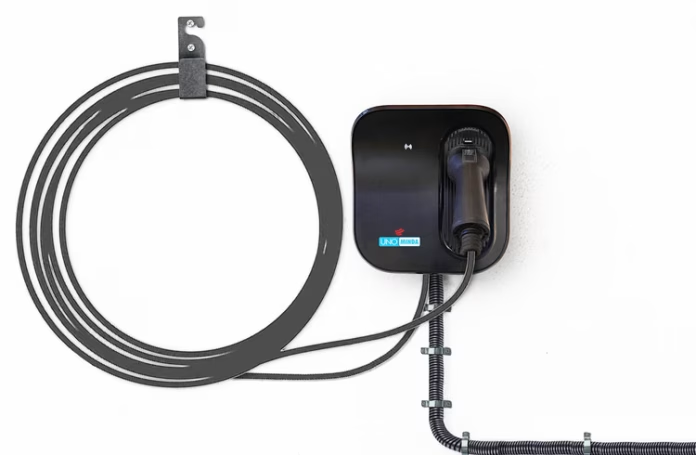
Uno Minda, the automotive aftermarket company, has unveiled a 3.3 kW charging solution featuring IP65 weatherproofing, Type 2 compatibility, and safety protections, priced at Rs 32,514 during launch. This new offering marks Uno Minda’s strategic expansion into the residential EV charging market, leveraging its extensive automotive components expertise to address India’s growing home charging infrastructure needs.

Uno Minda Portable EV Wall ChargerSpecifications
Product TypePortable EV wall charger for home use
Charging Capacity3.3 kW
Launch Price₹32,514 (introductory)
Connector TypeType 2 (standard for most EVs in India)
WeatherproofingIP65 rating (dust-tight, water-resistant)
InstallationWall-mountable, portable design
Safety FeaturesMultiple safety protections
Target MarketResidential EV owners, home charging applications
ManufacturerUno Minda Limited (Tier 1 automotive supplier)
Uno Minda launches 3.3kW portable EV wall charger

Strategic Entry into Home Charging Segment

Uno Minda Limited, a leading Tier 1 supplier of proprietary automotive solutions to OEMs, has expanded its electric vehicle product portfolio beyond battery management systems and EV components to include residential charging infrastructure. This 3.3kW portable wall charger represents the company’s recognition of the critical role home charging plays in EV adoption across India.

The automotive aftermarket giant brings over six decades of automotive industry experience to the EV charging space, having established expertise in automotive electronics, switching systems, and connected vehicle technologies through its Centre for Research Engineering and Advanced Technologies (CREAT).

Technical Specifications: 3.3kW Charging Capacity

The 3.3kW charging capacity positions this charger in the Level 2 AC charging category, suitable for overnight home charging applications. At 3.3kW output, the charger can deliver approximately 15-18 km of range per hour of charging, making it practical for daily commuting needs where vehicles charge overnight.

For context, a typical electric vehicle with a 40 kWh battery would require approximately 12-14 hours for a full charge using this 3.3kW charger—ideal for overnight charging scenarios where vehicles remain parked for 8-10 hours.

IP65 Weatherproofing for Indoor and Outdoor Use

The IP65 rating ensures comprehensive protection against environmental factors. The “6” denotes complete dust-tightness (no ingress of dust), while the “5” indicates protection against water jets from any direction. This weatherproofing makes the charger suitable for:

  • Outdoor installations: Covered parking areas, carports, open parking spaces
  • Indoor installations: Garages, basement parking
  • Variable weather conditions: Monsoon rains, dust exposure, temperature fluctuations

This durability standard addresses India’s diverse climatic conditions, from humid coastal regions to dusty northern plains and monsoon-heavy areas.

Type 2 Connector: Universal Compatibility

The Type 2 connector (also known as Mennekes connector) has emerged as the standard charging interface for electric vehicles in India, supporting both AC and DC charging protocols. This standardization ensures compatibility with:

  • Most electric passenger vehicles sold in India (Tata Nexon EV, Mahindra XUV400, MG ZS EV, etc.)
  • Imported luxury EVs (Tesla Model Y, BMW iX, Mercedes-Benz EQB)
  • Upcoming EV launches across all manufacturer

The Type 2 standard’s adoption by the Indian government for public charging infrastructure makes home chargers with Type 2 connectors future-proof investments.

Safety Features and Protection Mechanisms

While specific safety features weren’t detailed in the announcement, standard EV charger safety protections typically include:

  • Overcurrent protection: Prevents excessive current flow damaging vehicle or charger
  • Overvoltage protection: Guards against voltage spikes from grid fluctuations
  • Ground fault protection: Detects electrical leakage to prevent shocks
  • Thermal monitoring: Prevents overheating during extended charging sessions
  • Short circuit protection: Automatic shutoff in case of electrical faults
  • Surge protection: Guards against lightning and power surge damage

These safety mechanisms are essential for unsupervised overnight charging operations in residential environments.

Competitive Pricing at ₹32,514 Launch Price

The introductory price of ₹32,514 positions Uno Minda’s charger in the mid-range segment of India’s home EV charging market. For comparison:

  • Budget portable chargers (1.4-2.2kW): ₹8,000-15,000
  • Mid-range wall chargers (3.3-7.4kW): ₹25,000-45,000
  • Premium smart chargers (7.4-11kW): ₹45,000-80,000

The pricing reflects the charger’s IP65 weatherproofing, Type 2 compatibility, and Uno Minda’s brand reputation for quality automotive components.

Uno Minda launches 3.3kW portable

Uno Minda’s EV Ecosystem Strategy

This charger launch aligns with Uno Minda’s broader electric vehicle strategy. The company operates through UnoMinda EV Systems Private Limited, a joint venture with FRIWO AG Germany (50.1% Uno Minda stake), focusing on:

  • Battery management systems (BMS)
  • Electric drive solutions for two and three-wheelers
  • EV charging infrastructure
  • Power electronics for electric mobility

Recent quarterly results indicate Uno Minda is consolidating all EV-related BMS and charger business under Uno Minda EV Systems to create operational focus and synergy, positioning the company as a comprehensive EV solutions provider.

Market Context: India’s Home Charging Infrastructure Gap

India’s EV market has crossed 2 million cumulative registrations, but home charging infrastructure remains a critical bottleneck. Most EV owners rely on portable chargers or public infrastructure, with dedicated home wall chargers representing a small fraction of installations.

Uno Minda’s entry into this segment with an IP65-rated, Type 2 compatible solution addresses key concerns—weatherproofing for outdoor installations and universal compatibility for multi-brand EV households—that have limited home charger adoption.

Installation and Usage Scenarios

The “portable” designation suggests the charger can be wall-mounted permanently or potentially relocated between properties, offering flexibility for:

  • Homeowners: Permanent installation in garage or covered parking
  • Renters: Removable installation for relocation
  • Shared housing: Rotation between multiple parking spots
  • Second homes: Transport between properties

This versatility appeals to India’s diverse housing landscape where permanent installations may not always be feasible.

For more updates on India’s EV charging infrastructure developments and home charging solutions, stay connected with our comprehensive coverage.

Official Links:
Mahindra to Launch 250 Ultra-Fast EV Charging Stations by 2027

0
Mahindra

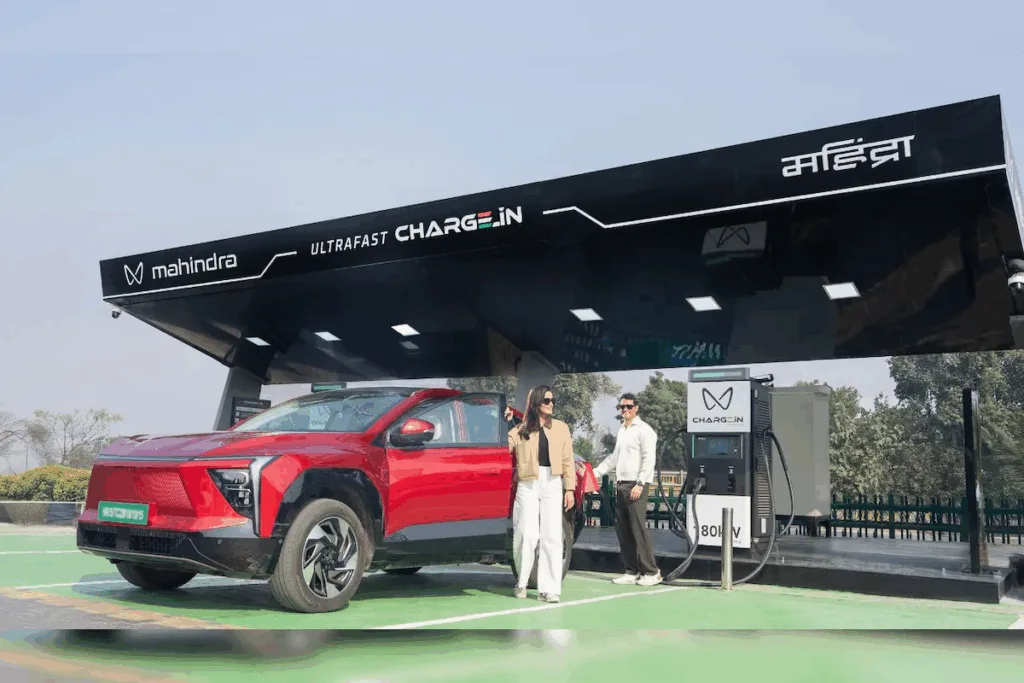
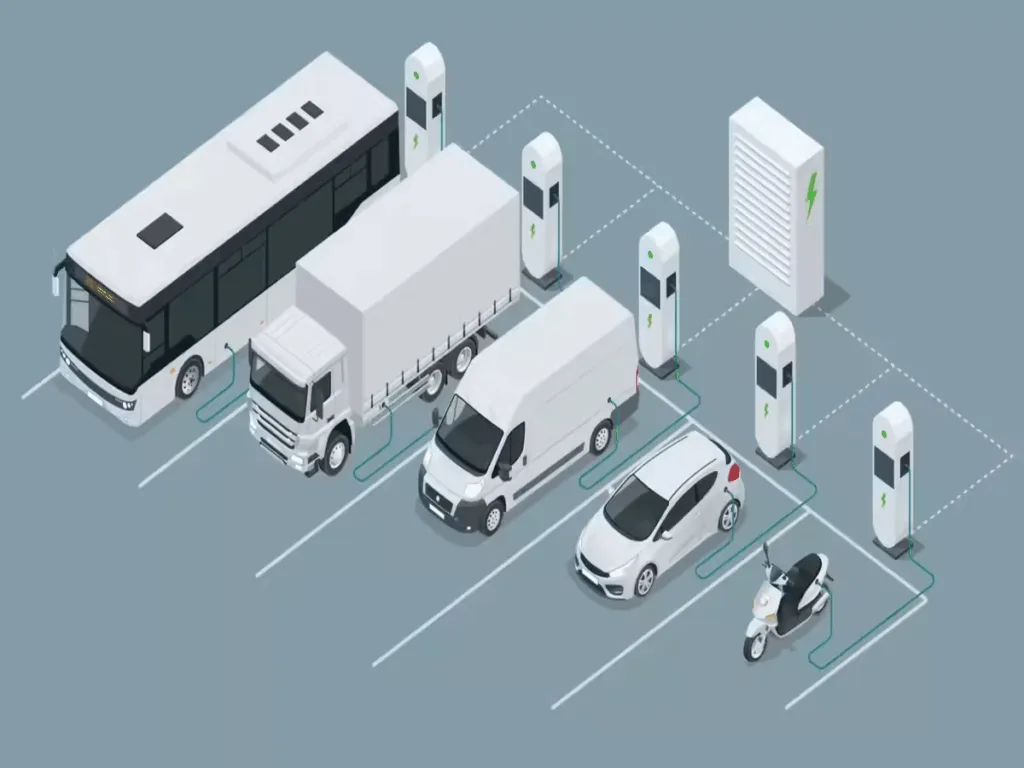
In a major push to strengthen India’s electric vehicle infrastructure, Mahindra & Mahindra on Tuesday said it plans to set up 250 electric vehicle charging stations, each with 180 kW, by the end of 2027, with the network entailing 1,000 charging points across 250 stations aligning with the government’s priority of strengthening public EV charging infrastructure to accelerate EV adoption in India.

Mahindra

Mahindra Charge_IN Network Overview

SpecificationDetails
Total Stations250 by end of 2027
Total Charging Points1,000+ charging points
Charging Power180 kW per charger
Charging Speed20% to 80% in ~20 minutes
Charger TypeDual-gun chargers
Simultaneous ChargingUp to 4 EVs per station
First LocationsHoskote (NH75), Murthal (NH44)
Network NameCharge_IN by Mahindra
App AccessMe4U app (34,000+ charging points)

Strategic Highway Deployment

The company has already inaugurated the first two Charge_IN stations in Hoskote on NH 75, Bengaluru Chennai highway and Murthal on NH44, about 50 km from Delhi. These strategic locations represent the beginning of a comprehensive nationwide network targeting major transportation corridors.

Each site will operate on a uniform 180 kW specification to maintain compatibility across participating vehicle categories, with operational planning including dual-gun chargers that enable simultaneous charging for four EVs at a location through two units with two connectors each.

Rapid Charging Technology

The 180 kW dual gun chargers at each station have the power to charge four EVs at once, with the chargers able to charge electric vehicles from 20 per cent power to 80 per cent in approximately 20 minutes. This charging speed makes long-distance highway travel practical for electric vehicle owners.

For Mahindra’s upcoming eSUV lineup—including the XEV 9e, BE 6 and XEV 9S—the network will enable charging from 20% to 80% in approximately 20 minutes, making highway travel faster and stress-free.

Strategic Station Placement

The charging locations will be placed strategically along major national corridors and co-located with amenities like restaurants and cafés, allowing EV users to take a break while their vehicle charges, turning stops into convenient travel halts rather than delays.

Station design includes co-location with existing wayside amenities such as restaurants and cafés, with this placement logic supporting charging downtime by connecting EV users to services already present on major corridors.

Open Network Accessibility

Mahindra owners will be able to locate, charge and pay through the Me4U app, which already provides access to nearly 34,000 public charging points from various operators. This interoperability ensures the network serves all EV users, not just Mahindra customers.

Electric vehicle users from other manufacturers can access the network through the dedicated Charge_IN by Mahindra application and leading aggregator platforms, making it a truly open charging infrastructure.

image 339 Mahindra to Launch 250 Ultra-Fast EV Charging Stations by 2027

Supporting Long-Range EVs

The network is designed to work seamlessly with Mahindra’s upcoming eSUVs, including the XEV 9e, BE 6 and the forthcoming XEV 9S, all of which target real-world ranges of around 500 km.

By pairing long-range EVs with a high-power highway network, Mahindra expects to ease long-distance travel concerns and help accelerate EV adoption in India.

Leadership Vision

“Electric mobility is about driving a larger shift towards cleaner, sustainable transportation. XEV 9e and BE 6, with their impressive 500 km real-world range, ensure drivers feel confident on long journeys. Meanwhile, with our ultra-fast charging network by Charge_IN we will be creating an open and accessible network for all EV users,” Mahindra & Mahindra CEO Automotive Division Nalinikanth Gollagunta stated.

“Our aim is to make long-distance travel with an electric vehicle effortless and reliable like conventional driving, thereby building customer confidence and accelerating India’s transition to electric mobility,” said Nalinikanth Gollagunta, Chief Executive Officer of Mahindra’s Automotive Division.

Phased Rollout Strategy

A target of 1000 charging points by the end of 2027 will be attained through staged rollout of 250 stations, with locations veering towards predictable access patterns for highway commuters and high traffic points.

The phased approach allows Mahindra to gather operational data, refine station placement strategies, and scale infrastructure in response to actual usage patterns and demand.

Compatibility and Standardization

Compatibility extends to Mahindra’s eSUV portfolio, including XEV 9e, BE 6, and the upcoming XEV 9S, with charging hardware uniformity simplifying operational planning by reducing the need for varied charger specifications across regions.

The standardized 180 kW architecture ensures consistent charging experiences regardless of location, addressing a key pain point in India’s fragmented charging landscape.

Impact on EV Adoption

This initiative represents one of the largest private-sector commitments to EV charging infrastructure in India. By addressing range anxiety through strategic highway placement and rapid charging capabilities, Mahindra aims to remove a critical barrier to electric vehicle adoption.

The open-network approach also sets a collaborative tone for the industry, recognizing that widespread EV adoption requires shared infrastructure accessible to all manufacturers’ vehicles.

For comprehensive coverage of India’s EV charging infrastructure developments and Mahindra’s electric vehicle initiatives, visit India EV News. For updates on Mahindra’s EV lineup, explore Mahindra Electric Origin SUVs.

PMO Intervenes on Polluting Vehicles in Delhi, Pushes for EV Expansion

0
PMO

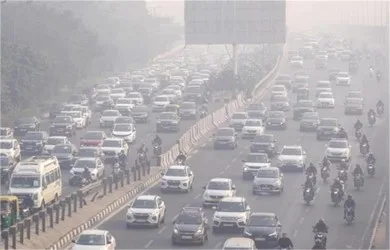
In a decisive response to Delhi’s worsening air quality crisis, the Prime Minister’s Office (PMO) has directed all states and union territories to speed up the transition to electric vehicles (EVs) and improve charging infrastructure, with the decision taken during a high-level meeting on Tuesday, chaired by the Principal Secretary to the Prime Minister.

image 335 PMO Intervenes on Polluting Vehicles in Delhi, Pushes for EV Expansion

High-Level Meeting Details

AspectDetails
Meeting DateNovember 25, 2025 (Tuesday)
Chaired ByPrincipal Secretary to PM
Attendees8 department secretaries
States PresentDelhi, Rajasthan, Haryana, Punjab, UP
Key FocusEV transition & charging infrastructure
Air Quality Status“Very Poor” for 2 weeks
Transport Contribution14-20% of pollution (Nov 1-22)

Delhi’s Alarming Vehicle Statistics

At the meeting, the principal secretary expressed concerns that the capital city holds more than half of all vehicles in the entire National Capital Region and that 37% of vehicles in Delhi-NCR still belong to the outdated BS I to BS III emission norms.

Out of 2.97 crore vehicles registered in the National Capital Region, 1.57 crore are concentrated in Delhi—a city occupying just 2.7% of the region’s land. This disproportionate concentration creates severe pollution challenges.

Slow EV Adoption Numbers

Data reveals that only 4,419 electric two-wheelers were registered in October in Delhi, taking the total for this year to 31,447, while in contrast, petrol-run two-wheelers saw over double the registrations at 78,114 in October alone.

These figures highlight the significant gap between EV adoption goals and ground reality, prompting the PMO’s urgent intervention.

Key Directives Issued

One of the decisions made during the meeting was to review and amend EV policies to speed the transition across two- and three-wheelers, cars, buses, and commercial vehicles, with clear timelines and implementation mechanisms.

States were also instructed to promptly notify cab and bike aggregator policies and create a unified monitoring platform, ensuring coordinated action across the National Capital Region.

The Ministry of Road Transport and Highways (MoRTH) has been instructed to expedite a scientific study on pollution from vehicles that run on fossil fuel, providing evidence-based policy recommendations.

Alarming Pollution Levels

Official data shows average PM10 levels in the capital region were around 295 ug/m3 between October 15 and November 25, while PM2.5 levels were at 171 ug/m3.

The World Health Organization recommends safe standards of PM2.5 (24 hours) not exceeding 15 ug/m3 and PM10 not exceeding 45 ug/m3—meaning Delhi’s pollution levels are approximately 11 times and 7 times higher than WHO safety limits respectively.

Transport Sector’s Major Role

The transport sector has been a major contributor to air pollution this season, accounting for 14-20% between November 1 and November 22. This makes vehicular emissions one of the primary targets for pollution control measures.

The Centre for Science and Environment estimates that half of winter particulate pollution can originate from vehicles alone, underscoring the critical importance of transitioning to cleaner transportation.

Farm Fire Decline Shows Progress

In comparison, farm fire incidents have declined this season, with 27,720 cases detected in Punjab, Haryana, Uttar Pradesh, Rajasthan, and Madhya Pradesh—a five-year low compared to previous years.

This is far below the 85,915 fires recorded in 2021, indicating that stubble burning, while still a concern, is becoming less dominant as a pollution source compared to vehicular emissions.

Technology-Backed Enforcement

With the Commission for Air Quality Management identifying transport pollution as the single biggest contributor, the PMO instructed NCR states to deploy ANPR, RFID and ITMS systems to crack down on non-compliant vehicles and enforce emission norms in real time.

These technology solutions will enable automated detection and enforcement against pollution-violating vehicles, moving beyond manual inspection systems.

PMO’s Direct Oversight

Officials also indicated that the PMO is now directly overseeing pollution sources, and further actions are likely soon. This high-level attention signals the government’s seriousness about addressing Delhi’s air quality crisis.

The task force meeting came just as Delhi imposed Stage 2 of GRAP and its Air Quality Index surged past 350, with a mix of vehicular emissions and stubble smoke pushing the city’s AQI into the “severe” zone between November 11 and 13.

image 336 PMO Intervenes on Polluting Vehicles in Delhi, Pushes for EV Expansion

Infrastructure Expansion Required

The PMO also pressed for rapid expansion of Delhi’s electric vehicle ecosystem, calling for faster installation of EV charging stations, smoother subsidy disbursements, and measures to reduce the capital’s dependence on petrol and diesel vehicles.

Officials acknowledged that EV adoption remains “far from adequate”, despite incentive schemes, and called for revised policies with clear timelines across two-wheelers, cars, buses and commercial fleets.

Emergency Measures Active

As the Delhi-NCR is currently recording an Air Quality Index (AQI) in the “very poor” range (above 353 value), the Commission for Air Quality Management (CAQM) had recently issued a notification that only Stage 3 of the Graded Response Action Plan (GRAP) is active.

All public and private offices in the capital have been instructed to implement staggered working hours and ensure that at least half their employees work from home as part of broader strategy aimed at easing congestion and reducing daily vehicular emissions.

Critical Transformation Needed

Centre warns Delhi, UP, Haryana, Punjab and Rajasthan to deliver “visible, result-oriented” action as winter pollution spirals into crisis. The PMO’s intervention represents the sharpest action this season, combining enforcement, infrastructure development, and policy reforms.

The question remains whether this comprehensive approach will finally break Delhi-NCR’s recurring pollution cycle or if the region needs even more aggressive measures to ensure breathable air for its residents.

For comprehensive coverage of India’s EV policy developments and air quality initiatives, visit India EV News. For updates on Delhi’s pollution control measures, follow NewsBytes.

Thailand Adjusts EV Policy to Address Potential Oversupply Crisis

0
Thailand

In a strategic move to prevent domestic market saturation, Thailand made changes to its electric vehicle incentive policy on Tuesday in order to encourage exports and head off a supply glut at home, which could have an impact on the overall car market, the country’s Board of Investment said.

image 333 Thailand Adjusts EV Policy to Address Potential Oversupply Crisis

Thailand EV Policy Adjustment Overview

AspectDetails
Announcement DateNovember 25, 2025
Key ChangeExport multiplier introduced
Export Credit1.5 units per exported EV
Previous Ratio1:1 (import to local production)
2025 Export Target12,500 units
2026 Export Target52,000 units
Total Investment$4+ billion (Chinese firms)
Chinese Market Share70%+ of EV sales

Export Incentive Mechanism

Every EV produced for export will now count as 1.5 units towards a manufacturer’s local production obligations, with this change designed to incentivize automakers to increase exports and prevent domestic market oversupply.

The Thai government is easing requirements for companies participating in the EV 3.0 and EV 3.5 schemes with the latest revisions, where previously it counted only the domestic sales of locally produced EVs for offsetting EVs they imported as Completely Built-Up Units (CBUs), now it will consider exports as well.

Previous Policy Adjustments

In July, the agency revised its EV policy to give carmakers more flexibility to meet production requirements and boost exports. The latest November adjustment builds on these earlier modifications, further prioritizing export-oriented production.

The EV Board already extended the timeframe for the compensatory local production once, in December last year, when it also said that participating companies can re-export unsold CBU EVs to reduce this quota.

Thailand’s Auto Industry Context

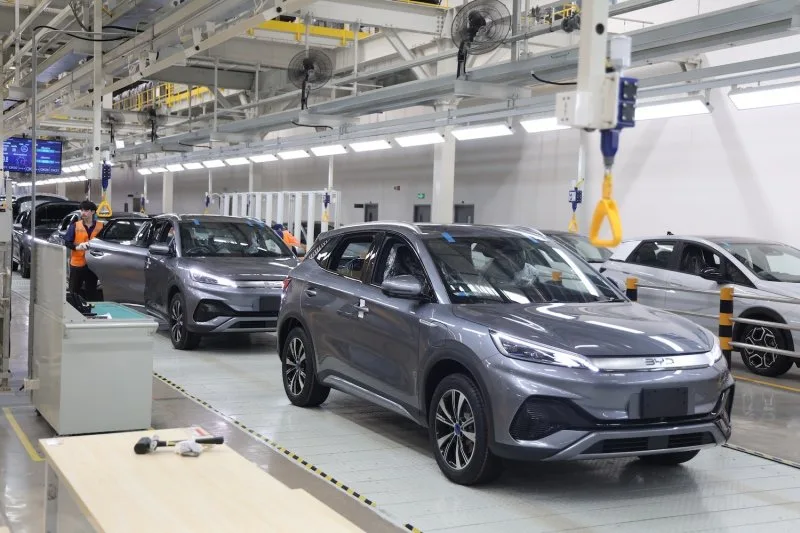
Southeast Asia’s second-largest economy is the regional auto production and export hub for top carmakers like Toyota and Honda, with Chinese brands dominating the EV segment, with a combined share of over 70% of sales.

Thailand’s EV policies, which also include tax breaks and price subsidies, have drawn more than $4 billion in investments, including from Chinese firms like BYD.

Oversupply Concerns Driving Changes

Such steps not only reduce pressure on these automakers but also help the industry avoid an oversupply situation, which could lead to heavy discounting and price wars.

Authorities are wary that if all manufacturers push to produce but hold back from exporting, the domestic market could face an oversupply, sparking aggressive price competition.

“Consumers may benefit from lower prices in the short term, but in the long term a price war is not healthy for the industry. Allowing export credits helps stabilize the market,” said Pongsak.

Production Capacity Exceeds Demand

The Thai market has a total demand of around 600,000 EVs, while total production capacity of seven EV makers in Thailand stands at 490,000 units, meaning if factories run at full capacity, this will drive production to exceed 60% of the demand.

This capacity-demand mismatch highlights the urgent need for export mechanisms to absorb surplus production and maintain market stability.

image 334 Thailand Adjusts EV Policy to Address Potential Oversupply Crisis

Strong EV Sales Growth Despite Concerns

While 70,582 electric cars were sold in the whole of 2024, this year 57,289 electric cars have already been sold in the first half, with the number up 15% compared to the first half of 2024.

In the first seven months of 2025, EV registrations reached 66,000 units, almost equaling the full-year total of 67,000 units in 2024, with EVs now representing 17.7% of the total market, up sharply from 11.4% in 2024.

Government Leadership Perspective

“The revisions approved today will allow greater flexibility and help Thailand, which is already the leader in the region’s automotive manufacturing industry, to become a key EV production base,” said Narit Therdsteerasukdi, the Secretary General of the Thailand Board of Investment (BOI) and the secretary of the EV Board.

BYD’s Export Strategy

To meet offset obligations on time, BYD believes right-hand drive exports alone are insufficient, with the parent company in China adjusting its plans to add left-hand drive production in Thailand and seeking new markets to absorb exports, with vehicles from BYD’s Rayong factory beginning to ship abroad from September 2025.

Additional Policy Flexibilities

In addition to including exports in the local EV offset quota, the EV board has extended the registration deadline for these EVs by one month and plans to strengthen subsidy payments.

These complementary measures provide manufacturers with multiple pathways to comply with local production requirements while managing inventory levels.

Chinese Dominance Creates Challenges

Thailand, often called the “Detroit of Southeast Asia,” has attracted over $3 billion in investments from Chinese EV manufacturers, lured by tax breaks and subsidies aimed at boosting local production.

The influx of 18 Chinese EV brands—double last year’s count—intensifies competition and risks oversupply, making the export-focused policy adjustments critical for market stability.

Market Balance Imperative

“This is a good direction—if exports weren’t allowed, the entire output would flood the domestic market, triggering fierce competition and distorting the market structure,” the source said.

The policy revision represents Thailand’s pragmatic approach to balancing ambitious EV production goals with realistic domestic demand constraints, positioning the country as a regional EV export hub while protecting local market health.

For comprehensive coverage of Southeast Asia’s EV policy developments and market dynamics, visit India EV News. For Thailand’s official investment information, explore Board of Investment Thailand.

Tata Sierra 2025 Launched at ₹11.49 Lakh: Icon Returns

0
Tata Sierra

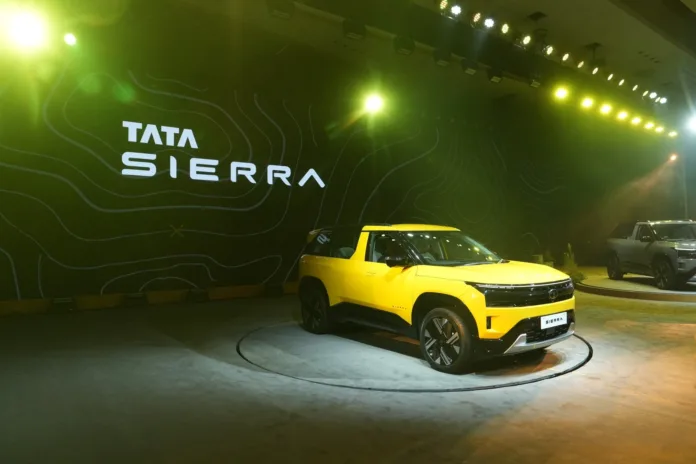
Tata Sierra 2025 Launched at ₹11.49 Lakh: Remember that boxy, bold SUV that dominated Indian highways in the ’90s? It’s back—and it’s better than anyone imagined.

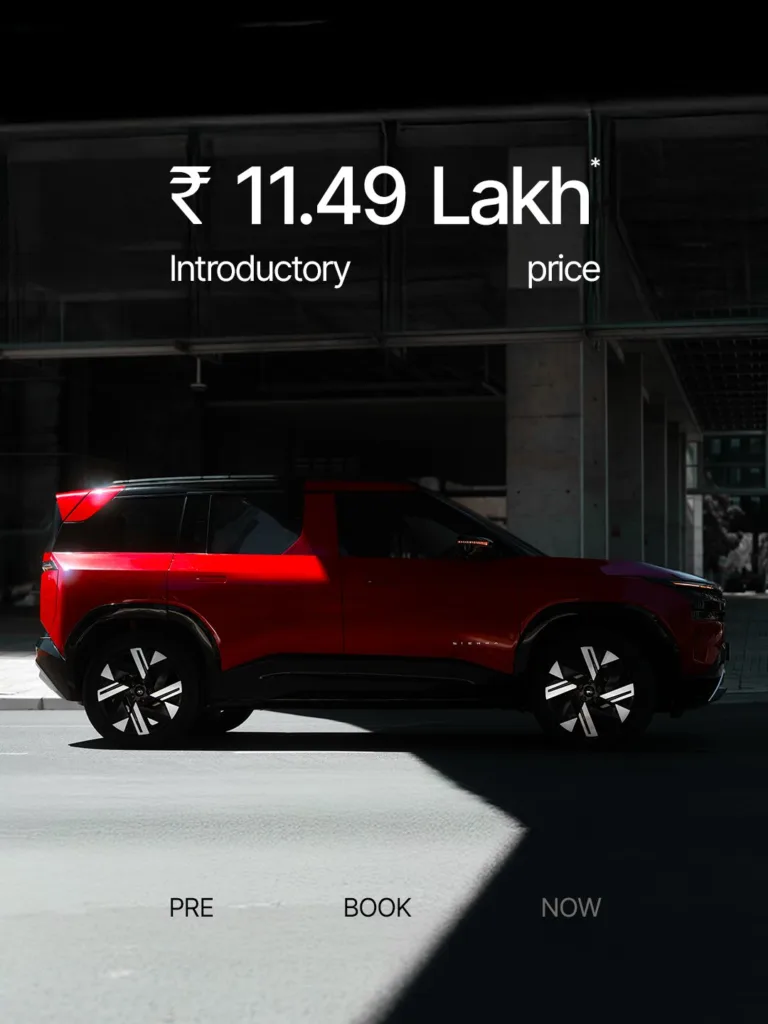
Tata Motors has launched the new Sierra in India at an introductory price of Rs 11.49 lakh (ex-showroom) for the base model, marking the return of one of India’s most iconic nameplates after more than two decades.

But here’s the twist: this isn’t your father’s Sierra. This is a thoroughly modern, tech-loaded SUV that honors its heritage while embracing 2025’s demands for premium features, advanced safety, and electrification-ready architecture.

Tata Sierra 2025 Pricing & Availability: What You Need to Know

DetailInformation
Starting Price₹11.49 lakh (introductory, ex-showroom)
Booking OpensDecember 16, 2025
Deliveries BeginJanuary 15, 2026
Variants7 trims across 4 personas
Full PricingTo be announced December 2025

Bookings open from 16 December, with deliveries slated to begin from 15 January 2026, giving eager buyers just enough time to finalize their decisions before the festive season wraps up.

The ₹11.49 lakh price is for the Smart Plus base variant only—full pricing across all seven variants will be revealed in early December 2025. This strategic phased pricing approach builds anticipation while allowing Tata to gauge market response.

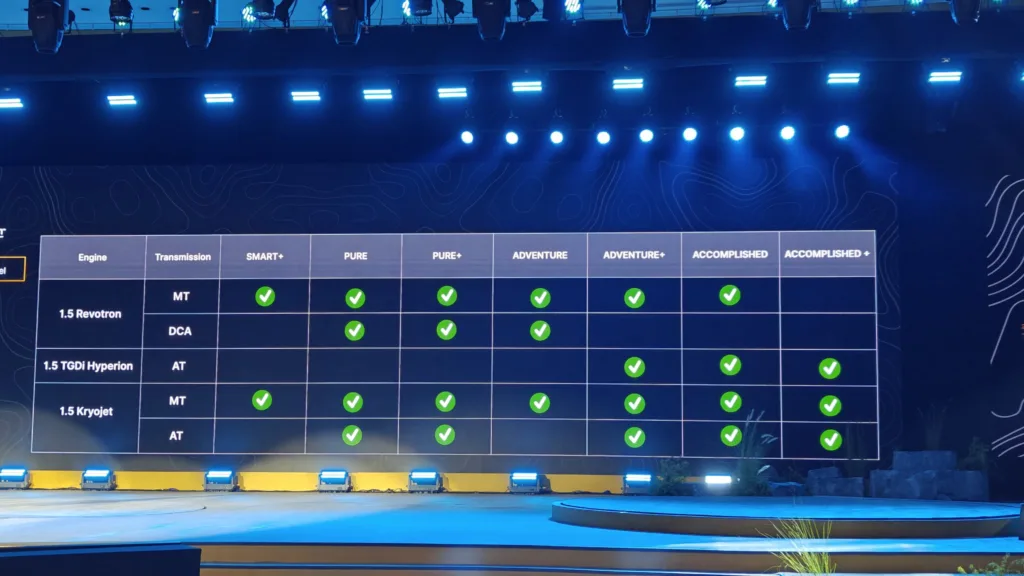
Three Engines, Five Transmissions: Power for Every Need

The Tata Sierra is available with three engine options, catering to diverse buyer preferences:

1.5L Naturally Aspirated Petrol

  • Power: 104 BHP @ 6,000 rpm
  • Torque: 145 Nm @ 2,100 rpm
  • Transmissions: 6-speed manual / 7-speed DCT

1.5L Turbocharged Diesel (Kryojet)

  • Power: 116 BHP @ 4,000 rpm
  • Torque: 260 Nm (MT) / 280 Nm (AT) @ 1,500-2,750 rpm
  • Transmissions: 6-speed manual / 6-speed automatic

1.5L Direct-Injection Turbo-Petrol (TGDi)

  • Power: 158 BHP @ 5,000 rpm
  • Torque: 255 Nm @ 1,750-4,000 rpm
  • Transmission: 6-speed automatic only

The TGDi engine is a segment-first feature that will also power upcoming Harrier and Safari petrol variants launching December 9, 2025, positioning Tata’s flagship SUVs for buyers preferring petrol powertrains.

Tata Sierra
Tata Sierra 2025

Design: Nostalgia Meets Modernity

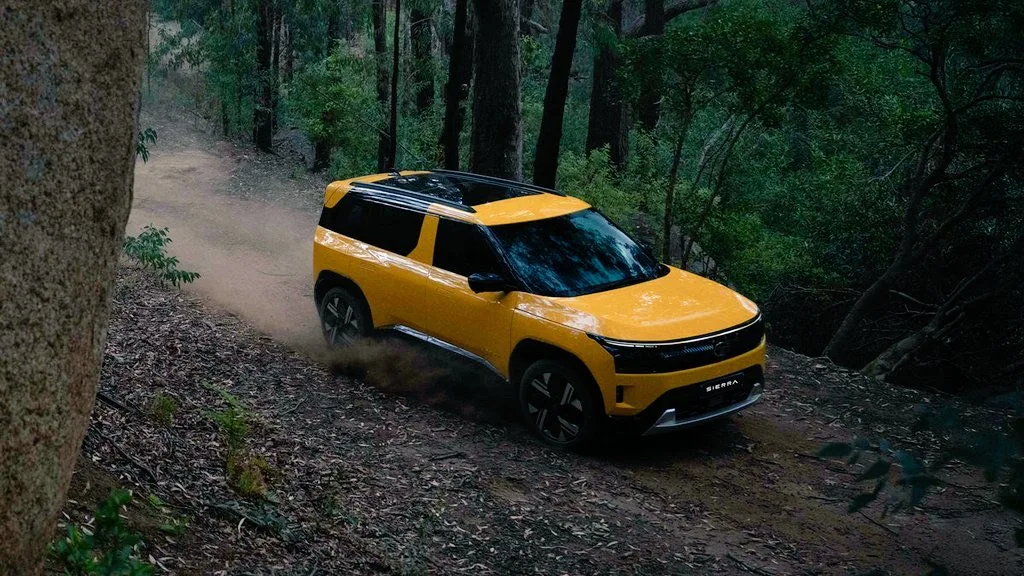
Walk around the 2025 Sierra and you’ll immediately spot the homage to the original. The exterior design of the new Sierra is inspired by the original, but Tata has reimagined every element for contemporary tastes.

Front Fascia:

  • Sleek full-width LED light bar
  • Flush-fitting door handles with integrated marker lights
  • Bold gloss-black grille
  • Muscular bumper with faux skid plate

Side Profile:

  • 19-inch alloy wheels are the largest in the segment
  • Iconic Alpine window effect preserved between B and C pillars
  • Black ORVMs and wheel arch cladding
  • Flush door handles (not motorized, but with lighting)

Rear Design:

  • Full-width LED tail light bar
  • Large “TATA” emblem with “Sierra” script
  • Powered tailgate
  • Glass section mimicking the original’s distinctive rear

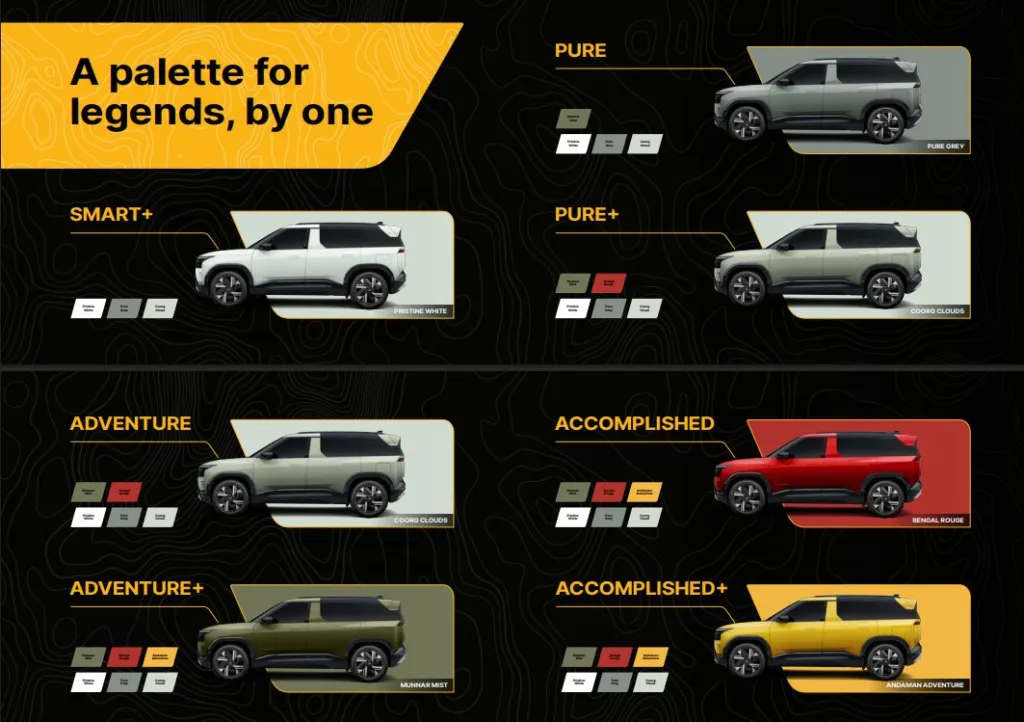
Available in six stunning colors: Andaman Adventure (Yellow), Bengal Rouge (Red), Coorg Clouds (Silver), Munnar Mist (Green), Pure Grey, and Pristine White.

Interior: Triple-Screen Tech Haven

Step inside and you’re greeted by what might be Tata’s best cabin to date, playing with premium materials, textures, and colors to create an upmarket ambience.

Technology & Features:

  • Triple-screen layout: 12.3″ central touchscreen + 12.3″ passenger display + 10.25″ digital cluster
  • Lower variants get dual-screen setup
  • 4-spoke steering with illuminated Tata logo
  • Head-up display
  • 12-speaker JBL sound system
  • Dashboard-mounted soundbar (segment-first)
  • Wireless Android Auto & Apple CarPlay

Comfort & Convenience:

  • Panoramic sunroof (segment-best size)
  • Ventilated front seats
  • Reclining rear seats with exceptional legroom
  • Dual-zone automatic climate control
  • Rear sunshades
  • Extendable sun visor system (segment-first)
  • 360-degree camera
  • Level 2 ADAS

Interior Themes: Three distinct color schemes based on variant selection, with premium light-colored options that exude sophistication (though they’ll require diligent maintenance).

Tata Sierra
Tata Sierra 2025

Safety: Built Tata-Tough

Tata’s reputation for building ultra-safe vehicles means we can expect a full 5-star crash test rating once results are published. The Sierra is built on the ARGO-S (Omni-Energy and Geometry Scalable) platform, which supports multiple body styles and future AWD variants.

Safety features include dual airbags (more in higher variants), ABS with EBD, electronic stability control, Level 2 ADAS, and robust body construction that’s become a Tata hallmark.

AWD Variant Confirmed: Adventure Awaits

In a surprise announcement, Tata confirmed an all-wheel-drive setup for the Sierra, making it the first modern Tata passenger vehicle to offer AWD. This positions the Sierra not just as a stylish urban SUV, but as a genuine adventure companion capable of tackling challenging terrain.

Details on the AWD variant’s launch timeline remain under wraps, but it’s expected within months of the initial launch.

Sierra EV: The Electric Future

While the ICE variants steal today’s headlines, Tata has confirmed the Sierra EV will launch in late 2025, sharing the same iconic design language but with EV-specific tweaks like a closed-off grille and unique alloy wheels.

Expected specs for the Sierra EV include:

  • Battery capacity comparable to Harrier EV
  • Approximately 500 km range
  • Fast-charging capability
  • Price range: ₹20-25 lakh

The dual launch strategy—ICE now, EV later—captures both traditionalists who want proven powertrains and futurists eager for zero-emission mobility with the iconic Sierra badge.

The Competition: Who Should Worry?

The Sierra will compete in the compact SUV space with cars like Hyundai Creta, Kia Seltos and Maruti Victoris, placing it squarely in India’s most competitive automotive segment.

Direct Rivals:

  • Hyundai Creta (₹11-20 lakh)
  • Kia Seltos (₹10.90-20.35 lakh)
  • Maruti Grand Vitara (₹10.70-20.10 lakh)
  • Volkswagen Taigun (₹11.70-19.50 lakh)
  • Skoda Kushaq (₹11.89-20.49 lakh)

The Sierra’s unique selling points? Design differentiation, premium interiors, largest-in-segment features, and emotional brand equity that foreign competitors simply can’t match.

Four Personas: Choose Your Adventure

Tata is offering the Sierra across four distinct “personas” with seven total variants:

  1. Smart+ – Entry-level (₹11.49 lakh announced)
  2. Pure / Pure+ – Value-focused variants
  3. Adventure / Adventure+ – Off-road oriented with AWD potential
  4. Accomplished / Accomplished+ – Fully-loaded premium variants

This persona-based approach allows buyers to choose a Sierra that matches their lifestyle, whether city commuting, weekend adventures, or premium daily driving.

Why the Sierra Matters Beyond Sales Numbers

This isn’t just another SUV launch—it’s a masterclass in brand resurrection. Tata took an icon that disappeared in 2000 and reimagined it for 2025 without diluting what made it special.

The Emotional Connect: For Indians who grew up in the ’90s, the original Sierra represented adventure, capability, and distinctive design. If you have nostalgic memories of the original Sierra, this revival will pull at your heartstrings.

The Business Strategy: By positioning between the Nexon and Harrier, Tata fills a crucial gap in its lineup while competing in India’s highest-volume SUV segment where monthly sales leaders move 15,000+ units.

The Design Statement: In a market where many SUVs look increasingly similar, the Sierra’s boxy silhouette and distinctive rear glass make an unmistakable statement. It’s perfect for buyers who want to stand out.

Should You Buy One? The Honest Take

Buy if you want:

Wait if you need:

  • Immediate delivery (deliveries start January 15)
  • Complete pricing transparency (full prices in December)
  • Third-row seating (Sierra is a 5-seater only)
  • Proven reliability data (it’s all-new)

The Verdict: A Comeback Done Right

The 2025 Tata Sierra is more than a comeback—it’s a statement about India’s automotive maturity and consumer readiness for distinctive, premium products from domestic brands.

Starting at ₹11.49 lakh—presumably for a well-equipped base variant—the Sierra enters the market competitively priced against established rivals. The full pricing reveal in December will determine whether Tata has struck the perfect balance between aspiration and affordability.

But here’s what we know for certain: Tata Motors has delivered a design that honors the Sierra legacy while creating something genuinely fresh, modern, and desirable. Whether judged by its segment-leading 19-inch wheels, triple-screen dashboard, confirmed AWD variant, or the sheer emotional weight of its nameplate, the Sierra matters.

For Tata, this is about more than one model’s success—it’s about proving they can resurrect icons and compete at the premium end of mass-market segments.

For buyers, it’s about finally having a mainstream SUV that doesn’t look like everything else on the road.

For India’s automotive industry, it’s proof that domestic brands can create world-class products that honor heritage while embracing innovation.

The countdown to December 16 bookings has begun. Will you be among the first to bring home this legend?


Also Read:

Know More:


The Sierra isn’t just back—it’s back with a vengeance, ready to reclaim its throne in Indian hearts and garages.