Kawasaki took to the EICMA Milan Motorcycle Show to unveil a trio of electric motorcycles, with Electrek front and center to see the action live. The Kawasaki Ninja EV and Kawasaki Z EV were revealed as traditional battery electric motorcycles, while the company also unveiled an HEV hydrogen-powered concept motorcycle. While the electric Ninja and Z models are both still in prototype form, Kawasaki Motors president Hiroshi Ito announced to the audience that the two models would be available for purchase next year.
Kawasaki Z, Ninja electric bikes
The Japanese brand took the wraps off a number of bikes at EICMA 2022, yesterday. As per the company, it will roll out the Ninja electric bike and Z electric bike in global markets next year, which are officially called the Ninja BEV and Z BEV, respectively. Both the Ninja BEV and Z BEV electricbikes will be available for purchase in 2023.
These bikes appear to have been inspired by the Z400 and the Ninja 400. According to the brand, these bikes will abide by the A1 requirements. Moreover, they will be marketed as entry-level electric performance bikes and will share the same battery with a capacity of up to 3.0 kWh.
The hybrid electric vehicle prototype, on the other hand, is still a little ways off from going into production, but Kawasaki predicts that it will hit the market by 2024. Further information on the motorcycle is still expected, but the HEV will have robust hybrid technology and will use either hybrid power or simply electric power depending on the needs.
President Ito has reaffirmed that Kawasaki is still heavily focused on bikes with internal combustion engines even if the company has begun to move toward electric motorcycles. Additionally, he stated that Kawasaki will launch about 30 ICE models internationally between 2024 and 2025, with almost half of them arriving in Europe.
For the safety of the rider, both the Z EV and Ninja EV are equipped with disc brakes on both the front and rear wheels, along with dual-channel ABS and a regenerative braking system for improved braking performance.The suspension duties on both motorcycles are taken care of by telescopic forks on the front and a mono-shock unit on the rear end.
As of now, the pricing and availability details for the Z EV and Ninja EV are very much a mystery. When launched, we can expect both all-electric motorcycles to be priced at around Rs. 5 lakh (ex-showroom) in India.
Kawasaki took to the EICMA Milan Motorcycle Show to unveil a trio of electric motorcycles, with Electrek front and center to see the action live. The Kawasaki Ninja EV and Kawasaki Z EV were revealed as traditional battery electric motorcycles, while the company also unveiled an HEV hydrogen-powered concept motorcycle. While the electric Ninja and Z models are both still in prototype form, Kawasaki Motors president Hiroshi Ito announced to the audience that the two models would be available for purchase next year.
Kawasaki Z, Ninja electric bikes
The Japanese brand took the wraps off a number of bikes at EICMA 2022, yesterday. As per the company, it will roll out the Ninja electric bike and Z electric bike in global markets next year, which are officially called the Ninja BEV and Z BEV, respectively. Both the Ninja BEV and Z BEV electricbikes will be available for purchase in 2023.
These bikes appear to have been inspired by the Z400 and the Ninja 400. According to the brand, these bikes will abide by the A1 requirements. Moreover, they will be marketed as entry-level electric performance bikes and will share the same battery with a capacity of up to 3.0 kWh.
The hybrid electric vehicle prototype, on the other hand, is still a little ways off from going into production, but Kawasaki predicts that it will hit the market by 2024. Further information on the motorcycle is still expected, but the HEV will have robust hybrid technology and will use either hybrid power or simply electric power depending on the needs.
President Ito has reaffirmed that Kawasaki is still heavily focused on bikes with internal combustion engines even if the company has begun to move toward electric motorcycles. Additionally, he stated that Kawasaki will launch about 30 ICE models internationally between 2024 and 2025, with almost half of them arriving in Europe.
For the safety of the rider, both the Z EV and Ninja EV are equipped with disc brakes on both the front and rear wheels, along with dual-channel ABS and a regenerative braking system for improved braking performance.The suspension duties on both motorcycles are taken care of by telescopic forks on the front and a mono-shock unit on the rear end.
As of now, the pricing and availability details for the Z EV and Ninja EV are very much a mystery. When launched, we can expect both all-electric motorcycles to be priced at around Rs. 5 lakh (ex-showroom) in India.
Mahindra revealed the all-electric XUV400 a few weeks ago, introducing its upcoming star in the electric mobility space. Based on the current XUV300, the new Mahindra XUV400 has a number of internal changes, greater dimensions, and a whole new heart under the hood. While the Mahindra XUV400’s official specifications, including its price, won’t be released until January 2023, we already know a few things about the model’s expected colour choices and variant names.
A document from Delhi RTO, which recently registered the Mahindra XUV400, states that there will be three different types of the new all-electric SUV available: Base, EP, and EL. Arctic Blue, Everest White, Infinity Blue, Napoli Black, and Galaxy Grey are the five colour options that will be offered for all of these Mahindra XUV400 models. According to T-BHP, the top-spec EL model will come in dual-tone colour variants.
The compact SUV on which the Mahindra XUV400 is based, the XUV300, has a number of features that set it apart from the former.
credit: autocarindia
The new Mahindra XUV400 has contrasting copper highlights, a closed grille, and longer length and wheelbase than the XUV300, which do give it a distinct character of its own in the front. Additionally, it receives new LED tail lamp inserts, new front and back bumper designs, and redesigned rear fenders that extend past the rear door panels.
The new Mahindra XUV400’s interior features a different all-black decor but keeps the XUV300’s cabin layout. A 7-inch touchscreen infotainment system, dual-zone automatic climate control, a single-pane sunroof, connected car technology, a push start-stop button, and six airbags are all included in the equipment list.
credit: autocarindia
The front wheels of the electric SUV, the Mahindra XUV400, are propelled by a single electric motor configuration. The XUV400 can accelerate from 0 to 100 km/h in 8.3 seconds thanks to the motor’s maximum output of 310 Nm and 150 PS. Mahindra claims that the electric powertrain and 39.5 kWh battery pack together can go 456 km at their maximum range on a single charge.
The XUV400 is built on the same platform as the XUV300, in contrast to the Born Electric platforms Mahindra displayed in August. Although the Mahindra XUV400’s official costs have not yet been released, we anticipate that they will be comparable to those of its closest competition, the Tata Nexon EV Max.
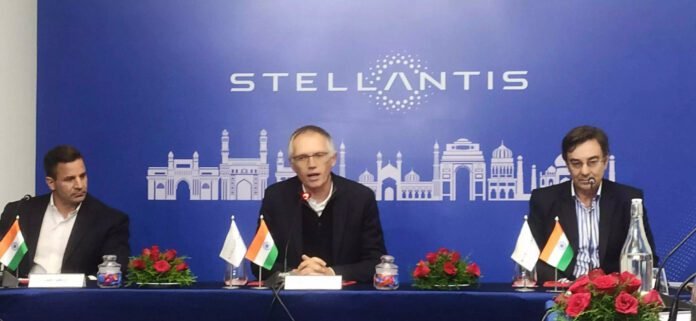
Stellantis, Fiat’s parent company stated that it has decided not to make electric vehicles in Europe at the moment and that it is now looking into lower-cost manufacturing options in countries similar as India.
The company may also explore openings to export affordable, India-made EVs to European requests, but no decision has been taken as yet, said Tavares, who was in India to review operations of Citroen’s Hosur and Tiruvallur manufactories in Tamil Nadu.
Stellantis aims early gains in India’s EV market
With its low-cost supplier base, India could be suitable to meet the company’s quality and cost targets by 2023-end. This would open the doors to exporting EVs into other requests, stated Carlos Tavares (CEO of the group).
“So far, Europe has not been able to produce affordable EVs. The big opportunity for India is to be able to sell compact EVs at an affordable price while protecting profitability,” Tavares stated to journalists during a media symposium in India.
Stellantis has made a significant investment in EVs and plans to make dozens over the coming decade. But Tavares advised last week that it was still five to six times before affordable battery EVs are available. He said that Stellantis was still developing a plan for EV exports to India and that he hadn’t taken any decision yet.
There’s adding pressure between China, the West, and China. This is going to have an impact on business. India is the country that has the most power to take advantage of this occasion, Tavares stated.
India is where Stellantis sells its Jeep and Citroen brands. still, Tavares stated that the company was n’t chasing volume but rather wanted to grow sluggishly and profitably. Tavares preliminarily stated that he anticipated earnings to further than double in South Asia by 2030 and that operating profit perimeters would be double- integers in the coming many times.
The automaker will launch India’s first EV – an electric interpretation of its Citroen C3 compact vehicle – in the early part of coming time. Stellantis makes its own battery packs and electric motors and plans to produce battery cells. Tavares also plans to land original factors for EVs in India.
The customs duties for importing a auto into India are extremely high. This means that if you want an affordable electric vehicle, it must be made in India by Indian suppliers and factors. He also said that the company would need at least 90 original corridor to remain competitive.
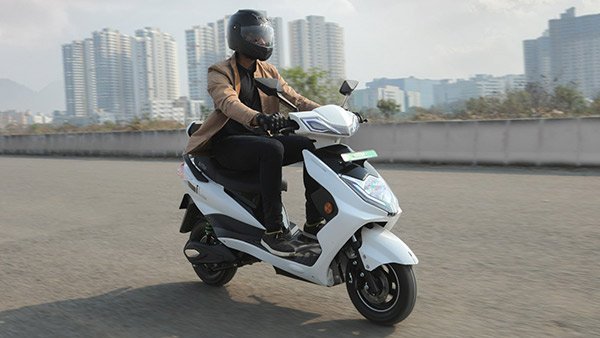
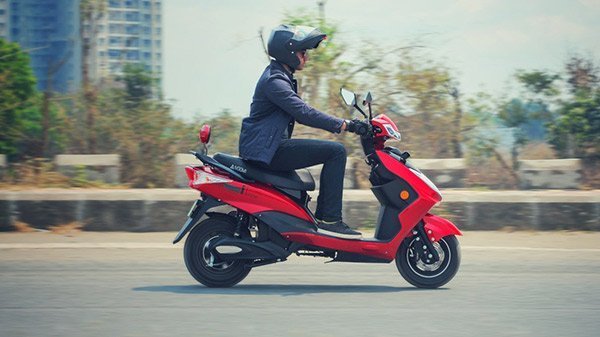
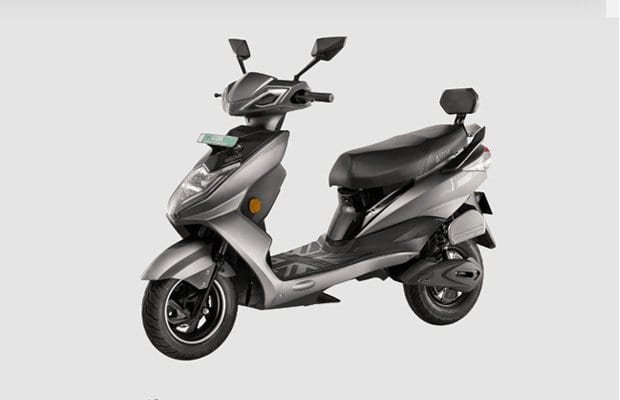
Electric mobility incipiency, iVOOMi energy, has expanded its portfolio with new variants of model S1, nominated S1 80, S1 200, and S1 240. The electric scooters have been upgraded and are priced between Rs,999 and Rs1.21 lakhex-showroom. The new variants are available in three colours Peacock Blue, Night Maroon, and Dusky Black.
iVOOMi Launches Three New S1 e-Scooters
The S1 240 delivers a range of 240 km and has a binary battery pack of4.2 kWh powered by a2.5 kW motor for redundant necklace. The tackle and specifications for the S1 80 are toned down compared to the S1 and it uses a1.5- kWh battery pack that comes with an IDC range of 80 km.
The S1 80 is powered by a2.5 kW mecca- mounted motor that’s claimed to deliver a top speed of 55 kmph. All the models of the S1 get three riding modes Eco, Rider, and Sport. The portfolio expansion was done owing to client demands, claims the company.
Opining on the development, Sunil Bansal, MD andCo-founder of iVOOMi Energy, said, “We are expanding as an engineering-oriented technology solutions brand, and we believe that the next logical step is to add more technology to the scooters that will further create a connected ecosystem and ensure safety. In our S1 series, our prime focus was to match the ergonomics of the Indian riders to the best possible standards and create a marvel that would usher everyone towards the adoption of e-vehicles.”
The rearmost range of iVOOMi scooters gets the ‘ Find my Lift ’ point with a GPS shamus and monitoring system. This helps guests find their vehicle in crowded locales, making them find their vehicles easier.
The S1 series of electric two- wheelers will be available to guests from December 1, 2022, onwards across all the iVOOMi dealerships. The new iVOOMi S1 models in India are priced betweenRs.,999($ 856) for the S 180 andRs.,000($,480) for the S 240. The newe-scooters will be available in the key from December 1. There are no suggestions yet on the global vacuity of the new iVOOMi S1 electric scooters. Further, guests can mileage of over to 100 percent backing of thee-scooters from ICICI, Bajaj Finserv, and L&T.
The li-ion battery packs made by Trontek, a manufacturer of electric car batteries, are now AIS 156 compliant. The business claimed that it was among the first businesses to receive certification for the whole line of Li-ion battery packs it produces.
Trontek claimed that the certification necessitated adjustments to chargers, battery management systems, and battery packs in addition to certain changes to the battery packs themselves.
credit: financialexpress
Samrath Kochar, Founder & CEO shared, “It gives us immense pride as a make-in-India company to receive the latest AIS-156 certification for our entire range of e-2W and e-3W li-ion batteries. We were among the first companies to incorporate changes to our products so as to ramp up the safety quotient. The revised AIS-156 battery norms required changes in battery—in terms of Design, BMS, charger as well as process in terms of traceability of each battery with respect to items used inside. We are also prepared for Phase 2 and will send the batteries for testing accordingly.”
credit: financialExpress
In NCR, Trontek runs a production facility with a 1 GWh yearly capacity. The company produces battery packs with capacities ranging from 2 kWh to 10 kWh for use in a number of different applications, including electric two- and three-wheelers. According to the business, it produces between 1,500 and 2,000 electric three-wheeler battery packs and 15,000 to 17,000 electric two-wheeler batteries per month.
Toyota is back to assist society overcome mobility difficulties and making a contribution to the fight against the threat of climate change. So they made the decision to reveal a new Hybrid EV Innova Hycross. The history of Toyota’s electrified mobility mission in India will be continued with this new hybrid vehicle.
Instead of the conventional MPV form, the Innova Hycross has an SUV design, which will give it a hint of boldness and glitz. The beautiful, roomy horizontal cockpit area is present in the interiors. There is soft-touch material throughout the cabin. Dark-chestnut hues are used throughout the interior. The seating area is ventilated to help with the humid Indian climate. The 10.1-inch display audio has a nine-speaker JBL system. The second row of the hybrid car has a powered ottoman seat.
The wheelbase of the Toyota Innova Hycross is 2,850mm, which is the longest. Additionally, it offers mood lighting and a panoramic sunroof. Power backdoors and tilt-down seats on the Innova Hycross make up to 991L of room available.
credit: e-vehicleinfo
The Tinga 2.0L in the Innova Hycross has a fifth-generation HEV system. Innova Hycross can accelerate from 0 to 100 km/h in 9.5 seconds. The hybrid car uses 21.1 kmpl of fuel on average. With a full tank, the distance travelled is 1097 kilometres. The car was entirely created with Toyota’s safety sensibilities in mind. Six SRS airbags are included. Dynamic radar cruise control, lane trace aid, auto high beam, electronic parking brakes, self-charging hybrid EVs, and blind spot monitoring are among the extra features.
By making an online registration for (Rs.) 50,000 at Toyota’s official website, you can take this hybrid model home. It is available in five different Toyota Innova Hycross G, GX, VX, and ZX models and seven different colours (O). The new Innova Hycross, which the manufacturer plans to introduce in January 2023, is anticipated to cost between 22 and 28 lakhs.
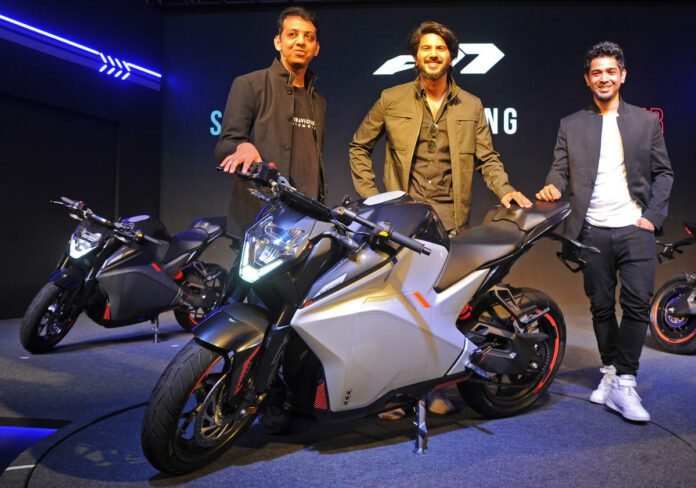
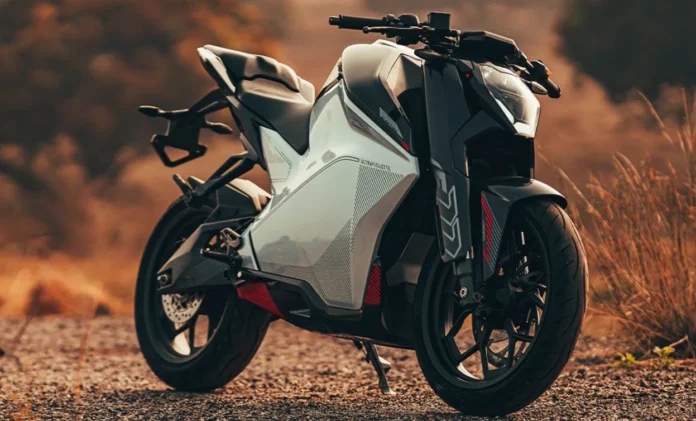
Ultraviolette F77, India’s first high- performance electric motorbike, has been introduced. The startingex-showroom cost of the F77 electric motorcycle is INR3.80 lakh. The F77 was conceived, created, and manufactured in India from the ground up and is offered to guests in three distinctive and eye- catching forms Airstrike, Shadow, and Ray. Each type has two variations the F77 and the F77 Canvass, with corresponding IDC Ranges of 206 km and 307 km.
Ultraviolette F77 Electric Motorcycle
The automotive company blazoned a limited product run of 77 units which will be made to celebrate what this brand stands for. Each unit is uniquely numbered and gets a special makeup scheme meteor slate with afterburn unheroic. This special edition F77 also makes further power at40.2 bhp(30.2 kWh) and 100 Nm of peak necklace from zero to 100 kmph coming up in just7.8 seconds with a top speed of 152 kmph.
Power comes from a BLDC direct drive motor in the F77. Thee-motorcycle Original and Canvass variants make do with38.8 bhp( 29 kW) and 95 Nm of peak necklace. The top speed is rated at 147 kmph. There are three riding modes which are Glide, Combat and Ballistic. This bike comes with two fixed battery options which are7.1 kWh and10.3 kWh with 21700 format cells. It ensures a range of 206 km and 307 on the battery pack.
Other mechanicals that come with the F77 are malleable USD frontal spoons and an malleable monoshock at the reverse as on F77. This motorbike is equipped with 320 mm front and 230 m hinder slice thickets with binary- channel ABS as standard. The wheelbase is approx 1360 mm while the weight distribution is said to be half-half.
In terms of design, the Ultraviolette F77 takes alleviation from spurt fighters which form the sharp styling. The machine company also revamped the handlebar height and lowered the seat height to make the bike further accommodating for riders of all sizes. Interestingly, there are no bolts visible on the bike in order to give it a clean design.
Niraj Rajmohan, Co-founder and CTO, Ultraviolette, stated “ The electric motorcycle in India that is backed by over 5 years of R&D. We have spent the last couple of years putting the F77 through some of the roughest and extreme terrains and weather conditions across the country.” According to the company, the Ultraviolette F77 is being manufactured in Bengaluru. The brand will open its first experience center in the same city as well with deliveries to begin in January next year.
According to Stellantis’ Chief Executive Officer Carlos Tavares, the company will join the electric vehicle revolution in India with the early 2023 launch of the new Citroen C3 EV. Recently, the Citroen C3 EV model was discovered charging at a location close to Pune, Maharashtra, in a state that suggests it will soon hit the market. Tavares also said that its Hosur plant will produce the C3’s electric variant, which will be sold for a reasonable price.
Carlos Tavares, CEO of Stellantis said, “We will launch the EV variation of the C3 by the beginning of next year, and you will have specific announcements for that soon.”
The French automaker is already selling more than 1,000 vehicles a month since the Citroen C3 made its debut in India earlier this year.
credit: indiacarnews
The vehicle has been more and more popular with purchasers, and an electric version will surely be an intriguing automobile because it would not only establish Citroen and Stellantis in the Indian electric vehicle market but also be one of the most approachable EVs available.
On the question of the pricing for the electric version of the C3, Tavares said, “We want to launch the C3 EV at an affordable price so that it is accessible across the market. We will bring in more details about this in the coming days.”
It’s still too early to make any educated guesses about the car’s mechanical characteristics. Hatchbacks will likely have a reduced range because they are fundamentally smaller than sedans and compact SUVs, which limits their ability to accommodate a larger battery pack. However, due to its minimal maintenance and ownership expenses, it might be the perfect city automobile. The Tata Tiago EV is now India’s most cheap electric passenger vehicle, with prices starting at Rs. 8.49 lakh (ex-showroom).
Pravaig, a Bengaluru-based automotive startup, has debuted the electric Defy SUV, its first SUV, for a price of Rs 39.5 lakh (ex-showroom). The company was established in 2011 in Jaipur and immediately started producing specialised off-road buggies after getting funding from the French renewable energy company Eren group.
An angular design gives the Pravaig Defy a butch appearance blended with crossover elements. The SUV does contain several aesthetic cues that resemble Range Rover SUVs, despite the brand’s claim that the styling motif is “brutal sophistication.” Sharp cuts can be seen in the front design, which also includes an LED light bar that spans its width.
In terms of its profile, the SUV seems huge and has a black painted upper half, but the angular windows and sloping roof give it a dynamic appearance. The tailgate and a horizontal LED light bar are elegantly merged with the strong character line that extends from the rear fender over the width of the vehicle.
The SUV, according to Pravaig, has a “particularly dynamic” form with a 0.33 drag coefficient. The brand added that the Extinction MK1, an EV sportscar demonstrator that we had previously experienced, also lends certain stylistic influences to the Defy SUV. The panoramic fixed roof will be standard equipment for the SUV.
18-inch alloy wheels with 255/65R18 tyres are standard on the Defy EV SUV. Additionally, it has optional “aero covers,” which the brand claims would increase the range by up to 10 km or more per charge, especially on the highway. According to Pravaig, the upholstery of the Defy SUV is composed of vegan leather and the inside is constructed of sustainable fabrics (recycled materials like PET). The seats provide six-way power reclining, ventilation, and self-adjusting temperature control. The dashboard features a sizable 15.6-inch touchscreen that can be used as a navigation screen and for internet browsing thanks to 5G connectivity. According to the manufacturer, the infotainment will also have on-board gaming with the potential to add more games via over-the-air (OTA) upgrades.
A separate 10-inch screen behind the steering wheel handles instrumentation functions, and this screen may be customised and adjusted depending on the driving mode. Pravaig claims that French audio expert company Devialet would also provide 3D sound for the Defy SUV.
credit: Pravaig
The Pravaig is a five-seat SUV by default, but it also has a unique four-seat cabin that can be customised with two separate rear captains seats, a 240V outlet, a wireless charger, and two separate 15.6-inch screens.
Additionally, the interiors can be pre-conditioned via the linked car app, and there are distinct climate control zones for front and back passengers. The Defy EV SUV will come standard with mood lighting, several wireless chargers, and two high-power USB-C connectors that can also be used to charge laptops. Although the SUV will have a special key card, it can also be locked or unlocked via connected car technology.
The SUV also has a 77GHz solid state radar, 360-degree cameras, and adaptive LED lighting. The Defy EV SUV will eventually have autonomous emergency braking, which will be enabled via an over-the-air update. It also comes standard with a tyre pressure monitoring system and six airbags.
According to Pravaig, the Defy SUV is constructed on a platform specifically designed for skateboarding. Due to the battery being a skateboard, the SUV’s centre has more room for passengers and their belongings. Future goods may be supported on the same platform.
The Pravaig Defy SUV is equipped with two electric motors that provide 407 horsepower and 620 Nm of torque. With this amount of power, the Defy can compete with SUVs like the Mercedes-Benz EQC, Jaguar iPace, and Audi e-tron. The SUV also has four wheel disc brakes with ABS and ESP and three degrees of regeneration that permit one pedal driving.
credit: Pravaig
The Defy SUV can be charged at home or using a fast charger, according to Pravaig. The SUV will include an optional 7.2kW home charger that can extend the range up to 300 kilometres in about eight hours. A 150kW DC charging setup can also be used to charge the electric SUV. The company is now working on partnerships with numerous Indian charging infrastructure suppliers. The Defy SUV, according to Pravaig, includes a 5-module Li-ion battery with 5,000 hardcase shells. According to Pravaig, the 90.9kWh battery has a real-world range of more than 500km.
According to Pravaig, the brand will not track or sell any user data and will instead treat it as the consumer’s own. Although policies are being developed, it is unclear how brands will manage the data obtained by connected automobiles at the moment. The business claims it can service the Defy SUV and provide emergency roadside assistance at 34,000 PIN codes throughout India, despite withholding dealership information. The company offers a free one-year trial period that can be extended to four years.
The Bengaluru-based startup Ultraviolette Automotive has officially introduced its F77 electric motorcycle in India. The cost of the company’s offering ranges from 3.8 lakh for the F77 Original to 4.55 lakh (all prices, ex-showroom) for the 307 km range F77 Recon. This electric motorcycle is available in three trim levels: Shadow, Lightning, and Laser.
The automaker disclosed a limited production run of 77 units that will be created to honour the values that this brand represents. Each unit has a unique number and is painted in a unique shade of afterburn yellow and meteor grey. This special edition F77 also produces more power, with a 0 to 100 kmph acceleration time of 7.8 seconds and a top speed of 152 kmph. It has 40.2 bhp (30.2 kWh) and 100 Nm of peak torque.
The Ultraviolette F77’s sharp styling was inspired by jet fighters in terms of design.
credit: e-vehicleinfo
To make the bike more accommodating for riders of all sizes, the automaker also changed the handlebar height and lowered the seat height. Interestingly, the bike has no visible bolts to maintain a clean appearance.
The F77’s BLDC direct drive motor provides power. The Original and Recon models of the e-motorcycle get by with 38.8 horsepower (29 kW) and 95 Nm of maximum torque. The maximum speed is 147 kmph. Glide, Combat, and Ballistic are the three available riding styles. With 21700 format cells, the fixed battery options for this bike are 7.1 kWh and 10.3 kWh. On either battery pack, a range of 206 km or 307 (IDC) is promised.
credit: e-vehicleinfo
The F77 also includes an adjustable monoshock at the back and USD front forks that can be adjusted. This motorcycle comes standard with dual-channel ABS and 320 mm front and 230 mm rear disc brakes. The weight distribution is estimated to be roughly 50:50, and the wheelbase is about 1360mm. The Ultraviolette F77 is manufactured in Bengaluru, claims the firm. Additionally, the company will establish its first experience centre in the city, and deliveries will start in January 2023.
The new Tigor.ev car from Tata Motors offers a 315 km extended range (ARAI certified). New technology and features are also added to the car in the revised model. A new colour option for the Tigor.ev is now available: Magnetic Red. Tigor.ev’s new line of products has a starting price of Rs. 12.49 lakh (ex-showroom).
Leatherette upholstery, a steering wheel covered in leather, rain-sensing wipers, auto headlights, and cruise control are some of the upgrades made to the new Tigor.ev. Additional technological features include multi-mode regen, linked car technology called Zconnect, smartwatch connectivity, iTPMS, and a tyre puncture repair kit that will be included as standard across the entire range.
New Tigor.ev Variants and Prices (All prices ex-showroom):
Tata Motors is providing a free feature upgrade pack to current Tigor.ev owners via a software update, much like it did with the Nexon EV Prime. Multi-Mode Regeneration, iTPMS, and Tyre Puncture Repair Kit are available for customers to enhance their vehicles with. Additionally, current owners of the XZ+ and XZ+ DT models can improve their smartwatch connectivity. Starting on December 20, 2022, this service can be obtained by going to any Tata Motors authorised service facility.
Shailesh Chandra, Managing Director, Tata Passenger Electric Mobility Ltd. and Tata Motors Passenger Vehicles Ltd., “The EV industry is witnessing tremendous growth and is gaining popularity in the Indian market. With 50,000 Tata EVs on road and an 89% market share (YTD), we at Tata Motors are solely driving this shift with our extensive portfolio.”
The Tigor.ev is powered by a 26 kWh liquid-cooled, high energy density battery pack and has an IP67 certified battery pack and motor to make it weather resistant. It has a peak power output of 55 kW and a peak torque of 170 Nm.
credit: team-bhp
In just one month after its introduction, Tiago.ev has attracted more than 20,000 bookings, according to Chandra. He went on to say that the Tigor.ev has been revamped with more modern and exclusive features. The business has been analysing the information on client driving behaviour gleaned from the 600 million miles travelled on Indian roadways.