Home Blog Page 275

Turno raises $13.8M as it scales across India and builds proprietary battery technology

0
Turno raises $13.8M as it scales across India and builds proprietary battery technology

Turno, India’s leading platform for commercial electric vehicle (EV) distribution and financing, services 20% of the EV market in the country, is today announcing a $13.8 million (~ INR 112 crores) Series A funding as it scales across the country and plans to build proprietary battery technology. 

The funding round was co-led by global venture capital firms B Capital and Quona Capital with participation from existing investors Stellaris Venture Partners and Avaana Capital and new investors Alteria Capital and InnoVen Capital. Turno plans to use the funding to build a proprietary battery tech platform to address issues around end-of-life battery value, amid global concerns around EV batteries and e-waste.

Turno raises $13.8M as it scales across India and builds proprietary battery technology

Turno plans to expand its Electric Vehicle distribution platform across India and offer a complete used battery solution to address consumers’ pressing EV battery concerns

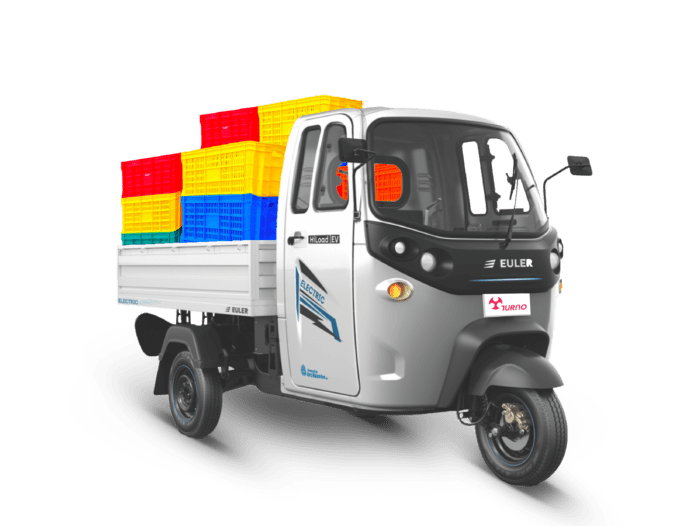
Turno is the only platform in India which delivers a complete total cost of ownership solution to commercial EV buyers. It offers a multi-brand selection of vehicles at the lowest prices through its unique EV sales platform (with both online and physical stores), the lowest-cost financing, and a guaranteed buy-back value on used batteries backed by its proprietary battery technology. Turno’s flagship offering lowers the overall ownership costs for customers by 30% when compared to other EV purchasing options available today.

Founded by Hemanth Aluru and Sudhindra Reddy (ex-Zoomcar CXOs) in January 2022, Turno is currently operational in five states— i.e. Karnataka, Telangana, Tamil Nadu, Delhi NCR, and Maharashtra— covering major markets in the South, West, and North of India. Since its inception as a one-stop solution improving the accessibility and affordability of commercial electric vehicles in India, the company has captured approximately 20% market share.

“Today 80-85% of India’s automotive fuel consumption is driven by commercial vehicles with internal combustion engines. Yet, there is a strong desire to transition to a green economy and so, commercial EV adoption holds significant promise. Turno was founded with the mission to convert these “gasoline miles” into “electric miles”, having a significant positive impact on the environment” says Hemanth Aluru, Co-Founder & CEO of Turno.

Turno raises $13.8M as it scales across India and builds proprietary battery technology

The company has identified a massive untapped opportunity to create a proprietary battery technology platform to repurpose EV batteries into large-scale second-life energy storage systems. This significantly enhances the life-cycle value of batteries and prolongs their usable life avoiding impending environmental disasters such as dumping used batteries in landfills and creating more toxic e-waste. Most importantly, this new technology is the best bet to further lower EV ownership costs, thereby making EVs more affordable and accessible to the masses.

As EV adoption has accelerated globally, so too have concerns about the end-of-life value of EV batteries and the potential e-waste created by them. Customers who purchase EVs through Turno receive a Vehicle Lifecycle Management app, which gamifies and incentivizes users’ driving behaviour to prolong battery life. The app offers a real-time dashboard for consumers to know their guaranteed buyback price for their vehicle’s end-of-life. The company promises an average 25-30% higher buyback than the market, ensuring a complete end-to-end sustainable solution to the core concerns of battery and vehicle lifecycle value in the EV industry.

Sudhindra Reddy, Co-Founder & COO of Turno adds “Our endeavor is to make the EV technology equitably available to everyone through business model innovations that can continually bring down the costs of ownership. We believe this is the only way to make India’s EV mission successful.” 

Turno raises $13.8M as it scales across India and builds proprietary battery technology

“Commercial EV sales are heavily dependent on the availability of attractive financing options and today the Indian market is plagued by lack of truly customer-centric options. Turno has identified a key missing element in the ecosystem that solves the problem of financing as well as distribution and servicing. As a technology enabled omni-channel platform, especially at a time while EV sales are inflecting and climate-tech enabling solutions are fast evolving, we are excited to partner with Hemanth and Sudhindra in their vision to build Turno and transform the landscape of India’s EV market,” said Karan Mohla, General Partner, B Capital and head of early stage investments in India & SEA.

“We’ve been very impressed with Turno’s progress to date in making commercial EVs more readily available across India, and with their intentional work in lifecycle management of those EVs and their batteries,” says Varun Malhotra, Partner at Quona

The company has forged multiple national level partnerships with leading 3W electric vehicle manufacturers, including Mahindra & Mahindra, Piaggio, Omega Seiki Mobility and Etrio, to sell their vehicles countrywide. They recently announced key personnel appointments across battery technology, brand, growth and operations. 

Kia all set to bring a new electric SUV and MPV in India by 2025

0

Kia has already committed Rs 2,000 crore to R&D, infrastructure development, and EV manufacturing in India. Kia will bring two new electric vehicles to India by 2025, both of which will be manufactured locally. However, there are no plans to localise the all-electric EV6; it will continue to be imported in full for the foreseeable future.

The first will be an entirely new mass-market MPV designed specifically for India and set to hit the market in 2025. The second vehicle will most likely be an electric version of Kia’s new compact SUV (internally known as the Kia AY), which will also be available in 2025. This unnamed SUV will be a sub-4m vehicle in Kia’s India lineup, sitting between the Seltos and the Sonet. Kia will position the AY as a lifestyle vehicle with a tougher SUV-like presence and a taller and boxier design to differentiate it from the Sonet.

The Kia AY will not be a pure EV, but will instead be available with both ICE and electric powertrains.

Kia
credit: autocar

According to sources, Kia India plans to produce close to one lakh units of the AY SUV per year, with the petrol version accounting for 80% of total volume and the EV derivative accounting for the remaining 20%. When asked where the company plans to manufacture this new range of EVs, Park stated that the existing plant in Anantapur is already future proof to produce both EVs and IC engine models concurrently. In fact, a portion of the Rs 2,000 crore investment will go towards modifying the current production line to produce both ICE models and EVs concurrently.

Also Read:

Source

Report: Four electric two-wheeler Manufacturers under fire for apparantly misusing of subsidy

0

The government is investigating allegations that four major electric two-wheeler manufacturers artificially kept their product prices low in order to claim subsidies. According to senior government officials, Ola, Ather, TVS Motor, and Vida are under investigation for allegedly mispricing their electric two-wheelers in order to qualify for subsidies under the scheme Faster Adoption & Manufacturing of Electric Vehicles (FAME). They added that the EV makers may have falsely claimed at least $300 million in subsidies.

The government is investigating a dozen other electric two-wheeler manufacturers for allegedly failing to meet the scheme’s localisation commitments.

The Ministry of Heavy Industries launched the latest investigation in response to a whistleblower complaint alleging that these four companies fraudulently claimed subsidies totaling at least Rs 300 crore by billing integral parts such as the charger and proprietary software separately from the two-wheeler.

electric two-wheelers
credit: economictimes

Subsidies cannot be claimed under the FAME programme for electric two-wheeler that cost more than 1.50 lakh ex-factory. It is alleged that these manufacturers billed customers separately for chargers and proprietary software in order to price the vehicles below the eligibility threshold required for the subsidy. Ola denied the allegations and stated that it had received no communication from the ministry on the subject.

Companies can offer up to 40% off the cost of locally manufactured vehicles and claim it as a government subsidy. This enables companies to make EVs more affordable and increase sales. According to the gazette notification for the current round of the scheme, Rs 2,000 crore has been set aside for financial assistance to manufacturers of electric two-wheelers.

Also Read:

Source

Electric Vehicle sales have declined upto 10.51% in January

0

According to FADA, retail sales of electric passenger vehicles fell 10.51 percent sequentially to 3,346 units in January 2023 from 3,739 vehicles sold in December last year. Tata Motors’ electric PV sales fell 17% in January, to 2,426 vehicles, compared to 2,926 units delivered in December 2022.

MG Motor sales volume fell 12.55 percent to 425 units, down from 486 units sold the previous month. According to FADA, BYD India reported a 164% increase in ePV volumes at 132 vehicles in January 2023 compared to 50 vehicles in December last year, while BMW India sales stood at 123 cars versus 29 units in December 2022.

Hyundai Motor India electric passengers vehicle sales were 111 units in the previous month, up from 91 units in December 2022.

Electric
credit: businessstandard

According to FADA data, electric CV sales were 23% lower at 131 units compared to 170 units in December last year. The sale of e-three wheelers fell 3% sequentially to 32911 vehicles in January this year, down from 33949 vehicles in the previous month of 2022. However, e-two-wheeler volumes remained flat at 64,363 vehicles in December 2022, compared to 64,348 units sold in December 2022, according to data released on Tuesday by the Federation of Automobile Dealers’ Association (FADA).

Also Read:

Source

Tata Nexon EV prices reduced to maintain fierce competition

0

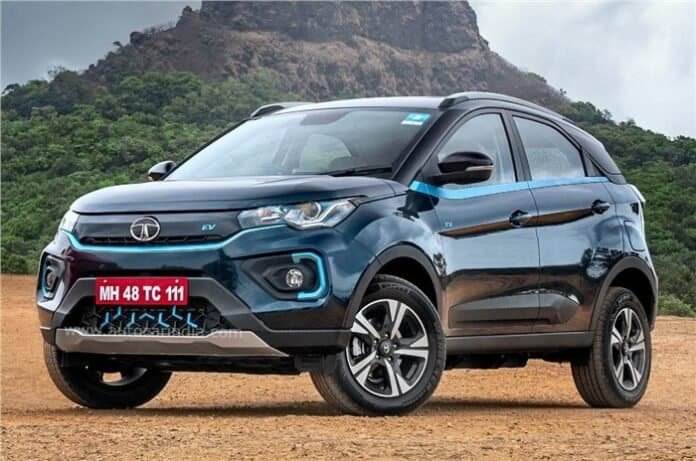
Tata Motors updated the Nexon EV lineup three times last month and the latest hot topic is that the prices of Nexon EV Prime variants have been reduced by up to Rs 50,000. This was accompanied by a price decrease for Nexon EV Max variants as well as an increase in driving range. The automaker has now revealed the reasons why the Nexon EV lineup is now more affordable.

To begin, Tata Motors stated that lower structural costs and higher levels of localisation have benefited the brand and, as a result, will benefit the customer with lower prices. Second, with new rivals such as the Mahindra XUV400 entering the EV segment, Tata wants to maintain fierce competition.

The Tata Nexon EV’s prices were revised shortly after the launch of the XUV400, which has a starting price of Rs 15.99 lakh (ex-showroom).

Nexon
credit: carwale

The Tata Nexon EV is available in two trim levels: Prime and Max. While the Prime trims have a 30.2kWh battery pack, the Max model has a larger 40.5kWh battery pack. The claimed electric range for both variants is 321km and 453km, respectively. Tata’s EV portfolio also includes the Tigor EV and Tiago EV. While the Tigor EV debuted in 2021, the Tiago EV is the most recent entrant and is available in medium and long-range versions. Tiago EV deliveries have begun, with the electric hatchback starting at Rs 8.49 lakh (ex-showroom). Surprisingly, the Tigor EV and Tiago EV prices remain unchanged.

Also Read:

Source

India’s EV start-ups records 117% jump in funding in 2022

0

According to a recent report by market intelligence platform Tracxn, EV start-ups in India raised a total of $1.66 billion in 2022, up 117% from 2021. It went on to say that the sector saw only four $100 million+ investment rounds in 2022, compared to just two in 2021. Late-stage funding in the sector is also expected to increase 124% to $1.02 billion by 2022. Early-stage funding also increased by 160 percent, from $202 million in 2021 to $526 million in 2022. According to the report, the average ticket size of early-stage investments increased by 112% this year.

In terms of EV funding, India ranks fourth after the United States, China, and Sweden.

According to the report, Blume Ventures, Micelio, and GrayCell Ventures are the top seed-stage investors in this space in India, while Tiger Global Management, Sequoia Capital, and Qualcomm Ventures are the largest early-stage investors. GIC, The Rise Fund, and Tekne Capital Management are the top late-stage investors.

EV
credit: businesstoday

Tracxn stated in its Electric Vehicles – India Feed Geo Report that this increase is largely due to an increase in late-stage funding rounds, which accounted for nearly 62 percent of total funding in this space in 2022. The report, which is based on Tracxn’s extensive database, offers insights into India’s electric vehicle (EV) market. In terms of the number of companies, India ranks third after the United States and China.

In 2022, India will have sold one million EVs, with electric 2-wheelers accounting for the vast majority of sales. Favorable government policies, an increasing number of options, and expanding EV infrastructure have all contributed to increased EV adoption this year.

According to the report, the sector saw four $100 million+ investment rounds in 2022, compared to just two in 2021. Furthermore, no new Unicorns have been created, and no IPOs have occurred in this space. Bengaluru has attracted the most investment ($2 billion) in the EV sector, followed by Mumbai ($525 million) and Gurgaon ($274 million).

Also Read:

Source

Nissan will acquire 15% stake in Renaults’s EV unit Ampere

0

Nissan said on Monday that it will buy up to 15% of Renault’s electric vehicle (EV) unit Ampere, reviving a long and sometimes contentious alliance that will also result in more common car platforms. The agreement, reached after months of tense negotiations, includes the previously announced reduction of Renault’s stake in Nissan to put the two on a more equal footing, extending a partnership that has been in place since 1999 for an initial period of 15 years and also includes Mitsubishi Motors.

“Previously the alliance was more about synergies… and global volumes,” Nissan chief operating officer Ashwani Gupta told the reporters. “The next 15 years is about how we become the number one value creator for each other and our shareholders.”

“I consider that what we have agreed is a much better set-up than what we have had in the last past few years,” Renault CEO Luca de Meo told a presentation of the new-look alliance in London. “We have now a new governance scheme that is much more straightforward, we can now operate like a normal company. Seen from Renault, (it) is about regaining some strategic agility without breaking necessarily the ties and the synergies that were existing.”

The lopsided relationship between the two automakers, which was strained by the arrest of its architect and former chairman, Carlos Ghosn, in 2018 amid a financial scandal, had long been a source of contention among Nissan executives.

Nissan
credit: economictimes

The financial details of the company’s valuation were not disclosed, with de Meo stating that the market would decide. According to some sources, it could be worth up to ten billion euros. Ampere will also be part of Mitsubishi’s European EV strategy, according to CEO Takao Kato, and the company will “further study” its share participation. Renault will reduce its stake in Nissan from approximately 43% to 15% by transferring a 28% stake to a French trust.

The companies detailed planned joint projects in Europe, India, and Latin America, as well as collaboration in the EV, electronics, and solid-state battery industries. The sweeping reimagining of the 24-year-old alliance begins after talks were slowed by concerns about intellectual property sharing as Renault sought tie-ups with companies outside the partnership, including China’s Geely.

The sweeping reimagining of the 24-year-old alliance begins after talks were slowed by concerns about intellectual property sharing as Renault sought tie-ups with companies outside the partnership, including China’s Geely.

Also Read:

Source

Nissan plans to launch EVs powered Solid-State Battery by 2028

0

Nissan intends to release its first electric vehicle with a solid-state battery in 2028. According to Autocar UK, the automaker plans to launch a pilot project for this in 2025. The British automotive publication also claimed that the project’s engineering work would be completed by 2026.

David Moss, Nissan’s vice president of R&D in Europe, has stated that solid-state batteries will significantly improve battery power technology. The charging speed of the solid-state batteries is claimed to be three times faster, reaching up to 400 kW. Furthermore, this battery technology is said to have twice the energy density of the current lithium-ion battery range. Furthermore, this technology is said to reduce production costs by 50% when compared to the current generation of lithium-ion batteries.

According to the report, Nissan has already developed 10-centimetre square cells for use in solid-state batteries in collaboration with the University of Oxford. The final battery cell is said to be about the size of a laptop. This would help EVs with significantly reduced size and weight, improving overall vehicle performance. All liquid elements will be removed from these solid-state batteries.

Nissan
credit: motor1

Nissan plans to release large electric pickup trucks and SUVs in the near future.

According to Moss, solid-state battery technology will assist the automaker in meeting that goal. He did not, however, specify which electric vehicle will be the first to use solid-state batteries. However, he has hinted that it will be a completely new model. Moss stated that a completely new architecture is required to accommodate the solid-state battery. He mentioned that the new battery would come in two sizes.

Nissan plans to release large electric pickup trucks and SUVs in the near future. According to Moss, solid-state battery technology will assist the automaker in meeting that goal. He did not, however, specify which electric vehicle will be the first to use solid-state batteries. However, he has hinted that it will be a completely new model. Moss stated that a completely new architecture is required to accommodate the solid-state battery. He mentioned that the new battery would come in two sizes.

Also Read:

Source

Volvo eyeing India for its new Global EV Plant

0

Volvo Cars is looking into the possibility of establishing a new manufacturing facility in Asia, outside of China, as sales of electric vehicles (EV) are expected to increase this year. The development of charging infrastructure and price parity with internal combustion engine (ICE) vehicles are expected to boost EV sales.

Volvo Cars’ Global CEO Jim Rowan stated that while a final decision on the location of the new EV manufacturing unit has yet to be made, India and Southeast Asian countries are among the contenders.

Volvo
credit: economictimes

The facility being considered will be utilised to meet domestic requirements and ship vehicles to other markets globally. “We need to make sure that we can feed countries other than just India from that location. So we need to look at the logistics of that. And also the cost benefits,” said Rowan.

Volvo Cars, which plans to go all-electric by the end of the decade, is also open to contract manufacturing collaboration with a partner in the region, according to the report. Volvo Cars announced plans last year to build a new manufacturing facility in Slovakia to meet increased demand for its EVs in Europe and the United States. The company believes that by 2025, ICE vehicles and EVs will be priced similarly, making EVs more affordable to a larger number of customers. In India, Volvo Cars currently sells the XC40 Recharge for Rs 56.90 lakh (ex-showroom).

Also Read:

Source

Honda Electric Bikes are set to arrive for the Entry Level Segment till 2025

0

Honda plans to launch at least ten electric two-wheelers globally by 2025 in the first phase of its EV roadmap. The goal for EV sales is one million units by 2027. Honda EV sales will be around 3.5 million units by the end of this decade. However, ICE-based models will continue to be Honda’s mainstay in this decade. By 2030, EV sales will account for roughly 15% of Honda’s total sales.

Honda has unveiled several new electric bikes, including the Cub e, Dax e, and Zoomer e. These are based on their gasoline-powered counterparts. These new e-bikes will be available in China first. Honda’s initial EV strategy appears to be similar to that of other OEMs, in which existing gasoline-powered vehicles are outfitted with electric powertrains and this approach is preferred because it reduces development costs and time to market.

Honda’s electric cubs are an ideal choice for Generation Z.

EVs are becoming more popular among the younger generation, and Honda is working to provide a variety of options. Honda’s new e-bikes have a simple design and are intended for utility. Honda’s new entry-level electric bikes may not require a driver’s licence in many global markets. Because the top speed is limited to 15 mph (approx. 24 kmph). The range appears to be less than that of standard electric bikes, but that won’t be an issue with options like fast charging and battery swapping.

Honda
credit: rushlane

Furthermore, Cub e, Dax e, and Zoomer e all have pedals. Even if the batteries die for whatever reason or if there is another malfunction, the bikes can still be used as bicycles. Because of their light weight, users will not have to huff and puff to run them on human power. The concept is similar to Kinetic Luna, which also had emergency pedals.

It is unknown whether Honda electric cubs will be introduced in India. Honda appears to have taken a safer approach for the Indian market rather than experimenting. Honda’s first electric two-wheeler for India will be the Activa Electric, which will go on sale in January 2024. Atsushi Ogata, MD and CEO of Honda Motorcycle and Scooter India (HMSI), confirmed this.

The top speed of the Activa electric scooter will be 50 kmph. This is significantly lower than the current industry average of around 80-100 kmph. The range of the Activa electric has not been disclosed, but it should be adequate for daily needs. Honda will launch its first born-electric bike in India following the Activa electric, which is essentially a retrofit project. It will have all of the bells and whistles that one would expect from a modern electric scooter. Honda is most likely to offer swappable battery technology to alleviate range anxiety. The company intends to increase localization in order to launch their electric scooters at a competitive price point.

Also Read:

Source