Kawasaki took to the EICMA Milan Motorcycle Show to unveil a trio of electric motorcycles, with Electrek front and center to see the action live. The Kawasaki Ninja EV and Kawasaki Z EV were revealed as traditional battery electric motorcycles, while the company also unveiled an HEV hydrogen-powered concept motorcycle. While the electric Ninja and Z models are both still in prototype form, Kawasaki Motors president Hiroshi Ito announced to the audience that the two models would be available for purchase next year.
Kawasaki Z, Ninja electric bikes
The Japanese brand took the wraps off a number of bikes at EICMA 2022, yesterday. As per the company, it will roll out the Ninja electric bike and Z electric bike in global markets next year, which are officially called the Ninja BEV and Z BEV, respectively. Both the Ninja BEV and Z BEV electricbikes will be available for purchase in 2023.
These bikes appear to have been inspired by the Z400 and the Ninja 400. According to the brand, these bikes will abide by the A1 requirements. Moreover, they will be marketed as entry-level electric performance bikes and will share the same battery with a capacity of up to 3.0 kWh.
The hybrid electric vehicle prototype, on the other hand, is still a little ways off from going into production, but Kawasaki predicts that it will hit the market by 2024. Further information on the motorcycle is still expected, but the HEV will have robust hybrid technology and will use either hybrid power or simply electric power depending on the needs.
President Ito has reaffirmed that Kawasaki is still heavily focused on bikes with internal combustion engines even if the company has begun to move toward electric motorcycles. Additionally, he stated that Kawasaki will launch about 30 ICE models internationally between 2024 and 2025, with almost half of them arriving in Europe.
For the safety of the rider, both the Z EV and Ninja EV are equipped with disc brakes on both the front and rear wheels, along with dual-channel ABS and a regenerative braking system for improved braking performance.The suspension duties on both motorcycles are taken care of by telescopic forks on the front and a mono-shock unit on the rear end.
As of now, the pricing and availability details for the Z EV and Ninja EV are very much a mystery. When launched, we can expect both all-electric motorcycles to be priced at around Rs. 5 lakh (ex-showroom) in India.
Kawasaki took to the EICMA Milan Motorcycle Show to unveil a trio of electric motorcycles, with Electrek front and center to see the action live. The Kawasaki Ninja EV and Kawasaki Z EV were revealed as traditional battery electric motorcycles, while the company also unveiled an HEV hydrogen-powered concept motorcycle. While the electric Ninja and Z models are both still in prototype form, Kawasaki Motors president Hiroshi Ito announced to the audience that the two models would be available for purchase next year.
Kawasaki Z, Ninja electric bikes
The Japanese brand took the wraps off a number of bikes at EICMA 2022, yesterday. As per the company, it will roll out the Ninja electric bike and Z electric bike in global markets next year, which are officially called the Ninja BEV and Z BEV, respectively. Both the Ninja BEV and Z BEV electricbikes will be available for purchase in 2023.
These bikes appear to have been inspired by the Z400 and the Ninja 400. According to the brand, these bikes will abide by the A1 requirements. Moreover, they will be marketed as entry-level electric performance bikes and will share the same battery with a capacity of up to 3.0 kWh.
The hybrid electric vehicle prototype, on the other hand, is still a little ways off from going into production, but Kawasaki predicts that it will hit the market by 2024. Further information on the motorcycle is still expected, but the HEV will have robust hybrid technology and will use either hybrid power or simply electric power depending on the needs.
President Ito has reaffirmed that Kawasaki is still heavily focused on bikes with internal combustion engines even if the company has begun to move toward electric motorcycles. Additionally, he stated that Kawasaki will launch about 30 ICE models internationally between 2024 and 2025, with almost half of them arriving in Europe.
For the safety of the rider, both the Z EV and Ninja EV are equipped with disc brakes on both the front and rear wheels, along with dual-channel ABS and a regenerative braking system for improved braking performance.The suspension duties on both motorcycles are taken care of by telescopic forks on the front and a mono-shock unit on the rear end.
As of now, the pricing and availability details for the Z EV and Ninja EV are very much a mystery. When launched, we can expect both all-electric motorcycles to be priced at around Rs. 5 lakh (ex-showroom) in India.
Tata Motors is currently producing Generation 1 EVs and will soon begin producing Generation 2 EVs, according to Shailesh Chandra, Managing Director of Tata Motors Passenger Vehicles Ltd and Tata Passenger Electric Mobility Ltd, in an interview with CNBC-TV18.
Chandra explained that the Generation 1 EVs of Tata Motors were ICE conversions such as the Nexon and Tiago. Generation 2 EVs will have more intrusive architecture changes to allow them to be electrified with longer-range vehicles, whereas Generation 3 EVs will be pure EVs.
Tata Motors’ most recent acquisition, Ford’s Sanand plant, will initially produce ICE vehicles but will primarily produce EVs in the future.
credit: moneycontrol
In August of last year, the company announced the acquisition of Ford India Pvt Ltd’s (FIPL) Sanand plant in Gujarat by its subsidiary Tata Passenger Electric Mobility Ltd (TPEML) for Rs 725.7 crore.
According to Chandra, the company’s capacity is already approaching 1 million units, including PVs and EVs. The capacity is set at 50,000, implying an annual output of 600,000, and the Ford plant in Sanand adds another 300,000, which can be expanded to 420,000.
Tata Motors currently operates from facilities in Pune, Sanand, and Ranjangaon. On the launch of the Punch EV, Chandra stated that he will not comment on a specific date at this time, but that it is definitely on the cards, and that details will be shared once the progress has reached a stage where it can be confirmed.
The Matter Aera is a new competitor in the EV market and has a 4-speed gearbox instead of a CVT or a single reduction gear. This is a one-of-a-kind offering in the Indian 2W EV market. There are four variants, two of which have been launched with prices beginning at Rs. 1.44 lakh (effective price, pan India).
Matter intends to launch four variants to begin with. They are known as the Aera 4000, 5000, 5000+, and 6000+. Aera 5000 for Rs. 1,43,999 and Aera 5000+ for Rs. 1,53,999 are the variants that have been released. Both the 5000 and 5000+ come with a 5 kWh battery pack. The upcoming 6000+ will have a 6 kWh battery. This means that the 4000 will be released in the future with a 4 kWh battery as the entry-level variant.
Matter Aera strives for a sharp street bike look in terms of design.
credit: rushlane
The design is kept simple, and no attempts are made to reinvent motorcycles. In this regard, it is similar to standard ICE-powered street bikes with a fuel tank. Aera appears muscular when viewed from the front. A fairly wide tank with shrouds and a belly pan add to the effect. Shrouds extend downward and flank a mesh covering a radiator used to cool the battery and motor with liquid. Telescopic front forks, twin shock absorbers at the rear, a front petal disc and a rear conventional disc brake are among the components.
A projector headlight with LEDs is one of the design elements. The number plate and LED indicators are integrated with the tyre hugger at the rear. Aera also has split seats and a neutral riding triangle. The 7-inch touchscreen instrument cluster also serves as a small windscreen.
Matter Aera also has a 9-axis IMU, implying that cornering ABS may be available in the future. Both the 5000 and 5000+ come with a 5 kWh battery pack. Matter promises charging times of less than 2 hours with a fast charger. The Matter Aera has a 10 kW motor (13.41 bhp) with a 4-speed manual gearbox.
With the release of the 2023 Chetak Premium Edition in three new colours – Matte Coarse Grey, Matte Caribbean Blue, and Satin Black – Bajaj Auto Ltd is making strides. The base variant of the Chetak starts at Rs 1.22 lakh. All prices are in Bangalore, ex-sh.
The 2023 Chetak Premium Edition features an all-metal body and premium materials for details. The vehicle information is displayed on the large new all-colour LCD display console. Satin black finish on the dual-toned seat, body-colored rearview mirrors, grab rail, and pillion footrest castings. Adding to the sleek appearance of the e-scooter. For added sophistication, the headlamp casing, blinkers, and central trims are finished in charcoal black.
To improve customer accessibility, Bajaj Auto Ltd is also focused on cost efficiency of the 2023 Chetak Premium Edition. In addition, it has implemented supply chain restructuring and development programmes with key vendors.
credit: rushlane
Bajaj Auto Ltd can now produce 10,000+ Chetak units per month while keeping final product costs low. Chetak’s monthly sales volume is unavoidably approaching its peak. Bookings for the 2023 Chetak Premium Edition are now open, with deliveries beginning in April 2023. Chetak has a dealership network in over 60 cities.
By the end of March 2023, the dealership network is expected to have grown to around 100 stores in 85 cities. Furthermore, there are over 40 stores that serve as exclusive Experience Centres, and Chetak dealerships also serve as exclusive service centres.
Bajaj Auto Ltd collaborated with Yulu, resulting in two products: Miracle GR and DeX GR. They are the newest e-scooters in last-mile urban mobility, designed and manufactured by Bajaj Auto Ltd. Overall, the hard work done on the EV supply chain has been critical in allowing Bajaj Auto to grow. This contributed to meeting the growing demand for electric vehicles. And start Yulu’s manufacturing. Bajaj can continue to innovate and grow with a strengthened supply chain and increased drive efficiencies. And, all the while, pave the way for a more environmentally friendly and sustainable transportation future.
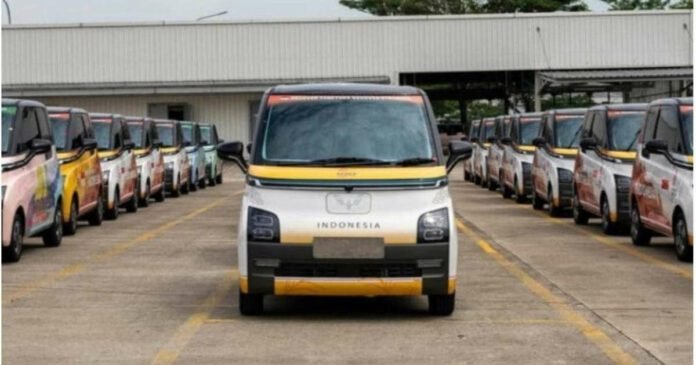
MG is developing a mini-EV to combat traffic congestion, pollution, and pollution in India’s large and mid-tier cities. It’s a rebadged Wuling Air EV that has just been announced for India. This upcoming EV is named MG Comet EV, in keeping with MG Motor India’s tradition of naming their vehicles after British fighter planes.
MG enjoys naming its vehicles after British planes. Hector was named after a 1930s British fighter biplane from WWII. Gloster is also named after a 1941 prototype jet-engine aircraft. Comet is named after a British plane that competed in the 1934 England-Australia MacRobertson Air Race.
Wuling Air EV prices in Indonesia begin at IDR 250 Million (Rs. 13.2 lakh, ex-sh). It would be slightly more expensive than the Tata Tiago EV and the recently launched Citroen eC3 if similar pricing is followed. Product positioning would be critical for MG in entering a niche market. We can see the MG Comet EV selling well if marketed as a lifestyle urban round-about vehicle for the wealthy. For most buyers, the Tata Tiago EV and Citroen eC3 will make far more sense. The Tiago EV starts at Rs. 8.69 lakh, while the eC3 starts at Rs. 11.50 lakh.
The MG Comet EV will be built on the GSEV (Global Small Electric Vehicle) platform developed by the SAIC-GM-Wuling joint venture.
credit: rushlane
Wuling Air EV is available in Indonesia in two lengths: SWB (Standard Wheel Base, 2-door, 2-seater) and LWB (Long Wheel Base, 2-door, 4-seater) 2974 mm. It is unclear which version India will receive. Regardless, the dimensions of 1505 mm width and 1631 mm height are likely to be similar. To keep costs down, MG Comet EV will most likely come with the smaller 17.3 kWh battery pack rather than the larger 26.7 kWh battery pack. The smaller battery has a range of 200 kilometres. The larger pack is said to have a range of 300 kilometres. Tata AutoComp and Gotion are likely to supply EV components for Nexon EV, which will use LFP cells.
Automatic climate control, dual 10.2″ horizontal screens for infotainment and instrumentation, a 2-spoke steering wheel, premium upholstery likely in white, an electronic parking brake, 12″ alloy wheels, a single-pane sunroof, and other features will be included. It is expected to go live in mid-2023.
Elon Musk’s Tesla could unveil the much-anticipated Model 2 hatchback at the brand’s Investor Day event on March 1, 2023. Along with the Model 2, the company is expected to unveil a new EV platform that will be the foundation for multiple future Tesla models.
Aside from what appear to be sketches of a facelifted Tesla Model 3 and Tesla Model Y, a side-profile drawing of Tesla’s smallest – and cheapest – model was shown in a preview video for the major event. The Model 3 had three doors and much smaller, squatter proportions. Although not officially confirmed, it is possible that the Tesla Model 2 will be the first vehicle to use the American company’s next-generation EV platform, codenamed Generation 3.
Musk previously stated that the platform will allow Tesla to reduce production costs, and thus vehicle prices, while also doubling its current output.
credit: hindustantimes
The wildly successful Model 3 is currently the most affordable Tesla offering available worldwide. According to InsideEVs, Musk stated that the company’s new platform will allow it to produce EVs at half the cost, implying that a mass-market, affordable hatchback is feasible.
For this price, we can expect a 50kWh battery with a range of around 400km, as the company competes internationally with the VW ID 3, Nissan Leaf, and Kia e-Niro. According to Teslarati, the new hatchback will be manufactured in China, with Tesla China advertising a job opening to prospective factory workers on a poster depicting the same nameless compact hatchback.
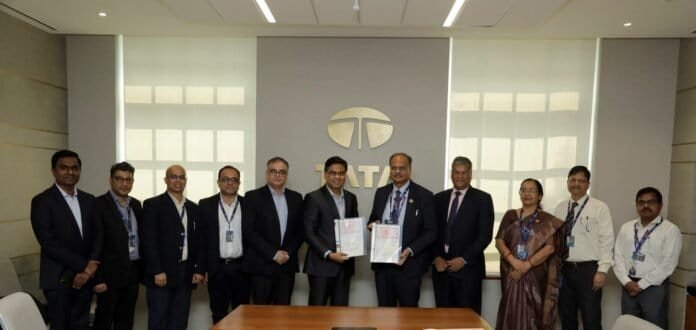
Tata Motors announced on March 1 that it has partnered with the State Bank of India (SBI) to offer “easy loan structured schemes” for the purchase of its all-new commercial electric vehicle, the Tata Ace EV. The automaker said it has signed a memorandum of understanding (MoU) with the SBI that will allow it to offer “unique financing solutions” for the Ace EV, and that it will use the public lender’s strong network to make these solutions available to customers.
“We are proud to partner with Tata Motors in an endeavour to offer attractive financing options for the Ace EV. We are confident that the new financing scheme will help individuals and MSMEs in purchasing the state-of-the-art, eco-friendly electric mini-truck,” SBI’s deputy managing director (retail – agri, SME & FI) Pravin Raghavendra said.
The collaboration with SBI, the country’s largest state-owned lender, will accelerate “efforts towards sustainable mobility and support the nation’s net-zero aspirations,” according to Rajesh Kaul, vice president, sales and marketing, commercial vehicle business, Tata Motors.
credit: mint
The Ace EV, which is described by Tata Motors as “India’s most advanced, zero-emission” commercial electric vehicle, comes with a holistic solution for hassle free e-cargo mobility and five-year comprehensive maintenance package.
According to the release, the vehicle’s supporting ecosystem includes “development and deployment of charging infrastructure,” the establishment of dedicated “electric vehicle support centres for maximum fleet uptime,” the deployment of “Tata Fleet Edge – the next-gen optimal fleet management solution,” and partnerships with the country’s leading financiers for funding.
Nitin Gadkari, Union Minister of Road, Transport and Highways, stated at the recently concluded ‘Ideas of India’ summit that hydrogen is the future of the country and that future vehicles will run on such green fuels. He also discussed the country’s transition to electric vehicles in the coming years, and how lithium-ion batteries will lead the way away from gasoline and diesel.
Nitin Gadkari stated at the summit that India imports Rs 16 lakh crore worth of fossil fuels each year.
Farmers, on the other hand, will be producing green fuel and green hydrogen very soon. Nitin Gadkari also stated that lithium-ion battery prices will fall in the future, and that India is on its way to becoming a net exporter of lithium to global markets in bulk.
credit: timesofindia
India is also working to become a major exporter of green hydrogen, with results expected as early as 2025.
Earlier in October 2022, Greenko (India’s renewable energy company) and Singapore Keppel Infrastructure signed a Memorandum of Understanding to explore further opportunities in green hydrogen exports from India. The two companies have agreed to an annual contract for the export of 2,50,000 tonnes to supply Keppel’s 600 Mw plant.
EVs are exciting always and the future of it in India has just started, in 2023 onwards we will see a lot of options than used to, thanks to companies like Hyundai, TATA, Mahindra, and others. SUVs have got insanely popular in India, around 40% of them account for them in the country, so turning them into EVs makes more sense, recently the Citroen eC3 EV was launched.
However, there are many new SUV EVs that are coming up in the next few months, here are all of them that you should keep eye on:
1. Hyundai Creta EV
credit: gaadiwaadi
Hyundai is expected to launch the Creta EV in the Indian market in 2025, with the Ioniq 5 and Kona EVs serving as the only models available until then. Hyundai will also completely localize the E-GMP platform for use in India and other global markets. Upon launch, the Creta EV could compete with the likes of the Maruti eVX EV SUV and the Seltos EV, among others. According to sources, the Creta EV will be priced between Rs 15 lakh and Rs 30 lakh when it is released.
2. Mahindra XUV800
credit: gaadiwaadi
The XUV800’s design is expected to be visually similar to the XUV700, sharing the ICE SUV’s ‘top hat’ or bodywork as well as its 2,750mm wheelbase. As a result, expect the overall silhouette to remain consistent, as hinted at in Mahindra’s teaser campaign for the EVs, where one of the SUVs looked almost identical to the XUV700. The front and rear ends of the SUV, however, are likely to change, with the grille likely to be blanked out and the bumpers and lights redesigned.
3. Maruti Suzuki eVX
credit: gaadiwaadi
The Maruti Suzuki eVX measures 4,300mm in length, 1,800mm in width, and 1,600mm in height. The boomerang-shaped split LED headlights and raised bonnet draw attention to the fascia. The electric SUV also gets a blanked-off grille and a silver skid plate to emphasize its personality.
Battery electric vehicles will account for 15% of the total powertrains available. The eVX EV’s side profile is defined by prominent creases, flared wheel arches, and dual-tone alloy wheels. The rear section features sleek LED taillights that span the width of the boot as well as a sporty coupe-like roofline.
4. Toyota Electric SUV
credit: gaadiwaadi
Toyota debuted the bZ brand last year with the introduction of the all-electric Toyota bZ4X. That vehicle, which is nearly identical to the Subaru Solterra as a result of the two companies’ collaboration, hit the market earlier this year.
The SUV concept car represents a “possible vision of the very near future” for the automaker’s EV lineup, according to a statement. Toyota did not specify a launch date but stated that the portfolio will contribute to the company’s goal of becoming carbon neutral by 2050.
5. Tata Harrier EV
credit: gaadiwaadi
Tata Motors unveiled the electric version of the Tata Harrier SUV earlier this month at the Auto Expo 2023. According to Carwale, the Tata Harrier EV could arrive in the country in 2024.
The Tata Harrier EV is said to have a 360-degree camera as well as ADAS for safety. The EV will have a blanked-off grille, as shown at the Auto Expo 2023 event. It will have a new bumper as well as a triangular-shaped headlamp cluster.
6. Tata Curvv
credit: gaadiwaadi
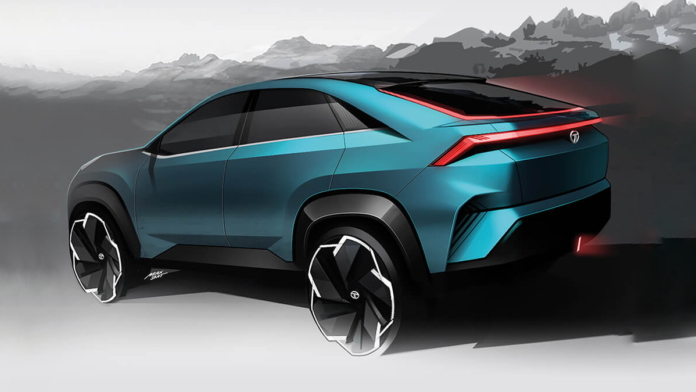
The Tata Curvv was first revealed as an electric SUV concept in April of last year, and the ICE version debuted as a concept at the Auto Expo 2023. The latter, while still a concept, is closer to production than the EV version.
At Auto Expo 2023, Tata Motors officials confirmed that the ICE Curvv will have flush-fitting door handles, a new front bumper and air dam compared to its EV sibling, new wheels, and a bench seat setup for the second row. A 10.25-inch touchscreen infotainment system, which is set to debut on the Harrier and Safari Red Dark Edition in the coming weeks, will also be available.
7. Kia Seltos EV
credit: gaadiwaadi
Given the growing popularity of the Kia Seltos SUV, there was talk of a new Electric Vehicle (EV) based on it. For a long time, Seltos fans have wished for a fully electric version. The company may launch an electric model of this car; however, no firm timeline has been provided by the company.
Xiaomi has finally announced its Xiaomi Digital Car Key feature and it was developed in collaboration between Xiaomi and BMW. A representative stated during the Xiaomi 13 series announcement event at this year’s MWC in Barcelona that Xiaomi would make its digital auto key available to owners of select BMW vehicles beginning in the second quarter of this year.
If you own a Xiaomi device as well as a BMW vehicle, you will soon be able to use the new Digital Car Key feature.
credit: arenaev
You can use the digital key to lock, unlock, and even start your vehicle. This option is useful if you need to rent your car to someone. Instead of lending your physical car key, simply share your digital car key with them. The car key is compatible with Google Wallet as well as other platforms.
The partnership with BMW represents a significant step forward for both companies. BMW is known for producing high-quality vehicles, and Xiaomi is a consumer electronics market leader. They are bringing cutting-edge technology to the automotive industry, which is constantly evolving to meet the needs of modern consumers.
One of the primary benefits of the Xiaomi smart car key is its convenience.
Instead of carrying a large set of keys, users can simply unlock their vehicles with their smartphones. This is particularly useful for people who frequently misplace their keys or forget where they’ve put them. Instead of searching for a physical key, they can easily access their vehicle using the digital auto key.
credit: arenaev
Furthermore, the Xiaomi digital auto key has improved security features. It uses encryption technology, for example, to prevent unauthorised vehicle access. This means that only the authorised user can unlock the vehicle, which reduces the risk of theft or break-ins. Furthermore, if the smartphone is lost or stolen, the digital key can be remotely deactivated, ensuring that the car remains secure.
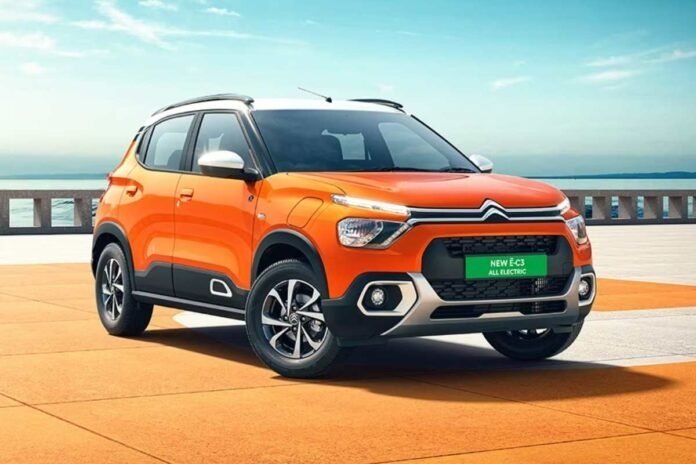
Citroen, a French automaker, has debuted its first electric vehicle in India. The E-C3 EV, which made its debut in the country earlier this year, will have a starting price of 11.50 lakh (ex-showroom). Tata Motors is the most prominent company in the affordable EV space. Tata Motors appears to have captured both the PV and CV segments with the Tiago EV, Tigor EV, and Xpres-T. Citroen eC3 must offer a lot to get a piece of this pie.
The Citroen eC3 is priced starting at Rs. 11.5 lakh (ex-showroom) for the base Live trim.
credit: hindustantimes
Feel trims with dual tone colour and the Vibe Pack are priced at Rs. 12.43 lakh. eC3 costs Rs. 5.52 lakh more with base variants and Rs. 5.23 lakh more with top-spec variants than its ICE counterpart, C3 hatchback.
Its main rival is the Tata Tiago EV, which starts at Rs. 8.69 lakh (ex-showroom) for 19.2 kWh battery pack variants, Rs. 10.19 lakh (ex-showroom) for 24 kWh variants with 3.3 kW AC charger, and Rs. 11.49 lakh (ex-showroom) for 24 kWh variants with 7.2 kW AC charger.
Tiago EV has four trim levels to choose from, whereas eC3 only has two. There are two powertrain options, as well as two charger options. Tiago EV has 7 variants in total. The eC3 has only one powertrain and two trim levels, with cosmetic options such as dual tone and Vibe Pack. It is immediately apparent that Tiago EV has more options to choose from.