


3EV Industries raises ₹120 crore led by Mahanagar Gas. Revenue surges 207% to ₹54.7 crore as Bengaluru EV maker doubles vehicle sales in last-mile logistics. Bengaluru’s 3EV Industries just secured ₹120 crore in Series A funding led by Mahanagar Gas Limited, marking the city gas distributor’s first strategic bet on electric mobility. With vehicle sales nearly doubling and revenue surging 207%, this electric three-wheeler manufacturer is proving that India’s last-mile logistics revolution has found its champion.
Table of Contents
3EV Industries: Mahanagar Gas Bets Big on Electric Future
The investment breakdown tells a strategic story. MGL contributed ₹96 crore—the lion’s share signaling serious conviction in 3EV’s Battery-as-a-Service model. Thackersey Group added ₹10.46 crore through Bhishma Realty Limited, Equentis Angel Fund invested ₹8.15 crore, with the remaining ₹4.82 crore from high-net-worth individuals and family offices.
This marks MGL’s maiden voyage into EV territory—a significant shift for a company traditionally focused on natural gas distribution. The move reflects broader recognition that India’s transportation electrification, particularly in commercial segments, represents unstoppable momentum.
The Numbers That Caught Investors’ Attention
3EV’s growth trajectory justified the investor confidence. Vehicle sales nearly doubled from 438 units in FY24 to a projected 834 units in FY25. More impressively, revenue exploded from ₹17.8 crore to ₹54.7 crore—a 207% increase demonstrating both volume growth and improved unit economics.
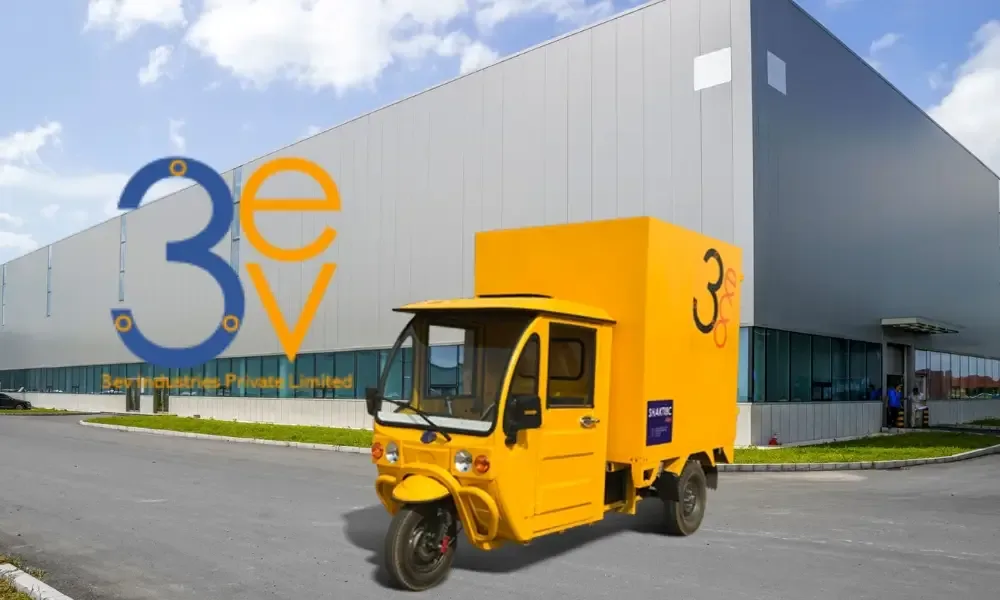
For FY26, the company targets ₹65 crore revenue with positive EBITDA margins—the holy grail metric proving the business model works without endless cash burn. Founded in 2019 by Peter Hartmut and CG Krishna Bhupathi, 3EV manufactures seven models ranging from cargo vehicles to passenger autos and micro-mobility rickshaws focused on hyperlocal logistics.
The 3C Division: Charging, Care, Conversions
Fresh capital powers the launch of 3EV’s 3C vertical—a strategic move addressing the complete EV ecosystem. Charging infrastructure eliminates range anxiety for commercial operators. Care services ensure uptime-critical for businesses where vehicle downtime equals revenue loss. Conversions offer pathways for existing ICE fleet operators to transition gradually.
This ecosystem approach mirrors successful strategies in India’s expanding EV infrastructure, where comprehensive support networks prove as important as the vehicles themselves. As the government pushes 39,485 charging stations nationwide, private players like 3EV building complementary infrastructure accelerate adoption.
Battery-as-a-Service: The Secret Weapon
3EV’s BaaS platform deserves special attention. By separating battery ownership from vehicle ownership, the model slashes upfront costs—the biggest barrier for price-sensitive commercial buyers. Combined with integrated financing and aftermarket support, 3EV creates a turnkey solution where operators simply pay per kilometer rather than worrying about battery degradation or replacement costs.
“We believe 3ev’s unique combination of robust vehicle design, strong customer testimonials and an innovative battery-as-a-service model positions it to play a pivotal role in driving EV adoption across urban markets,” said Manas Das, Vice President at Mahanagar Gas.
Solar Cold Chain and Regenerative Braking Research
The funding accelerates R&D in regenerative braking systems, advanced materials, and solar-enabled cold chain EV technologies. This last focus area addresses a critical market need—temperature-controlled last-mile delivery for pharmaceuticals, food, and perishables. Solar-powered refrigeration eliminates range-draining battery usage, making electric cold chain logistics economically viable.
As India’s EV market races toward 30% penetration by 2030, specialized applications like cold chain logistics represent untapped opportunities where purpose-built solutions command premium margins.
The L5 Three-Wheeler Market Opportunity
3EV competes in India’s L5 electric three-wheeler segment projected to reach $18.7 billion by 2035 with 60%+ penetration in overall three-wheeler sales. Key competitors include Euler Motors, Piaggio, and Kinetic Green, but the market remains fragmented with no dominant player—creating opportunities for well-funded, technology-focused manufacturers.
As manufacturers like Mahindra scale commercial EV production, the entire ecosystem benefits from improved component availability, charging infrastructure, and consumer acceptance. 3EV’s focus on last-mile logistics positions it perfectly as e-commerce and quick-commerce demand explodes across Indian cities.
With ₹120 crore firepower, robust growth metrics, and comprehensive ecosystem approach, 3EV Industries just positioned itself as a serious player in India’s electric mobility transformation.

