

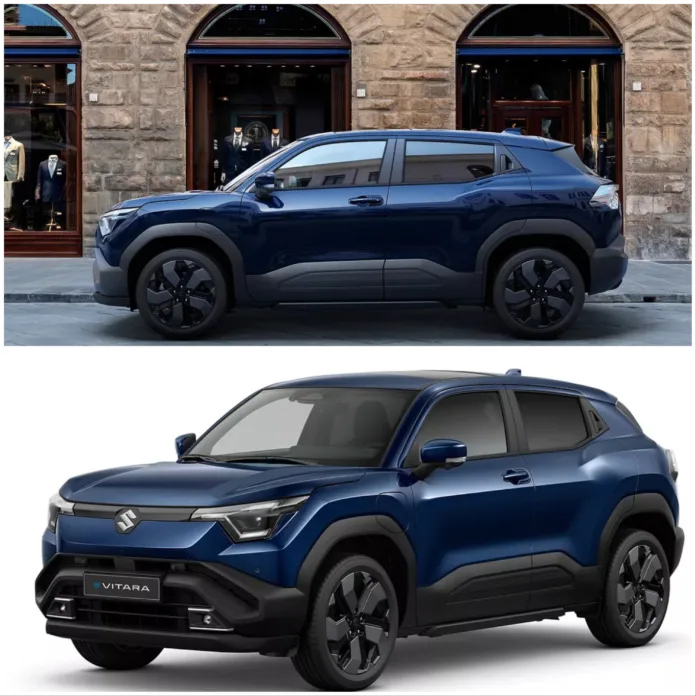

India’s automotive giant Maruti Suzuki is finally entering the electric vehicle arena with its much-anticipated eVitara SUV, promising to reshape the country’s EV landscape in ways few manufacturers can match.
Table of Contents

The Wait Is Almost Over
After years of watching rivals dominate the electric space, Maruti Suzuki has revealed that the eVitara will hit Indian roads in March 2025. This isn’t just another EV launch—it’s a potential watershed moment for India’s electric mobility revolution.
The eVitara comes equipped with two battery options: a 49kWh pack offering 400km range and a robust 61kWh variant promising 500km on a single charge. These aren’t just numbers on paper; they represent Maruti’s understanding of Indian consumers’ range anxiety concerns.
Why This Launch Matters
Maruti commands nearly 42% of India’s passenger vehicle market. When a player this dominant enters the EV segment, the entire industry takes notice. The company’s extensive dealership network of over 3,000 outlets could democratize EV access across tier-2 and tier-3 cities, where electric vehicle adoption remains nascent.
According to Forbes India, industry experts believe the eVitara could catalyze mass-market EV acceptance, particularly if Maruti maintains its reputation for competitive pricing and low maintenance costs.
The Competition Heats Up
The eVitara enters a crowded battlefield. Tata Motors leads India’s EV charge with popular models like the Nexon EV and Punch EV. Mahindra’s XUV400 and MG’s ZS EV have carved their niches. But Maruti’s brand loyalty runs deep—millions trust the badge for reliability and affordability.
The pricing strategy remains crucial. If Maruti positions the eVitara between ₹15-20 lakhs, it could trigger a price war that ultimately benefits consumers. Recent government subsidies and incentives for EVs further sweeten the proposition.
The Road Ahead
Maruti’s EV journey doesn’t end with the eVitara. The company has announced plans to invest ₹1.35 lakh crore in EV development by 2030, signaling long-term commitment to electrification.
As India races toward its ambitious target of 30% EV penetration by 2030, Maruti’s entry could be the catalyst that transforms electric mobility from niche to mainstream. The eVitara isn’t just a vehicle—it’s potentially the spark that ignites India’s EV revolution.
The countdown to March 2025 has begun.

