

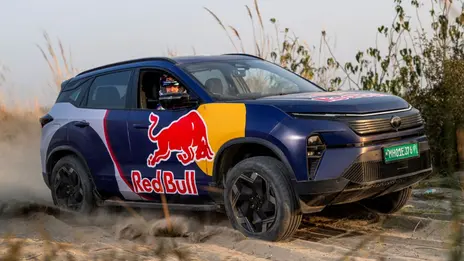

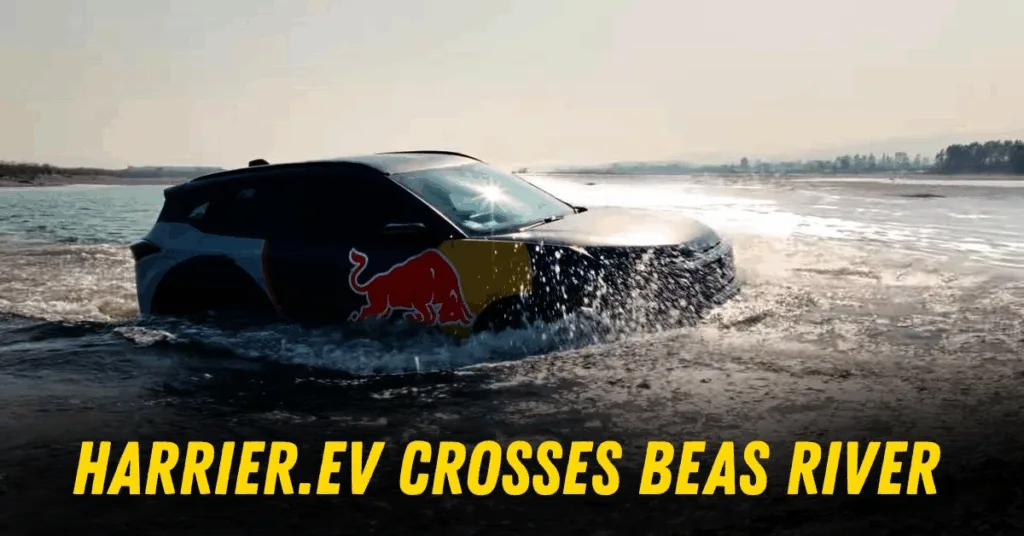
Tata Harrier EV proved its mettle by conquering the Beas River during Red Bull’s extreme challenge, shattering EV capability myths.
Electric vehicles face persistent skepticism about real-world toughness. Critics dismiss them as fragile technology unsuited for India’s demanding conditions. Tata Motors just delivered a spectacular rebuttal. The Tata Harrier EV’s successful navigation of the Beas River during Red Bull’s extreme challenge demonstrates that electric powertrains can handle punishing terrain conventional SUVs struggle with.
Table of Contents
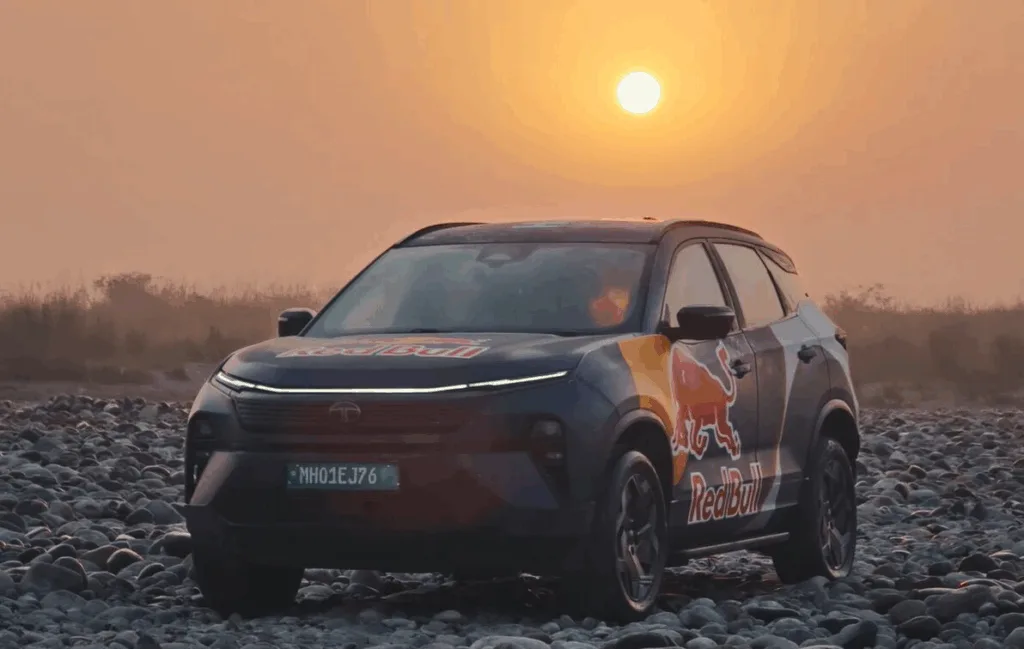
Beyond City Limits
The Red Bull extreme challenge isn’t a marketing stunt—it’s a genuine test of vehicle capability, durability, and engineering robustness. River crossings demand precise throttle control, waterproof electrical systems, adequate ground clearance, and powerful torque delivery. The Harrier EV’s dual-motor setup provided instant torque crucial for maintaining momentum through flowing water, while its sophisticated battery protection systems prevented damage from submersion.
This accomplishment directly addresses Indian buyers’ practical concerns. If the Harrier EV can ford rivers, it can certainly handle monsoon flooding, rural roads, and challenging terrain that defines much of India’s geography. For potential buyers worried about EV fragility, this extreme challenge provides reassurance that modern electric SUVs are genuinely tough.
Engineering Confidence
Tata’s willingness to subject the Harrier EV to such punishing conditions reflects confidence in their engineering. Battery placement, sealing, and thermal management systems must be exceptionally robust to survive water crossings without catastrophic failure. The successful completion validates years of development focused on making EVs suitable for Indian conditions rather than simply adapting global platforms.
The growing capability of Indian-developed EVs proves domestic manufacturers understand local requirements intimately—something foreign brands often miss despite superior technology. Ground clearance priorities, waterproofing standards, and durability expectations differ dramatically between India and Western markets.
Marketing Meets Substance
Extreme challenges provide spectacular marketing content, but they serve practical purposes too. Engineers gather real-world performance data under stress conditions, identifying potential weaknesses before customer vehicles encounter similar situations. The publicity benefits are bonuses—the primary value lies in validation and continuous improvement.
For Tata’s marketing team, footage of the Harrier EV conquering the Beas River is worth more than conventional advertising. It tells potential buyers: this isn’t a fragile tech experiment; it’s a capable SUV that happens to be electric.
Changing Perceptions
India’s EV adoption journey requires overcoming deep-seated perceptions about electric vehicle limitations. Demonstrations like the Red Bull extreme challenge accelerate this mindset shift, proving that EVs aren’t compromised alternatives but genuinely capable vehicles suited for diverse Indian conditions.
As more manufacturers showcase EV toughness through extreme testing, public confidence grows. The Harrier EV fording the Beas River isn’t just one vehicle’s achievement—it’s a milestone in India’s electric mobility narrative, proving that sustainable transportation needn’t sacrifice capability or adventure.
Electric vehicles conquering rivers today will conquer Indian highways tomorrow.

