

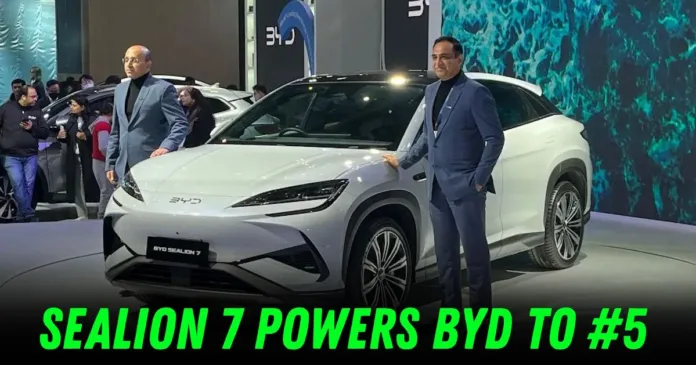

BYD Sealion India is rewriting its growth story. The Chinese automaker has surged to become India’s fifth-largest EV manufacturer by retail sales, driven largely by aggressive expansion and the premium Sealion 7 coupe-SUV’s strong market reception.
The numbers tell a compelling tale. BYD India sold 2,831 EVs in 2024, registering impressive 41% year-on-year growth, with October marking a breakthrough month delivering 395 units. This momentum catapulted BYD past established competitors, securing nearly 3% of India’s electric passenger vehicle market.
Table of Contents
BYD Sealion Premium Positioning Pays Dividends
The Sealion 7 represents BYD’s most ambitious Indian offering yet. Built on BYD’s e-Platform 3.0 Evo with an 82.5 kWh battery pack, the Premium variant delivers 313 PS and 567 km range, while the Performance AWD variant unleashes 530 PS with 542 km range.
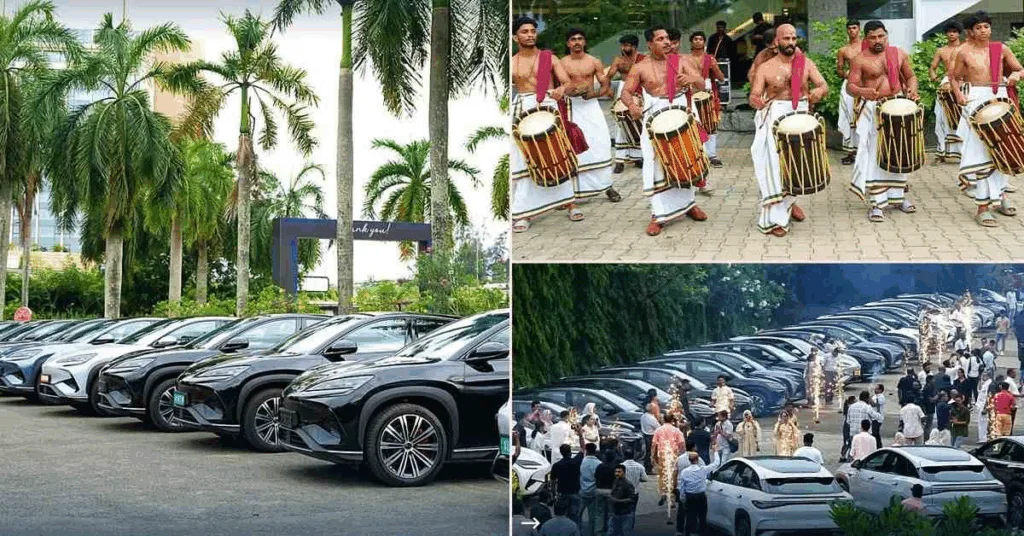
Early response exceeded expectations. EVM Southcoast BYD delivered 51 Sealion 7 units in a single day, securing an India Book of Records entry for premium EV deliveries. This validates BYD’s strategy of targeting affluent buyers seeking Tesla Model Y alternatives at competitive pricing.
Aggressive Network Expansion
Infrastructure development underpins BYD’s growth ambitions. The company expanded its dealership network from 27 to 40 outlets by January 2025, penetrating tier-2 cities and improving service accessibility. The recently inaugurated Karnal showroom represents North India’s largest BYD facility.
This expansion mirrors broader Indian EV infrastructure development, where charging networks and dealer support increasingly determine purchase decisions. BYD’s partnership with Relux Electric for charging infrastructure addresses range anxiety concerns.
Competitive Landscape Intensifies
BYD faces mounting competition from domestic manufacturers aggressively expanding electric portfolios. Tata Motors maintains market leadership, while MG and Mahindra battle for runner-up positions. Hyundai’s entry further fragments market share.
However, BYD’s current lineup spanning ₹25 lakh to ₹49 lakh targets premium buyers differently from mass-market competitors. The anticipated Atto 2 launch could address affordable segments, potentially doubling addressable market size.
Future Growth Trajectory
BYD’s trajectory depends on localization progress. Currently assembling Atto 3 from kits while importing Seal and Sealion 7 as CBUs, the company faces regulatory hurdles establishing full manufacturing operations. Tariff reductions through increased local assembly could significantly boost competitiveness.
The broader Indian EV policy environment remains supportive, with favorable taxation encouraging premium segment growth where BYD concentrates efforts.
FAQs:
What drove BYD to become India’s fifth-largest EV maker?
BYD achieved 41% year-on-year growth in 2024 through aggressive dealership expansion (40 outlets), premium product positioning, and strong Sealion 7 reception securing nearly 3% market share.
What makes the BYD Sealion 7 special?
The Sealion 7 offers 567 km range, 313-530 PS power output depending on variant, e-Platform 3.0 Evo architecture, and premium features at competitive pricing versus European luxury EVs.
How many dealerships does BYD India operate?
BYD expanded from 27 to 40 dealerships by January 2025, covering 38 cities nationwide with continued expansion planned throughout the year.

