

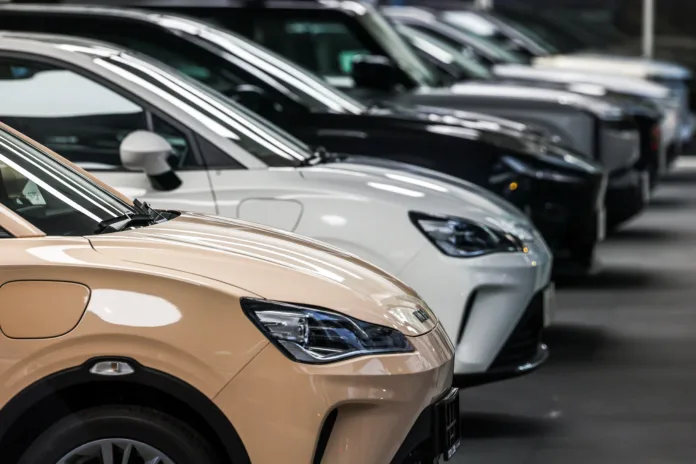

In a strategic move to prevent domestic market saturation, Thailand made changes to its electric vehicle incentive policy on Tuesday in order to encourage exports and head off a supply glut at home, which could have an impact on the overall car market, the country’s Board of Investment said.
Table of Contents
Thailand EV Policy Adjustment Overview
| Aspect | Details |
|---|---|
| Announcement Date | November 25, 2025 |
| Key Change | Export multiplier introduced |
| Export Credit | 1.5 units per exported EV |
| Previous Ratio | 1:1 (import to local production) |
| 2025 Export Target | 12,500 units |
| 2026 Export Target | 52,000 units |
| Total Investment | $4+ billion (Chinese firms) |
| Chinese Market Share | 70%+ of EV sales |
Export Incentive Mechanism
Every EV produced for export will now count as 1.5 units towards a manufacturer’s local production obligations, with this change designed to incentivize automakers to increase exports and prevent domestic market oversupply.
The Thai government is easing requirements for companies participating in the EV 3.0 and EV 3.5 schemes with the latest revisions, where previously it counted only the domestic sales of locally produced EVs for offsetting EVs they imported as Completely Built-Up Units (CBUs), now it will consider exports as well.
Previous Policy Adjustments
In July, the agency revised its EV policy to give carmakers more flexibility to meet production requirements and boost exports. The latest November adjustment builds on these earlier modifications, further prioritizing export-oriented production.
The EV Board already extended the timeframe for the compensatory local production once, in December last year, when it also said that participating companies can re-export unsold CBU EVs to reduce this quota.
Thailand’s Auto Industry Context
Southeast Asia’s second-largest economy is the regional auto production and export hub for top carmakers like Toyota and Honda, with Chinese brands dominating the EV segment, with a combined share of over 70% of sales.
Thailand’s EV policies, which also include tax breaks and price subsidies, have drawn more than $4 billion in investments, including from Chinese firms like BYD.
Oversupply Concerns Driving Changes
Such steps not only reduce pressure on these automakers but also help the industry avoid an oversupply situation, which could lead to heavy discounting and price wars.
Authorities are wary that if all manufacturers push to produce but hold back from exporting, the domestic market could face an oversupply, sparking aggressive price competition.
“Consumers may benefit from lower prices in the short term, but in the long term a price war is not healthy for the industry. Allowing export credits helps stabilize the market,” said Pongsak.
Production Capacity Exceeds Demand
The Thai market has a total demand of around 600,000 EVs, while total production capacity of seven EV makers in Thailand stands at 490,000 units, meaning if factories run at full capacity, this will drive production to exceed 60% of the demand.
This capacity-demand mismatch highlights the urgent need for export mechanisms to absorb surplus production and maintain market stability.
Strong EV Sales Growth Despite Concerns
While 70,582 electric cars were sold in the whole of 2024, this year 57,289 electric cars have already been sold in the first half, with the number up 15% compared to the first half of 2024.
In the first seven months of 2025, EV registrations reached 66,000 units, almost equaling the full-year total of 67,000 units in 2024, with EVs now representing 17.7% of the total market, up sharply from 11.4% in 2024.
Government Leadership Perspective
“The revisions approved today will allow greater flexibility and help Thailand, which is already the leader in the region’s automotive manufacturing industry, to become a key EV production base,” said Narit Therdsteerasukdi, the Secretary General of the Thailand Board of Investment (BOI) and the secretary of the EV Board.
BYD’s Export Strategy
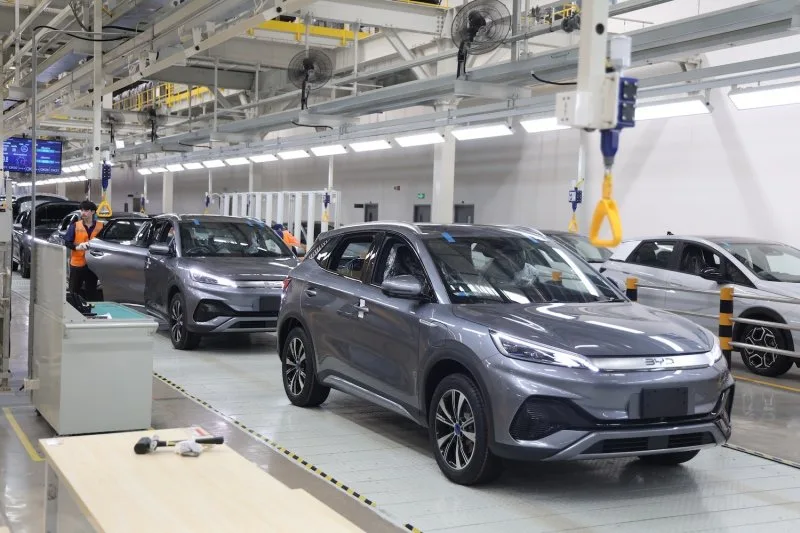
To meet offset obligations on time, BYD believes right-hand drive exports alone are insufficient, with the parent company in China adjusting its plans to add left-hand drive production in Thailand and seeking new markets to absorb exports, with vehicles from BYD’s Rayong factory beginning to ship abroad from September 2025.
Additional Policy Flexibilities
In addition to including exports in the local EV offset quota, the EV board has extended the registration deadline for these EVs by one month and plans to strengthen subsidy payments.
These complementary measures provide manufacturers with multiple pathways to comply with local production requirements while managing inventory levels.
Chinese Dominance Creates Challenges
Thailand, often called the “Detroit of Southeast Asia,” has attracted over $3 billion in investments from Chinese EV manufacturers, lured by tax breaks and subsidies aimed at boosting local production.
The influx of 18 Chinese EV brands—double last year’s count—intensifies competition and risks oversupply, making the export-focused policy adjustments critical for market stability.
Market Balance Imperative
“This is a good direction—if exports weren’t allowed, the entire output would flood the domestic market, triggering fierce competition and distorting the market structure,” the source said.
The policy revision represents Thailand’s pragmatic approach to balancing ambitious EV production goals with realistic domestic demand constraints, positioning the country as a regional EV export hub while protecting local market health.
For comprehensive coverage of Southeast Asia’s EV policy developments and market dynamics, visit India EV News. For Thailand’s official investment information, explore Board of Investment Thailand.

