


The Solid-State Battery revolution that promised 800-mile ranges and 10-minute charging is finally moving from lab prototypes to your driveway—and it’s happening faster than anyone expected.
For over a decade, solid-state batteries have been the “next big thing” in electric vehicles—always just a few years away. But 2025 changed everything. Major automakers are now road-testing prototypes, building production lines, and setting firm launch dates. The future of EVs isn’t coming anymore. It’s arrived.
Table of Contents

What Makes Solid-State Batteries Revolutionary?
Think of today’s lithium-ion batteries as using a liquid highway for electricity to flow. Solid-state batteries replace that flammable liquid with a solid material—creating a safer, more efficient, and dramatically more powerful energy storage system.
The Game-Changing Benefits:
| Advantage | Impact |
|---|---|
| Extended Range | 620-800 miles per charge (vs. 300-400 today) |
| Faster Charging | 10-18 minutes to 80% charge |
| Superior Safety | Non-flammable solid electrolyte reduces fire risk |
| Extreme Weather Performance | Retains 72%+ capacity at -22°F (vs. 60% for liquid) |
| Lighter Weight | Higher energy density up to 450 Wh/kg |
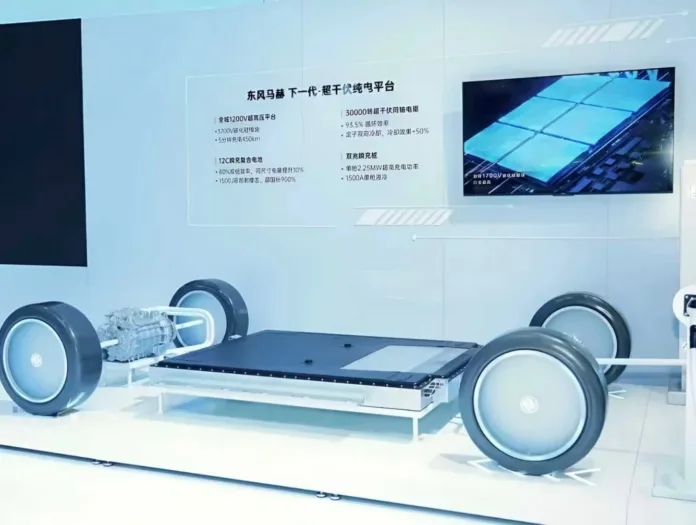
Chinese automaker Dongfeng recently announced its solid-state EVs will arrive in September 2026 with batteries featuring 350 Wh/kg energy density, capable of reaching 621 miles on a full charge—nearly double what most EVs achieve today.
Who’s Racing to Market First?
Dongfeng: The Surprise Frontrunner
Dongfeng Motor Corporation has a 0.2GWh pilot production line already established and operational, positioning them to deploy solid-state battery EVs by September 2026. Their battery uses a multi-component layout with a high-capacity ternary cathode, silicon-carbon anode, and oxide polymer composite solid electrolyte.
The Chinese automaker tested their battery in extreme conditions: at temperatures as low as -22°F, it retained more than 72% of its capacity compared to 60% for liquid-state batteries, and functioned safely up to 266°F.
Mercedes-Benz: Luxury Meets Innovation
Mercedes-Benz began road testing solid-state battery vehicles in February 2025, partnering with Factorial Energy to develop lithium-metal batteries. The results? Spectacular. A prototype EQS sedan drove 749 miles on a single charge—enough to travel from Germany to Sweden with 85 miles remaining.
The German automaker expects their solid-state technology to increase energy density up to 450 Wh/kg at the cell level, enabling 25% longer range while reducing battery weight.
Toyota: Patent Powerhouse
Toyota holds approximately 1,700 patents related to solid-state battery technology, with over 1,500 active patents—more than any competitor. The Japanese automaker announced it developed a solid-state battery capable of charging from 10% to 80% in just 10 minutes while delivering 620 miles of range, with mass production expected in 2027 or 2028.
Stellantis & Dodge
Stellantis plans to test Factorial Energy’s solid-state batteries in a fleet of Dodge Charger Daytona EVs in 2026, with batteries capable of charging from 15% to 90% in just 18 minutes.
Volkswagen’s Motorcycle Gambit
Volkswagen and QuantumScape unveiled a solid-state battery in a prototype Ducati V21L race bike at IAA Mobility 2025, delivering 844 watt-hours per liter and charging from 10% to 80% in just over 12 minutes.
Timeline: When Can You Buy One?
| Year | Milestone |
|---|---|
| 2025 | Road testing phase (Mercedes, BMW, Nissan) |
| 2026 | First production models (Dongfeng, Stellantis demos) |
| 2027-2028 | Mass production begins (Toyota, Samsung SDI) |
| 2029 | Wide availability (Nissan, cost targeting $75/kWh) |
| 2030 | Projected 40% of EV batteries worldwide |
The Challenge: Making Them Affordable
Here’s the reality check: solid-state batteries currently cost up to 2.8 times more than legacy liquid-electrolyte lithium-ion packs, primarily due to expensive sulfide materials and low production yields.
But history suggests this will change rapidly. Lithium-ion battery prices plummeted from $7,500 per kWh in 1991 to around $115 per kWh by 2025. Nissan aims to reduce solid-state battery costs to $75 per kWh by 2028—low enough to make EVs cheaper than gasoline vehicles.
Why China Might Not Dominate This Time
QuantumScape CEO Siva Sivaram noted that eliminating graphite anodes in solid-state batteries counters one of China’s strengths in EV batteries, potentially freeing manufacturers from China’s control of the graphite supply chain.
This could reshape the global EV battery landscape, giving Western and Japanese manufacturers a competitive edge.
What This Means for You
Should you wait to buy an EV? That depends on your timeline:
- Need a car in 2025? Current EVs are excellent, with prices dropping and charging networks expanding.
- Can wait until late 2026? You might access the first solid-state models from Dongfeng or demonstration Stellantis vehicles.
- Looking at 2027-2028? This is the sweet spot for mass-market solid-state EVs with mature technology.
The solid-state revolution solves the three biggest EV concerns: range anxiety, charging time, and safety. An 800-mile range with 10-minute charging makes EVs objectively better than gasoline cars for most drivers.
The age of compromise is ending. The age of superior electric vehicles is beginning.

