

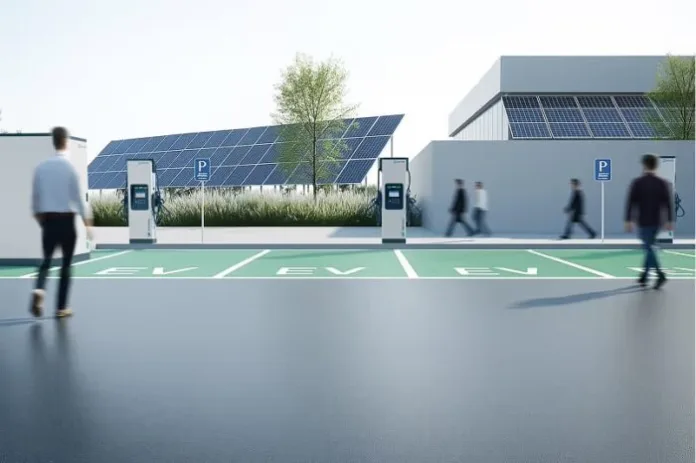

India’s EV charging infrastructure is leaping from chaotic to cutting-edge—and these five breakthroughs are making it happen.
5 Game-Changing Innovations, Remember when finding a working EV charger in India felt like a treasure hunt? Those frustrating days are rapidly ending. As India races toward its ambitious goal of 30% EV adoption by 2030, the charging ecosystem has transformed from isolated charging points into an intelligent, interconnected network that’s setting global standards.
Table of Contents
Here are the 5 Game-Changing Innovations how India powers its electric future.
1. Lightning-Fast Charging: Minutes, Not Hours
The Problem: Range anxiety has been the silent killer of EV adoption. Who wants to wait hours for a charge on a highway trip?
The Solution: High-power fast charging technology is slashing charging times from hours to mere minutes, making long-distance highway travel genuinely practical for EV drivers.
| Innovation Highlight | Details |
|---|---|
| Exicom Harmony Direct 2.0 | Up to 400 kW charging power |
| Key Feature | Predictive maintenance with modular design |
| Capability | Simultaneous fast charging of multiple vehicles |
| Impact | Supports both urban and highway charging sites |
Multiple Indian and global manufacturers are now developing modular, battery-backed fast chargers that prioritize grid resilience alongside lightning-speed performance. This isn’t just convenience—it’s the foundation for mass EV adoption across India’s vast landscape.
2. Grid-Resilient Charging: Solar Meets Smart Storage
India’s grid can be unpredictable. Smart innovators are solving this with hybrid solutions that don’t just rely on grid power.
Breakthrough Example: India’s first solar-powered EV charging hub near Bengaluru Airport features a 45 kWp rooftop solar array integrated with a 100 kWh battery system, enabling 24/7 charging across 23 points while reducing pressure on the local grid.
The genius? These stations harvest maximum solar energy during daylight and deploy stored power during nighttime or peak demand periods. It’s sustainability meeting practicality.
Meanwhile, Fortum’s Charge & Drive India piloted a load balancing project in New Delhi that intelligently modulates EV charging demand to match available supply from local utilities. Think of it as a smart traffic controller for electricity flow.
3. Remote Monitoring: Eyes Everywhere, Always
Gone are the days of arriving at a charger only to discover it’s been broken for weeks.
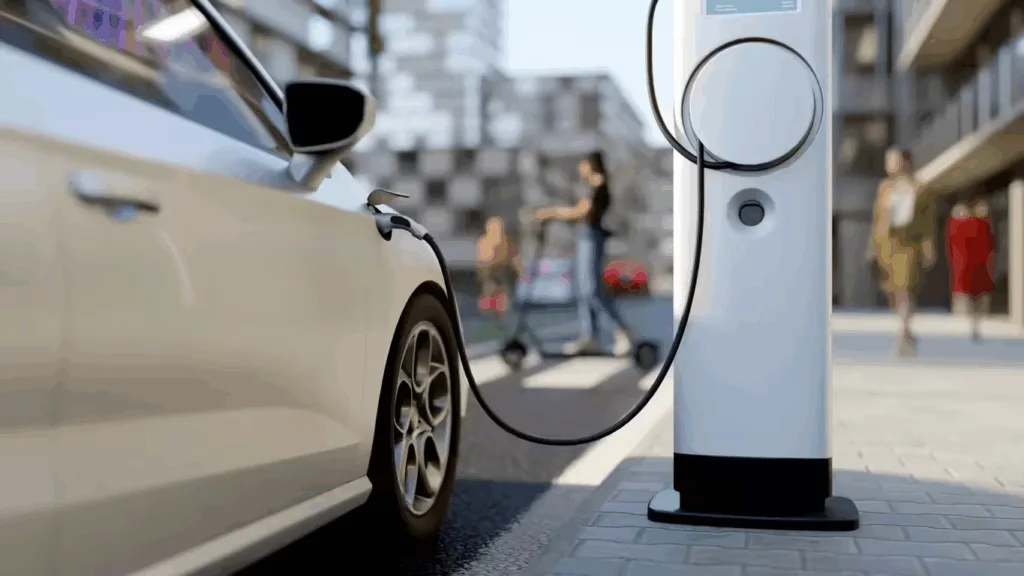
Major players like ChargeZone and Bolt.Earth have deployed cloud-based dashboards and IoT-enabled technology, allowing operators to monitor charger status, energy consumption, and uptime from anywhere in real-time.
Real-World Benefits:
- Proactive fault detection before users are affected
- Predictive maintenance reducing unexpected downtime
- Remote troubleshooting slashing operational costs
- Data-driven insights optimizing network performance
Remote monitoring has become the backbone of reliable, efficient, and customer-friendly EV infrastructure—ensuring you’ll actually find a working charger when you need one.
4. Interoperability: One App to Rule Them All
The Old Nightmare: Different apps for different networks. Incompatible connectors. Payment chaos. Frustration everywhere.
The New Reality: Platforms like Tata Power EZ Charge, ChargeZone, Glida, and Bolt.Earth are adopting open standards such as OCPP and ISO 15118 to enable seamless communication across charging networks.
This standardization across hardware, communication protocols, and payment systems is transforming India’s fragmented charging landscape into a unified national grid. No more juggling five different apps or wondering if your connector will fit.
5. Connected User Experience: Smart Apps for Smart Drivers
The best technology is invisible—it just works.
JSW MG Motor India’s eHub app exemplifies this user-centric revolution by integrating station discovery, live updates, navigation, and payments into a single platform, providing access to over 12,500 fast chargers through partnerships with 33 operators.
What Makes These Apps Game-Changing:
- Real-time charger availability and functionality verification
- Intelligent route planning with charging stops
- Seamless digital payments (no more carrying multiple cards)
- Live navigation to the nearest available charger
Since launch, the eHub app has crossed 100,000 downloads—testament to growing demand for integrated charging solutions among Indian EV owners.
The Road Ahead: From Catching Up to Setting Standards
These innovations represent a significant leap in how India is building its EV future, balancing speed, reliability, intelligence, and user experience.
India isn’t just playing catch-up anymore. With these five technological pillars—fast charging, grid resilience, remote monitoring, interoperability, and connected experiences—the country is building a charging ecosystem that rivals the world’s best.
The message for EV skeptics? Range anxiety, charging uncertainty, and infrastructure gaps are rapidly becoming yesterday’s problems. India’s charging revolution is here, and it’s electric in every sense of the word.

