

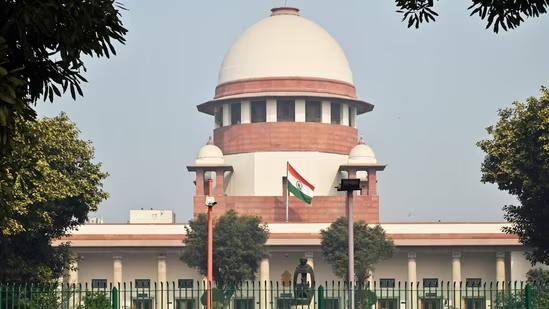

Ban on Luxury Cars, Imagine driving down Mumbai’s Marine Drive in a Mercedes S-Class when suddenly you realize your beloved luxury sedan might become illegal. Sounds absurd? The Supreme Court of India just proposed exactly that—a phased ban on high-end petrol and diesel vehicles to jumpstart the nation’s electric vehicle revolution.
In a landmark hearing on November 13, 2025, India’s apex court didn’t just nudge the government toward electric mobility—it threw down the gauntlet with a bold suggestion that could reshape the entire automotive landscape. And surprisingly, their logic is rock-solid.
Table of Contents
Why Target the Rich First?
Justice Surya Kant, leading the bench with Justice Joymalya Bagchi, posed a simple yet powerful question: Why not start with what affects the fewest people but sends the strongest message?
“Very small part of the Indian population can afford such vehicles. Just think of imposing a ban on the very high-end vehicles first,” Justice Kant remarked during the PIL hearing.
The brilliance of this approach lies in its surgical precision. By targeting luxury petrol and diesel cars—typically used by VIPs and large corporations—the policy would not impact the common public while sending a powerful message about India’s environmental priorities.
Translation: If billionaires and politicians can switch to electric, what’s your excuse?
The Court’s Three-Pronged Strategy
The Supreme Court’s proposal includes several strategic elements that could reshape India’s automotive transition:
| Strategy Component | Details | Impact Timeline |
|---|---|---|
| Phased Implementation | Start with premium VIP and corporate vehicles | Immediate |
| Pilot Projects | Launch test programs in major metropolitan cities | 4-12 months |
| Policy Review | Comprehensive audit of NEMMP and NITI Aayog frameworks | 4 weeks |
| Multi-Ministry Action | 13 government departments coordinating EV adoption | Ongoing |
Attorney General R. Venkataramani informed the court that the government supports the idea and that 13 ministries are working together on EV adoption measures. When 13 ministries coordinate on anything in India, you know something serious is brewing.
The “Gas Guzzlers” Argument
Here’s where the Court got deliciously specific. Justice Kant noted that the market already offers high-end electric cars that can match the comfort and performance of conventional fuel-powered luxury vehicles.
Think about it: Mercedes EQS, BMW iX, Audi e-tron, Porsche Taycan, and even Tesla’s Model S Plaid are already prowling Indian roads. These aren’t glorified golf carts—they’re technological marvels offering:
✓ 0-100 km/h in under 4 seconds (faster than most supercars)
✓ Over 500 km real-world range (no more range anxiety)
✓ Luxury interiors that make traditional cars look outdated
✓ Performance that embarrasses conventional “gas guzzlers”
The Court’s message is clear: The technology exists. The alternatives are available. The only thing missing is political will.
The Infrastructure Chicken-and-Egg Problem
Advocate Prashant Bhushan, representing the petitioners, highlighted that while EV prices have reduced over time, inadequate charging infrastructure remains the key barrier.
It’s the classic dilemma: We need more EVs to justify building charging stations, but people won’t buy EVs without charging stations.
The Court’s response was refreshingly pragmatic: “These are market forces related issues. If electric vehicles are introduced, charging stations will also be there. Existing petrol stations can be provided”.
In other words: Build it, and they will charge.
The bench believes that market demand, not just regulation, will fuel India’s electric mobility revolution. Start with luxury EVs creating demand in premium areas, and the infrastructure will follow the money—literally.
Who Wins and Who Loses?
The Winners:
Environment: Fewer luxury ICE vehicles mean significant emission reductions. A single Range Rover produces more CO2 annually than three average sedans combined.
EV Manufacturers: Mercedes, BMW, Audi, Tesla, and even homegrown brands like Tata’s luxury EV division stand to gain massive market share.
Charging Infrastructure Companies: A guaranteed customer base of wealthy early adopters makes investment viable.
Common Citizens: Luxury car owners subsidize the charging infrastructure that everyone else will eventually use.
The Losers:
Traditional Luxury Car Dealerships: Bentley, Rolls-Royce, and Lamborghini dealers might need to pivot—fast.
Petrol Pump Owners: Though the Court suggested retrofitting existing stations, the writing’s on the wall.
Status Symbol Seekers: That roaring V8 won’t impress anyone when it’s literally illegal.
The Policy Review Time Bomb
Here’s the kicker: Noting that some policies are more than five years old, Justices Kant and Bagchi suggested a re-evaluation of existing frameworks, including the NEMMP.
The National Electric Mobility Mission Plan dates back to 2012—when smartphones had physical keyboards and Tesla was a quirky startup. The Supreme Court has scheduled the next hearing in four weeks to assess the report and deliberate on the proposal further.
That’s government-speak for: “Get your act together, or we’ll make you.”
Why This Actually Matters
The move signals judicial impatience with the slow pace of EV infrastructure roll-out. When the Supreme Court starts making policy suggestions this specific, it’s not a gentle nudge—it’s a judicial sledgehammer.
India’s EV adoption has been frustratingly slow despite ambitious targets. Passenger EV sales more than doubling to 15,329 units in September compared to the previous year sounds impressive until you realize India sells over 300,000 vehicles monthly.
We’re nowhere near the tipping point. The Court knows it. The government knows it. And now, luxury car owners might have to lead the charge—literally.
The Bigger Question Nobody’s Asking
If India bans luxury ICE vehicles, what happens to:
- Imported classic cars and collector vehicles?
- High-performance sports cars with no electric equivalents?
- The massive pre-owned luxury car market?
- Automotive heritage and enthusiast culture?
These aren’t trivial concerns. Car culture matters. But so does breathable air.
What Happens Next?
The Supreme Court has directed the Centre to file a detailed report within four weeks, after which the matter will be heard again.
The government can:
- Embrace the proposal and become EV transition heroes
- Delay and face judicial wrath
- Propose a watered-down version that satisfies nobody
My money’s on option three, followed eventually by option one after public pressure.
The Bottom Line: Leading from the Top
By targeting luxury fossil-fuel cars first, the court’s approach aims to minimize social impact while sending a strong signal to both auto manufacturers and consumers.
It’s progressive policy with conservative implementation—start where it hurts the least but matters the most. If India’s elite can’t make this sacrifice for the environment, what hope do we have for mass adoption?
The Supreme Court just called the bluff of every politician, bureaucrat, and corporate executive who claims to care about climate change while cruising in a diesel Land Cruiser.
The message is unmistakable: The electric future isn’t coming someday—it’s being mandated, starting with those who can most afford it.

