

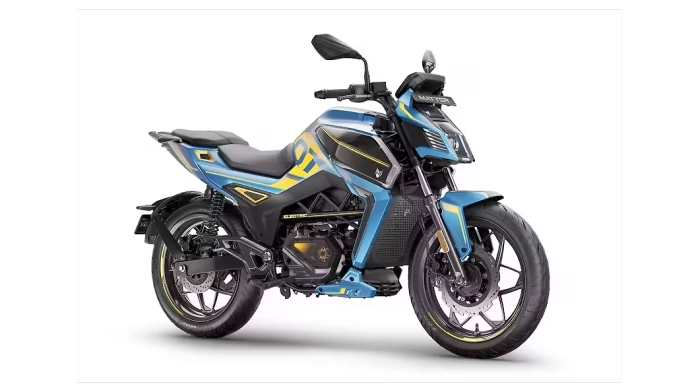

Matter EV , An underdog from Ahmedabad is about to shake up India’s motorcycle market. Matter, the electric vehicle startup that launched India’s first geared electric bike, isn’t just entering the game—it’s planning to dominate it.
Table of Contents
Matter EV From Zero to Hero: The Ambitious Growth Plan
Matter was in pilot mode until June 2025 and is now expanding aggressively across Maharashtra, Gujarat, Karnataka, Tamil Nadu, Andhra Pradesh, and Kerala. But here’s where it gets interesting.
The startup aims to scale from just seven dealerships to 150 dealerships by the end of 2026, targeting sales of 50,000 units next year. That’s not growth—that’s a rocket launch.
Currently producing around 4,000 units monthly, Matter expects to achieve a monthly run rate of 20,000–25,000 units within the next three to five years. To put that in perspective, they’re planning to produce in a month what some startups dream of selling in a year.
What Makes Matter Different?
Most electric bikes feel like silent scooters. Matter said, “Not on our watch.”
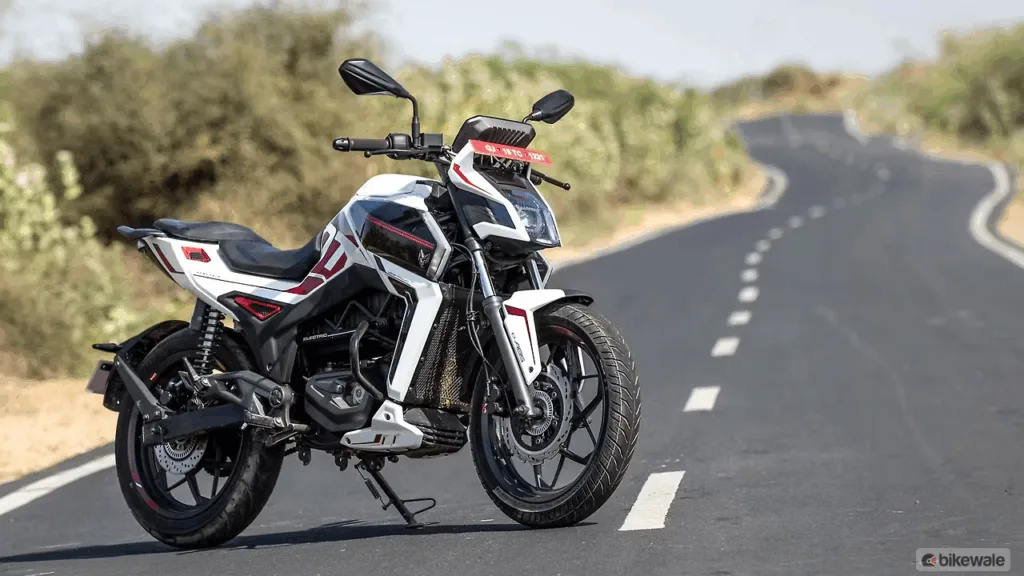
The company launched the Aera 5000+ electric motorcycle priced at ₹1.93 lakh, positioning it as a direct alternative to internal combustion engine motorcycles in the 150–200cc segment. But price isn’t their only weapon.
Matter built the world’s first electric motorcycle with a manual 4-speed gearbox and clutch. For riders who love the thrill of shifting gears and the visceral connection to their machine, this changes everything.
| Model | Type | Price (₹ Lakh) |
|---|---|---|
| Matter Aera 5000+ | Electric | 1.93 |
| Yamaha R15 V4 | Petrol | 1.85 |
| TVS Apache RTR 160 | Petrol | 1.18 |
| Bajaj Pulsar NS200 | Petrol | 1.45 |
| KTM 200 Duke | Petrol | 2.06 |
Matter aims to compete directly with ICE rivals like the Yamaha R15 V4, TVS Apache RTR 160, Bajaj Pulsar NS200, and KTM 200 Duke.
The Strategy Behind the Numbers
Matter’s founder Mohal Lalbhai isn’t playing small. “With our gearbox, liquid cooling, and connected features, Aera is built for riders who want performance and convenience without compromise,” Lalbhai explained. “We’re not competing with other EVs but with petrol motorcycles in the 150–200cc category”.
That’s a critical distinction. While other EV makers fight over eco-conscious early adopters, Matter is targeting the massive mainstream market of petrol bike riders.
The company has serious backing too. US-based venture firm Helena leads Matter’s investor roster, joined by Capital 2B, Japan Airlines, Translink Innovation Fund from Canada, and SB Invest.
The Infrastructure Race
Numbers tell only part of the story. Matter is building the foundation for sustainable growth:
Manufacturing Muscle: Building a production facility capable of manufacturing up to 120,000 bikes annually
Retail Presence: Setting up 45 dealerships across six states by the end of 2025
Production Ramp: Increasing monthly output from 4,000 units in 2025 to 20,000–30,000 units by 2026
Breaking Even and Beyond
Matter expects to break even in the next three to five years with a monthly run rate of 20,000–25,000 units. For a startup in India’s competitive EV market, that timeline shows remarkable confidence—or extraordinary product-market fit.
Why This Matters for India’s EV Revolution
Matter represents a new breed of Indian EV manufacturers. They’re not importing technology or slapping batteries on existing designs. They’re engineering solutions specifically for Indian riders who love motorcycles.
The geared electric bike solves a psychological barrier: the perception that EVs lack soul. By giving riders the tactile feedback of shifting gears, Matter bridges the gap between petrol nostalgia and electric efficiency.
The market timing is perfect. India’s EV adoption is accelerating, charging infrastructure is expanding, and government incentives remain attractive. Matter enters this landscape with a differentiated product at a competitive price point.
The Road Ahead
Can an Ahmedabad startup really achieve 10x growth and sell 50,000 units? The audacious plan faces real challenges: building brand recognition, establishing service networks, and convincing traditional riders to make the switch.
But Matter has something many startups lack: a product that doesn’t ask riders to compromise. It offers the thrill of a manual transmission, the efficiency of electric power, and pricing that competes directly with petrol alternatives.
If they execute on their expansion plan, Matter could become the success story that proves Indian EV manufacturers can compete globally—not by copying others, but by innovating for their home market first.

