

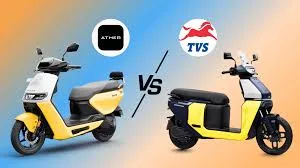

Two titans of Indian electric mobility have just squared off with their family-focused offerings. The Ather Rizta, priced at ₹1,10,000, represents the tech-forward premium approach. The TVS Orbiter, at just ₹99,900, promises to democratize electric mobility with segment-first features at an accessible price. But here’s the real question: Does spending ₹10,000 more actually get you ₹10,000 worth of value?
Table of Contents
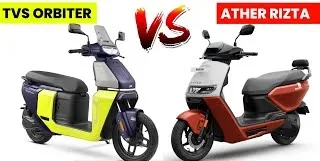
The Price Battle: Every Rupee Counts
The TVS Orbiter is priced at ₹99,900 (ex-showroom Bengaluru, including PM e-Drive subsidy), while the Ather Rizta starts at ₹1,10,000. That’s a ₹10,000 difference—roughly the cost of two months’ worth of groceries for an average Indian family.
But wait. Both qualify for government subsidies, and on-road prices vary significantly across states. In some regions, you might find these scooters neck-and-neck after all taxes and subsidies are applied.
Head-to-Head: The Complete Breakdown
| Specification | Ather Rizta | TVS Orbiter |
|---|---|---|
| Ex-showroom Price | ₹1,10,000 – ₹1,45,000 | ₹99,900 (₹1,04,990 without subsidy) |
| Battery Capacity | 2.9-3.7 kWh | 3.1 kWh |
| Range (IDC) | 123-160 km | 158 km |
| Real-World Range | 100-130 km | ~120 km (estimated) |
| Top Speed | 79 km/h | 68 km/h |
| 0-40 km/h | Not specified | 6.8 seconds |
| Boot Space | 34 liters | 34 liters |
| Wheel Size | Standard config | 14″ front, 12″ rear |
| Ground Clearance | 160 mm | 169 mm |
| Charging Time | 4-5 hours | ~4 hours 10 mins (0-80%) |
Range Reality: Who Goes the Distance?
The TVS Orbiter delivers an impressive IDC range of 158 km with its 3.1 kWh battery, matching the higher variants of the Ather Rizta. Based on TVS’s track record with the iQube achieving 76.4 km in real-world conditions (versus 94 km IDC claim), the Orbiter should realistically offer around 120 km.
The Ather Rizta’s base variant offers 123 km IDC (around 100 km real-world), while its top variant matches the Orbiter at 160 km IDC.
Translation: For range-conscious buyers, both scooters are evenly matched in their respective price brackets.
Performance: Speed Demon or City Cruiser?
The Ather Rizta hits 79 km/h, while the Orbiter tops out at 68 km/h. That 11 km/h difference matters if you frequently ride on highways or arterial roads.
The Orbiter uses a hub-mounted BLDC motor producing 2.5 kW of peak power, with 0-40 km/h acceleration in 6.8 seconds. Team-BHP testers found the performance “underwhelming in terms of outright performance.”
Winner: Ather Rizta for those who crave speed; Orbiter for relaxed city commuting.
Features Face-Off: What You Actually Get
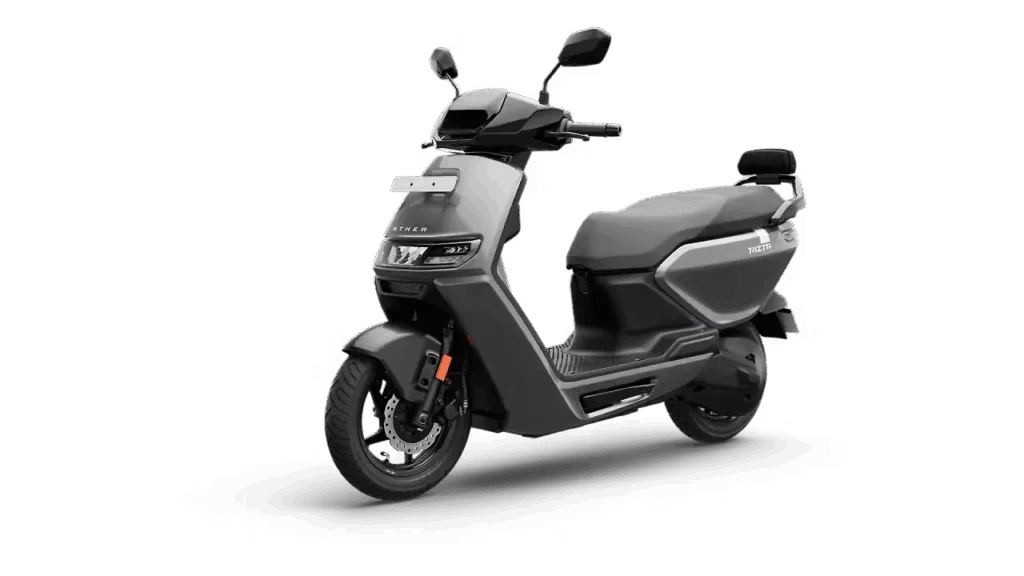
Ather Rizta’s Arsenal:
- 7-inch touchscreen with navigation
- Magic Twist throttle
- Ather Grid fast-charging network access
- OTA updates and predictive maintenance
- Multiple riding modes
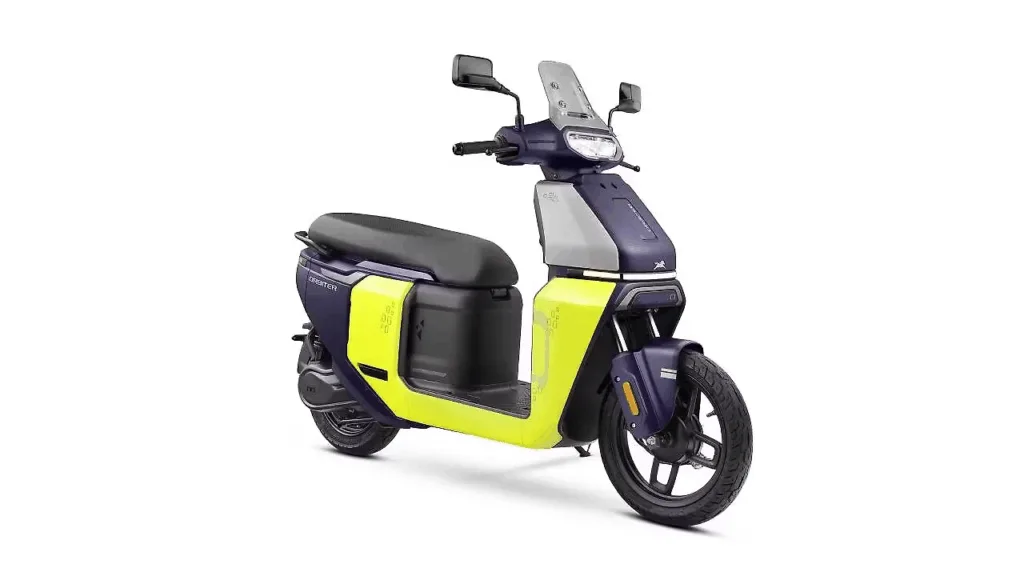
TVS Orbiter’s Impressive Package:
- Cruise control, hill-hold assist, reverse parking function
- Smart connectivity with geo-fencing, crash/fall alerts, anti-theft, towing alerts, live tracking
- 14-inch front wheel for better stability and distinctive stance
- SmartXonnect App for vehicle details on your phone
- LED headlamp with integrated indicators
- USB charging port
The Surprise Winner? TVS Orbiter. It packs cruise control and reverse parking assist—features typically found in premium scooters—at an entry-level price.
Design Philosophy: Modern vs Minimalist
The Ather Rizta follows a futuristic, tech-forward design with smooth curves and a sophisticated aesthetic. The Orbiter follows a minimalist, boxy design with fewer flowing lines, featuring a single large side panel that flows from front to tail, giving it a distinctive, eye-catching stance.
The Orbiter gets large LED lights, a decently-sized windscreen, and body panels that are large and curvy, positioning it as both youthful and family-friendly.
Storage & Practicality: Dead Heat
Both scooters offer 34 liters of underseat storage—enough for two helmets comfortably. The Orbiter adds a spacious 290mm flat floorboard, making it exceptionally practical for grocery runs and daily errands.
Ground clearance? The Orbiter edges ahead with 169 mm versus Rizta’s 160 mm—crucial for India’s unpredictable road conditions.
The TVS Advantage: Market Leadership
Here’s something buyers often overlook: TVS led the Indian e-scooter market in August 2025 with a 24.8% market share, demonstrating production resilience even amid rare-earth magnet shortages.
What does this mean for you? Parts availability, service network reliability, and long-term brand stability.
The 5-Year Ownership Cost Reality
Let’s do honest math (assuming 30 km daily riding):
Ather Rizta (5 years):
- Purchase: ₹1,10,000
- Electricity: ₹18,000
- Maintenance: ₹10,000
- Total: ₹1,38,000
TVS Orbiter (5 years):
- Purchase: ₹99,900
- Electricity: ₹18,000
- Maintenance: ₹10,000
- Total: ₹1,27,900
The Orbiter saves you ₹10,100 over five years—essentially maintaining its initial price advantage throughout ownership.
Who Should Buy What?
Choose Ather Rizta if:
- You need highway capability and higher top speed
- Advanced tech features matter to your daily ride
- You live in cities with extensive Ather Grid charging
- Performance is more important than price
- You prefer the established Ather ecosystem
Choose TVS Orbiter if:
- Budget is your primary consideration
- Cruise control and reverse parking appeal to you
- You want a 14-inch front wheel for better stability
- TVS’s extensive service network gives peace of mind
- You prioritize value-for-money over brand prestige
The Honest Verdict
Given its utilitarian nature and convenience-focused features, the Orbiter positions itself directly against family-oriented scooters like the Ather Rizta.
For an entry-level electric scooter, the TVS Orbiter gets many things right—its funky styling and modern features appeal to young buyers, while practicality and ease of use make it suitable for families.
Here’s the bottom line: The TVS Orbiter delivers 90% of the Ather Rizta’s capabilities at 91% of the price, while adding segment-first features like cruise control. Unless you specifically need that extra top-speed or prefer Ather’s premium tech ecosystem, the Orbiter represents phenomenal value.
Both scooters are winners in their own right. The Rizta is the sophisticated choice for tech enthusiasts. The Orbiter is the practical choice for value-conscious families.
Choose based on what matters most: premium experience or exceptional value. Either way, you’re joining India’s electric revolution.

