


Some cars never die. They just wait for the perfect moment to return. For automotive enthusiasts who grew up in the ’90s, the Tata Sierra wasn’t just an SUV—it was a rolling piece of art. Those distinctive curves, that unmistakable silhouette. It was India’s answer to European design, bold and unapologetic.
Now, after decades of nostalgia, Tata Motors is bringing back the legend. And this time, it’s electric.
Table of Contents
Tata Sierra EV: Nostalgia Meets Tomorrow
Tata isn’t just reviving a nameplate. They’re rewriting the rulebook. The Sierra will launch in both electric and ICE versions, giving buyers the freedom to choose their power source while enjoying the same iconic design.
But it’s the Sierra EV that’s stealing the spotlight, and Tata’s latest teaser reveals exactly why.
What Makes the Sierra EV Stand Out?
| Feature | Details |
|---|---|
| Launch Date | November 15, 2025 |
| Versions | Electric & ICE (petrol/diesel) |
| Signature Color | Bright yellow (teaser) |
| Range | ~500 km (expected) |
| Special Feature | AWD/QWD (likely EV exclusive) |
| Design | Grille-less, futuristic fascia |
The Design That Turns Heads
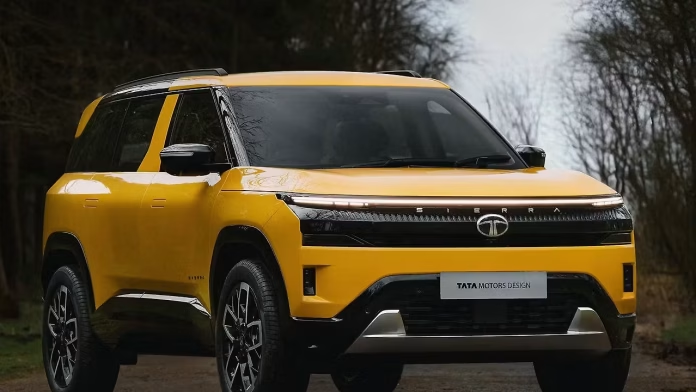
Picture this: A bright yellow SUV gliding silently through city streets, its grille-less front fascia announcing its electric soul before you even hear—or rather, don’t hear—the engine.
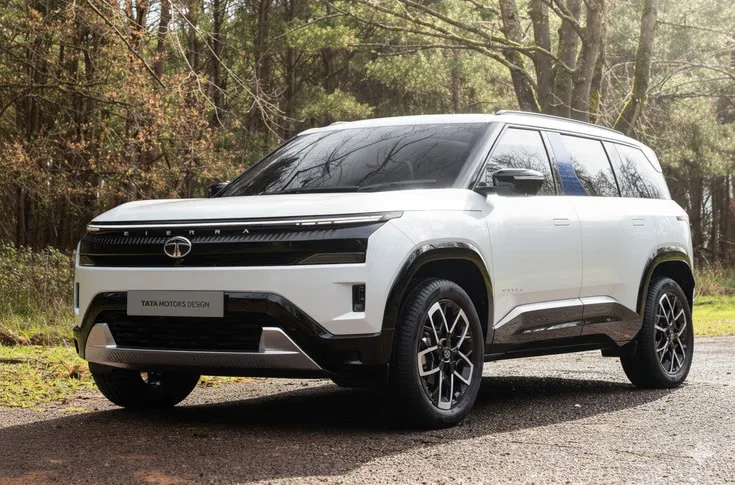
The Sierra EV wears its electric identity proudly. A sleek full-width LED DRL runs just below the bonnet line, creating a light signature that’s impossible to miss. The lower split headlamps, black bumper, and silver skid plate give it a clean, futuristic look that screams 2025, not 1991.
Meanwhile, the ICE Sierra keeps things rugged with a prominent black grille—a nod to traditional SUV styling. It’s the same DNA, different expressions.
Power That Matches the Legend
Here’s where things get seriously exciting. The Sierra EV is expected to pack a battery comparable to the Harrier EV, promising around 500 km of range on a single charge. That’s Mumbai to Pune and back with juice to spare.
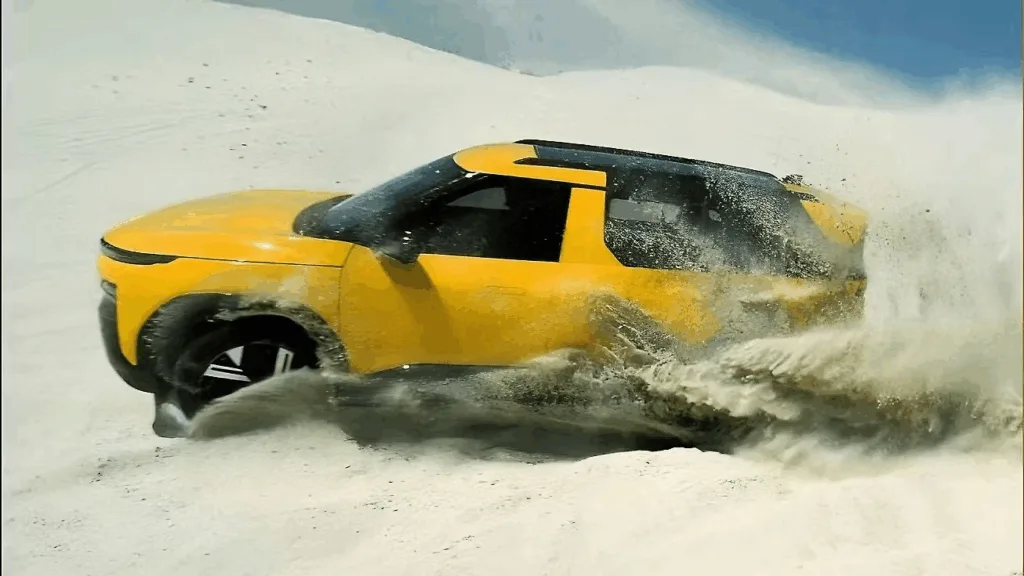
But the real party trick? Tata’s AWD system—branded as QWD (Quad Wheel Drive)—is likely to be exclusive to the Sierra EV. Imagine tackling mountain roads or monsoon-slicked highways with electric power distributed to all four wheels. That’s not just nostalgia; that’s next-level capability.
ICE vs. EV: Two Souls, One Legend
Tata’s dual-launch strategy is brilliant. Not everyone is ready to go electric, and Tata knows it. By offering both powertrains, they’re capturing two distinct buyer segments:
The Traditionalist: Wants the Sierra name, the commanding presence, and the familiar roar of an internal combustion engine.
The Futurist: Craves the same iconic design but with zero emissions, instant torque, and cutting-edge tech.
Same SUV. Different heartbeat.
Why the Sierra’s Return Matters
India’s automotive landscape is transforming rapidly. Buyers want vehicles with character, not just transportation appliances. They want stories, not just specs.
The Sierra has both in spades. It’s a vehicle that older generations remember fondly and younger buyers will discover with fresh eyes. Tata is betting that nostalgia plus innovation equals market domination—and they might just be right.
What We’re Still Waiting to Know
While the teaser gives us plenty to drool over, questions remain:
- What’s the exact battery capacity and charging speed?
- Will the QWD system be standard or optional?
- How will pricing compare between ICE and EV variants?
- What interior tech can we expect?
November 15 will answer everything. Until then, the anticipation builds.
The Countdown Begins
The original Sierra was ahead of its time. The 2025 Sierra EV? It might just be right on time.
India is hungry for electric SUVs that don’t compromise on style, capability, or heritage. The Sierra EV promises all three, wrapped in a design that’s been waiting decades for its second act.
November 15, 2025, isn’t just a launch date. It’s a homecoming. The legend returns, and this time, it’s powered by the future.

