

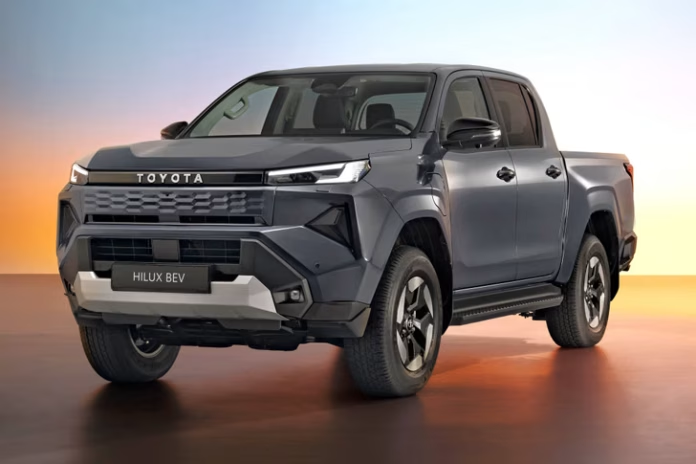

After nearly a decade of waiting, Toyota Hilux has finally pulled back the curtain on something extraordinary—the ninth-generation Hilux is here, and for the first time in its 57-year legacy, it’s going electric.
Yes, you read that right. The same truck that survived Top Gear’s infamous demolition attempts is now entering the EV era, while keeping its legendary toughness intact.
Table of Contents
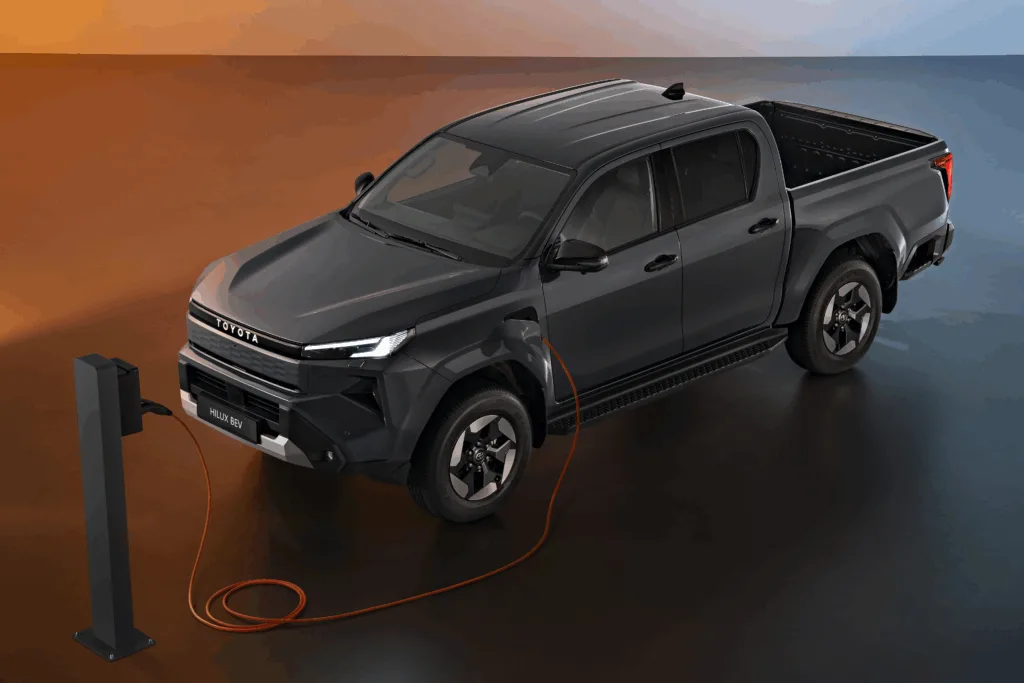
Toyota Hilux: A New Era for an Iconic Workhorse
The ninth-generation Hilux debuted in Thailand, ten years after the previous model launched, with Toyota putting the EV variant under the spotlight. This isn’t just another facelift—it’s a complete overhaul that combines cutting-edge electric technology with the rugged DNA that made the Hilux a global icon.
Since the original debuted in 1968, more than 21 million units have been sold, making it one of the most successful pickup trucks in automotive history. Now, it’s ready to write its next chapter.
Power Meets Practicality: What’s Under the Hood
The Hilux BEV (Battery Electric Vehicle) represents Toyota’s bold commitment to electrification without compromising capability. Here’s what makes it tick:
| Specification | Details |
|---|---|
| Battery Capacity | 59.2 kWh lithium-ion |
| Power Output | 193 hp (144 kW) |
| Torque (Front) | 205 Nm (151 lb-ft) |
| Torque (Rear) | 268.6 Nm (198 lb-ft) |
| Range (WLTP) | ~240 km (~150 miles) |
| Towing Capacity | 1,600 kg (3,527 lbs) |
| Payload | 715 kg (1,576 lbs) |
| Fast Charging | Up to 150 kW DC |
The dual electric motor setup provides power to both axles, ensuring permanent all-wheel drive capability. While the 150-mile range might raise eyebrows among EV enthusiasts, it’s intentionally designed for short-haul work—think construction sites, farms, and urban deliveries where daily distances are predictable.
Still Got Diesel? Absolutely!
Toyota isn’t abandoning traditional buyers. The lineup follows Toyota’s multipath philosophy, giving customers multiple powertrain options to best meet their needs and local driving conditions.
Available powertrains include:
- Electric BEV (launching December 2025)
- 2.8L Diesel + 48V Mild-Hybrid (volume seller in Europe, launching Spring 2026)
- 2.7L Petrol + 48V Mild-Hybrid (select markets)
- Hydrogen Fuel Cell (scheduled for 2028)
The mild-hybrid diesel remains the workhorse champion, maintaining a one-tonne payload capacity and 3,500 kg towing capability—perfect for those who need maximum grunt for heavy-duty tasks.
Tough Meets Tech: Design That Demands Attention
The new ninth-gen truck was designed using a “Tough and Agile” philosophy, featuring narrow new headlights and an aggressively bluff front end. Gone is the traditional Toyota badge, replaced by bold “TOYOTA” lettering across the grille—a design cue borrowed from the new Land Cruiser and Tacoma.
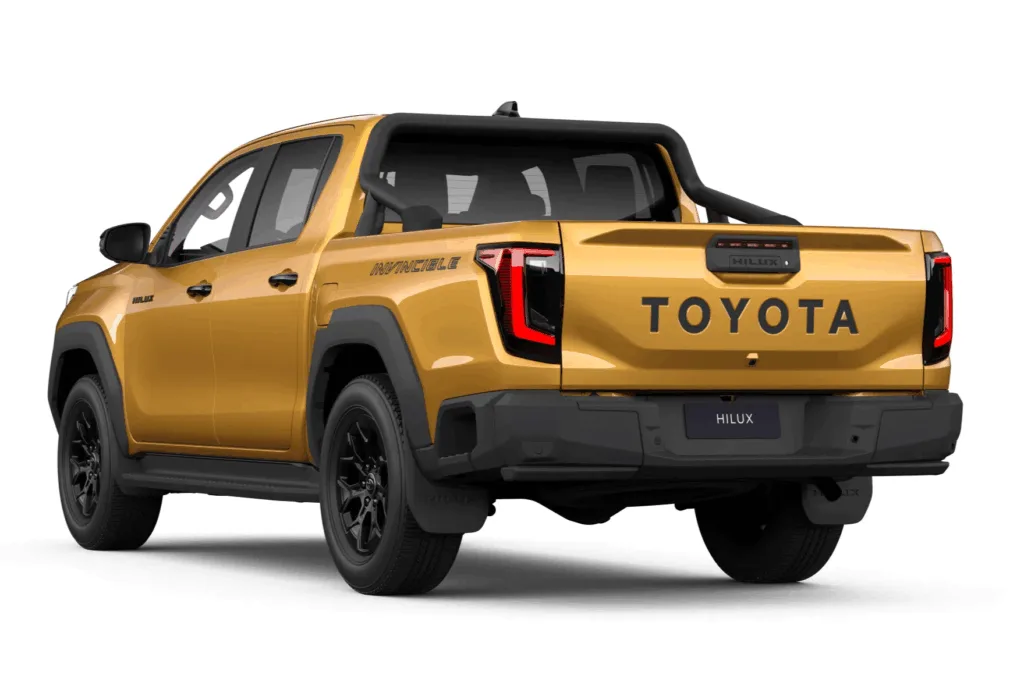
The EV variant gets a mostly closed-off front grille for better aerodynamics, while diesel versions retain the traditional cooling vents. All models get a new rear deck step, and selected trims get a redesigned side step too, making bed access easier than ever.
Interior: Welcome to the Future
Step inside, and you’ll find a cabin that’s light-years ahead of its predecessor. Dual 12.3-inch screens dominate the dashboard—one for the digital instrument cluster and another for the infotainment system. But Toyota hasn’t gone full-Tesla; there are still plenty of physical buttons for climate control, drive modes, and 4WD settings.
Safety upgrades include blind spot monitoring, driver monitoring camera, Safe Exit Assist, and over-the-air software updates. Every trim now comes with wireless charging and rear USB ports—small touches that make a big difference for daily usability.
Built to Conquer, Engineered to Last
The Hilux BEV retains the fundamental strength of Hilux’s signature body-on-frame construction and is engineered for off-road performance, including specific measures to protect the battery from damage or water ingress.
The wading depth matches the ICE models, and the Multi-Terrain Select system adapts vehicle performance to suit different off-road terrains using brake and torque control, equivalent to driving in L4 range. Translation? This electric truck can still handle serious off-road adventures.
The Bottom Line
The 2026 Toyota Hilux EV isn’t trying to replace every diesel truck on the road—and that’s exactly why it works. It’s a purpose-built electric workhorse for urban fleets, environmentally conscious buyers, and anyone who needs reliable short-range hauling without tailpipe emissions.
The all-new Hilux market roll-out will commence with the BEV model from December 2025, starting in Thailand and rolling out to Europe and other markets in 2026. Unfortunately, like previous generations, it won’t reach American shores (Toyota already has the Tacoma for that market).
With electric, diesel, and eventually hydrogen options all under one nameplate, Toyota is proving that the future of trucks isn’t one-size-fits-all—it’s about choice, capability, and respecting what makes the Hilux legendary in the first place.
The question isn’t whether the Hilux can survive the transition to electric. After 57 years of proving its indestructibility, the real question is: can the competition keep up?

