

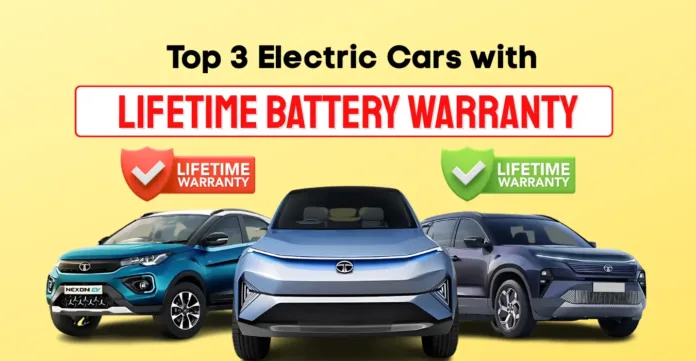

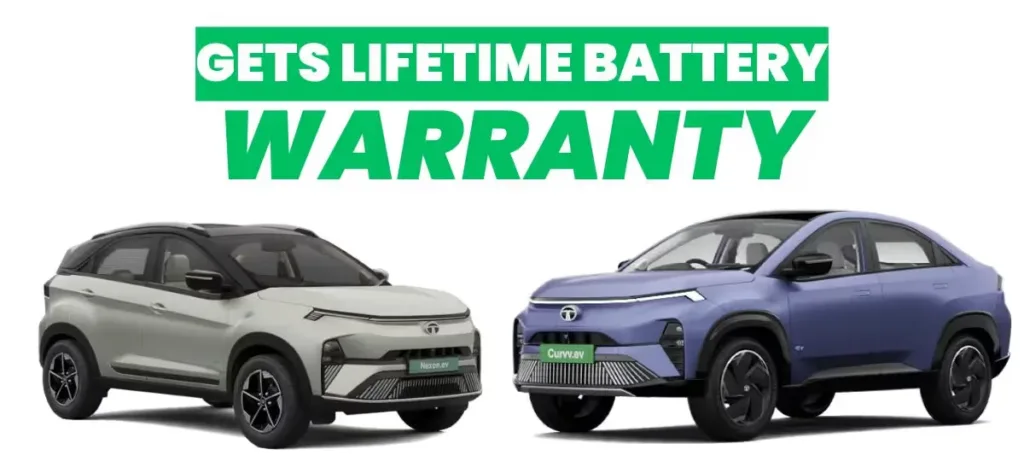
Recently, Indian automakers have started offering unprecedented lifetime warranties on EV battery packs. Tata Motors was the first mainstream brand to announce an unlimited‑kilometre, 15‑year battery warranty for its upcoming Curvv.ev and an extended lifetime warranty option for the Nexon.ev 45 kWh model (These Tata EVs now get lifetime battery warranty). Soon after, reports highlighted that the offer would include a ₹50 000 loyalty bonus for existing Tata EV owners and cover both the traction battery and battery management system (Ather 450x Gen 3 vs Ola S1 Pro – Which is Better?). Mahindra has also teased lifetime warranty coverage for its BE 6 and XEV 9e SUVs, signalling a trend towards lifetime battery assurance across premium EVs.
Table of Contents
EV Battery : What is a Lifetime Battery Warranty?
So what does “lifetime” really mean? Standard EV warranties typically cover the high‑voltage battery for 8 years or 1.6 lakh km, whichever comes first. A lifetime warranty extends coverage to the vehicle’s entire lifespan, provided you remain the original owner and perform routine servicing. It promises free repair or replacement of the battery in case of manufacturing defects or capacity drop below a certain threshold. That peace of mind protects the most expensive component of an EV.
Benefits and Caveats
A lifetime battery warranty removes one of the biggest anxieties around EV ownership: battery degradation. With a replacement pack costing ₹5‑10 lakh, a warranty that lasts the life of the vehicle can save you significant money. It also signals confidence from automakers that their packs are durable and will retain at least 70‑80 % capacity after a decade of use.
However, there are caveats. Lifetime policies often have strict terms – they may apply only to the first owner, require adherence to service schedules and exclude damage due to accidents, abuse or third‑party chargers. They also don’t exempt you from routine maintenance fees. As EV technology evolves, manufacturers could revise warranty conditions, so read the fine print carefully.
Should You Choose a Lifetime Warranty?
If you plan to keep your EV for more than eight years, a lifetime battery warranty is worth considering. It effectively locks in the total cost of ownership and future‑proofs your investment. But if you tend to upgrade vehicles every 4‑5 years, a standard warranty may suffice. Watch out for promotional pricing, as some brands may bundle lifetime coverage with launch editions or loyalty discounts. Whichever option you choose, remember to compare financing offers and ensure your EV fits your lifestyle – our EV financing guide has more tips.

