

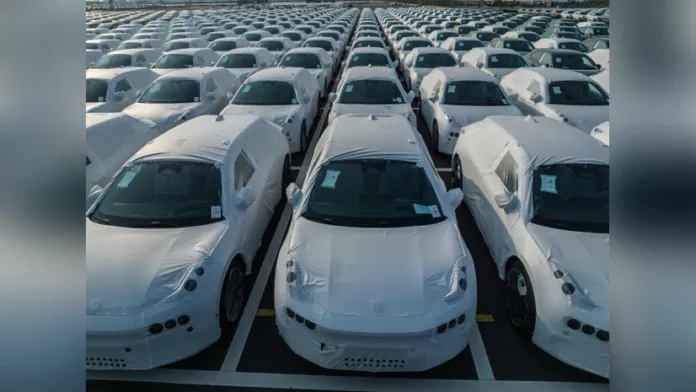

EV Resale Market, Picture this: You’re ready to sell your electric car after three years of ownership. But unlike your friend who quickly sold their petrol car, you’re facing a puzzling question—what’s your EV actually worth? Welcome to India’s newest automotive challenge.
Table of Contents
The Hidden Complexity of Selling Electric Cars
While selling a conventional car is straightforward—check the age, mileage, and condition—electric vehicles operate by different rules. The battery, representing up to 40% of the car’s value, adds a layer of complexity that’s stumping buyers, sellers, and even insurance companies.
Think of it like selling a smartphone. The device might look pristine, but if the battery drains in two hours, its value plummets. The same principle applies to EVs, except we’re talking about lakhs of rupees, not thousands.
India’s Growing But Uncertain Market
| Market Segment | 2024 Share | Growth Trend |
|---|---|---|
| ICE Used Cars | 97% (5.27M units) | Stable |
| Used EVs | 2-3% (0.14M units) | 5x growth since 2022 |
| Projected 2030 Market | 10.8M total units | 13% CAGR |
Leading states: Maharashtra, Karnataka, and Delhi are driving India’s used EV adoption, with early models like the Tata Nexon EV and MG ZS EV now entering the resale market.
Why Battery Health Changes Everything
Here’s the problem: batteries age invisibly. Two identical cars from the same year could have vastly different battery conditions based on:
- Charging patterns and frequency
- Climate and thermal exposure
- Total charge cycles completed
- Software update compatibility
Yet there’s no odometer equivalent for battery health. No standardized test. No certification that tells you “this battery is 85% healthy.”
The Insurance Dilemma
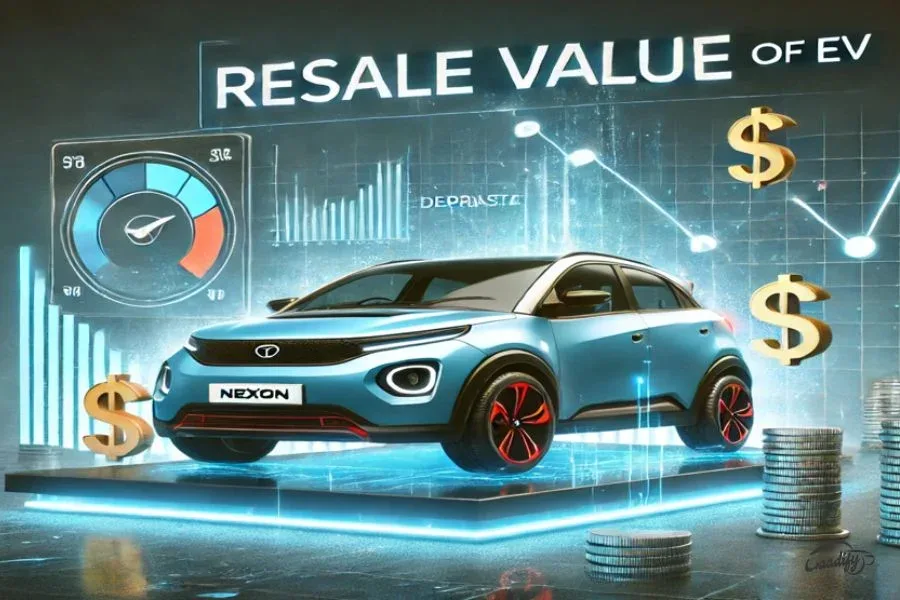
Currently, insurance companies use the same depreciation tables for EVs and petrol cars—5% for six-month-old vehicles, scaling up to 50% after five years. But this one-size-fits-all approach ignores the battery’s unique aging pattern.
“Battery health is a key differentiator, but insurers rely on indirect indicators like warranty period and manufacturer reputation rather than actual degradation testing,” explains Paras Pasricha from Policybazaar.
What Needs to Change
For buyers and sellers:
- Standardized battery health certification
- Transparent charging history records
- Transferable manufacturer warranties
For the industry:
- Separate EV depreciation norms
- Better spare parts availability
- City-to-city transfer guarantees
Learning From Global Solutions
Other countries aren’t waiting around:
- UK: Introducing Battery Health Certificates
- Netherlands: ₹1.65 lakh subsidies for used EV buyers
- USA: ₹3.3 lakh tax credit for second-hand EVs
- Norway: Integrated tax breaks creating healthy resale markets
India’s regulator IRDAI already offers 15% discount on EV third-party premiums, signaling willingness to adapt policies as the market matures.
The Road Ahead
As hundreds of thousands of first-generation EVs approach their fifth year, the used market can’t remain in limbo. Fleet operators and urban commuters are already showing interest, particularly for short-haul city usage.
“Used EVs will become a viable segment over the next five to ten years,” predicts Gajendra Jangid of CARS24. “But pricing confidence and standardized battery diagnostics are essential prerequisites.”
The transition is inevitable. India’s EV stock—currently dominated by two and three-wheelers—is rapidly expanding into passenger vehicles. For this market to thrive, one thing is clear: we need to solve the battery puzzle.
Because until buyers know exactly what they’re getting, and sellers know what they’re worth, the used EV market will remain stuck in uncertainty—and that benefits no one.

