

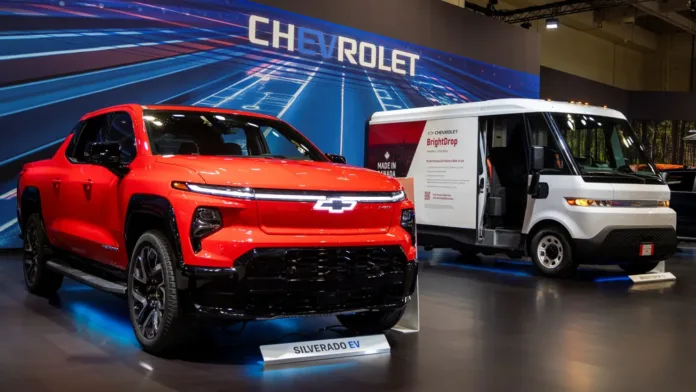

GM, when the music stops in the electric vehicle dance, someone always ends up without a chair. Today, that someone is General Motors—to the tune of $1.6 billion. The Detroit automaker just announced a massive third-quarter charge as it dramatically scales back EV production plans, marking one of the clearest signals yet that America’s electric vehicle revolution has hit turbulence.
Table of Contents
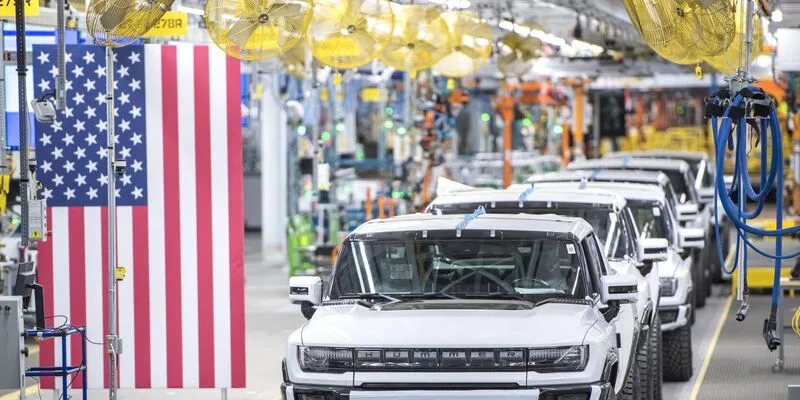
The $1.6 Billion Reality Check
General Motors announced Tuesday it would take a $1.6 billion charge in the third quarter as it reshapes its electric vehicle strategy following the scrapping of the $7,500 federal EV tax credit—a policy earthquake that’s forcing automakers to rethink everything.
Let’s break down where that staggering number comes from:
| Charge Component | Amount | Type | Reason |
|---|---|---|---|
| EV Capacity Adjustments | $1.2 billion | Non-cash impairment | Scaling back production infrastructure |
| Contract Cancellations | $400 million | Cash | Supplier agreements and settlements |
| Total Impact | $1.6 billion | Mixed | Policy shifts and demand slowdown |
The charges will be recorded as adjustments to non-GAAP results for the third quarter, scheduled for release early next week. Translation: this hurts, but GM doesn’t want it affecting how investors judge core business performance.
What Changed Everything?
Three seismic shifts collided to create this perfect storm:
1. The Tax Credit Vanished The Trump administration scrapped the $7,500 federal tax credit for electric vehicles, a key industry support. Overnight, EVs became thousands of dollars more expensive for consumers. That’s not a speed bump—it’s a wall.
2. Emissions Rules Relaxed GM cited reduced emissions-rule stringency among the policy changes. When the government stops pushing automakers toward EVs, the urgency to invest billions in electric infrastructure evaporates.
3. Consumer Demand Cooled GM stated it expects “the adoption rate of EVs to slow” following recent policy changes. The market was already pumping the brakes before policy changes—this just made it official.
GM’s Aggressive Gamble Backfires
“The charge doesn’t come as a surprise given recent market developments and the fact GM had made probably the most aggressive EV push of any traditional automaker,” said Garrett Nelson, a senior equity analyst at CFRA Research.
GM bet big on an all-electric future. Really big. While competitors like Toyota and Honda hedged with hybrids, GM went all-in on battery electric vehicles. Now that gamble is costing them.
The company even launched a program allowing dealers to offer the $7,500 tax credit on EV leases after the federal subsidy expired, before walking back on those plans. That about-face tells you everything about how quickly the landscape shifted.
The Domino Effect Nobody Wants to Talk About
Morningstar senior analyst David Whiston noted that other automakers could follow GM’s suit and announce their own EV-related impairments. GM isn’t alone in this mess—they’re just the first to admit it publicly.
Ford declined to comment on its EV plans, while Stellantis did not immediately respond when asked about similar charges. That silence? It speaks volumes.
What About Current EVs?
Here’s the good news for consumers and dealers: The changes will not affect GM’s current portfolio of Chevrolet, GMC, and Cadillac EVs in production. If you’re driving a Chevy Bolt EUV or eyeing a Cadillac Lyriq, your vehicle isn’t going anywhere.
But GM issued an ominous warning: The company warned of possible additional charges as it reassesses capacity and manufacturing footprint. This $1.6 billion? It might just be the opening act.

The Winners and Losers
Winners:
- Toyota and Honda: Automakers who chose to invest more heavily in hybrid vehicle development are poised to benefit in the U.S. auto market
- Consumers who want choice: More hybrids mean options for buyers not ready for full electric
Losers:
- GM shareholders: Though shares were up 2.1% in morning trade, suggesting the market expected worse
- Climate goals: Less aggressive EV adoption pushes emission reduction timelines further out
- EV infrastructure: Charging networks lose a major supporter
The Bigger Picture: Tariffs and Trade Headwinds
This isn’t GM’s only financial headache. Automakers are working to cushion the impact of President Donald Trump’s tariffs, which forced GM to take a $1.1 billion hit in the previous quarter.
The company has estimated a bottom-line impact of $4 billion to $5 billion this year from trade headwinds and said it could take steps to offset at least 30% of the blow. Between tariffs and EV pullbacks, GM’s facing a financial gauntlet in 2025.
What This Means for the EV Future
GM’s disclosure is one of the clearest indications yet that U.S. automakers are scrambling to adapt their production plans in response to slowing EV demand.
Does this mean EVs are dead? Absolutely not. But it does mean the transition won’t be the straight line upward that everyone predicted. Auto executives are warning of a sharp near-term drop in battery-car sales before an eventual rebound.
Think of it as a pause, not a reversal. GM went too far, too fast for current market conditions. The company’s challenge now is recalibrating without losing the momentum it spent billions building.
The road to electric dominance just got longer, more expensive, and a lot more complicated.

