


What happens when two of Asia’s manufacturing powerhouses join forces? The answer could reshape the future of electric vehicles, electronics, and digital trade as we know it. India and South Korea just announced a strategic partnership that’s sending ripples through global supply chains.
Table of Contents
The Handshake That Changes Everything
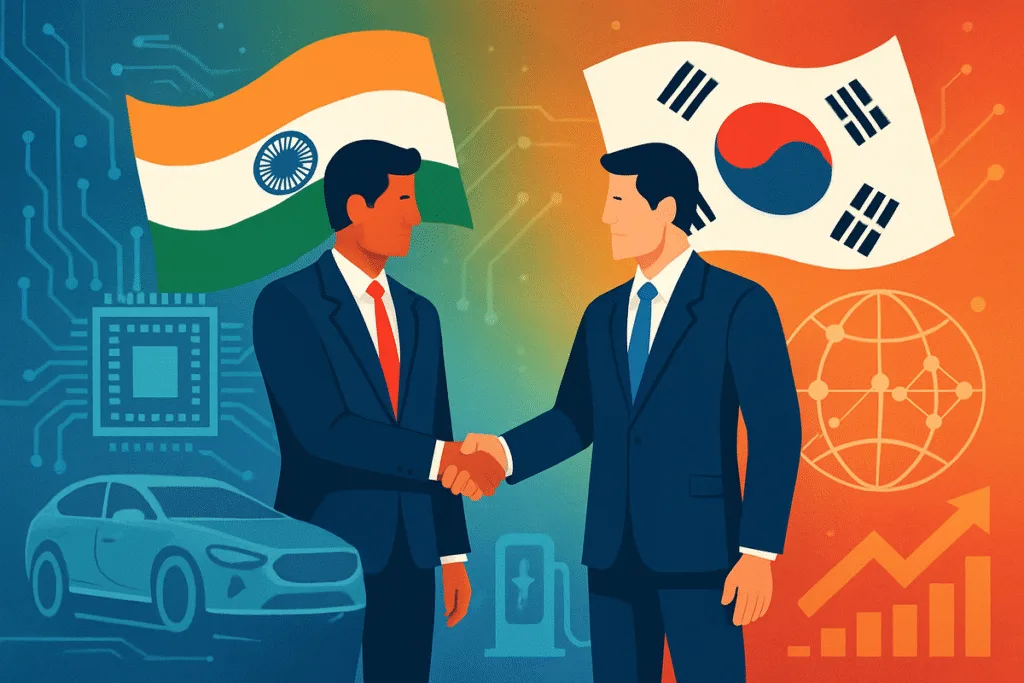
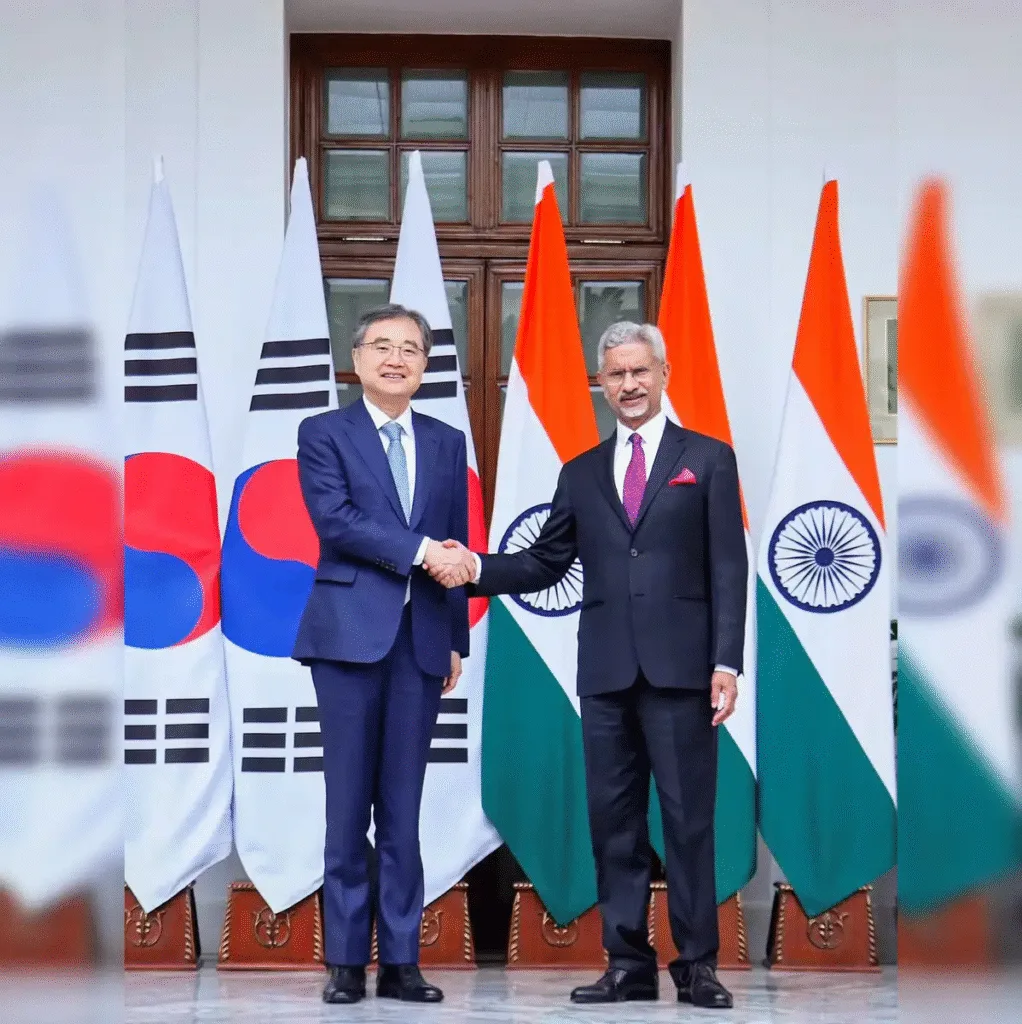
During the G20 Trade and Investment Ministers’ Meeting in Gqeberha, South Africa, India’s Minister of State for Commerce Jitin Prasada and Korea’s Yeo Han-Koo agreed to explore joint initiatives spanning electronics, electric vehicle components, and trusted digital supply chains. This isn’t just diplomatic talk—it’s a calculated move in the global race for technological supremacy.
Think of it as a strategic marriage. India brings its massive market, skilled workforce, and rapidly growing manufacturing ecosystem. Korea contributes cutting-edge technology, decades of electronics expertise, and some of the world’s most advanced EV component manufacturers like LG and Samsung.
Why This Partnership Matters Right Now
The timing couldn’t be more critical. As global supply chains continue their post-pandemic transformation, countries are scrambling to reduce dependencies and build resilient alternatives. This India-Korea alliance addresses that urgency head-on.
The Global Context:
- Supply chain vulnerabilities exposed by recent disruptions
- Growing demand for local manufacturing alternatives
- Rising EV adoption creating unprecedented component needs
- Digital transformation accelerating across industries
The collaboration focuses on manufacturing, digital technologies, and clean technologies—three sectors that will define the next decade of economic growth.
Breaking Down the Partnership Pillars
| Sector | India’s Strength | Korea’s Expertise | Combined Potential |
|---|---|---|---|
| EV Components | Large domestic market, cost-effective production | Advanced battery tech, motor systems | Self-sufficient supply chain for Asia |
| Electronics | Expanding semiconductor ecosystem | World-class chip design, display tech | Reduced dependency on single sources |
| Digital Supply Chains | IT talent pool, digital infrastructure | Logistics innovation, smart systems | Secure, efficient trade networks |
What’s Actually on the Table?
Let’s get specific. This partnership could manifest in several game-changing ways:
Electric Vehicle Components: Joint ventures in battery cell manufacturing, power electronics, and motor production facilities. Imagine Korean technology powering batteries assembled in Indian facilities at competitive prices.
Electronics Manufacturing: Collaborative semiconductor fabrication plants, display manufacturing units, and component sourcing networks that serve both domestic and export markets.
Digital Trade Infrastructure: Trusted digital supply chains that use blockchain and AI to track components, ensure authenticity, and streamline cross-border trade between the nations.
The Numbers Behind the Ambition
Bilateral trade between India and Korea reached $27.8 billion in 2022-23, marking a 21.46% growth. But here’s the ambitious part: both nations are eyeing a $50 billion trade target by 2030.
South Korea has already invested $5.78 billion in India across sectors like metallurgy, proving this isn’t just talk—there’s real capital backing the relationship.
What This Means for Consumers and Industries
For businesses: Access to diversified suppliers, reduced procurement risks, and potential cost advantages through economies of scale.
For consumers: More affordable electric vehicles, competitive electronics pricing, and faster technology adoption without quality compromises.
For workers: New manufacturing jobs, technology transfer opportunities, and skill development in emerging tech sectors.
The Bigger Picture: G20 and Beyond
India also used the G20 platform to advocate for restoring a fully functional WTO dispute settlement system and emphasized the need for policy space for development. This positions the India-Korea partnership within a broader framework of fair global trade.
The message is clear: emerging economies aren’t just participants in global trade—they’re setting the agenda.
What Happens Next?
While the agreement marks the beginning, the real work starts now. Expect joint working groups, feasibility studies, and pilot projects throughout 2025. The first tangible outcomes—likely manufacturing announcements or technology transfer agreements—could emerge within six to twelve months.
This partnership represents more than economics. It’s about two democracies with shared values building resilient, future-ready supply chains that neither China nor the West can dictate terms to.
The India-Korea EV and electronics collaboration isn’t just about today’s supply chains—it’s about who controls tomorrow’s technology. And that makes all the difference.

