

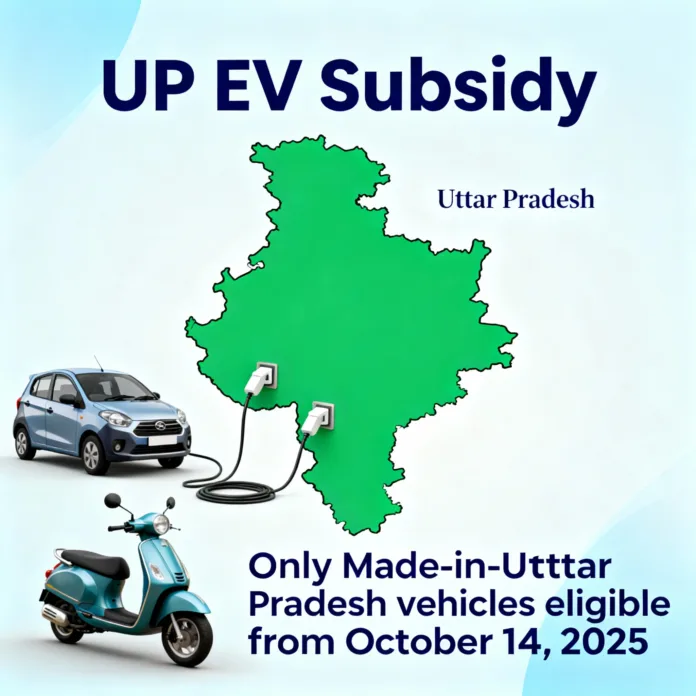

UP EV Subsidy Ends October 13: Uttar Pradesh is implementing a major policy shift that will reshape the state’s electric vehicle landscape. Starting October 14, 2025, only electric vehicles manufactured within UP will qualify for government subsidies—a move aimed at boosting local manufacturing but potentially limiting consumer choices.
Table of Contents
What’s Changing: Before and After October 13
| Aspect | Until October 13, 2025 | From October 14, 2025 | Impact |
|---|---|---|---|
| Eligibility | All EVs nationwide | Only UP-manufactured EVs | Drastically reduced options |
| Subsidy Amount | ₹5,000 to ₹1 lakh | Same range for eligible vehicles | Unchanged for qualifying buyers |
| Manufacturer Scope | Pan-India brands | UP-based production only | Promotes local industry |
| Policy Duration | First 3 years complete | New phase begins | Strategic pivot |
Current UP EV Subsidy Benefits (Until October 13)
The Uttar Pradesh EV Subsidy Scheme currently offers attractive incentives across vehicle categories:
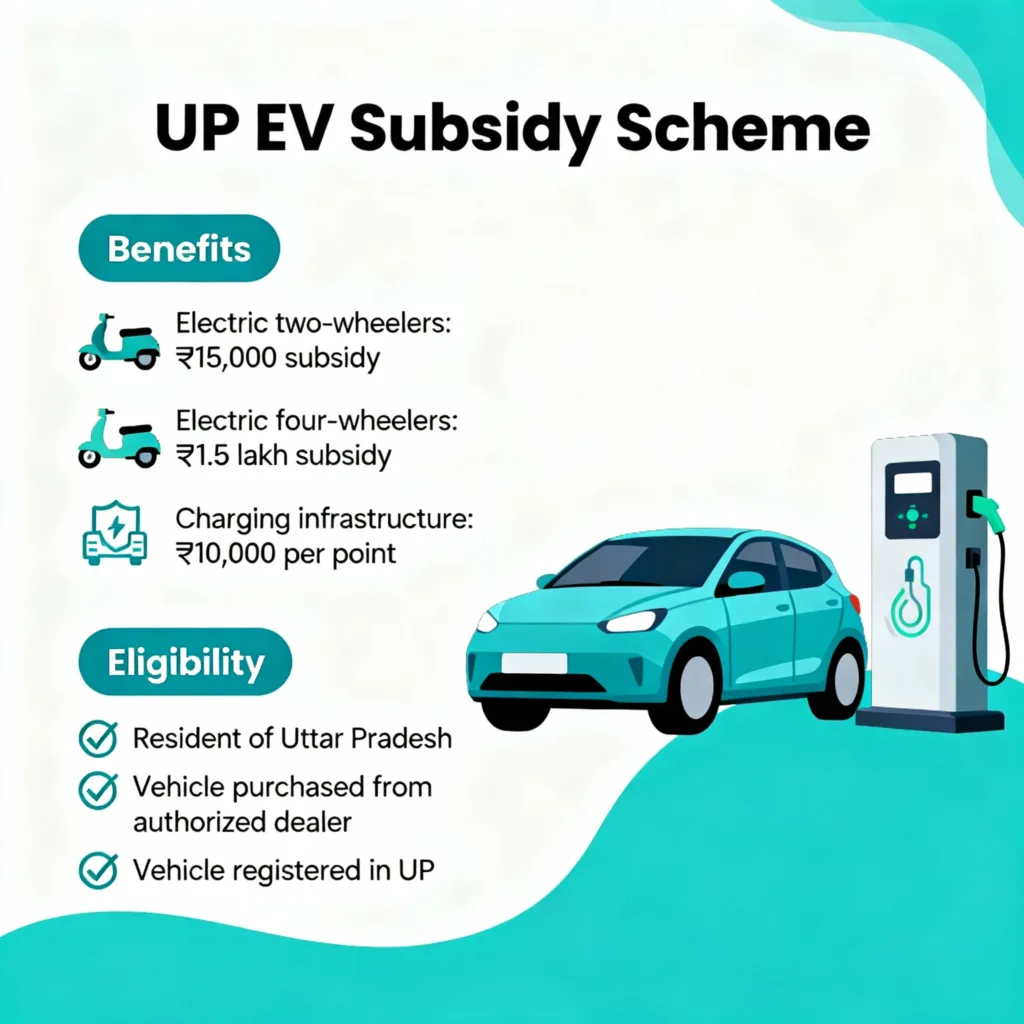
Two-Wheelers: Up to ₹5,000 subsidy on electric scooters and bikes
Three-Wheelers: Subsidies for e-rickshaws and commercial vehicles
Four-Wheelers: Up to ₹1 lakh on electric cars
Commercial Vehicles: Enhanced incentives for buses and trucks
For buyers who purchased EVs on or after October 14, 2022, the subsidy remains claimable through the official online portal—but only until the October 13 deadline for non-UP manufactured vehicles.
Why the Policy Change?
Transport Department officials have indicated this strategic shift aims to:
Boost Local Manufacturing: Encourage EV companies to establish production facilities in UP
Create Employment: Generate jobs in manufacturing, assembly, and supply chain sectors
Attract Investment: Position UP as an EV manufacturing hub
Reduce Import Dependency: Build self-reliant automotive ecosystem
The timing aligns with the completion of three years since the original policy implementation, marking a natural review point.
Impact on Different Stakeholders
For Consumers
| Consumer Type | Until Oct 13 | After Oct 14 | Action Required |
|---|---|---|---|
| Planning to buy | All brands eligible | Limited to UP brands | Purchase before Oct 13 for full choice |
| Already purchased | Can claim subsidy | Existing claims honored | Apply immediately if pending |
| UP brand buyers | Standard benefits | Continued benefits | No change in eligibility |
For Manufacturers
Major EV brands without UP manufacturing facilities face a critical decision: establish local production or lose access to India’s most populous state’s subsidy benefits.
Companies like Tata Motors, Mahindra Electric, and Ola Electric with existing or planned UP facilities will gain competitive advantages.
For insights into how state-level policies shape India’s EV manufacturing landscape, explore our coverage on regional EV policy impacts.
UP’s EV Manufacturing Vision
The Uttar Pradesh Electric Vehicle Manufacturing and Mobility Policy 2022 outlines ambitious goals:
Infrastructure Incentives: 20% capital subsidy up to ₹10 lakh for first 2,000 charging stations
Battery Swapping Support: ₹5 lakh subsidy for swapping stations with minimum ₹15 lakh investment
Manufacturing Incentives: Significant benefits for anchor OEM investments
MSME Integration: Leveraging UP’s extensive auto component MSME base

How to Claim Your Subsidy Before the Deadline
If you’ve purchased an EV or plan to buy before October 13, here’s how to claim:
Step 1: Visit the official UP EV Subsidy Portal
Step 2: Register with vehicle and personal details
Step 3: Upload required documents (RC, invoice, Aadhaar, bank details)
Step 4: Submit application before the October 13 deadline
Step 5: Track application status online
For detailed guidance on claiming EV subsidies across Indian states, read our comprehensive guide on state EV incentive programs.
Which Brands Will Qualify After October 14?
While the complete list hasn’t been officially released, EVs manufactured at facilities in cities like Lucknow, Greater Noida, and other UP industrial hubs will likely qualify.
Brands with confirmed or planned UP manufacturing presence include several major players expanding local production to meet the new requirements.
National Context: State-Level Protectionism Trend?
UP’s move reflects broader tensions between promoting local manufacturing and maintaining consumer choice. Other states may follow similar approaches, potentially fragmenting India’s EV market.
The Government of India’s FAME-III scheme continues to provide pan-India incentives, but state-level policies increasingly emphasize local production.
Alternative Incentives Still Available
Even after October 14, UP residents can still access:
FAME-III Subsidies: Central government incentives remain available
Income Tax Benefits: Section 80EEB deductions for EV loan interest
Road Tax Exemptions: Many states offer reduced or zero road tax
GST Benefits: Lower GST rates on EVs compared to ICE vehicles
The Bottom Line
UP’s policy shift represents a calculated gamble—betting that restricting subsidies will accelerate local manufacturing more than it dampens EV adoption. For consumers, the October 13 deadline creates urgency to purchase before options narrow dramatically.
If you’re considering an EV purchase in Uttar Pradesh, the next few days offer the last chance to access subsidies on any brand. After October 14, only UP-manufactured vehicles will qualify—potentially limiting choices but theoretically strengthening the state’s EV manufacturing ecosystem.
Stay updated on UP’s EV policy developments and subsidy eligibility changes at IndiaEVNews.com – your source for state EV policy analysis and consumer guidance.
Are you rushing to buy an EV before October 13, or waiting to see which brands establish UP manufacturing? Share your decision and reasoning in the comments!

