

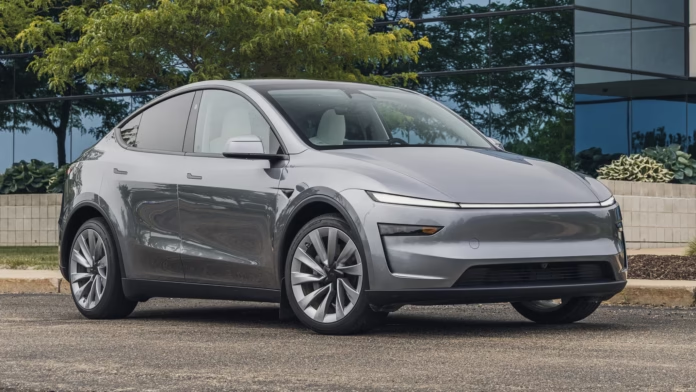

After years of promises and delays, Tesla has finally pulled the trigger on affordability. The Model Y Standard—priced at $41,630—just became the least expensive way to own America’s best-selling vehicle. But here’s the twist: Wall Street isn’t impressed, and the stock tells a brutal story about why cheaper doesn’t always mean better.
Table of Contents

The Numbers That Matter
Tesla unveiled the Model 3 Standard at $38,630 and Model Y Standard at $41,630, including destination and order fees, with availability starting November-December 2025 and December-January 2025 respectively.
| Model | Price | Savings vs Premium | Availability |
|---|---|---|---|
| Model 3 Standard | $38,630 | $5,500 less | Dec 2025 – Jan 2026 |
| Model Y Standard | $41,630 | $5,000 less | Nov – Dec 2025 |
| Model 3 Premium | $44,130 | Base comparison | Available now |
| Model Y Premium | $46,630 | Base comparison | Available now |
The price cuts look significant—until you realize the $7,500 federal tax credit just expired, making these “affordable” models effectively more expensive for buyers than the Premium versions were just weeks ago.
What You’re Giving Up
Tesla didn’t just slash prices—they stripped features. Here’s what disappears when you choose Standard over Premium:
Interior Compromises:
- No eight-inch rear touchscreen
- Only seven speakers instead of 15 plus subwoofer
- Cloth seats only (no microsuede)
Performance Trade-offs:
- Slower 0-60 mph acceleration
- Passive shock absorbers instead of frequency dependent ones
- Reduced range compared to Premium versions
Think of it as flying economy when you’re used to premium economy. You’ll get there, but the journey feels noticeably cheaper.
The Real Story: Desperation, Not Innovation
Let’s be honest about why this happened. Tesla reported record sales drops in the first two quarters of 2025, reversing years of growth. Chinese automakers like BYD are poised to pass Tesla as the world’s largest EV seller when full-year numbers drop in January.
The competitive pressure isn’t theoretical:
- Hyundai announced EVs priced as much as $9,800 below previous versions last week
- Chinese manufacturers are flooding markets with better-equipped, cheaper alternatives
- Expectations of sharply lower US sales will likely create excess capacity at Tesla’s two US factories
Translation? Tesla needs to fill factory lines, fast.
The Market’s Verdict: Underwhelming
Shares of Tesla were down about 4% an hour after the unveiling as investors realized these weren’t the $30,000 EVs Elon Musk had been promising for years.
During a call with investors in April, CFO Vaibhav Taneja claimed the less-expensive model was close and would be widely available in Q4 2025. But $41,630 for a stripped-down Model Y isn’t the mass-market breakthrough Wall Street was hoping for.
The Musk Factor
You can’t discuss Tesla’s challenges without mentioning the elephant—or rather, the CEO—in the room. Tesla has faced backlash from Elon Musk’s political activities, including his role in the Trump administration’s Department of Government Efficiency and support of right-wing political candidates in Europe.
This prompted widespread protests at Tesla dealerships in both the US and Europe as well as acts of vandalism. Musk’s subsequent split from President Donald Trump may have alienated Trump supporters who had been looking more favorably on Tesla cars.
Result? Tesla’s fighting on two fronts: product competition and brand toxicity.
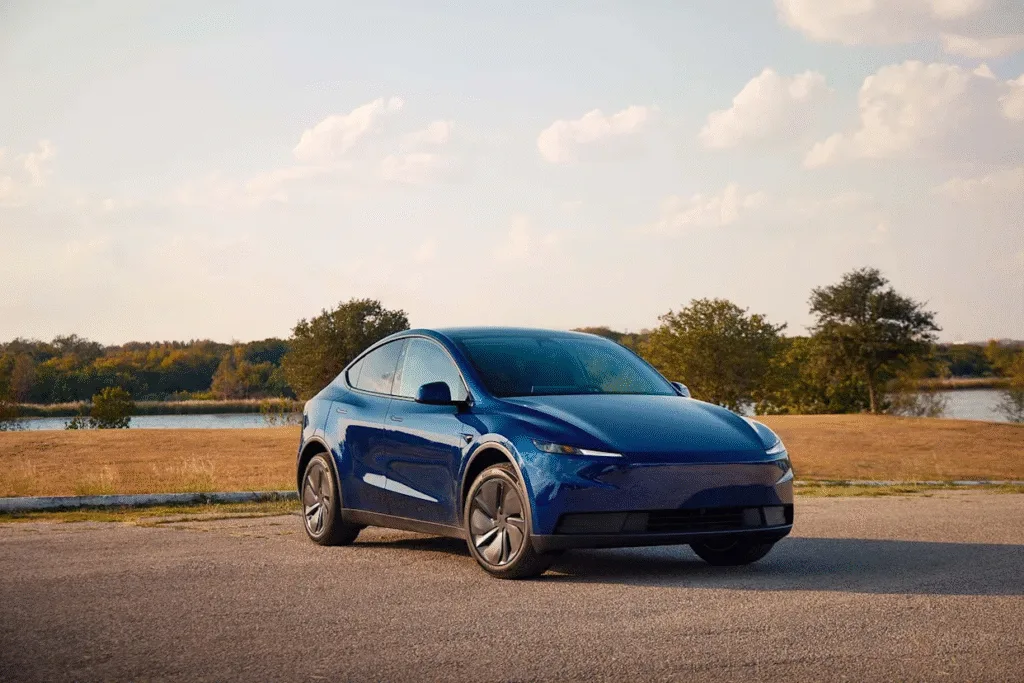
Who Should Buy the Standard Models?
Perfect for:
- First-time EV buyers prioritizing range over luxury
- Budget-conscious commuters (under 50 miles daily)
- Tesla loyalists accepting the trade-offs
- Buyers who missed the tax credit window
Skip if you:
- Value premium audio and interior comfort
- Regularly carry passengers who’ll notice the downgrade
- Can stretch budget $5,000 for Premium features
- Want the fastest acceleration and best handling
The China Wildcard
Tesla reportedly has plans to roll out a less expensive version of the Model Y in China next year. That market matters: 46% of Tesla’s total revenue comes from US sales and 21% comes from China.
If Chinese consumers reject these stripped-down models in favor of domestic brands like BYD, Tesla’s volumes could crater further—making the US affordability push even more critical.
Production Timeline Reality Check
CFO Taneja noted: “We started the production of the lower cost model as planned in the first half of 2025. However, given our focus on building and delivering as many vehicles as possible before the EV credit expires and the additional complexity of ramping a new product, the ramp will happen in Q4, slower than initially expected.”
Translation: Don’t expect immediate availability. Production constraints mean wait times could stretch into early 2026 for some buyers.
Bottom Line: Too Little, Too Late?
The Model Y Standard is exactly what Tesla should have launched two years ago—when the tax credit existed, competition was weaker, and Musk’s brand hadn’t alienated half the potential customer base.
Now? It’s a defensive move by a company watching its market share evaporate in real-time. The 4% stock drop following the announcement tells you everything: investors wanted aggression, not incremental cost-cutting.
For buyers, though, the math is simple. If you can live without premium features and stomach the wait, $41,630 buys you into the Tesla ecosystem at its lowest price point ever. Just know you’re buying into a company fighting for relevance, not leading from the front.
The question isn’t whether the Model Y Standard is affordable. It’s whether affordability alone can save Tesla from itself.

