

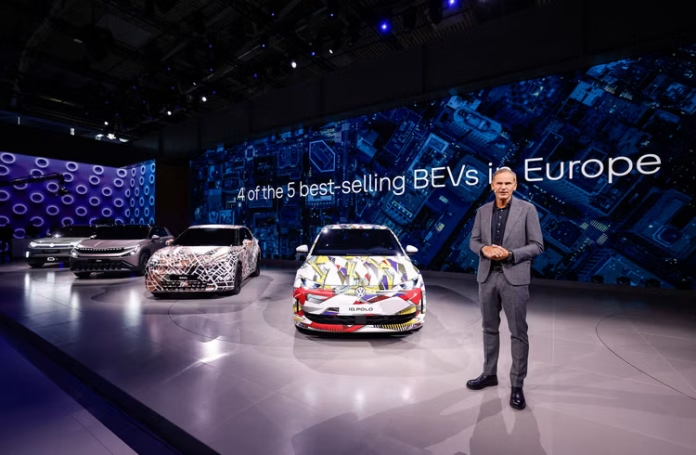

In a surprising strategic shift, Volkswagen Group CEO Oliver Blume has declared that a complete transition to electric vehicles by 2035 might be “too early.” This candid admission marks a significant departure from the automotive industry’s aggressive electrification timeline, with VW now advocating for flexibility over rigid EV mandates.
Table of Contents
The Reality Check: Why VW is Pumping the Brakes
The Volkswagen Group’s CEO, Oliver Blume, said the company’s strategy for electric and electrified vehicles will now heavily depend on the region it does business in. For the United States, he believes about 20% of cars sold will be all-electric by 2030, down from previous goals.
This dramatic revision reflects the uneven global adoption of electric vehicles and the practical challenges facing automakers worldwide.
Regional EV Adoption Reality Check
| Region | Previous EV Target | Revised Target | Key Challenges |
|---|---|---|---|
| United States | 50%+ by 2030 | ~20% by 2030 | Infrastructure gaps, consumer hesitancy |
| Europe | 80%+ by 2030 | Market-dependent | Regulatory uncertainty |
| China | Aggressive push | Technology-driven | Government support varies |
| Emerging Markets | Optimistic goals | Pragmatic approach | Economic constraints |
The Dual-Strategy Approach: ICE and Electric Coexistence
Rather than abandoning internal combustion engines entirely, VW is now embracing what industry experts call a “technology-agnostic” approach. This strategy recognizes that different markets will evolve at different speeds.
VW’s New Strategic Framework
Market-Specific Adaptation:
- Developed Markets: Aggressive EV push where infrastructure supports it
- Emerging Markets: Continued ICE development alongside gradual EV introduction
- Hybrid Solutions: Bridge technologies to ease transition concerns
Technology Investment Balance:
- Continue EV platform development (MEB, PPE platforms)
- Maintain ICE efficiency improvements
- Explore alternative fuels and hybrid technologies
What Changed Oliver Blume’s Mind?
Several factors contributed to this strategic recalibration:
Market Realities vs. Ambitious Targets
| Challenge | Impact on Strategy | VW’s Response |
|---|---|---|
| Charging Infrastructure | Slower adoption rates | Partner with charging networks |
| Consumer Price Sensitivity | EV premium concerns | Develop affordable EV models |
| Supply Chain Issues | Production bottlenecks | Diversify supplier base |
| Regulatory Uncertainty | Policy changes | Maintain flexibility |
The Financial Imperative
Volkswagen has invested billions in electric vehicle technology, but the company now recognizes that forcing the transition too quickly could:
- Strain Financial Resources: Premature ICE abandonment means stranded assets
- Reduce Competitiveness: Markets not ready for full EV adoption need ICE options
- Impact Employment: Gradual transition protects automotive jobs
- Risk Market Share: Competitors offering choice may gain advantage
Industry Impact: Is VW Setting a New Trend?
Blume’s admission could signal a broader industry recalibration. Other automakers are quietly reassessing their aggressive EV timelines:
Potential Industry Ripple Effects
Positive Implications: ✅ Realistic Planning: More achievable targets based on market readiness
✅ Consumer Choice: Maintaining options for different needs and budgets
✅ Job Security: Gradual transition protects automotive workforce
✅ Investment Efficiency: Better allocation of R&D resources
Concerns for EV Advocates: ⚠️ Climate Goals: Slower transition may impact emission reduction targets
⚠️ Innovation Pace: Less pressure might slow technological advancement
⚠️ Policy Alignment: Conflicts with government mandates in some regions
The Competitive Landscape Shift
| Automaker | 2035 EV Strategy | Market Position |
|---|---|---|
| Volkswagen | Flexible, market-driven | Pragmatic leader |
| Tesla | All-electric focus | Pure-play advantage |
| Toyota | Multi-technology approach | Hybrid expertise |
| General Motors | Aggressive EV push | Committed transition |
What This Means for Consumers
VW’s strategic shift offers several implications for car buyers:
Short-term Benefits (2025-2030)
- More Choice: ICE, hybrid, and EV options across VW brands
- Competitive Pricing: Continued ICE development maintains affordability
- Technology Maturation: More time for EV technology to improve and costs to decrease
Long-term Outlook (2030-2035)
- Market-Driven Adoption: EV transition pace matches infrastructure readiness
- Regional Variations: Different products for different markets
- Quality Focus: Less rushed development, potentially better products
The Strategic Wisdom Behind the Shift
While some critics view this as backtracking, industry analysts see strategic wisdom:
Market Leadership Through Adaptability:
- Responding to real consumer needs rather than arbitrary deadlines
- Maintaining competitiveness across diverse global markets
- Balancing environmental goals with business sustainability
Risk Management:
- Avoiding over-investment in markets not ready for full electrification
- Maintaining technology options as regulations and consumer preferences evolve
- Protecting shareholders and stakeholders from premature strategic bets
Looking Ahead: The New EV Timeline
Blume’s declaration doesn’t signal retreat from electrification—rather, it represents a maturation of strategy. VW remains committed to electric vehicles but acknowledges that sustainable transformation requires patience, flexibility, and market-driven timing.
The Bottom Line:
Sometimes the fastest way forward is to take a measured approach. VW’s willingness to adjust its timeline based on market realities might actually accelerate long-term EV adoption by building sustainable demand rather than forcing premature transitions.

