

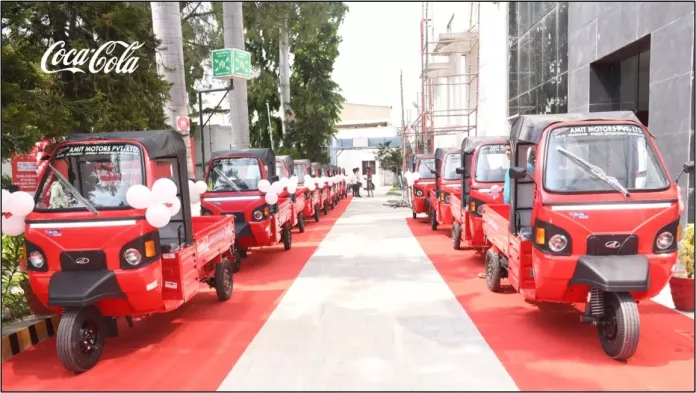

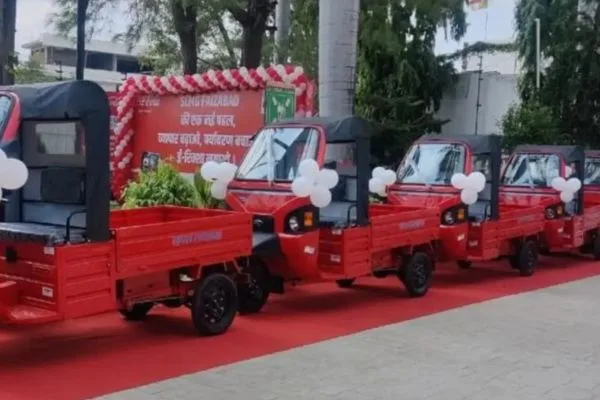
Global beverage giant Coca-Cola is making significant strides in India’s commercial electric vehicle adoption, expanding one of the country’s largest truck fleets with over 5,000 electric vehicles now operating nationwide. This massive investment showcases how multinational corporations are embracing sustainable logistics in India’s rapidly growing commercial EV market.
Table of Contents
Fleet Expansion by the Numbers
Coca-Cola’s bottling partners are leading this transformation with impressive deployment figures across different regions:
| Bottling Partner | EV Deployment | Timeline | Coverage |
|---|---|---|---|
| SLMG Beverages | 3,000+ EVs | Past 3 years | Rural markets |
| HCCB | ~500 EVs | Recent expansion | 10 states |
| Superior Drinks | 200 new trucks/EVs | 2025 addition | Enhanced distribution |
Strategic Impact on Indian Logistics
This expansion represents more than just fleet electrification—it’s reshaping India’s logistics ecosystem. The investment aims to boost last-mile distribution, create new employment opportunities, and strengthen supply chains connecting urban and rural markets.
Sundeep Bajoria, Vice President, Coca-Cola India, emphasized that “the trucking ecosystem is creating livelihoods across states while fuelling local economies.”
Driver Welfare and Safety Initiatives
Beyond vehicle electrification, Coca-Cola is prioritizing comprehensive driver welfare through:
- Annual road safety training programs
- Medical and vision check-ups
- Wellness seminars for drivers
- Regular vehicle assessments for operational standards
These initiatives demonstrate how companies can integrate workforce development with sustainable transportation strategies.
Market Leadership in Commercial EVs
The scale of Coca-Cola’s EV adoption positions the company as a major player in India’s commercial electric vehicle transformation. With products traveling hundreds of kilometers daily, this fleet electrification significantly impacts:
Economic Benefits
- Job creation across multiple states
- Local economy stimulation through logistics operations
- Rural market connectivity enhancement
Environmental Impact
- Reduced carbon footprint from logistics operations
- Support for India’s EV adoption goals
- Demonstration of corporate sustainability commitment
Industry Implications
Vinay Nair, Chief Commercial Officer at HCCB, highlighted that “fleet augmentation improves last-mile deliveries and supports agile, tech-enabled supply chains.”
This approach sets a benchmark for other multinational corporations operating in India, showing how large-scale EV adoption can be successfully implemented across diverse geographic and market conditions.
Future Growth Trajectory
The collective fleet of Coca-Cola bottlers is expected to grow further in the coming years, aligning with:
- Rising consumer demand, particularly in rural markets
- India’s push for electric mobility
- Corporate sustainability commitments
- Government incentives for commercial EV adoption
Rahul Kumar, Deputy CEO of SLMG, noted that “increasing the EV fleet aligns with the system’s growth objectives and rising consumer demand.”
As India accelerates toward sustainable logistics, Coca-Cola’s massive EV fleet expansion demonstrates how corporate leadership can drive both environmental sustainability and economic development.
Source: ITLN | Coca-Cola India

