

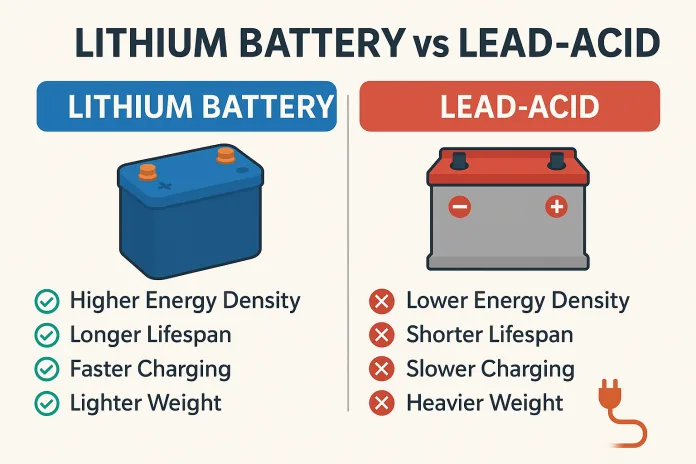

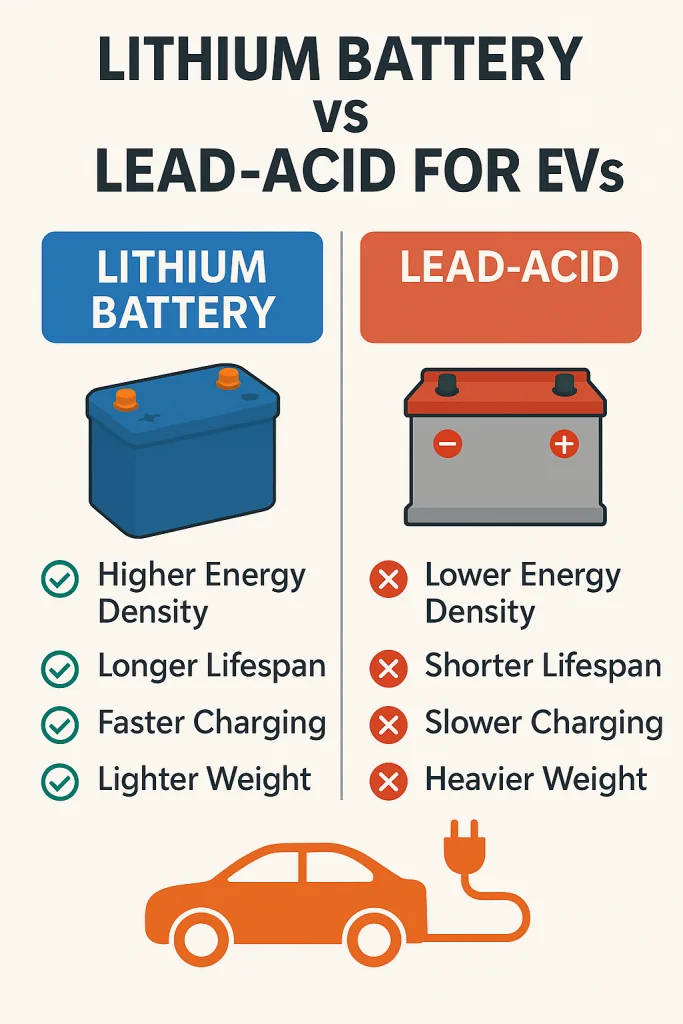
Lithium Battery vs Lead Acid for EVs: Choosing the right battery for your electric vehicle isn’t just about price—it’s about performance, longevity, and your overall driving experience. Let’s dive into the real differences between lithium and lead acid batteries that every EV owner should know.
Table of Contents
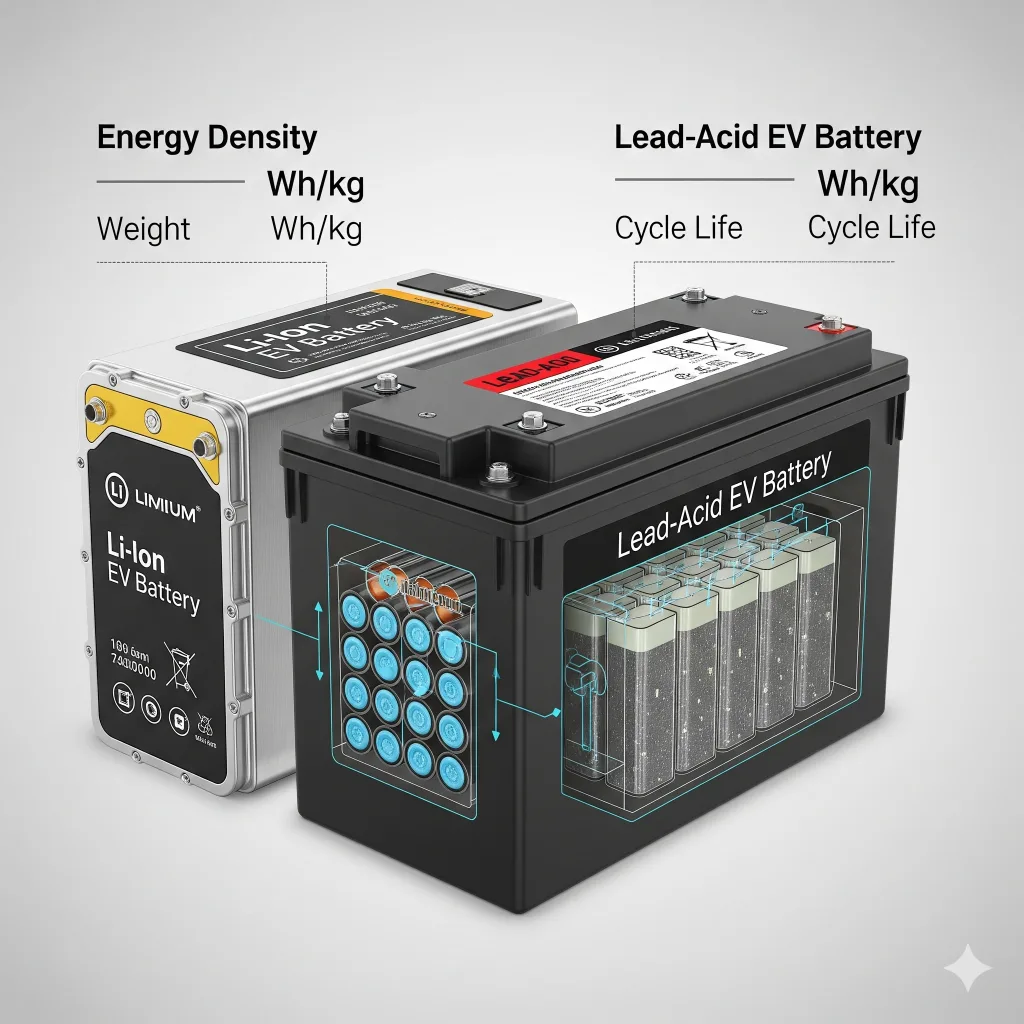
Performance Showdown: The Numbers That Matter
| Factor | Lithium Battery | Lead Acid Battery |
|---|---|---|
| Energy Density | 150-250 Wh/kg | 30-50 Wh/kg |
| Lifespan | 8-15 years | 3-5 years |
| Charging Time | 1-4 hours | 8-12 hours |
| Efficiency | 95-98% | 80-85% |
| Weight | 50-60% lighter | Heavier |
| Initial Cost | Higher | Lower |
Why Lithium Wins the Long Game
Range and Performance: Lithium batteries pack nearly 5x more energy per kilogram. This means your EV goes further on a single charge—typically 200-400 km compared to lead acid’s 80-120 km range.
Smart Charging: Unlike lead acid batteries that need careful maintenance, lithium batteries handle fast charging without degrading quickly. The Department of Heavy Industry’s guidelines support this technology for India’s EV mission.
Lifecycle Value: While lithium costs more upfront, it delivers a 2-3x longer lifespan. A lithium battery lasting 10+ years versus replacing lead acid batteries every 3-4 years makes financial sense.
When Lead Acid Still Makes Sense
For budget-conscious buyers or low-usage scenarios like neighborhood electric vehicles, lead acid remains viable. It’s proven, serviceable, and requires a lower initial investment.
Cost Breakdown Over Time
| 10-Year Period | Lithium Battery | Lead Acid |
|---|---|---|
| Initial Cost | ₹80,000 | ₹25,000 |
| Replacements | 0 | 2-3 times |
| Total Cost | ₹80,000 | ₹75,000-₹1,00,000 |
| Energy Savings | Higher efficiency | Lower efficiency |
Making Your Choice
For daily commuters and performance-focused riders, lithium batteries offer superior value despite higher upfront costs. The Ministry of Road Transport’s EV policy increasingly favors advanced battery technologies for sustainable transportation.
Ready to upgrade your EV experience? Consider your usage patterns, budget timeline, and performance needs. The future of electric mobility clearly points toward lithium technology—the question is whether you’re ready to make the switch today.
Looking for more EV insights? Check our latest EV technology trends and battery maintenance tips for optimal performance.

