

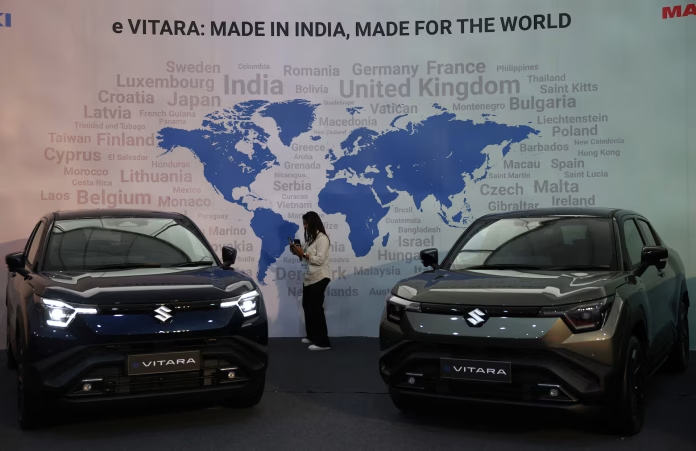

Japanese automotive giant Suzuki Motor Corp. has announced a groundbreaking investment that could reshape India’s electric vehicle landscape. The company will invest 700 billion rupees ($8 billion) in India over the next five to six years, marking one of the largest foreign investments in the country’s automotive sector.
Table of Contents
Game-Changing Investment Details by Suzuki Motors
The massive investment coincides with a major milestone – the start of production for Suzuki’s first electric vehicle. Here’s what this means for India’s automotive future:
| Investment Aspect | Details |
|---|---|
| Total Amount | $8 billion (₹70,000 crores) |
| Timeline | 5-6 years |
| Focus Areas | EV production, new models, capacity expansion |
| First EV Model | e-VITARA (export-focused initially) |
Strategic Significance for India
Suzuki is aiming to defend its lead in the world’s third-largest auto market through this ambitious investment. The company already dominates India’s passenger vehicle market through its majority stake in Maruti Suzuki, and this investment solidifies its long-term commitment to the Indian market.
The timing couldn’t be better as India pushes toward its electric mobility goals. With government incentives for EV adoption and growing environmental consciousness among consumers, Suzuki’s investment positions it perfectly for the electric transition.
Production Hub Strategy
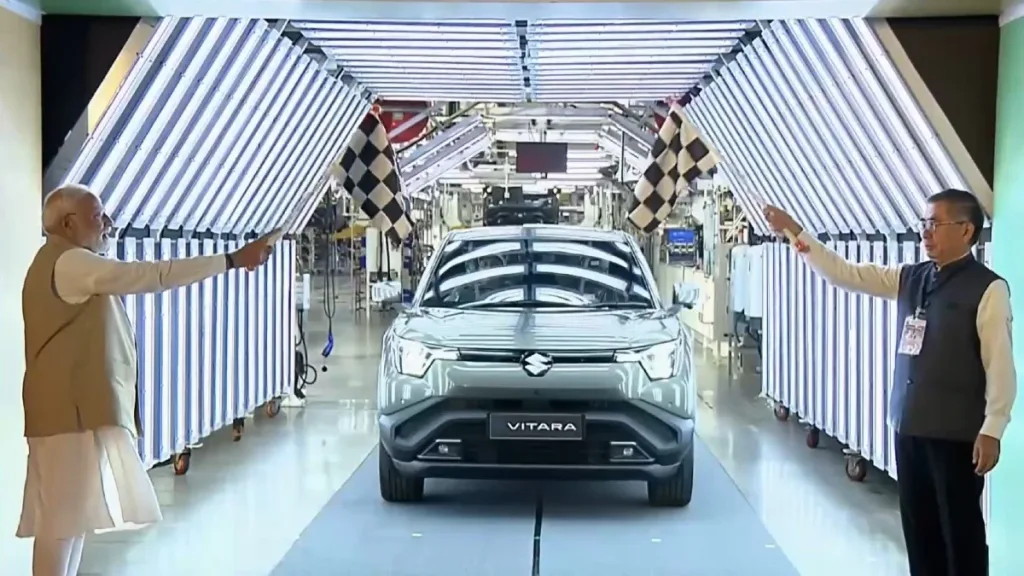
Manufactured exclusively at Suzuki Motor Gujarat (SMG), a unit of Maruti Suzuki India, the first batch of export-bound e VITARA will be shipped to international markets. This export-first approach demonstrates Suzuki’s confidence in using India as a global manufacturing hub.
Market Impact and Challenges
While the investment signals strong optimism, China’s export restrictions on rare earth materials—critical for EV motors—have forced Maruti Suzuki to slash e-Vitara production by two-thirds in early 2025. This highlights the complex supply chain challenges facing the global EV industry.
Looking Ahead
Suzuki’s $8 billion commitment represents more than just an investment—it’s a vote of confidence in India’s emerging role as a global EV manufacturing powerhouse. As the company expands its electric portfolio, Indian consumers can expect more affordable and locally-produced EV options in the coming years.
For more insights on India’s automotive transformation, explore our coverage of electric vehicle policies and automotive industry trends.
Sources: Nikkei Asia, Yahoo Finance

