

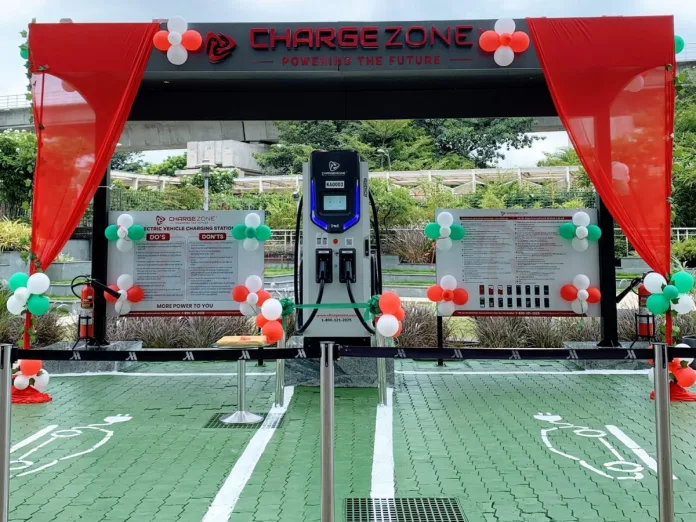

Karnataka has solidified its position as India’s electric vehicle charging powerhouse, operating the nation’s largest network of public EV charging stations. With ambitious infrastructure goals and significant government backing, the state is setting the blueprint for India’s electric mobility future.
Table of Contents
Karnataka’s EV Infrastructure Dominance
As of 2025, Karnataka operates approximately 5,765-5,880 public EV charging stations, making it the state with the highest count of public charging facilities in India. This impressive network stems from the state’s proactive 2017 EV policy and strategic vision for sustainable transportation.
Regional Distribution Breakdown
| City/Region | Charging Stations | Key Features |
|---|---|---|
| Bengaluru | ~2,900 stations | India’s largest urban EV hub |
| Mysuru | ~400 stations | Rapid expansion underway |
| Hubballi-Dharwad | ~350 stations | Industrial corridor focus |
| Highway Network | 489 stations | Covering 8,191 km of highways |
Source: Karnataka Government EV Data
Record-Breaking Infrastructure Milestones
India’s Largest Charging Hub
Karnataka recently inaugurated India’s largest EV charging hub in Bengaluru, featuring over 210 charging points with 80 DC fast chargers and 50 AC chargers, capable of simultaneously charging 210 vehicles with a capacity exceeding 4 megawatts.
Public Transport Electrification
The Bengaluru Metropolitan Transport Corporation (BMTC) expanded its EV bus fleet from 390 buses in 2024 to nearly 1,800 buses in 2025, supported by 17 bus depots equipped with modern charging facilities.
Market Performance and Adoption Rates
Strong EV Registration Numbers
- Total EV registrations (2024-25): 1.73 lakh vehicles
- EV penetration rate: 9.38% (above national average of 7.49%)
- Four-wheeler growth: Increased from 10,300 to 12,200 units
- Three-wheeler surge: Over 5,000 registrations in 2024-25
Infrastructure Challenges and Solutions
Despite leading nationally, Karnataka faces operational hurdles. Field checks across Bengaluru revealed that many charging stations are either non-operational or poorly maintained, causing range anxiety among EV users.
Key Improvement Areas
- Reliability: Enhanced maintenance protocols needed
- Universal standards: Standardization across manufacturers
- Rural expansion: Extending beyond urban centers
- Real-time monitoring: Digital tracking for station availability
Learn more about India’s EV charging infrastructure challenges and potential solutions.
Government Policy Impact
The state government scaled back ambitious plans to build 2,500 new public charging stations by early 2025 due to logistical hurdles and lack of central incentives. However, renewed focus on public-private partnerships could accelerate future expansion.
Future Outlook
Karnataka’s EV infrastructure success demonstrates that with proper policy support and strategic investment, states can create comprehensive charging networks. The state’s experience offers valuable lessons for national EV policy implementation.
Stay updated on Karnataka’s EV developments and India’s electric mobility revolution at indiaevnews.com
Related Coverage:

