

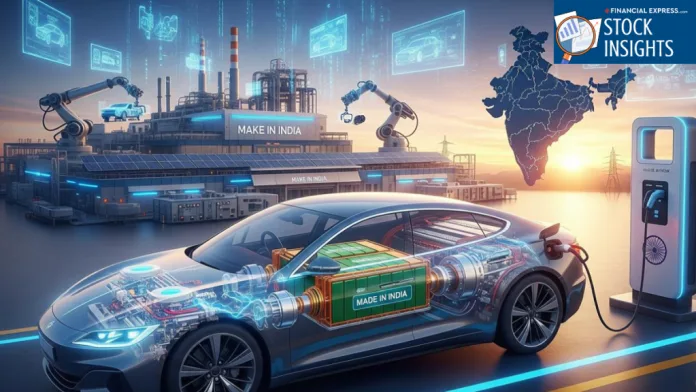

Make in India EV, India’s electric vehicle revolution isn’t just transforming local roads—it’s reshaping global supply chains. As the world races toward electrification, five Indian auto parts manufacturers have emerged as unlikely champions, securing billion-dollar contracts that position India as the next EV manufacturing powerhouse.
Table of Contents
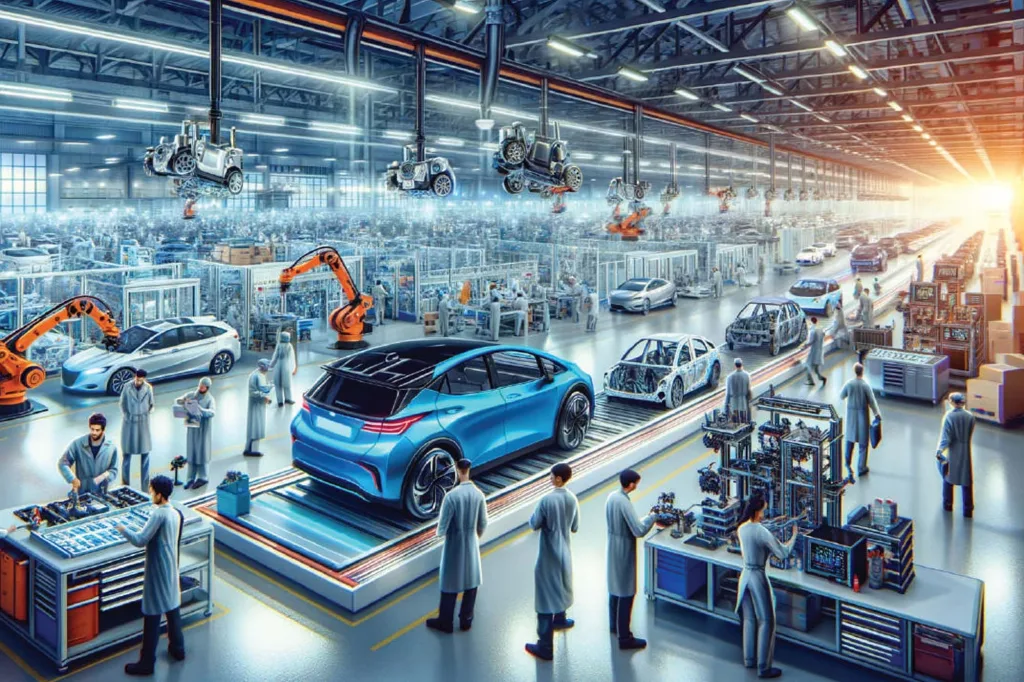
The Numbers Tell an Incredible Story
India’s EV market is projected to explode from $5.22 billion in 2024 to $18.32 billion by 2029—a staggering 28.52% annual growth rate. But here’s what’s even more remarkable: Indian companies aren’t just meeting domestic demand; they’re winning the trust of global giants.
India’s automotive components industry is set to exceed $80 billion in revenue for 2024-25, becoming a growing force in global supply chains. This isn’t just growth—it’s a fundamental shift in how the world views Indian manufacturing.
The Global Game Changers
While the specific companies leading this charge represent diverse specializations—from battery management systems to electric drivetrains—their success stories share common threads: innovation, cost-effectiveness, and scale that international OEMs can’t ignore.
These manufacturers have cracked the code that many established players struggle with: delivering high-quality EV components at competitive prices while maintaining the flexibility to scale rapidly. Their billion-dollar contracts aren’t just business wins; they’re validation of India’s emerging role as the world’s EV parts factory.
Why Global Giants Are Betting on India
The attraction goes beyond cost savings. Make in India has significantly boosted domestic car production and EV manufacturing capabilities. International automotive companies are discovering that Indian suppliers offer:
Technical Excellence: Indian engineers are developing cutting-edge solutions for complex EV challenges, from thermal management to software integration.
Manufacturing Scale: With decades of automotive experience, these companies can ramp up production to meet global demand quickly.
Supply Chain Resilience: Recent global disruptions have taught manufacturers the value of diversified, reliable supply chains.
The Ripple Effect
This success is creating a virtuous cycle. Auto component exports from India are expected to reach $80 billion by 2026, with the industry planning to invest ₹58,000 crore ($7 billion) by FY28.
Each major contract win attracts more international attention, leading to additional partnerships and technology transfers. Local talent pools deepen, innovation accelerates, and India’s reputation as a serious EV player solidifies.
What This Means for the Future
With EV sales in India reaching a record 1.95 million units in 2024—a 27% year-over-year growth—domestic demand provides a solid foundation for these companies to test and refine their products before scaling globally.
The billion-dollar deals these five companies have secured represent more than revenue—they’re proof points that India can compete at the highest levels of automotive technology. As global EV adoption accelerates, expect more Indian auto parts manufacturers to join this elite group.
The Make in India EV revolution isn’t coming—it’s already here. And these five companies are just the beginning of what promises to be a dramatic reshaping of the global automotive supply chain, with India at its center.

