

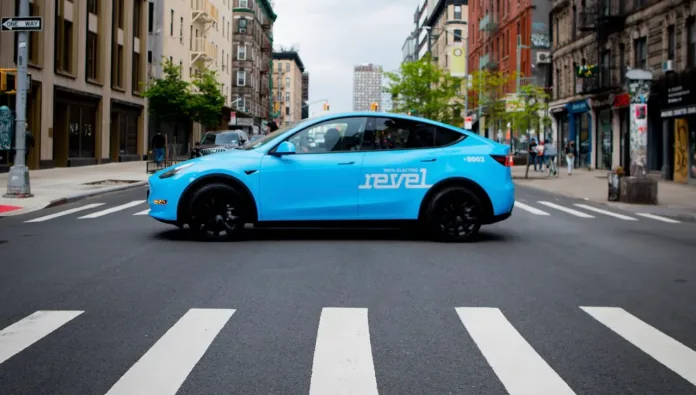

What happens when a company realizes they’ve been sitting on a goldmine without knowing it? Revel just answered that question by shutting down their entire ride-hailing business to focus on something far more profitable – EV charging stations that went from 21% to 45% utilization in just two years.
Table of Contents
The Shocking Pivot That Makes Perfect Sense
Picture this: You’re running a ride-sharing company with bright blue Teslas cruising New York streets, but your real money-maker is the charging stations where those cars refuel. That’s exactly the revelation that hit Revel’s leadership team.
After four years of ride-hailing operations, Revel announced they’re permanently closing their rideshare service to focus entirely on their fast-charging infrastructure business. It sounds crazy until you see the numbers.
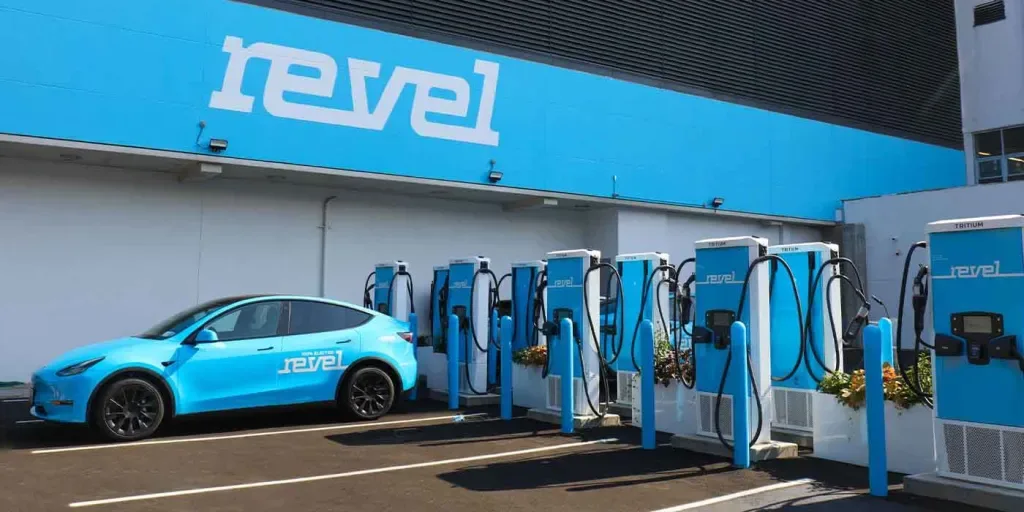
From Struggling Startup to EV Charging Powerhouse
Revel’s journey reads like a startup survival guide:
2019: Started renting electric scooters in NYC 2021: Launched ride-hailing with 50 Teslas AND opened their first charging stations
2023: Charging utilization sat at a disappointing 21% (mostly their own cars) 2025: Utilization exploded to 45% with external customers driving growth
The turning point? When Uber partnered with Revel in 2024, sending their drivers to Revel’s charging stations. Suddenly, Revel wasn’t just charging their own fleet – they were powering the entire rideshare ecosystem.
The Million-Dollar Decision: Why Charging Won
CEO Frank Reig didn’t mince words: “We have made the difficult decision that the best way we can keep the EV transition moving forward is by ending our rideshare service and focusing on building the fast charging infrastructure our biggest cities need.”
The math is compelling:
Asset Liquidation: Revel will sell their fleet of bright-blue Teslas and Kias, plus 165 for-hire vehicle license plates worth $20,000-$25,000 each. That’s potentially $4+ million in immediate capital.
Market Timing: While ride-hailing faces intense competition from Uber and Lyft, EV charging infrastructure is experiencing explosive demand with limited supply.
Utilization Growth: Jumping from 21% to 45% utilization in two years indicates a business hitting its stride, not struggling to survive.
The Real Story Behind the Numbers
Here’s what makes Revel’s pivot brilliant:
2023 Reality Check: With 19% of charging coming from their own fleet, it was essentially subsidizing their ride-hail business with charging infrastructure investments.
2025 Breakthrough: External customers now represent 88% of charging demand. Revel accidentally built a business that others desperately need.
Partnership Power: The Uber deal proved that major players would pay for reliable charging infrastructure, transforming Revel from a competitor to an essential service provider.
Aggressive Expansion Plans Signal Confidence
Revel isn’t just shutting down rideshare – they’re doubling down on charging with over 400 stalls planned across Los Angeles, New York, and San Francisco by end of 2026.
Current footprint: Six stations (five in NYC, one in San Francisco) Future vision: Coast-to-coast charging network serving major metropolitan areas Target market: Professional drivers and everyday EV owners seeking fast, reliable charging
Why This Pivot Could Be Genius
The EV charging market is exploding while ride-hailing plateaus:
Growing Demand: Every new EV sold creates recurring charging revenue opportunities Less Competition: Unlike oversaturated ride-hailing, charging infrastructure has room for multiple players Recurring Revenue: Drivers return to charge regularly, creating predictable income streams Government Support: Infrastructure investments often receive regulatory and financial backing
Lessons for Entrepreneurs Everywhere
Revel’s story offers crucial insights for any business owner:
Listen to Your Data: When external utilization grows from 2% to 33% in two years, that’s your market speaking Pivot When Evidence Demands It: Sometimes your side business becomes your main business Asset Optimization: Converting struggling assets into growth capital can fuel your real opportunity
The Road Ahead: Charging Into the Future
Revel’s bold move reflects a broader truth about the EV revolution: Infrastructure will ultimately matter more than individual vehicles. While car manufacturers fight for market share, companies like Revel are building the foundation that makes electric mobility possible.
The question isn’t whether Revel made the right choice – it’s whether they moved fast enough to capture the massive opportunity in front of them.

