

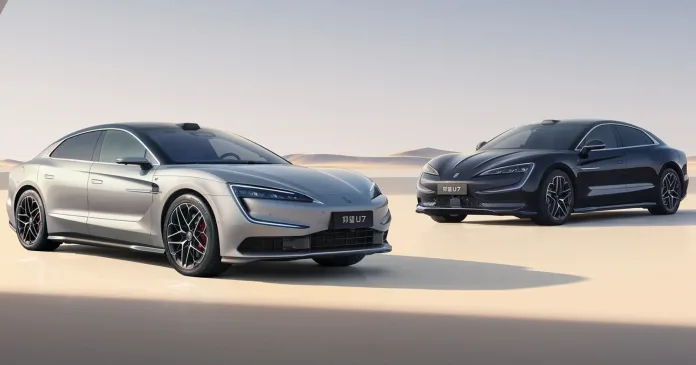

Imagine producing 13 million electric cars—enough to replace every vehicle in Mumbai, Delhi, and Bangalore combined. That’s exactly what China’s BYD has achieved, marking a historic milestone that cements its position as the world’s electric vehicle champion while revealing surprising challenges in India’s growing EV market.
Table of Contents
The Historic Moment That Changed Everything
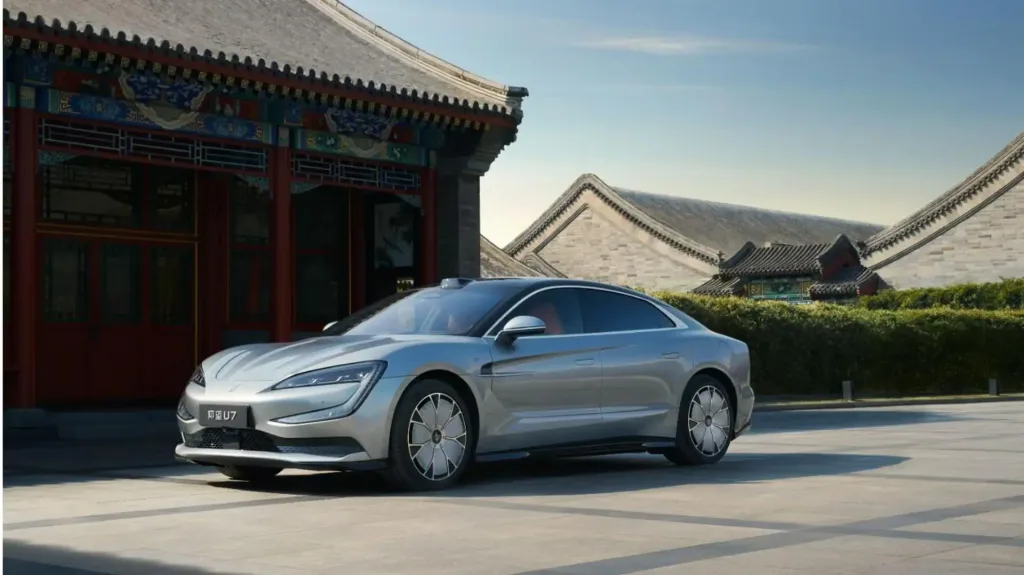
On Monday, BYD’s Shenzhen factory witnessed history as the luxury sedan Yangwang U7 became the company’s 13-millionth new energy vehicle to roll off the production line. This isn’t just a number—it’s a testament to how rapidly the global automotive landscape is transforming.
The milestone comes amid explosive growth for the Chinese giant. BYD’s H1 2025 sales soared to 2.113 million units domestically (up 31.5% year-over-year) and 472,000 overseas (up 128.5% year-over-year), proving that the electric revolution isn’t slowing down—it’s accelerating.
India: The Challenging Frontier
While BYD dominates globally, its India story reads like a cautionary tale of ambition meeting reality. Entering in 2022 with the e6 MPV for corporate fleets, BYD now targets affluent Indian buyers with a premium portfolio, but the numbers tell a sobering story.
Despite grand ambitions, BYD sold just around 2,400 units in India in 2024—making it a niche player in a market where Tata commands 72% of the EV share. That’s fewer cars than some successful dealerships sell in major Indian cities.
The Premium Pricing Puzzle
What’s holding BYD back in India? The answer lies in a fundamental mismatch between strategy and market reality. High prices and import dependency (CKD assembly near Chennai) limit volume growth, creating a barrier that even BYD’s technological prowess can’t overcome.
BYD’s premium positioning contrasts sharply with Tata’s ₹10 lakh Nexon EV and MG’s sub-₹25 lakh offerings. In a price-sensitive market where families stretch budgets for their first car, premium positioning often means premium problems.
The Global Success vs. Local Struggles
BYD’s 128.5% overseas surge highlights aggressive European and SEA expansion, where consumers readily embrace premium electric vehicles. European buyers see EVs as luxury lifestyle statements, while Indian buyers primarily view them as practical transportation solutions.
This disconnect explains why BYD thrives in markets like Norway, where government incentives make luxury EVs accessible, but struggles in India, where every rupee counts and charging infrastructure remains patchy.

The Road Ahead: Patience and Strategy
With India’s EV market projected to hit 1.5 million units by 2030, BYD hints at future “made-in-India” models. This localization strategy could be the game-changer the company needs, potentially bringing costs down and volumes up.
For now, it banks on premium branding and global R&D might to woo early adopters, even as rivals Tata and Mahindra race ahead in mass segments. It’s a waiting game where patience might eventually pay dividends.
The Bigger Picture
As BYD‘s Yangwang U7 symbolizes its high-end aspirations globally, India remains a high-potential—but patience-testing—frontier. The company’s 13-million milestone proves it knows how to scale globally, but India’s unique market dynamics demand a different playbook.
Success in India isn’t just about superior technology or global pedigree—it’s about understanding that the family buying their first electric car cares more about value than prestige. Until BYD cracks this code, its India dreams may remain as premium as its pricing.

