

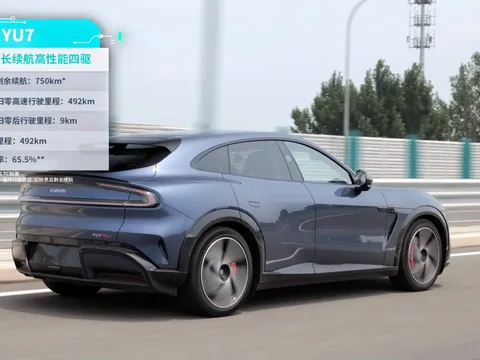

A shocking reality check has emerged from independent testing of China’s most hyped electric SUV. The Xiaomi YU7 Max, touted as a Tesla Model Y killer with jaw-dropping range claims, just had its performance bubble burst in spectacular fashion.
Table of Contents
The Promise vs. Reality Gap
On paper, the Xiaomi YU7 Max sounds like an EV dream come true. With an official range specification of 466 miles, it completely demolishes the Tesla Model Y’s 344-mile EPA rating. That’s a difference that should make Tesla engineers lose sleep at night.
But here’s where the story takes a dramatic turn.
The Shocking Test Results
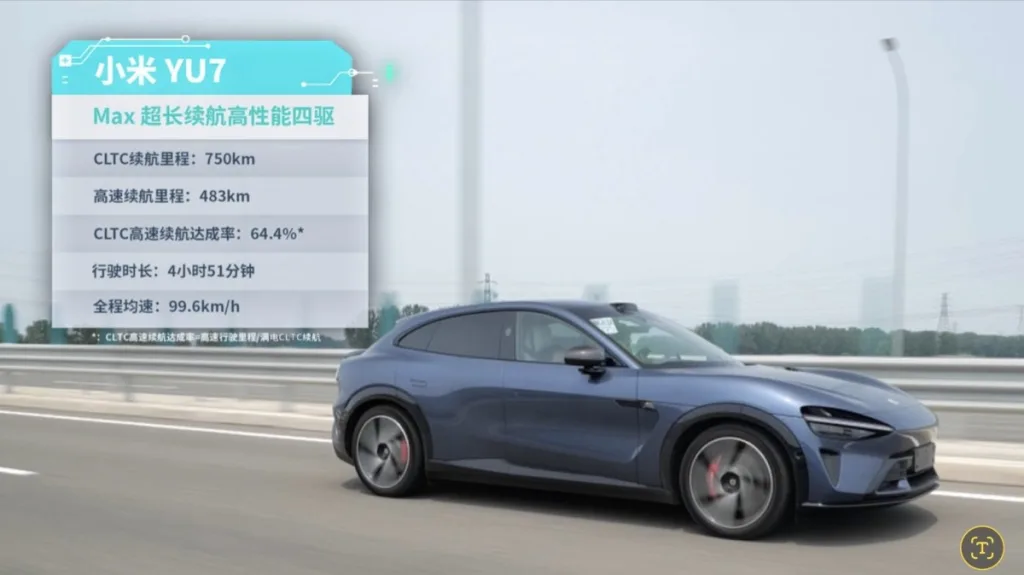
Independent range testing conducted under real-world conditions revealed a devastating truth: the YU7 Max managed only 306 miles—160 miles short of its official rating. That’s not a small discrepancy; that’s a 34% difference that could leave drivers stranded on highways.
The test wasn’t conducted under harsh conditions either. Warm weather, proper tire pressure, and a steady 62 mph speed on a closed loop around Beijing—these were ideal circumstances that should have favored maximum range performance.
Why Chinese EV Claims Don’t Add Up
The culprit behind these inflated numbers? China’s CLTC testing standard, which creates a fantasy world where electric vehicles perform far better than they do in real life. While the United States uses the more stringent EPA testing routine, Chinese manufacturers rely on CLTC standards that consistently overshoot realistic range estimates by about one-third.
This isn’t just about Xiaomi. The entire Chinese EV industry has been caught in this web of inflated expectations, creating a false narrative about electric vehicle capabilities that misleads consumers worldwide.
The Huawei Reality Check
The problem extends beyond just range testing. Recently, Huawei made headlines claiming their solid-state battery technology could deliver an outrageous 1,864-mile range with just five minutes of charging. Sounds revolutionary, right?
When you apply real-world calculations and account for CLTC inflation, that number shrinks dramatically to around 800 miles—still impressive, but nowhere near the headline-grabbing claim that initially captured global attention.
What This Means for EV Buyers
For consumers considering Chinese electric vehicles, this revelation serves as a crucial wake-up call. Those impressive range specifications plastered across marketing materials and press releases need to be viewed with healthy skepticism.
The math is simple: take any Chinese EV range claim and reduce it by approximately 30-35% to get a realistic expectation of real-world performance. That 500-mile range becomes 350 miles. That 400-mile claim drops to 280 miles.
The Global Impact
This testing standard discrepancy creates an unfair competitive landscape. Chinese EV manufacturers can claim superior range performance on paper, while international competitors using EPA standards appear less impressive, despite potentially offering better real-world performance.
The Xiaomi YU7 Max’s power consumption of about 20 kWh per 100 kilometers during highway driving proves that Chinese manufacturers aren’t achieving miraculous efficiency breakthroughs—they’re simply using more generous testing methods.
The Path Forward
While the EPA testing routine isn’t perfect and can still fall short of real-world conditions, it remains the most credible official standard for comparing electric vehicle range capabilities. Until China adopts more stringent testing protocols, consumers must become educated translators of marketing claims.
For the EV industry to maintain credibility and consumer trust, standardized, realistic testing methods across all markets aren’t just preferable—they’re essential. The Xiaomi YU7 Max’s real-world performance proves that impressive numbers on paper mean nothing if they can’t be delivered on the road.

