

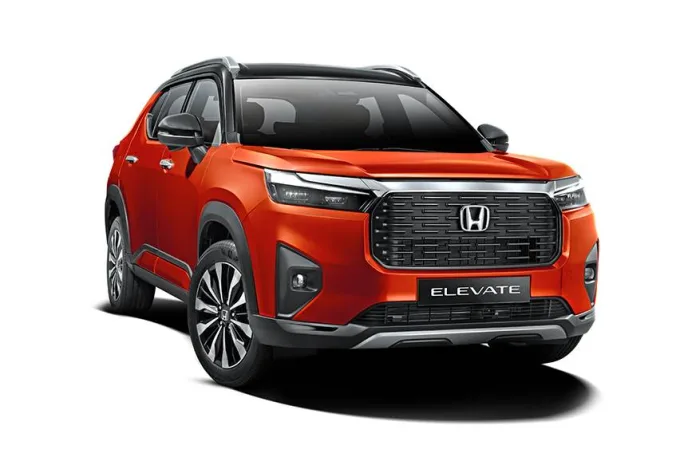

Honda is revolutionizing India’s hybrid landscape with an ambitious expansion plan that promises to make advanced hybrid technology accessible to mainstream buyers. As compared to Honda’s existing hybrid offering (City e:HEV), newer hybrid models will be more accessible, starting at around Rs 15 lakh, marking a significant shift from the current City e:HEV’s ₹20.85 lakh price point.
Table of Contents
Honda’s Strategic Roadmap: What’s Coming When
The automaker’s expansion centers around the new PF2 modular platform that supports multiple powertrains including hybrids, ICE, and EVs. Here’s what Indian buyers can expect:
| Vehicle | Launch Year | Expected Price | Key Features |
|---|---|---|---|
| 3-Row SUV | 2027 | ₹15-20 lakh | Strong hybrid, above Elevate positioning |
| 6th Gen City | 2028 | ₹15-18 lakh | Petrol + hybrid options |
| Sub-4m SUV | 2029 | ₹12-16 lakh | Elevate’s 1.5L engine, localized |
| Elevate EV | 2026 | ₹18-22 lakh | First Honda EV for India |

Why This Matters for Indian Buyers
Breaking the Premium Barrier: The City hybrid has been a slow seller right from launch, thanks to a significant premium of more than Rs 4 lakh over the regular City petrol. Honda’s new strategy addresses this crucial affordability gap.
Government Support Advantage: With FAME-III incentives and 15 per cent subsidy up to Rs 3 lakh for hybrid cars in states like Haryana, Honda’s timing aligns perfectly with supportive policies.
Market Impact and Competition
Honda’s move comes as hybrid adoption gains momentum. The most affordable strong hybrid option currently available in India is the Toyota Urban Cruiser Hyryder. It is available in the price range of Rs 16.81 lakh to Rs 20.19 lakh.
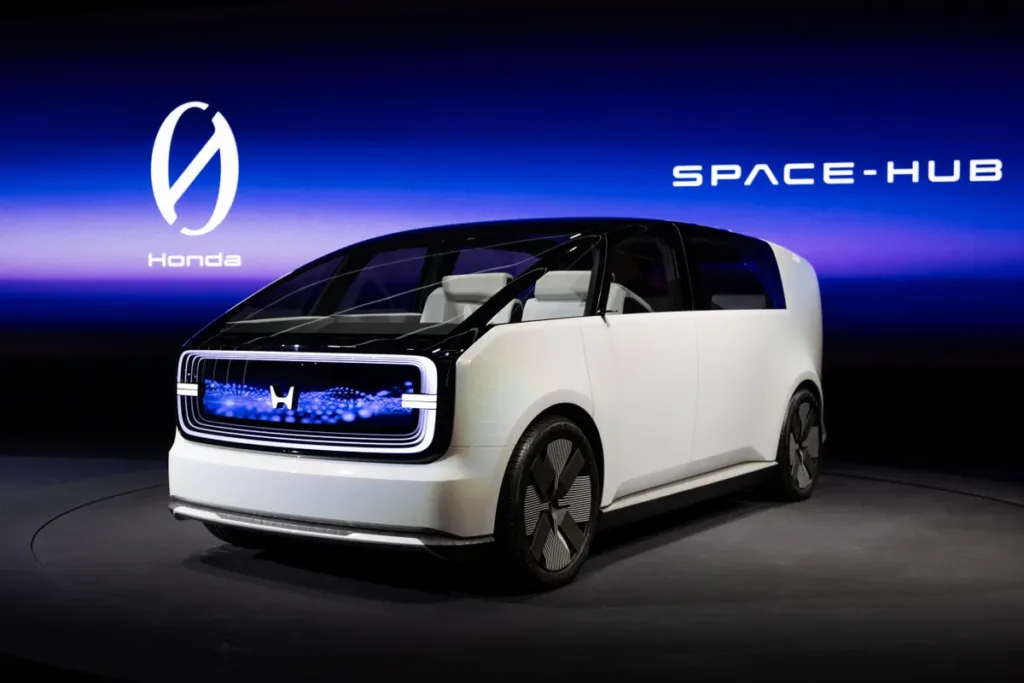
Local Manufacturing Advantage: Honda’s new PF2 platform will be different, as it will see a high level of localization, enabling competitive pricing and establishing India as a key production hub for global markets.
What Makes Honda’s Strategy Smart
Multi-Energy Flexibility: The PF2 platform’s adaptability allows Honda to quickly respond to market shifts between ICE, hybrid, and full-electric demand.
Production Efficiency: High localization reduces import dependency, a key factor that made the current City e:HEV expensive due to complex tech and relies on imported components.
The Road Ahead for Indian Mobility
Honda’s expansion comes at a crucial time. The Indian government aims to increase the share of EV sales to 30% in private cars by 2030, making hybrids a crucial bridge technology.
For detailed coverage of Honda’s electrification journey, visit our Honda EV News section. Stay updated with the latest hybrid car reviews and government EV policies.
Bottom Line: Honda’s ₹15 lakh starting price strategy could finally make hybrid technology mainstream in India, offering buyers the perfect blend of fuel efficiency and affordability without the range anxiety of pure EVs.
Track Honda’s hybrid revolution and India’s EV transformation at IndiaEVNews.com – Your trusted source for electric mobility insights.

