

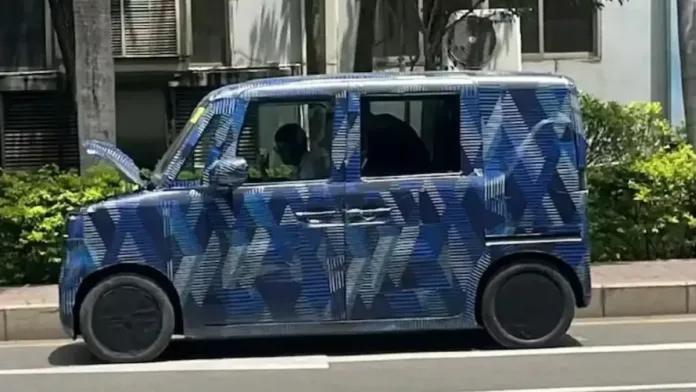

In the rapidly evolving landscape of electric vehicles, Chinese automotive giant BYD has once again captured attention with its latest innovation. Recent spy shots have revealed BYD’s first-ever mini electric vehicle, designed in the style of Japanese “kei cars,” undergoing road testing.
This compact EV represents BYD’s strategic move into the ultra-compact vehicle segment, potentially disrupting both the Japanese market and possibly finding its way to Indian shores. With its distinctive boxy design, sliding doors, and compact dimensions, this new mini EV could redefine urban mobility solutions for congested city environments while maintaining BYD’s reputation for affordable electric transportation.
The emergence of this mini EV comes at a time when global automakers are increasingly focusing on smaller, more efficient electric vehicles for urban environments. BYD, already known for its aggressive pricing strategy and vertical integration in manufacturing, appears poised to challenge Japanese dominance in the kei car segment while potentially opening new markets like India, where compact, affordable EVs could address significant transportation challenges in densely populated urban centers.
BYD’s Bold Entry into the Kei Car Segment
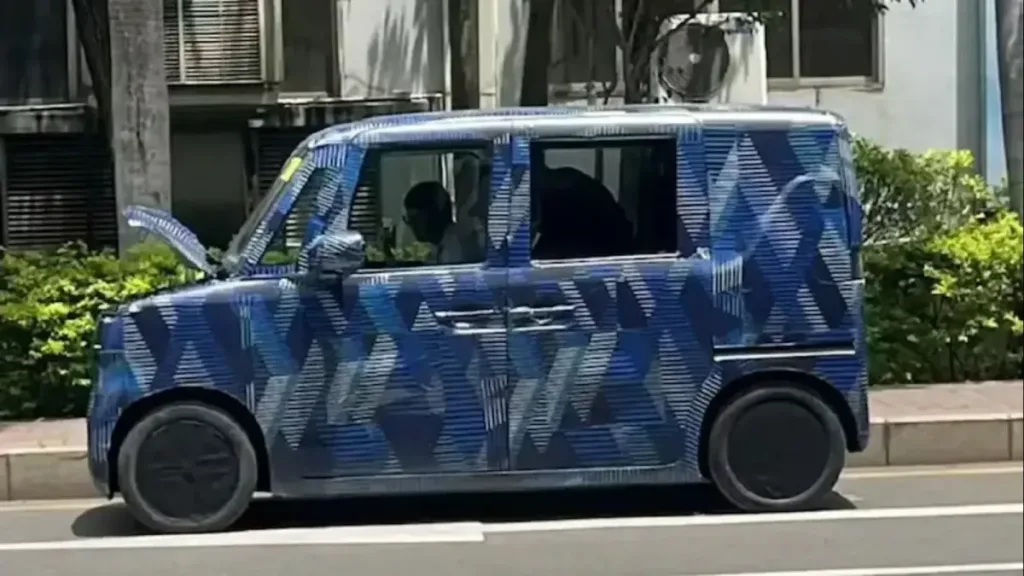
The spy images reveal a vehicle that adheres to the classic kei car formula – boxy, practical, and extremely compact. Traditional kei cars must conform to strict size limitations, typically under 3.4 meters in length and around 1.48 meters in width. This makes them significantly smaller than BYD’s current smallest offering, the Dolphin Mini (known as Seagull in some markets), which measures 3,780mm in length.
“These cars are typically manufactured by Japanese OEMs, and nearly no other manufacturer has successfully produced a car that meets the restrictions of this category,” notes automotive journalist Amulya Raj Srinet from NDTV Auto source.
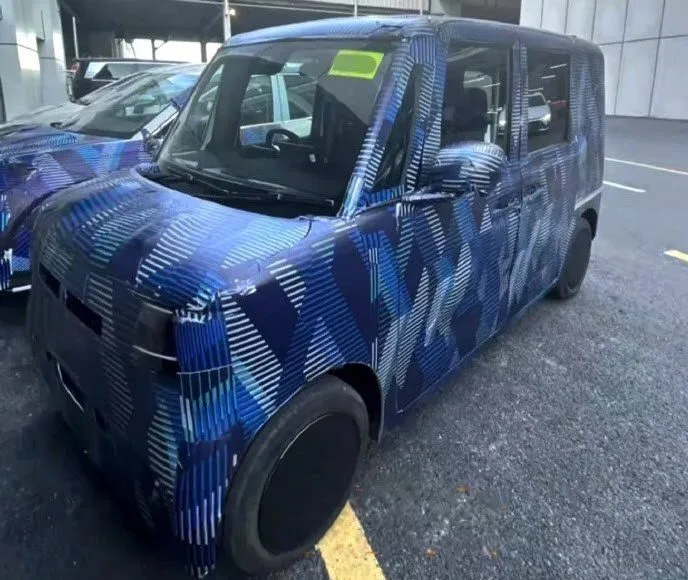
The test vehicle spotted in camouflage displays several distinctive kei car characteristics:
- Ultra-compact dimensions (likely under 3.4 meters)
- Boxy, space-efficient design
- Sliding side doors for easy access in tight spaces
- Flat surfaces with minimal curves or contours
Technical Specifications and Platform Innovation
According to industry reports, the company is developing an entirely new platform specifically for this mini EV. The vehicle is expected to feature:
- A 20 kWh battery pack
- Approximately 180 km (112 miles) of range on the WLTC testing cycle
- BYD’s proprietary Blade LFP (Lithium Iron Phosphate) batteries
- Competitive pricing around 2.5 million yen (approximately $18,000) in Japan
“By using its in-house Blade LFP batteries, BYD is expected to have a cost advantage,” reports Peter Johnson from Electrek source.
This vertical integration in manufacturing – from batteries to complete vehicles – has been a cornerstone of BYD’s strategy, allowing it to offer electric vehicles at price points that challenge even established manufacturers.
Market Impact and Competitive Landscape
The introduction of the company’s mini EV has already sent ripples through the automotive industry, particularly in Japan where kei cars represent a significant market segment. In 2024, approximately 1.55 million kei cars were sold in Japan, accounting for roughly 40% of all new vehicle sales.
Japanese dealers have expressed concern about the company’s entry into this space. As one Suzuki dealer told Nikkei, “Young people do not have a negative view of BYD. It would be a huge threat if the company launches cheap models in Japan.”
The mini EV will compete directly with established models like:
- Nissan Sakura (Japan’s best-selling EV in 2024)
- Mitsubishi eK X
- Honda N-Box (Japan’s top-selling kei car for three consecutive years)
| Model | Starting Price | Range | Market Position |
|---|---|---|---|
| BYD Mini EV (Expected) | ~$18,000 (2.5M yen) | ~180 km (112 miles) | Upcoming challenger |
| Nissan Sakura | ~$18,000 (2.59M yen) | ~180 km | Current EV market leader |
| Honda N-Box | ~$14,000 (2.0M yen) | N/A (ICE vehicle) | Overall kei car leader |
Potential for Indian Market Entry
While the mini EV is primarily targeted at the Japanese market, industry observers speculate about its potential introduction in India. “Considering the recent development and propagation of EVs in India, BYD might contemplate launching it in the country,” suggests NDTV Auto.
BYD has been steadily expanding its presence in India with models like:
- Atto 3 SUV
- e6 MPV
- Seal sedan
According to V3Cars, BYD has several vehicles planned for the Indian market in 2025-2026, including the Sealion 6 SUV and E9 sedan. The addition of an affordable mini EV could significantly strengthen BYD’s position in India’s growing electric vehicle market.
The BYD Manufacturing Advantage
BYD’s ability to produce affordable electric vehicles stems from its comprehensive vertical integration. The company manufactures virtually every component in-house, from batteries to motors to electronics, giving it significant cost advantages over competitors who rely on external suppliers.
This manufacturing approach has enabled the company to produce vehicles like the Seagull (Dolphin Mini) for under $10,000 in China while still maintaining profitability. The same strategy is likely to be applied to the new mini EV, potentially making it one of the most affordable electric vehicles in any market it enters.
Also Read: TVS Electric Scooter to Hit Markets Soon
Frequently Asked Questions
When will BYD’s mini EV be available for purchase?
Based on current information, BYD’s mini EV is still in the testing phase. Industry reports suggest it may launch in Japan in 2026, with potential availability in other markets like India to be determined. The vehicle has only recently been spotted in road tests, indicating it’s still in development.
How does BYD’s mini EV compare to other small electric vehicles in India?
BYD’s mini EV would be significantly smaller than current electric offerings in India. At under 3.4 meters in length, it would be more compact than models like the Tata Tiago EV (3.8 meters) or MG Comet EV (2.9 meters). Its expected range of around 180 km would be competitive with entry-level EVs in the Indian market, while its potential price point could make it an attractive option for urban commuters if BYD decides to introduce it to India.

