



Indian EV charging startup funding reaches a new milestone as IPEC secures $3 million in fresh investment from Gruhas. As India’s electric vehicle market experiences rapid growth, the demand for reliable charging infrastructure continues to surge.
Additionally, IPEC stands among the leading EV charging companies in India, addressing the critical need for accessible charging solutions across the country. The company’s innovative approach has attracted attention from major investors, positioning it alongside other successful EV startups in India’s expanding market.
Consequently, this strategic funding positions IPEC to strengthen its presence among the top 10 EV charging companies in India while accelerating the nation’s transition to sustainable transportation.
IPEC: Pioneering EV Charging Solutions in India
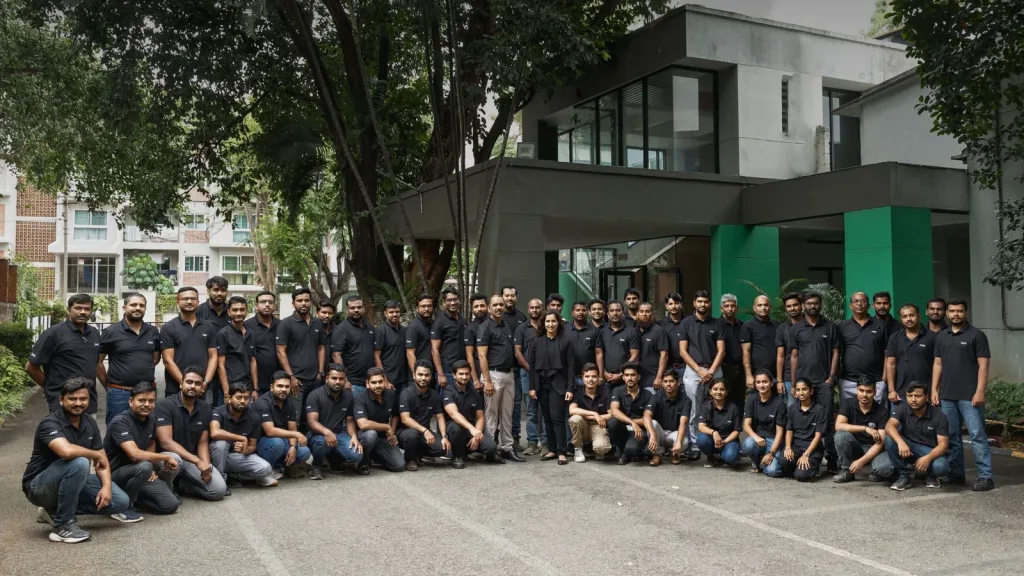
Founded in 2017, IPEC has established itself as a formidable player in India’s electric vehicle infrastructure sector through strategic partnerships and indigenous manufacturing. The Bengaluru-based company emerged as a joint venture bringing together three established entities: MEHER Group, Deki Electronics, and Sungho Electronics 1. This collaboration combines over 135 years of collective expertise in power electronics, electrical systems, and manufacturing 1.
Company Background and Founders
IPEC operates under the leadership of CEO Zohra Khan, who has articulated a clear vision for the company’s role in India’s electric mobility ecosystem. “Traditionally, India’s reliance on imports for power electronics has been high. At IPEC, we are changing that by designing and manufacturing power electronic products in India, for India and the world,” noted Khan 1. The joint venture structure has provided IPEC with a strong foundation, bringing together specialized knowledge across critical domains necessary for developing advanced charging infrastructure.
Notably, the company’s leadership team has focused on reducing import dependency, aligning with India’s broader self-reliance initiatives. Their business strategy emphasizes localized production that meets international quality standards, a factor that has attracted significant attention from investors and partners alike.
Product Portfolio and Technology
IPEC’s comprehensive product range spans the entire EV charging ecosystem, addressing various market segments:
- Charging Hardware: Smart and reliable chargers for two-wheelers, three-wheelers, and four-wheelers; home chargers; portable and onboard chargers; public charging stations 1
- Connection Systems: EV charging connectors and vehicle inlets designed for seamless integration 1
- Software Solutions: Cloud-based Charging Management System (CMS) and user-friendly mobile applications offering real-time control and insights 1
Furthermore, IPEC has distinguished itself by ensuring all products comply with both national and international standards, including recent localization regulations such as the PM E-Drive initiative and Production-Linked Incentive (PLI) Scheme 1. This compliance has positioned the company favorably with OEMs seeking reliable domestic partners for their charging infrastructure needs.
Growth Trajectory and Market Position
Since its inception, IPEC has witnessed remarkable growth in India’s expanding EV ecosystem. The company has successfully delivered over 1 million EV charging products to leading electric vehicle manufacturers in India 1, establishing itself as a trusted supplier in the market. Its client portfolio includes several prominent names in the electric mobility space, such as Ather Energy, Bajaj Auto, and Greaves Electric Mobility (Ampere) 2.
On the financial front, IPEC reported a 40% revenue growth in FY25 1, reflecting the increasing demand for its products. Looking ahead, the company projects doubling its revenue in FY26 1, indicating strong business momentum. To support this anticipated growth, IPEC is actively scaling up its manufacturing capacity to 50,000 units per month 1.
The recent funding from Gruhas signifies investor confidence in IPEC’s approach and growth potential. According to Abhijeet Pai, Co-Founder of Gruhas, “IPEC is fast emerging as a changemaker in India’s EV charging ecosystem… By already serving four of India’s top OEMs, they’ve set benchmarks in manufacturing chargers, especially for the two-wheeler segment” 1. Their technical capabilities position them well for expansion beyond the current product range into broader applications across the electric mobility spectrum.
The $3 Million Funding Round
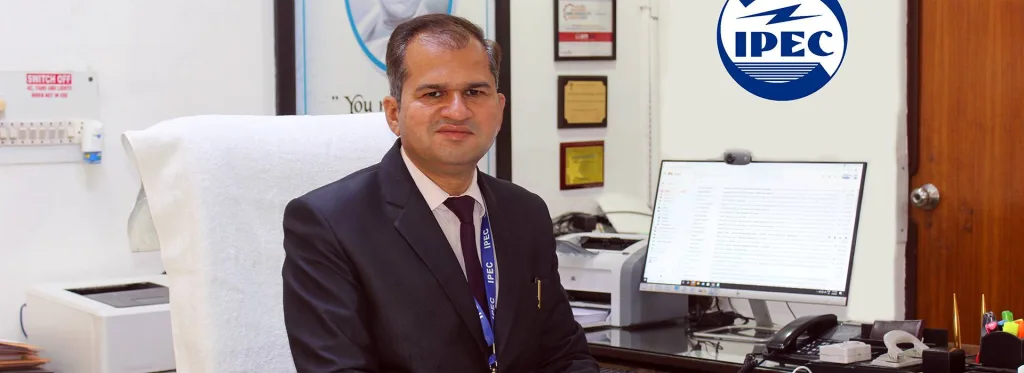
Bengaluru-based EV charging startup IPEC has secured a major financial boost with INR 253.14 million (approximately $3 million) in fresh funding from Gruhas, an investment platform co-founded by Nikhil Kamath of Zerodha fame and Abhijeet Pai 345. The funding marks a significant milestone for this emerging player in India’s electric vehicle infrastructure space.
Gruhas Investment Details
The investment from Gruhas represents a strategic move into the EV infrastructure sector by the investment firm. Nikhil Kamath, co-founder of Zerodha, and Abhijeet Pai established Gruhas as a platform focused on supporting innovative companies with strong growth potential 56. The funding transaction was completed in April 2024, with Gruhas acquiring a minority stake in IPEC 7.
Abhijeet Pai, co-founder of Gruhas, expressed strong confidence in IPEC’s capabilities: “IPEC is fast emerging as a changemaker in India’s EV charging ecosystem. As the country accelerates toward an electric future, reliable and scalable charging infrastructure built on quality components, sub-assemblies, and smart chargers becomes mission-critical” 78.
Strategic Importance of the Funding
This capital infusion arrives at a pivotal moment for IPEC, which has demonstrated substantial market traction in recent periods. The company recorded impressive 40% revenue growth in FY25 and anticipates doubling its revenue in FY26 86. The funding solidifies IPEC’s position among top EV charging companies in India while providing resources to capitalize on growing market opportunities.
For the broader Indian EV ecosystem, this investment highlights increasing investor confidence in domestic manufacturing capabilities. Gruhas’ backing validates IPEC’s business model that emphasizes indigenous production aligned with government initiatives like “Make in India” 2.
Planned Utilization of Funds
IPEC has outlined several strategic priorities for deploying the newly secured capital:
- Manufacturing Expansion: The company plans to scale its production capabilities to 50,000 units per month, significantly increasing output capacity 46
- Market Leadership Consolidation: Funds will help strengthen IPEC’s position in the EV charging sector while accelerating growth across the broader power electronics domain 32
- Global Market Entry: The investment enables IPEC to explore opportunities beyond India, expanding its geographical footprint 62
- Product Development: Enhancing existing product lines and developing new solutions to address evolving market needs 7
Zohra Khan, CEO of IPEC, highlighted how this investment aligns with national priorities: “This investment by Gruhas shall further propel our contributions to the ‘Make In India’ mission and enhance India’s EV ecosystem. This investment also enables the firm to expand its avenues and capabilities across global markets” 2.
The funding represents not just a financial transaction but a strategic alliance that positions IPEC to play a more significant role in India’s transition to electric mobility, particularly as EV adoption accelerates across vehicle segments.
India’s EV Charging Infrastructure Landscape
The landscape for electric vehicle charging infrastructure in India is at a critical inflection point. Currently, the country has approximately 12,146 operational public EV charging stations across various states . Maharashtra leads with 3,079 stations, followed by Delhi (1,886), Karnataka (1,041), and Kerala (852) .
Current Market Status
India’s EV charging market was valued at USD 588.6 million in 2023 and is projected to reach USD 5695.6 million by 2030, growing at a remarkable CAGR of 39.1% 10. However, a significant infrastructure gap persists with only one public charger available per 135 EVs—far below the global average of one per 6-20 EVs 1. To accommodate India’s ambitious goal of 80 million EVs by 2030, the country will require approximately 3.9 million public and semi-public charging stations 1.
Investment momentum in the sector is building, with more than INR 37971.20 million (₹30,000 crores) already invested in startups operating charging networks and battery-swapping models 1. Between March 2023 and February 2024, the number of operational public EV charging stations nearly doubled from 6,586 to 12,146 1.
Government Initiatives and Policies
The Ministry of Power issued revised consolidated guidelines for EV charging infrastructure in January 2022, aiming to accelerate EV adoption through accessible charging networks 11. Key provisions include:
- Mandating at least one EV charging station in a grid of 3 km × 3 km in cities and one station every 25 km on highways 11
- Simplifying electricity connections for charging stations with specific timelines: 7 days in metro cities, 15 days in municipal areas, and 30 days in rural areas 11
- Limiting electricity tariffs to not exceed the “average cost of supply” until March 2025 11
The PM E-DRIVE scheme has allocated INR 2,000 crore for charging infrastructure, targeting 22,100 fast chargers for 4-wheelers, 1,800 for e-busses, and 48,400 for 2/3-wheelers 12. Moreover, under FAME-II, the Department of Heavy Industries sanctioned 2,636 charging stations across 62 cities in 24 states 13.
Key Players and Competition
The EV charging infrastructure sector features diverse players encompassing charger manufacturers, charge point operators (CPOs), and battery swapping companies. Major players in this competitive landscape include:
- Tata Power: Leading the market with an ambitious plan to establish 400,000 charging points by 2027 14
- Public sector oil companies (IOCL, BPCL, HPCL): Collectively installing charging networks across 18,000+ locations 14
- Private operators: Chargemod, Bolt.Earth, Statiq, Exicom, and ChargeZone 10
- OEM-led initiatives: Maruti Suzuki (planning 1,500 chargers) and Hyundai (targeting 600 fast charging stations by 2031) 14
Despite progress, metropolitan and urban areas dominate charging infrastructure development, while rural and northeastern regions require significant attention and investment 15. The capital-intensive nature of building charging stations, land acquisition challenges, and grid reliability issues remain key roadblocks to faster expansion 1.
Future Growth Plans and Industry Projections
With ambitious growth targets on the horizon, IPEC is positioning itself for significant expansion in both domestic and international markets as India’s electric vehicle sector continues its upward trajectory.
IPEC’s Expansion Strategy
Following a successful FY25 with 40% revenue growth 5, IPEC has set an ambitious target to double its revenue in FY26 8. To support this growth, the company is actively scaling up its manufacturing capabilities to reach 50,000 units per month 2. This expansion builds upon IPEC’s track record of delivering over 1 million EV charging products to leading Indian OEMs 5.
The recent Gruhas investment enables IPEC to pursue opportunities beyond India’s borders 2. According to CEO Zohra Khan, this capital will “propel our contributions to the ‘Make In India’ mission and enhance India’s EV ecosystem” while simultaneously supporting international expansion 2.
EV Charging Market Outlook
India’s EV market is projected to grow from INR 270.86 billion in 2022 to INR 9618.53 billion by 2029, representing a remarkable 66.52% CAGR 16. Correspondingly, the government has established targets for EV adoption by 2030:
- 30% for private cars
- 70% for commercial vehicles
- 40% for busses
- 80% for two-wheelers and three-wheelers 16
This translates to approximately 80 million EVs on Indian roads by 2030 16, necessitating at least 1.32 million charging stations nationwide 16. Presently, industry experts estimate India will require 3.9 million public and semi-public charging stations by 2030 to maintain a ratio of one station per 20 vehicles 1.
Opportunities and Challenges
The sector presents substantial growth opportunities, specifically in technological advancements like ultra-rapid DC chargers that can dramatically reduce charging times 17. Private sector initiatives are gaining momentum, with over INR 37971.20 million already invested in charging networks and battery-swapping models 1.
Nevertheless, challenges persist. The current ratio of one public charger per 135 EVs falls significantly short of the global average of one per 6-20 EVs 1. Hence, India risks falling 40% behind its EV 30@30 vision without accelerated infrastructure development 18. The capital-intensive nature of building charging stations, land acquisition hurdles, and grid reliability remain key obstacles 1.
India has the potential to emerge as a global manufacturing hub for EV components by 2030 19, provided it addresses these infrastructure gaps through collaborative approaches between government, industry, and startups.
Expert Insights and Industry Perspectives
Industry experts point to significant hurdles in India’s growing EV charging ecosystem, even as startups like IPEC secure fresh funding. Harish Mehta, CEO of Jio BP (which operates over 5,000 charging points), identifies location acquisition in cities as a primary challenge for charging point operators (CPOs) 20.
The economics remain challenging for new entrants in the EV charging market. Currently, the utilization rate of EV chargers stands at just 5%, offering minimal prospects for immediate investment returns 20. This low utilization creates financial pressure on operators who face substantial setup costs.
Technical and financial barriers remain considerable. According to Servotech, chargers with 15-360 kW capacity cost between INR 300,000-3 million (approximately USD 3,575-35,700) 20. These figures don’t include peripheral installation expenses, which can reach INR 500,000-700,000 (USD 6,000-8,335) for a 60-kW DC charger 20.
Operational challenges extend beyond initial setup. CPOs report voltage spike issues, particularly in remote areas, affecting charging reliability 20. This technical constraint limits expansion into underserved regions where EV infrastructure is already sparse.
Nonetheless, policy support appears forthcoming. H.D. Kumaraswamy, India’s Minister of Heavy Industries and Steel, recently announced that the government expects to finalize the third edition of the Faster Adoption and Manufacturing of (Hybrid and) Electric Vehicles (FAME) scheme within two months 20. The scheme specifically supports charging station installation along major highways 20.
Vishesh Rajaram, managing partner at Speciale Invest, emphasizes the strategic opportunity: “India’s EV transition isn’t just about vehicles — it’s about the infrastructure that enables mass adoption. Charging networks present one of the most exciting investment opportunities in energy and mobility today” 1.
Industry stakeholders advocate for greater collaboration. “The key to success lies in a collaborative approach—where government support, private investment, and technological innovation converge to build a resilient, future-ready charging network,” notes Amrut Joshi, founder of GameChanger Law Advisors. This perspective aligns with ongoing government efforts to establish a nationwide unified platform for charging station operators.
Also Read: MG Windsor EV Upgrade: New 50 kWh Battery Incoming!
Frequently Asked Questions
What is an electric vehicle charging station?
Electric vehicle charging stations provide a connection for EVs to a power source for charging. They come equipped with advanced features like smart metering, cellular capability, and network connectivity 21.
What are the different types of EV chargers available?
Chargers are classified as fast or slow/moderate. Fast chargers include Combined Charging System (CCS), CHArge de MOve (CHAdeMO), and Type-2 AC. Slow/moderate chargers include Bharat DC-001 and Bharat AC-001 standards 21.
How long does charging an EV take?
An electric car with a 30 kWh battery reaches 80% capacity in less than 1 hour using a 50 kW Fast Charger. The same level using a Slow/Moderate charger (15 A plug) takes approximately 8 hours.
What are the costs associated with charging an EV?
Charging cost varies by state EV tariff and battery capacity. It can be calculated using: Battery capacity (kWh) × EV charging tariff (INR/kWh).
Are electric vehicles more economical than conventional vehicles?
Indeed, EVs have lower operating costs. For example, a Tata Tigor EV costs approximately INR 96.75 to charge for 100 km compared to INR 434.75 for its petrol counterpart.
Where can EV owners charge their vehicles?
EVs can be charged at public charging stations or at home. Many oil marketing companies are setting up charging stations at retail outlets to improve accessibility.
How can EV owners locate nearby charging stations?
Several network service providers are developing mobile applications that provide information about the nearest charging points, expected waiting time, and charging costs.
What government benefits exist for EV purchases?
Benefits include upfront capital subsidy under FAME India Scheme Phase II, reduced GST from 12% to 5%, and income tax deductions on interest paid for EV loans.
Who are the key players in India’s EV charging infrastructure?
Major players include Ather Energy, BluSmart, Charge Zone, jio-bp pulse, Kazam EV, Statiq, Tata Power, Bolt Earth, and petroleum companies like BPCL and HPCL.
Conclusion
IPEC’s successful $3 million funding round marks a significant milestone for India’s evolving EV charging sector. The company’s remarkable 40% revenue growth, coupled with plans to scale manufacturing capacity to 50,000 units monthly, demonstrates strong market momentum. Though India’s EV charging infrastructure faces substantial challenges, including low utilization rates and high setup costs, government support through initiatives like FAME-II and PM E-DRIVE schemes signals positive change. Strategic partnerships between manufacturers, operators, and investors will prove essential as India works toward its ambitious goal of 80 million EVs by 2030. IPEC’s indigenous manufacturing approach, aligned with national self-reliance goals, positions the company favorably among leading players shaping India’s sustainable transportation future. The road ahead demands continued innovation, substantial investment, and collaborative effort to bridge the infrastructure gap and accelerate India’s electric mobility transformation.

