

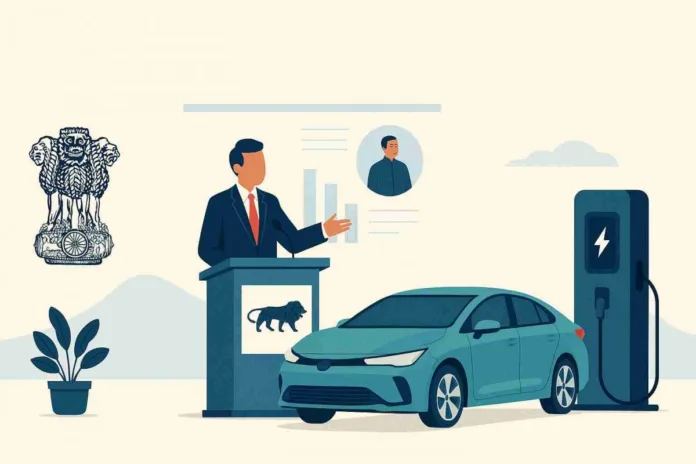

India EV ecosystem needs stronger government push beyond subsidies. PM E-DRIVE invests ₹10,900 crore but infrastructure gaps and policy clarity remain critical. India’s electric vehicle revolution is gaining momentum, but industry experts agree—the government needs to accelerate its role. With 39,485 public charging stations installed and ₹10,900 crore allocated under the PM E-DRIVE scheme, the foundation is laid. Yet the question remains: is this enough to transform India into a global EV manufacturing powerhouse by 2030?
Table of Contents
The Ambitious 30% Target and Reality Check
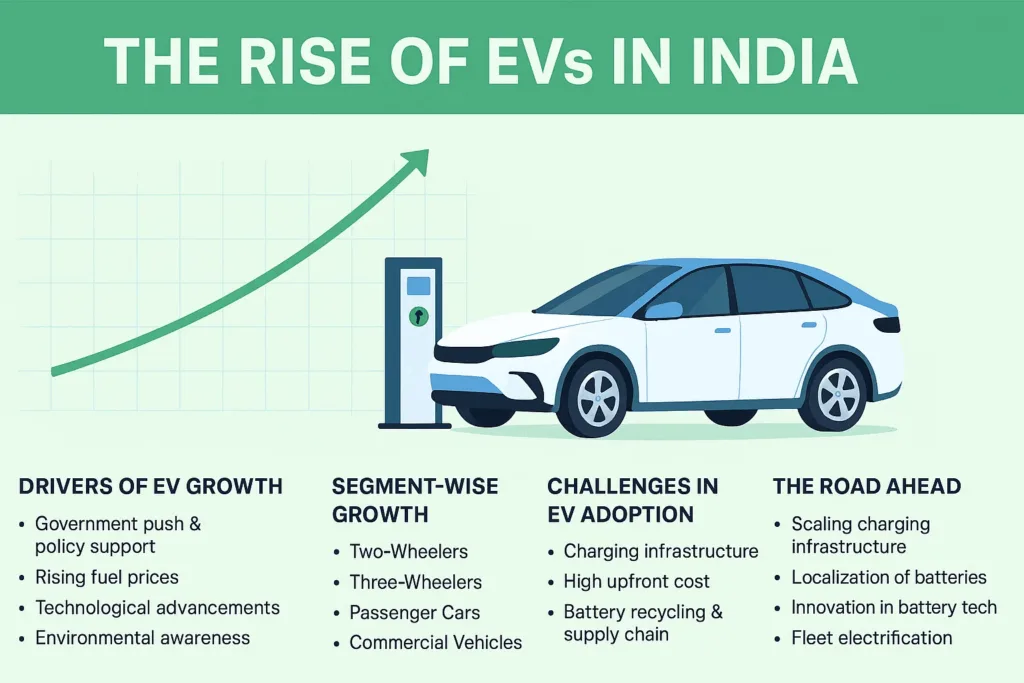
The government’s target is bold: 30% EV penetration by 2030, including 70% of commercial vehicles and 80% of two-wheelers. NITI Aayog has even proposed policies focusing on mandates rather than endless subsidies. But recent data reveals challenges. Electric vehicles accounted for just 17-18% of total passenger vehicle sales in 2024, with two-wheelers leading at 50-60% market share.
The gap between ambition and reality highlights why critics argue the government must expand beyond financial incentives. Infrastructure development, regulatory clarity, and manufacturing support need equal priority. As India’s charging network crosses 29,000 stations, tier-2 and tier-3 cities still face severe charging deserts.
Beyond Subsidies: Building Ecosystem Foundations
The PM E-DRIVE initiative demonstrates smart strategy by offering 100% subsidy for charging infrastructure at government premises and 80% at high-traffic locations like airports and railway stations. However, private sector players need more than subsidies—they need policy certainty.
The government recently sanctioned ₹1,062 crore for 85 civil depot and 88 power projects, with ₹475 crore already disbursed to nine states. While impressive, manufacturing hubs like Ludhiana are still announcing plans for 100 charging stations through public-private partnerships—suggesting national policy hasn’t translated into ubiquitous ground-level action.
The Make in India Promise and Import Dependency
India’s vision for 100% local EV production under Make in India faces a critical bottleneck: lithium and cobalt dependency. While companies like Ola Electric have developed ferrite motors requiring no rare-earth magnets, and the 4680 Bharat Cell promises indigenous lithium-ion cells, these innovations remain exceptions rather than norms.
The government extended customs duty exemptions for importing machinery to create lithium-ion cells, signaling awareness of supply chain vulnerabilities. Yet without aggressive investment in domestic battery manufacturing—where China holds commanding advantages—India risks becoming an assembly hub rather than a manufacturing leader.
State Leadership vs. Central Coordination
Karnataka leads with 6,097 charging stations, followed by Maharashtra and Tamil Nadu. These states demonstrate what happens when regional governments offer comprehensive policies including demand-side incentives, R&D support, and infrastructure development. Their success raises uncomfortable questions: Why isn’t this replicated nationwide?
Delhi’s EV policy achieved 17% EV share of vehicle sales by December 2022—an 86% year-over-year growth. Yet similar success stories haven’t emerged in states with comparable populations and economic activity. The central government’s role should include ensuring policy adoption frameworks that help lagging states learn from leaders.
The Hybrid Vehicle Distraction
Perhaps most concerning is the emerging “EV vs hybrid” policy debate. While Morgan Stanley and global investors now view hybrids more favorably amid China’s EV market challenges, India cannot afford policy confusion. Toyota’s lobbying for tax parity between EVs and hybrids could dilute the pure electric vehicle push.
The government must resist short-term compromises that undermine long-term electrification goals. As Indian manufacturers launch ambitious electric SUVs, policy stability becomes paramount.
What’s Actually Needed
Industry experts point to specific requirements: accelerated charging corridor development on highways, standardized battery swapping protocols for commercial vehicles, streamlined approval processes for charging infrastructure, and R&D funding matching China’s scale. India’s EV patenting activity remains far below global leaders—a gap government research initiatives must urgently address.
The roadmap exists. The ₹2,000 crore earmarked for charging infrastructure under PM E-DRIVE is moving. But as India races toward 80 million EVs on roads by 2030, the government’s role must expand from policy announcer to ecosystem architect, ensuring every component—from batteries to charging stations to skilled technicians—scales in concert.
Meta Description: India’s EV ecosystem needs stronger government push beyond subsidies. PM E-DRIVE invests ₹10,900 crore but infrastructure gaps and policy clarity remain critical.
Primary Keywords: India EV ecosystem development, government role electric vehicles India, PM E-DRIVE scheme
Secondary Keywords: India EV charging infrastructure, Make in India electric vehicles, 30% EV penetration 2030

