

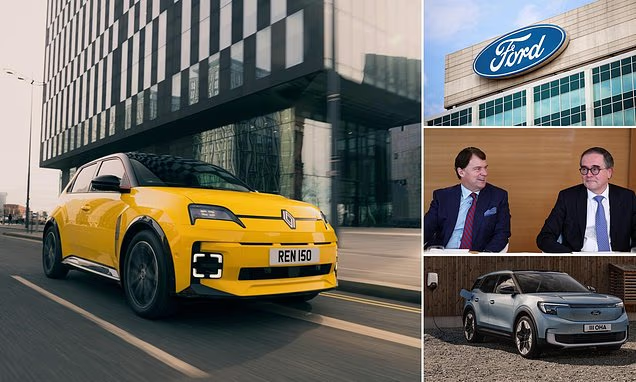

In a surprising move to combat Chinese EV dominance, Ford and Renault announced a strategic partnership that will bring two affordable, compact electric vehicles to European showrooms by 2028—marking a bold shift in it’s European strategy.
Table of Contents
A Fight for Survival
“We know we’re in a fight for our lives in our industry,” Ford CEO Jim Farley declared at the Paris announcement. His words underscore the urgency legacy automakers feel as Chinese brands like BYD, Xpeng, and Changan flood the European market with competitively priced EVs.
Ford’s European market share has plummeted from 6.1% in 2019 to just 3.3% in 2024, forcing the company to close its Saarlouis plant in Germany and cut 1,000 jobs at its Cologne facility. This partnership with Renault represents more than collaboration—it’s survival strategy.
The Platform Play
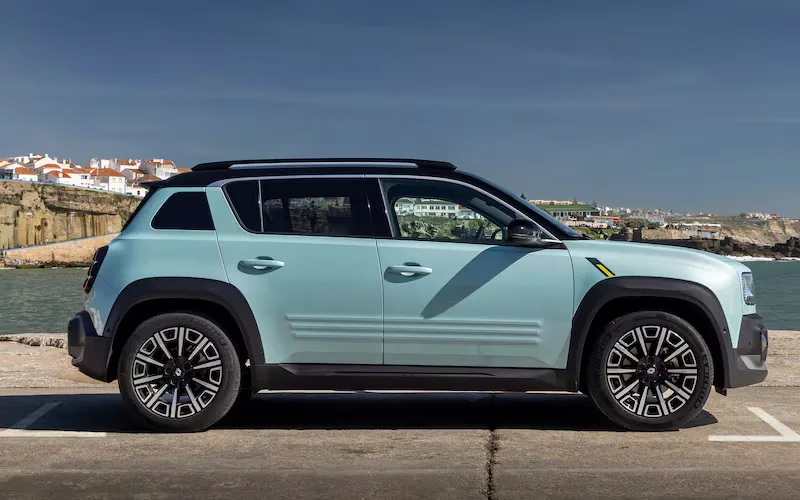
The new Ford-branded EVs will utilize Renault’s proven AmpR Small platform, the same architecture underpinning the critically acclaimed Renault 5 E-Tech and Renault 4 E-Tech. By leveraging existing technology instead of developing from scratch, Ford can dramatically reduce costs and accelerate time-to-market.
These vehicles will be manufactured at Renault’s ElectriCity plant in northern France, a state-of-the-art facility already producing multiple award-winning electric models. While Ford will design the exteriors and tune the driving dynamics to maintain authentic “Ford DNA,” the technical foundation comes from Renault’s expertise.
The partnership could potentially revive iconic nameplates like the F.Fiesta in electric form—a possibility that has enthusiasts buzzing across Europe.
Beyond Passenger Cars
The collaboration extends beyond passenger vehicles. Both companies signed a Letter of Intent to jointly develop and manufacture light commercial vehicles for Europe, complementing Ford’s existing partnership with Volkswagen on larger vans and the Transit lineup.
This multi-pronged approach allows Ford to maintain its “wildly independent” status, as Farley emphasized, while strategically collaborating where it makes business sense. There are no plans for a merger or cross-shareholding between the companies.
The Chinese Challenge
Renault CEO François Provost echoed Farley’s concerns: “The Chinese will come soon and that’s why I don’t want to wait.” His statement reflects the industry-wide anxiety about Chinese automakers’ rapid expansion into traditional European territory.
For Renault, the partnership offers critical manufacturing scale. The French automaker doesn’t sell vehicles in China or the United States—the world’s two largest markets—making collaborations essential for factory utilization and development cost-sharing. Renault is simultaneously pursuing partnerships with Chinese brands like Geely and Chery, demonstrating its pragmatic approach to survival.
Global Implications
While this partnership targets Europe specifically, its implications extend globally. The strategy mirrors challenges facing emerging EV markets like India, where affordable electric vehicles are essential for mass adoption. Ford’s willingness to embrace platform-sharing for cost competitiveness could signal broader industry trends toward collaboration over isolation.
The 2028 launch date gives both companies time to refine their offerings, but it also acknowledges the complexity of bringing truly affordable EVs to market. As traditional automakers navigate the expensive transition to electric powertrains while maintaining profitable combustion-engine lineups, partnerships like Ford-Renault may become the new normal rather than the exception.
For consumers, this collaboration promises more choice in the affordable EV segment—exactly what’s needed to accelerate the transition away from fossil fuels.

