

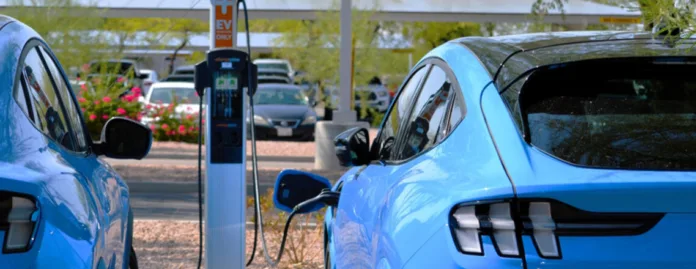

Ford and Renault are Two automotive giants are joining forces in what could be the industry’s most pragmatic response yet to the Chinese electric vehicle onslaught sweeping across Europe—and the partnership might just save Ford’s struggling European operations.
Table of Contents
Ford and Renault: The Battle Lines Are Drawn
“We know we’re in a fight for our lives in our industry,” Ford CEO Jim Farley declared in Paris, his words cutting through the diplomatic niceties that usually characterize corporate announcements. His brutal honesty reflects a stark reality: Ford’s European market share has crashed from 6.1% in 2019 to just 3.3% this year.
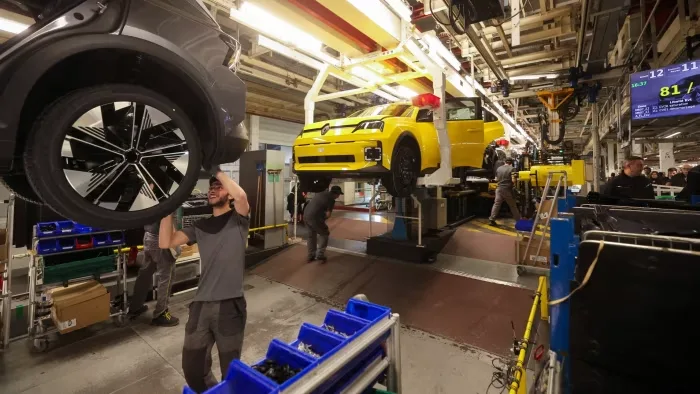
The answer? A landmark partnership with Renault Group that will deliver two Ford-branded electric vehicles by 2028, built on Renault’s proven AmpR platform—the same architecture powering the award-winning Renault 5 E-Tech and Renault 4 E-Tech.
Why This Partnership Makes Perfect Sense
Ford isn’t just buying technology; it’s buying survival time. The American automaker has already shuttered its Saarlouis plant in Germany and slashed 1,000 jobs at its Cologne facility. Meanwhile, Chinese brands like BYD, Xpeng, and Changan are flooding Europe with competitively priced EVs that traditional manufacturers struggle to match.
Renault CEO François Provost echoed the urgency: “The Chinese will come soon, and that’s why I don’t want to wait.” His statement acknowledges what many in the industry prefer to whisper—Chinese automakers represent an existential threat to European manufacturers.
For Renault, the mathematics are equally compelling. As Europe’s smallest mainstream automaker with no presence in China or the United States, the partnership provides crucial manufacturing scale. Renault’s ElectriCity plant in northern France gains guaranteed production volume, spreading development costs across more units.
Beyond Passenger Cars: The Van Strategy
The collaboration extends beyond compact EVs. Both companies signed a Letter of Intent to jointly develop light commercial vehicles—a segment where Ford maintains strength but faces emerging Chinese competition in global markets.
This multi-pronged approach allows Ford to maintain partnerships with both Volkswagen (for larger vans and current EVs) and Renault (for affordable small cars and future commercial vehicles) without committing to mergers or cross-shareholding. It’s partnership pragmatism at its finest.
The Fiesta’s Electric Resurrection?
While neither company has confirmed specific models, industry speculation centers on an electric successor to Ford’s beloved Fiesta—discontinued in 2023 after 47 years. The new vehicles will be “smaller than any Ford plans for the U.S. market,” according to Farley, filling a critical gap in Ford’s European lineup where prices now start above £26,000.
Ford will handle exterior design and driving dynamics tuning, maintaining what the company calls authentic “Ford DNA,” while Renault manages platform engineering and manufacturing. This division of labor maximizes each company’s strengths while minimizing redundant investment.
Global Implications for EV Markets
This partnership signals a broader industry shift from competition to collaboration. With Trump’s administration withdrawing EV support in the United States, and European charging infrastructure lagging expectations, traditional automakers face unsustainable dual investments in both combustion and electric technologies.
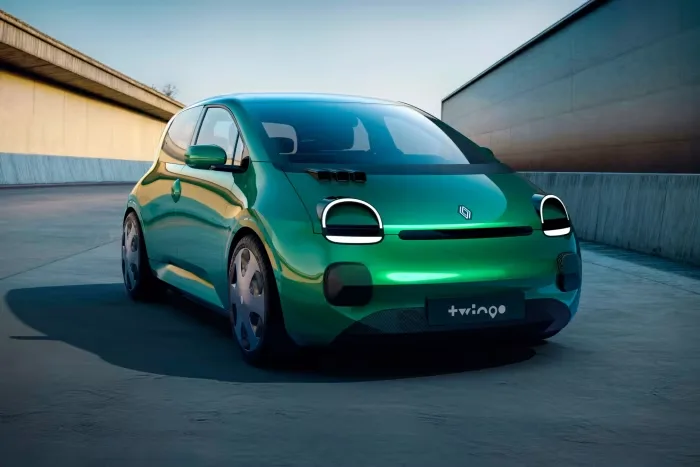
For emerging markets like India, where affordable electric vehicles are essential for mass adoption, the Ford-Renault model offers intriguing lessons. Platform sharing dramatically reduces development costs, making sub-$25,000 EVs economically viable—exactly what’s needed to compete with Chinese offerings.
Volkswagen is pursuing similar strategies with its ID. Polo budget EV, while Stellantis has ramped up production of the affordable Citroën C3. The message is clear: legacy automakers either collaborate on affordable EV platforms or risk irrelevance in the face of Chinese manufacturing efficiency.
The 2028 Reality Check
The three-year timeline to 2028 acknowledges harsh truths about EV development complexity. Despite pressure from Chinese competitors already shipping vehicles, Ford and Renault recognize that rushed development yields costly recalls and damaged reputations—lessons both companies have learned from recent software struggles.
For consumers, this partnership promises expanded choice in the affordable EV segment where options remain limited. Whether it’s enough to stem the Chinese tide remains uncertain, but it represents the automotive industry’s most honest acknowledgment yet that survival requires adaptation, not denial.

