

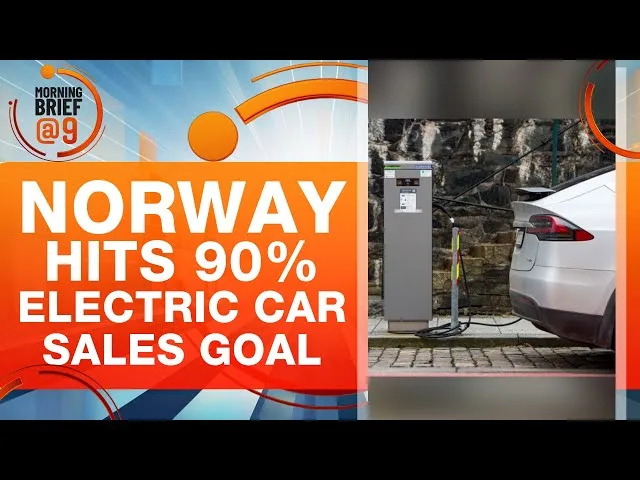

Norway achieved a staggering 97% EV market share in November, proving complete automotive electrification is possible. The future arrived early in Norway. While most countries debate electric vehicle timelines and feasibility, Scandinavian nation has essentially completed its passenger car transition. November’s 97% EV sales figure represents more than statistical achievement—it’s proof that comprehensive electrification isn’t theoretical; it’s achievable with proper infrastructure, incentives, and political will.
Table of Contents
How Norway Did It
Norway’s success didn’t happen overnight. Decades of consistent policy support, generous tax incentives, extensive charging infrastructure, and public education created conditions where buying combustion vehicles became economically irrational. EVs enjoy exemptions from purchase taxes, tolls, and parking fees while accessing bus lanes—making them cheaper and more convenient than petrol alternatives.
The comprehensive approach addressed every adoption barrier simultaneously. Range anxiety disappeared through nationwide charging networks. Cost concerns evaporated via tax benefits. Performance skepticism vanished as Norwegians experienced electric acceleration and reliability firsthand.
Lessons for India
Can Norway’s model work in India? The challenges differ significantly. Norway’s small population, high per capita income, compact geography, and renewable energy abundance create advantages India lacks. However, fundamental principles remain applicable.
India’s EV transition requires similar comprehensive thinking—not just vehicle subsidies but holistic ecosystem development. Charging infrastructure, grid capacity, battery manufacturing, recycling facilities, and workforce training must advance together. Piecemeal approaches delay progress while comprehensive strategies accelerate transformation.
Economic Realities
Critics argue Norway’s oil wealth funds its EV transition—a luxury developing nations can’t afford. However, India faces different calculus. Every liter of imported petroleum drains foreign exchange. Air pollution costs billions in healthcare and lost productivity. Early EV investment could save substantially more long-term.
Additionally, as battery costs decline globally, EVs approach price parity with combustion vehicles. India’s manufacturing scale advantages could accelerate this convergence, making affordable EVs accessible to mass markets sooner than expected.
Inspiration, Not Replication
India shouldn’t blindly copy Norway’s playbook—contexts differ too dramatically. But Norway proves complete automotive electrification is feasible, not fantastical. The question isn’t whether India can electrify, but how quickly and through which pathways.
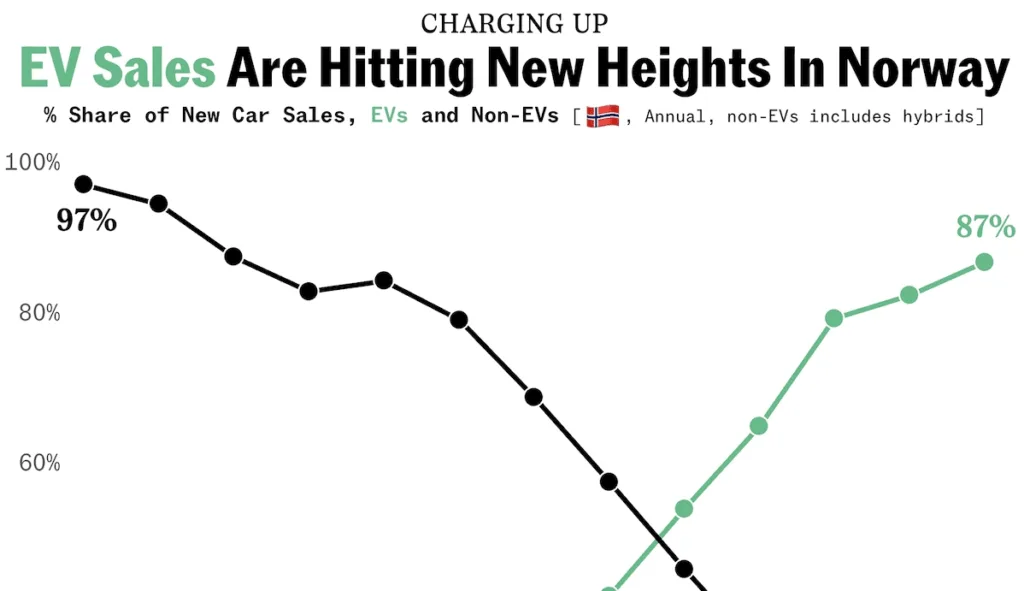
It’s achievement should inspire policymakers, manufacturers, and citizens alike. Ambitious targets aren’t unrealistic if backed by consistent policies, adequate infrastructure, and collective commitment.
The 100% Milestone
Norway will likely achieve 100% EV sales soon—perhaps within months. When it does, combustion vehicles will essentially vanish from Norwegian showrooms, confined to specialty applications and enthusiast collections.
For the global automotive industry,it represents the endpoint of electrification’s inevitable arc. The only question for other nations, including India: how fast can we follow this pioneering path toward clean, sustainable transportation?

