

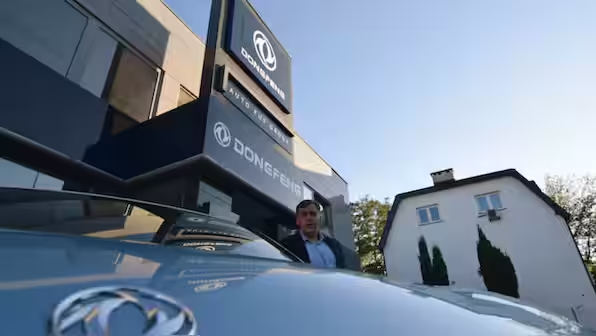

Picture this paradox: China’s domestic buyers are snapping up electric vehicles at record pace, yet the country is flooding global markets with millions of gasoline-powered cars. Welcome to the unintended consequence of the world’s most aggressive EV transition—where fossil-fuel cars made up 76% of China’s auto exports since 2020, with total shipments expected to exceed 6.5 million vehicles in 2024, up from just 1 million in 2020.
Table of Contents
The Domestic EV Revolution
At home, China’s transformation is staggering. Sales of traditional petrol and diesel-powered vehicles sank 17% in 2024, from 14 million to 11.6 million, while total vehicle sales reached 31.4 million—a 4.5% increase year-over-year. Electric vehicles, including plug-in hybrids, now command nearly half the market.
This mirrors global EV momentum, including India’s own electric revolution where affordable EV options and favorable tax policies are accelerating adoption.
Legacy Automakers’ Survival Strategy
Here’s the twist: China’s aggressive EV subsidies decimated demand for gasoline cars domestically, leaving legacy state-owned manufacturers with massive overcapacity. China’s factories have the capacity to build up to 30 million gasoline vehicles annually, far more than Chinese consumers are willing to buy.
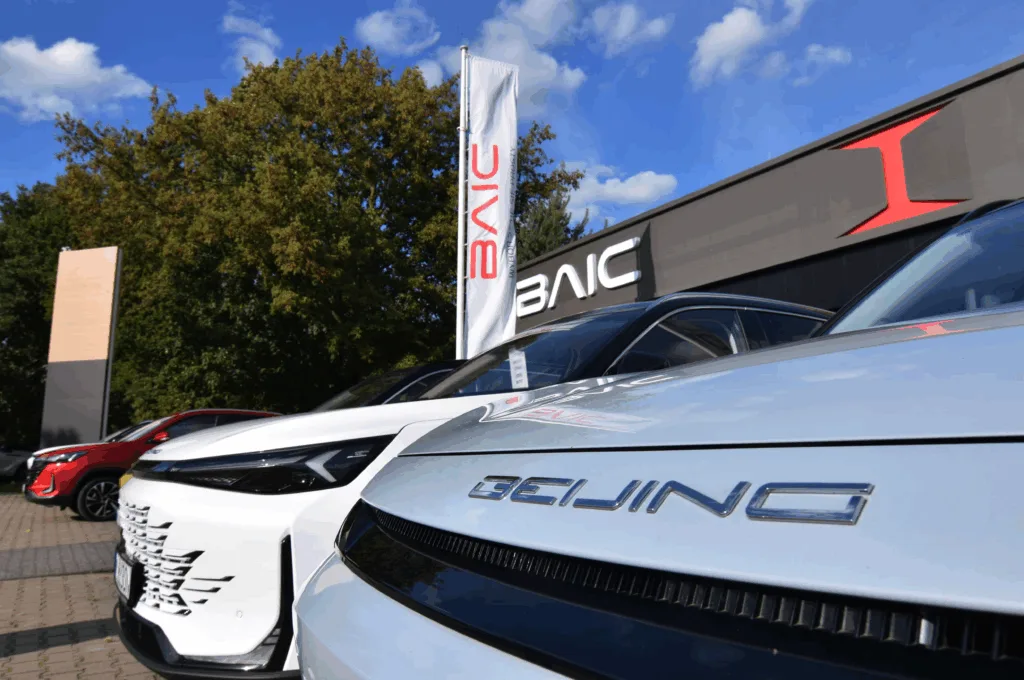
Rather than shutting these politically sensitive facilities, companies like SAIC, BAIC, Dongfeng, and Changan are exporting gasoline vehicles en masse. Former Vice Minister of Industry Su Bo warned that the country’s combustion-engine sector faces “a critical survival crisis,” with exports serving as the only workable lifeline.
Where Are These Cars Going?
The bulk of China’s gasoline-car exports are flowing to Latin America, Africa, the Middle East, Southeast Asia, and Eastern Europe, where EV adoption remains low. In Poland, over 30 Chinese brands launched since 2023. In South Africa, Chinese brands captured around 16% of the market, selling nearly 30,000 gasoline cars but only 11 EVs in the first half of 2025.
The strategy is clear: dominate markets where charging infrastructure remains limited and gasoline vehicles still make practical sense.
Impact on Global Automakers
The surge is crushing traditional players twice—first in China, then globally. Foreign automakers such as Volkswagen and Nissan, which historically relied on strong demand in China, are scrambling to develop electric vehicles for the Chinese market. Honda and Nissan recently announced merger plans specifically to counter Chinese EV makers.
Meanwhile, these same companies face Chinese gasoline vehicles undercutting them in developing markets by thousands of dollars.
What This Means for India
India must watch this carefully. While building robust EV infrastructure and supporting domestic EV manufacturers, India also needs strategies to protect against potential flooding of cheap gasoline vehicles as Chinese makers seek export markets.
The lesson? Industrial policy has far-reaching consequences. China’s EV push succeeded domestically but created global gasoline car overcapacity—reshaping automotive competition in unexpected ways.
Stay updated on global EV market dynamics at IndiaEVNews.com and explore China Association of Automobile Manufacturers data for detailed insights.
FAQs
Q1: Why is China exporting gasoline cars if it’s going electric domestically? China’s aggressive EV subsidies caused domestic gasoline car sales to plunge 17% in 2024, leaving factories with massive overcapacity (up to 30 million units annually). Rather than closing politically sensitive facilities, manufacturers export gasoline vehicles to developing markets where EV infrastructure remains limited.
Q2: Which countries are receiving Chinese gasoline car exports? Latin America, Africa, the Middle East, Southeast Asia, and Eastern Europe are primary destinations. In South Africa, Chinese brands sold 30,000 gasoline vehicles versus only 11 EVs in early 2025, highlighting infrastructure limitations in these markets.
Q3: How has China’s EV boom affected foreign automakers? Foreign brands like Volkswagen, Nissan, and Honda saw China sales collapse over 30% in five years as Chinese EV makers captured nearly 50% market share. This forced Honda-Nissan merger discussions and scrambling to develop competitive EVs for the Chinese market.
Meta Description: China exports 6.5M cars in 2024—76% are gasoline vehicles flooding global markets as domestic EV boom leaves legacy automakers with massive overcapacity.

